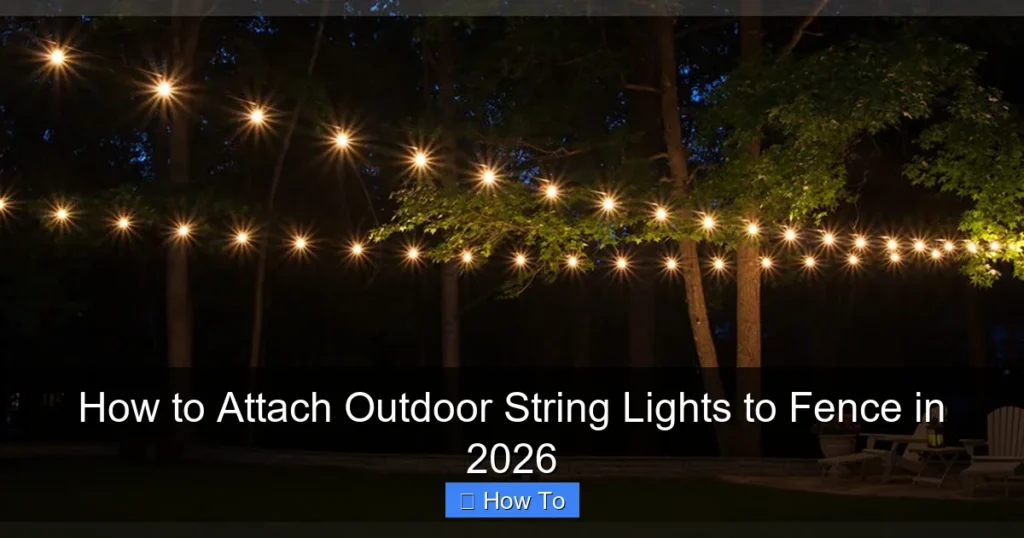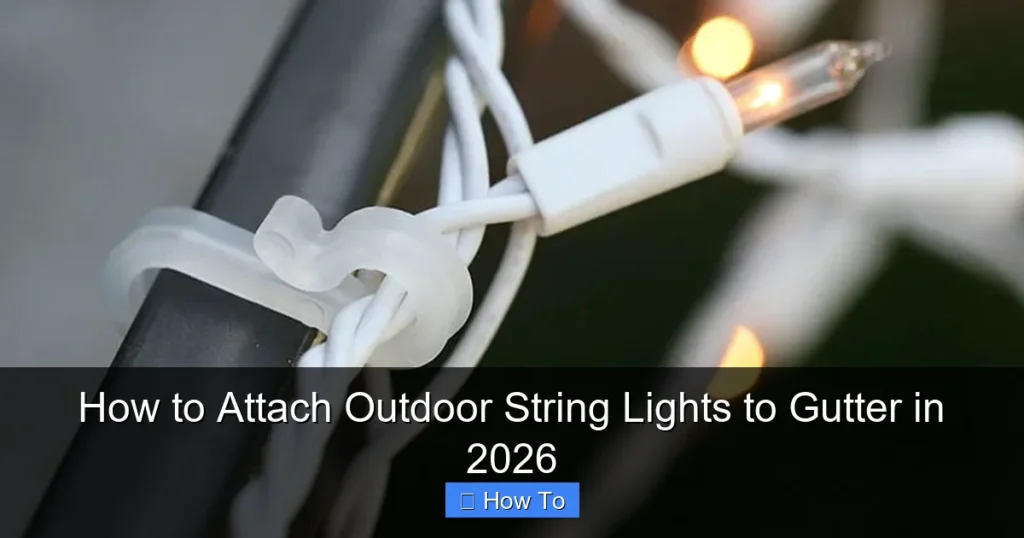
Featured image for how to hang string lights on fence
Transform your outdoor space in 2026 by effortlessly hanging string lights on your fence using simple, damage-free methods like zip ties, adhesive clips, or tension rods. This easy guide walks you through weather-resistant installation techniques, spacing tips, and power source planning to create a stunning, ambient glow. No drilling required—just quick, secure setup for year-round or seasonal charm.
“`html
How to Hang String Lights on Fence in 2026 Easy Guide
Key Takeaways
- Plan spacing first: Measure and mark even intervals for balanced lighting.
- Use outdoor-rated clips: Secure lights safely without damaging the fence.
- Check power source proximity: Ensure outlets are nearby or use solar lights.
- Test lights before hanging: Verify functionality to avoid mid-installation surprises.
- Angle lights downward: Enhance ambiance and reduce glare effectively.
- Weatherproof connections: Protect plugs with covers or silicone for longevity.
Why This Matters / Understanding the Problem
Imagine this: it’s a warm summer evening, you’re sipping lemonade in your backyard, and the sun dips below the horizon. You flick a switch—nothing happens. Or worse, the lights flicker like a haunted house. Sound familiar?
Hanging string lights on a fence isn’t just about aesthetics. It’s about transforming your outdoor space into a cozy, inviting retreat. But without the right approach, you risk tangled wires, droopy bulbs, or even damage to your fence. That’s where this How to Hang String Lights on Fence in 2026 Easy Guide comes in.
Whether you’re prepping for a BBQ, a birthday, or just want to enjoy your patio after dark, the right lighting makes all the difference. And in 2026, with more smart, solar, and weather-resistant options than ever, there’s no excuse not to get it right.
The good news? You don’t need an electrician or a toolbox full of gear. With a few simple tricks and the right tools, you can have a beautifully lit fence in under an hour. Let’s get into it.
What You Need
Before we jump in, let’s talk supplies. The beauty of hanging string lights on a fence is that most of what you need is probably already in your garage—or can be picked up at your local hardware store for under $50.
- String lights (outdoor-rated, LED preferred)
- Fence clips or hooks (plastic, vinyl, or stainless steel—match your fence type)
- Measuring tape (to avoid guesswork)
- Zip ties or twist ties (for securing loose ends)
- Extension cord (outdoor-rated, GFCI-protected if using power)
- Drill or screwdriver (only if your fence is wood and you’re using screws)
- Ladder (if your fence is tall or you’re hanging from a second story)
- Smart plug or timer (optional, but highly recommended)
Pro tip: If you’re using solar lights, make sure they’ll get at least 6 hours of direct sunlight during the day. And if you’re going the wired route, plan your power source *before* hanging anything. Running an extension cord across the lawn isn’t just a tripping hazard—it’s a safety risk.
“I once hung lights without checking my outlet location. Ended up with a 25-foot extension cord snaking through my flowerbed. Lesson learned: plan the power first!”
This How to Hang String Lights on Fence in 2026 Easy Guide assumes you’re working with a standard wooden, vinyl, or metal privacy fence. Adjustments for chain-link or lattice fences are covered in the pro tips section.
Step-by-Step Guide to How to Hang String Lights on Fence in 2026 Easy Guide
Step 1: Choose the Right Lights for Your Fence
Not all string lights are created equal. For fences, you need outdoor-rated, weather-resistant models. Look for an IP44 or higher rating—this means they’re protected against splashing water and dust.
LEDs are your best bet: they’re energy-efficient, last longer, and stay cool to the touch. In 2026, many models come with smart features like app control, color-changing modes, or voice activation (Alexa, Google Home, etc.).
Consider the length and spacing of the lights. A 20-foot strand with 10 bulbs is great for a straight fence. But if you’re wrapping around a corner or creating a canopy effect, go longer—40 to 100 feet—and use multiple strands.
Also, think about bulb style: Edison bulbs give a vintage vibe, globe lights are soft and ambient, and mini lights are perfect for subtle sparkle.
“I tried using indoor string lights once. After one rainy night, half the strand died. Outdoor-rated is non-negotiable.”
This step sets the foundation for your entire project. Picking the right lights ensures longevity, safety, and the perfect mood—making your How to Hang String Lights on Fence in 2026 Easy Guide a success from the start.
Step 2: Measure and Map Your Layout
Grab your measuring tape and walk the perimeter of your fence. Note the total length and any obstacles—gates, posts, planters, or trees.
Decide on your lighting pattern. Common options:
- Straight line: Lights run along the top rail. Simple and clean.
- Zigzag: Lights crisscross between posts for a dramatic effect.
- Canopy: Lights stretch from the fence to a pergola or house. Great for dining areas.
- Wrap-around: Lights spiral around each post. Ideal for circular or corner fences.
Sketch a quick diagram on paper or use your phone’s notes app. Mark where each strand will start and end, and where power sources will connect.
Pro tip: Leave a 6–12 inch “slack” at the power source end. This gives you room to plug in without tension on the lights.
If you’re using multiple strands, plan for connectors. Most outdoor lights have end-to-end plugs, but make sure your total wattage doesn’t exceed the circuit limit (usually 15 amps).
Mapping saves time and prevents “oops, I’m 10 feet short” moments. It’s the secret sauce in this How to Hang String Lights on Fence in 2026 Easy Guide.
Step 3: Install the Mounting Hardware
Now comes the fun part: attaching the clips or hooks. The method depends on your fence material.
For wooden fences: Use plastic or metal screw-in hooks. Drill a pilot hole first (especially in older wood) to prevent splitting. Space hooks every 12–18 inches. For a zigzag pattern, alternate sides of the fence.
For vinyl or PVC fences: Avoid nails or screws—they can crack the material. Use adhesive-backed plastic clips or tension clips that grip the top rail. These are removable and leave no marks.
For metal fences (chain-link or wrought iron): Use S-hooks or zip ties. S-hooks clip onto the mesh or top rail. Zip ties work well for tight, secure holds—just don’t over-tighten.
Attach all hooks or clips *before* hanging the lights. It’s much easier to do this with both hands free.
“I once tried hanging lights first, then clipping them. Ended up with a tangled mess. Install hardware first—every time.”
Make sure hooks are level. Use a small level or eyeball it with a straight edge. Crooked lights look messy, no matter how pretty the bulbs are.
This step is crucial for a clean, professional look—and it’s a key part of any How to Hang String Lights on Fence in 2026 Easy Guide.
Step 4: Hang the String Lights
Now, the magic happens. Start at the power source end. Plug in the first strand and test it. Nothing ruins a project like a dead string halfway through.
Hang the lights by clipping or hooking each bulb socket or connector into the hardware. Don’t pull too tight—leave a slight sag (like a clothesline) to prevent strain on the wires.
For straight-line patterns, run the lights along the top rail. For zigzag, alternate sides of the fence, connecting at each post. Use zip ties to secure loose wires behind the fence or under the rail.
If you’re creating a canopy, stretch the lights from the fence to a house, pergola, or tree. Use eye hooks or tension cables for support. Make sure the lights are high enough (7+ feet) to avoid head bumps.
When connecting multiple strands, use end-to-end plugs. Avoid daisy-chaining more than 3 strands unless the manufacturer says it’s safe. Overloading can blow a fuse or damage the lights.
Use zip ties to bundle excess cord near the power source. Tuck it behind the fence or under a planter to keep it tidy.
Work from one end to the other. This prevents tangles and makes adjustments easier.
“I once hung lights in random sections. Had to take them all down because one strand was upside down. Work in sequence!”
This is where your planning pays off. A smooth, even installation is the hallmark of a well-executed How to Hang String Lights on Fence in 2026 Easy Guide.
Step 5: Secure Loose Ends and Manage Wires
Once all lights are up, it’s time to clean up. Loose wires are a tripping hazard and can get caught in lawn mowers or pets.
Use zip ties to bundle cords every 2–3 feet. Attach them to the back of the fence or under the rail. For vinyl fences, use adhesive cable clips.
If you have a long extension cord, run it along the ground and cover it with a cord cover or bury it under mulch (not recommended for high-traffic areas).
For a neater look, use a cord concealer—a plastic channel that snaps over the wire. Paint it to match your fence for a seamless finish.
Test all connections. Gently tug on each plug to make sure it’s secure. Wiggle the lights to check for loose clips.
Turn on the lights and walk around. Look for dark spots, flickering, or drooping sections. Adjust as needed.
Pro tip: Use a timer or smart plug. Set it to turn on at sunset and off at midnight. Saves energy and means one less thing to remember.
Wire management might seem like a small detail, but it’s what separates a “nice” setup from a “wow” one.
Step 6: Weatherproof and Maintain
Your lights are up—now keep them that way. Weatherproofing ensures they last through rain, wind, and snow.
For wired lights, use outdoor-rated extension cords with GFCI (Ground Fault Circuit Interrupter) protection. This cuts power if water gets in, preventing shocks.
Seal any outdoor plugs with waterproof covers. You can buy these at hardware stores, or make one with a plastic bag and zip ties (not ideal, but it works in a pinch).
For solar lights, clean the panels monthly with a damp cloth. Dirt or snow blocks sunlight and reduces charging.
During storms, consider turning off the lights or unplugging them. While outdoor-rated, extreme weather can shorten their lifespan.
Store lights properly in winter. Coil them loosely and keep them in a dry, temperature-controlled space. Avoid plastic bags—they trap moisture and can cause mold.
Inspect your setup every 3–6 months. Replace burnt-out bulbs, tighten loose clips, and check for frayed wires.
This step is often overlooked, but it’s essential for long-term enjoyment—and a key part of any How to Hang String Lights on Fence in 2026 Easy Guide.
Pro Tips & Common Mistakes to Avoid
After hanging lights on my own fence (and helping friends with theirs), I’ve learned a few hard truths. Here’s what to keep in mind:
- Don’t skip the test run. Always plug in and test each strand before hanging. A dead bulb can ruin the whole effect.
- Match your clips to your fence. Vinyl needs adhesive or tension clips. Wood can handle screws. Metal works best with S-hooks or zip ties.
- Use the right power source. Don’t plug outdoor lights into indoor outlets. Use a GFCI outlet or a weatherproof box.
- Mind the sag. Lights should have a gentle curve, not be pulled tight. Tension can break wires or pull out clips.
- Label your strands. If you’re using multiple types (e.g., warm white and color-changing), mark them with tape. Saves time when replacing or reconfiguring.
- Think about maintenance. Place power sources where you can reach them easily. No one wants to climb a ladder to unplug lights.
- Use smart features wisely. A timer is great, but avoid overcomplicating. I once set my lights to change colors every 10 minutes. My neighbors thought it was a disco.
“I used regular screws on my vinyl fence. They cracked the rail within a week. Always check compatibility!”
Common mistakes:
- Hanging lights in the rain. Wet conditions increase shock risk and can damage the lights.
- Ignoring local codes. Some areas require permits for permanent outdoor electrical installations. Check with your HOA or city.
- Overloading circuits. More lights ≠ better. Stick to the manufacturer’s recommendations.
- Forgetting about pets and kids. Keep wires out of reach. Use cord covers or elevated hooks.
These tips aren’t just about aesthetics—they’re about safety, longevity, and peace of mind. A well-hung light setup should last years, not weeks.
FAQs About How to Hang String Lights on Fence in 2026 Easy Guide
Q: Can I hang string lights on a vinyl fence without damaging it?
Absolutely. Use adhesive-backed plastic clips or tension clips that grip the top rail. These are removable and won’t leave holes. Avoid nails, screws, or staples—they can crack the material. This is a common concern, and the solution is simple: use the right hardware for your fence type, as outlined in this How to Hang String Lights on Fence in 2026 Easy Guide.
Q: How many strands can I connect together?
It depends on the lights. Most manufacturers say you can connect 2–3 strands end-to-end. Check the packaging or manual. Exceeding this can overload the circuit. For longer runs, use a power strip with multiple outlets or a dedicated circuit.
Q: What’s the best way to hang lights around a corner?
Use a “wrap-around” method: spiral the lights around the corner post. Or, run one strand along each side, connecting them with a zip tie or hook. For a seamless look, use a 90-degree corner clip (available at hardware stores).
Q: Are solar string lights bright enough for a fence?
Yes, but with caveats. Modern solar LEDs are much brighter than older models. Look for ones with at least 100 lumens per strand. Make sure they get 6+ hours of direct sunlight. In shaded areas, wired lights are a better choice.
Q: How do I remove lights without damaging the fence?
For adhesive clips, gently peel them off with a plastic scraper. For screw-in hooks, use a screwdriver. For zip ties, snip them with scissors. Most hardware is designed to be reusable or removable. Always remove lights before painting or staining your fence.
Q: Can I leave the lights up year-round?
You can, but it’s not recommended. Even weatherproof lights degrade over time. For best results, take them down in winter and store them indoors. If you must leave them up, inspect them monthly and replace any damaged parts.
Q: Do I need a permit to hang string lights?
Generally, no—if you’re using plug-in or battery-powered lights. But if you’re hardwiring or installing a permanent electrical box, check with your local building department. Some HOAs have rules about outdoor lighting, too.
Final Thoughts
Hanging string lights on your fence isn’t just a DIY project—it’s an invitation to enjoy your outdoor space more. Whether it’s a quiet night with a book or a lively backyard party, the right lighting sets the mood.
This How to Hang String Lights on Fence in 2026 Easy Guide walks you through every step: from picking the right lights to weatherproofing your setup. It’s designed to be simple, safe, and effective—no prior experience needed.
Remember: plan your layout, test your lights, use the right hardware, and manage your wires. And don’t forget the timer—set it once and enjoy automatic ambiance every night.
Your fence isn’t just a boundary. It’s a canvas. Light it up, and let it shine.
Now grab those clips, plug in those lights, and enjoy your beautifully lit backyard. You’ve got this.
“`