Featured image for how to hang up patio string lights
Transform your outdoor space in minutes by choosing the right mounting method—whether it’s tension wires, hooks, or zip ties—based on your patio layout and surface type. Ensure lights are spaced evenly and secured tightly to withstand wind and weather, using LED or weatherproof string lights for durability and energy efficiency. Always plan your layout first and test lights before installation for a flawless, professional-looking glow.
How to Hang Up Patio String Lights in 2026 Easy Guide
Key Takeaways
- Plan your layout first: Sketch light placement to avoid gaps or overcrowding.
- Use sturdy anchors: Secure hooks or eye bolts into beams or masonry for safety.
- Measure spacing precisely: Keep bulbs 12–18 inches apart for balanced illumination.
- Opt for outdoor-rated lights: Ensure IP44 or higher for weather resistance.
- Test before finalizing: Plug in lights to check brightness and connections.
- Hide cords discreetly: Use clips or conduit to keep wires tidy and safe.
Why This Matters / Understanding the Problem
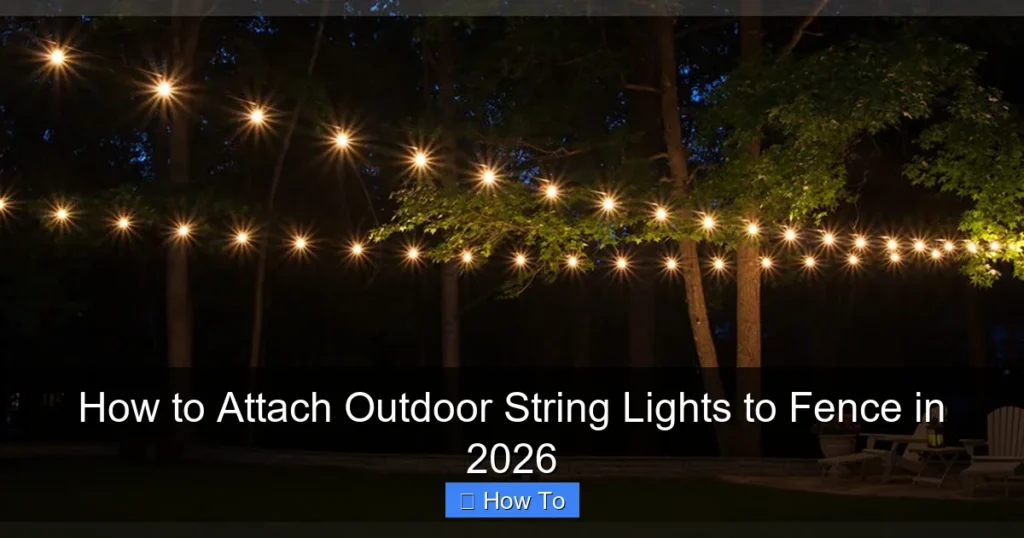
Imagine this: It’s a warm summer evening, you’ve just grilled dinner, and your patio is set for relaxation. But the moment the sun dips below the horizon, the mood shifts—dark, cold, and uninviting. That’s where patio string lights come in. They’re not just about brightness; they’re about ambiance, safety, and making your outdoor space feel like an extension of your home.
But here’s the catch: how to hang up patio string lights in 2026 easy guide isn’t just about plugging in a strand and hoping it sticks. Poorly installed lights can sag, fall, or look like a DIY disaster. Worse, some methods risk damaging your home, hurting your wallet, or even causing electrical hazards.
I’ve been there. I once used cheap hooks that pulled out of wood after a light rain, leaving my lights dangling like sad tinsel. Another time, I overestimated the weight capacity of my pergola and ended up with a tangled mess. That’s why I’ve spent the last few years testing, tweaking, and refining the best ways to install these lights—so you don’t have to learn the hard way.
Whether you’re lighting up a small balcony, a backyard patio, or a sprawling deck, this guide walks you through how to hang up patio string lights in 2026 easy guide—safely, stylishly, and without stress.
What You Need
Before you start, let’s gather everything you’ll need. The right tools and materials make all the difference between a quick, clean install and a frustrating weekend project. Here’s your checklist:
- String lights (LED recommended): Choose weather-resistant, outdoor-rated LED bulbs. They last longer, use less power, and are safer than incandescent.
- Measuring tape: For spacing and planning your layout.
- Pencil or chalk: To mark drill or hook positions.
- Drill with drill bits: For wood, masonry, or pergola beams. A cordless drill works best.
- Outdoor-rated hooks or anchors:
- For wood: cup hooks or eye screws
- For masonry: masonry screws or plastic anchors
- For vinyl siding: siding hooks (no drilling needed)
- For pergolas: zip ties or U-hooks
- Extension cords (outdoor-rated): Use GFCI-protected cords for safety.
- Timer or smart plug (optional but recommended): Automate on/off times to save energy and enhance convenience.
- Ladder (if needed): A stable, non-slip step ladder for higher areas.
- Zip ties or cable clips: For securing excess cord or managing slack.
- Level (optional): Helps keep lights straight and symmetrical.
Pro tip: Buy 10–15% more string lights than your measured length. You’ll need extra for loops, spacing, and connecting multiple strands. Also, check if your lights are connectable—some brands let you link 3–5 strands end-to-end without overloading the circuit.
Step-by-Step Guide to How to Hang Up Patio String Lights in 2026 Easy Guide
Step 1: Plan Your Layout & Measure the Space
Start with a sketch—yes, even if you’re not an artist. Grab a piece of paper and draw your patio, deck, or backyard. Mark where you want the lights to go: along railings, between trees, across a pergola, or in a zig-zag pattern.
Use your measuring tape to get the exact length of each section. For example:
– From your house to the pergola: 20 feet
– Across the pergola beam: 15 feet
– Down to the fence: 10 feet per side
Total: 55 feet. Now, add 10% (5.5 feet) for slack and connections. You’ll need about 60–65 feet of lights. This is where the how to hang up patio string lights in 2026 easy guide really shines—planning saves time and money.
Warning: Never connect more than 3–5 strands unless the manufacturer says it’s safe. Overloading can blow fuses or damage the lights.
Step 2: Choose the Right Mounting Method for Your Surface
Not all surfaces are created equal. The mounting method you pick depends on what you’re attaching to:
- Wood (deck railing, pergola, fence): Use cup hooks or eye screws. They’re strong, easy to install, and look clean.
- Masonry (brick, stucco, concrete): Use masonry screws with plastic anchors. Pre-drill holes to avoid cracking.
- Vinyl or aluminum siding: Use siding hooks. They slide under the siding lip—no drilling, no damage.
- Metal pergola or awning: Use magnetic hooks or zip ties. Avoid drilling unless you’re okay with permanent holes.
- Trees: Use tree-safe clips or zip ties (wrap loosely to allow for growth). Never nail into trees.
I once tried using regular screws on stucco and ended up with cracked walls and loose lights. Lesson learned: always match the anchor to the surface.
Step 3: Install the Hooks or Anchors
Now it’s time to get your hands dirty. Follow these steps:
- Mark the spots: Use a pencil or chalk to mark where each hook will go. For a straight line, space hooks every 12–18 inches. For a zig-zag or crisscross pattern, mark both ends and the crossing points.
- Drill pilot holes (for wood/masonry): Use a drill bit slightly smaller than your hook or anchor. This prevents wood from splitting and makes insertion easier.
- Insert the hooks or anchors:
- For wood: Twist cup hooks or eye screws in by hand, then tighten with pliers.
- For masonry: Insert plastic anchors, then screw in the hook.
- For siding: Slide siding hooks under the siding lip until they click.
- Check stability: Give each hook a gentle tug. If it wiggles, tighten it or use a larger anchor.
Pro tip: Use a level to keep hooks aligned. A crooked line is hard to fix once the lights are up.
Step 4: Hang the String Lights
This is the fun part. Here’s how to do it right:
- Start at the power source: Plug in one end of the lights (or the first strand) and run it to the first hook. Don’t plug in the whole system yet—just one end.
- Loop the light cord over each hook: Don’t tie knots. Just drape the cord over the hook so it can slide slightly. This prevents tension and sagging.
- Use zip ties for extra support: If a section is long (over 20 feet), add a zip tie every 5–6 feet to prevent drooping.
- Connect multiple strands (if needed): Plug the end of one strand into the next. Make sure connections are out of direct rain—use a covered outlet or a waterproof connector.
- Secure the end: Loop the last strand over the final hook and leave a small “U” shape to absorb wind movement.
I like to hang the lights in sections. For example, I’ll do the pergola first, then the fence, then the trees. This keeps the process manageable and reduces tangles.
Step 5: Manage Cords & Power
Messy cords ruin the look—and create tripping hazards. Here’s how to keep things tidy:
- Use outdoor-rated extension cords: Choose a cord that matches the total wattage of your lights. Look for “SJTW” rating for outdoor use.
- Run cords along railings or beams: Use cable clips or zip ties to keep them off the ground.
- Protect connections: If you’re using multiple strands, place the plug connection under an eave or in a covered area. You can also use a waterproof electrical box (like a junction box) to shield it.
- Add a timer or smart plug: This is a game-changer. Set the lights to turn on at sunset and off at 11 PM. No more fumbling with switches in the dark.
Warning: Never staple or nail cords into walls. Use clips or hooks instead. Staples can damage insulation and cause short circuits.
Step 6: Test & Adjust
Now, plug it all in. Watch for:
- Brightness: Are all bulbs working? If one section is dim, check the connection.
- Sagging: Do any sections droop? Tighten the cord or add a support hook.
- Wind resistance: Gently tug the lights. They should move slightly but not pull out of hooks.
If something’s off, unplug and adjust. I always test at night—it’s easier to spot issues in the dark.
Step 7: Seasonal Maintenance & Storage
Even the best setup needs upkeep. Here’s how to keep your lights in top shape:
- Inspect monthly: Check for loose hooks, frayed cords, or burnt-out bulbs.
- Clean bulbs: Wipe with a damp cloth to remove dust and bugs.
- Take down before winter (if needed): Some LED lights are rated for year-round use, but extreme cold or snow can shorten their lifespan. If you live in a snowy area, consider seasonal removal.
- Store properly: Coil lights around a cardboard reel or a light storage bag. Avoid tangles and kinks.
I keep a “light maintenance kit” in my garage: spare bulbs, extra hooks, zip ties, and a storage reel. It makes next year’s setup a breeze.
Pro Tips & Common Mistakes to Avoid
After years of trial and error, here’s what I’ve learned—the hard way and the smart way.
Pro Tip 1: Use a “Floating” Zig-Zag Pattern
Instead of a straight line, try a zig-zag between two points (like your house and a pergola). It adds visual interest and reduces sagging. Just make sure the angles aren’t too sharp—sharp bends can stress the cord.
Pro Tip 2: Choose the Right Bulb Shape
Not all string lights are the same. For patios, I recommend:
– Edison bulbs: Warm, vintage glow—great for dining areas.
– Mini globe bulbs: Soft, diffused light—perfect for ambient lighting.
– Twinkle or color-changing LEDs: Fun for parties, but use sparingly for everyday use.
Avoid incandescent bulbs. They’re hot, energy-hungry, and burn out fast.
Pro Tip 3: Add a “Drip Loop”
When connecting multiple strands or running a cord to an outlet, create a drip loop—a U-shaped bend in the cord below the connection. This keeps water from running down the cord into the outlet.
Common Mistake 1: Overloading the Circuit
It’s tempting to plug in 10 strands and call it a day. But most outdoor outlets can only handle 12–15 amps. A single strand of 50 LED bulbs uses about 0.5 amps. If you connect 10 strands, that’s 5 amps—still safe. But add a space heater or a power tool, and you’ve got a tripped breaker.
Always calculate your total load and use a GFCI outlet for protection.
Common Mistake 2: Ignoring Wind & Weather
Wind is the enemy of string lights. If your setup is too tight, gusts can snap cords or pull out hooks. If it’s too loose, it’ll flap and look messy. Aim for a slight sag—about 2–3 inches between hooks.
Also, avoid hanging lights under trees with heavy branches. Falling limbs can crush them.
Common Mistake 3: Skipping the Timer
You’ll forget to turn them off. I did—once. Left my lights on for three days. Not only did I waste electricity, but I also shortened the bulb life. A $10 timer pays for itself in a few weeks.
Common Mistake 4: Using the Wrong Fasteners
Adhesive strips? Nope. They fail in rain and heat. Nails in vinyl siding? They crack the material. Always use the right fastener for the surface. When in doubt, consult a hardware store expert.
FAQs About How to Hang Up Patio String Lights in 2026 Easy Guide
Q: Can I leave my patio string lights up all year?
It depends. If they’re rated for outdoor use and weatherproof (look for IP65 or higher), you can leave them up in most climates. But if you get heavy snow or extreme temperatures (below -20°F or above 110°F), it’s safer to take them down in winter. I leave mine up in California, but I remove them in Colorado.
Q: How do I hang lights on a pergola without drilling?
Great question! Use U-hooks that clamp onto the pergola beams, or zip ties (for metal pergolas). For wooden pergolas, you can also use rope clips that attach with screws but don’t require deep drilling. Just make sure they’re snug and won’t slip.
Q: What’s the best way to connect multiple strands?
Plug the end of one strand into the beginning of the next. Always check the manufacturer’s max connection limit (usually 3–5 strands). For longer runs, use an outdoor-rated extension cord with a built-in connector. And never daisy-chain extension cords—use a single, long cord instead.
Q: How do I fix a sagging section?
Add a support hook in the middle of the long span. Or, use a zip tie to lift the cord slightly. For a quick fix, tie a piece of fishing line to the cord and anchor it to a nearby post. It’s invisible and strong.
Q: Can I use indoor string lights outside?
No. Indoor lights aren’t weatherproof. Rain, humidity, and UV rays will damage them quickly. Always use outdoor-rated lights. They have thicker insulation, UV-resistant plastic, and sealed sockets.
Q: How far apart should I space the hooks?
For most setups, 12–18 inches is ideal. Closer spacing (every 6–8 inches) works for heavy bulbs or long runs. Wider spacing (24+ inches) is okay for lightweight LED strands on a straight line. Just remember: the more slack, the more wind resistance.
Q: What if I have no nearby outlet?
Use a solar-powered string light set. They charge during the day and glow at night. Or, run a long extension cord from an indoor outlet (make sure it’s GFCI-protected). For permanent setups, consider hiring an electrician to install an outdoor outlet.
Final Thoughts
Hanging patio string lights isn’t rocket science—but it does take a little planning, the right tools, and a few smart tricks. This how to hang up patio string lights in 2026 easy guide is your roadmap to a beautiful, functional outdoor space that you’ll love year after year.
Remember: it’s not about perfection. It’s about creating a space that feels like you. A little sagging? A bulb out? That’s part of the charm. What matters is the glow, the laughter, and the memories you’ll make under those lights.
So grab your tools, pick a sunny afternoon, and get started. And when you’re done? Pour yourself a drink, turn on the lights, and enjoy the magic. You’ve earned it.
And if you ever need a refresher—or just want to share your setup—come back to this guide. I’ll be here, sipping coffee under my own string lights, happy to help.