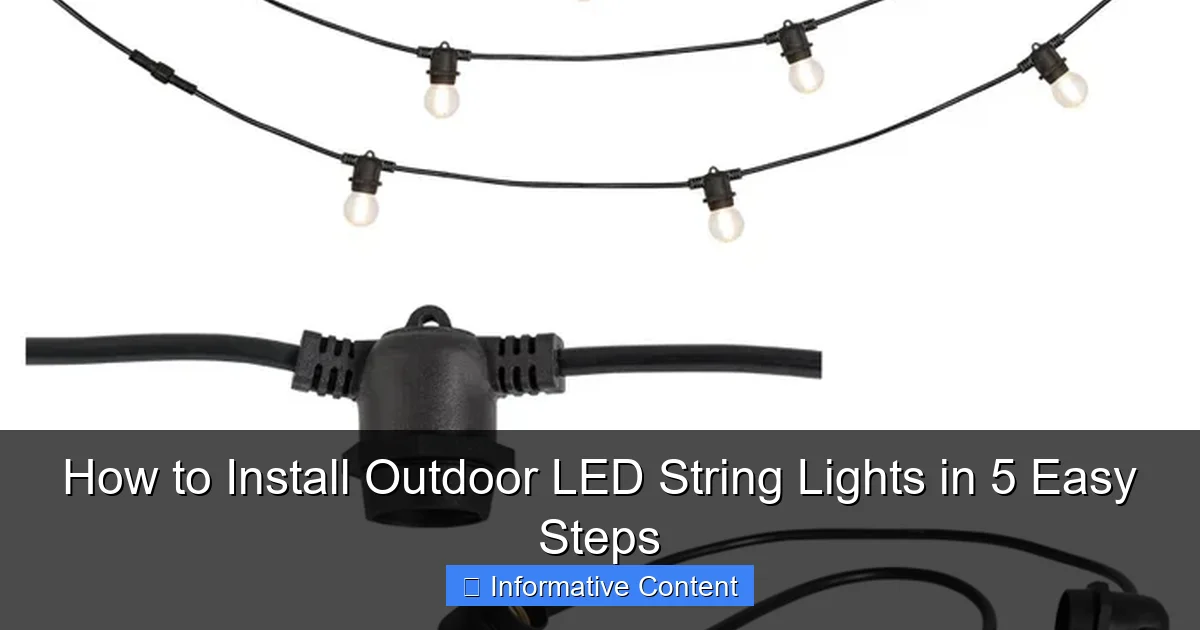
Featured image for how to install outdoor led string lights
Image source: cdn.shopify.com
Installing outdoor LED string lights is a simple, five-step process that instantly transforms your outdoor space into a warm, inviting retreat. Begin by planning your layout and measuring the area to ensure proper light coverage and safe power access. With the right tools and a few minutes, you can securely hang, connect, and enjoy energy-efficient, weather-resistant lighting all year round.
Key Takeaways
- Plan your layout: Measure the area and sketch light placement for even coverage.
- Choose weatherproof lights: Ensure lights are rated for outdoor use and damp/wet conditions.
- Secure with durable hardware: Use hooks, clips, or screws designed for outdoor installations.
- Test before hanging: Check all bulbs and connections to avoid mid-installation failures.
- Keep cords tidy: Use zip ties or cord covers to prevent tripping and damage.
- Use a timer: Automate on/off times to save energy and enhance convenience.
📑 Table of Contents
- How to Install Outdoor LED String Lights in 5 Easy Steps
- 1. Plan Your Layout and Measure Carefully
- 2. Choose the Right Outdoor LED String Lights
- 3. Gather Your Tools and Materials
- 4. Install the Anchor Points and Hang the Lights
- 5. Secure, Test, and Maintain Your Lights
- Data Table: Recommended Tools and Materials for Outdoor LED String Lights
- Final Thoughts: Enjoy Your Glowing Outdoor Space
How to Install Outdoor LED String Lights in 5 Easy Steps
Imagine this: It’s a warm summer evening. The sun has just dipped below the horizon, painting the sky in soft hues of orange and pink. You’re sitting on your patio, a cold drink in hand, surrounded by the gentle glow of outdoor LED string lights strung overhead. The ambiance is magical—cozy, inviting, and just a little bit romantic. If that sounds like the kind of outdoor space you want to create, you’re not alone. String lights have become a staple in backyard decor, and for good reason. They’re affordable, energy-efficient, and surprisingly easy to install—even if you’re not a DIY expert.
But let’s be honest: Installing outdoor lighting can feel a little intimidating. Where do you start? How do you keep the wires neat and safe? Will they survive the rain and wind? I’ve been there. I once tried to hang string lights with zip ties, only to find them sagging and sparking after a light rain. It was a mess. After years of trial, error, and a few late-night YouTube tutorials, I’ve learned the right way to install outdoor LED string lights—and I’m here to share it with you. In this guide, I’ll walk you through five simple, foolproof steps to get your lights up and glowing safely. No electrical degree required. Just a little planning, the right tools, and a few clever tricks to make your outdoor space shine.
1. Plan Your Layout and Measure Carefully
Before you even buy a single light bulb, take a step back and think about what you want your space to feel like. Are you lighting a dining area? Creating a cozy lounge zone? Or maybe wrapping lights around trees for a fairy-tale vibe? Your vision will guide every decision—from where to hang the lights to how many you’ll need.
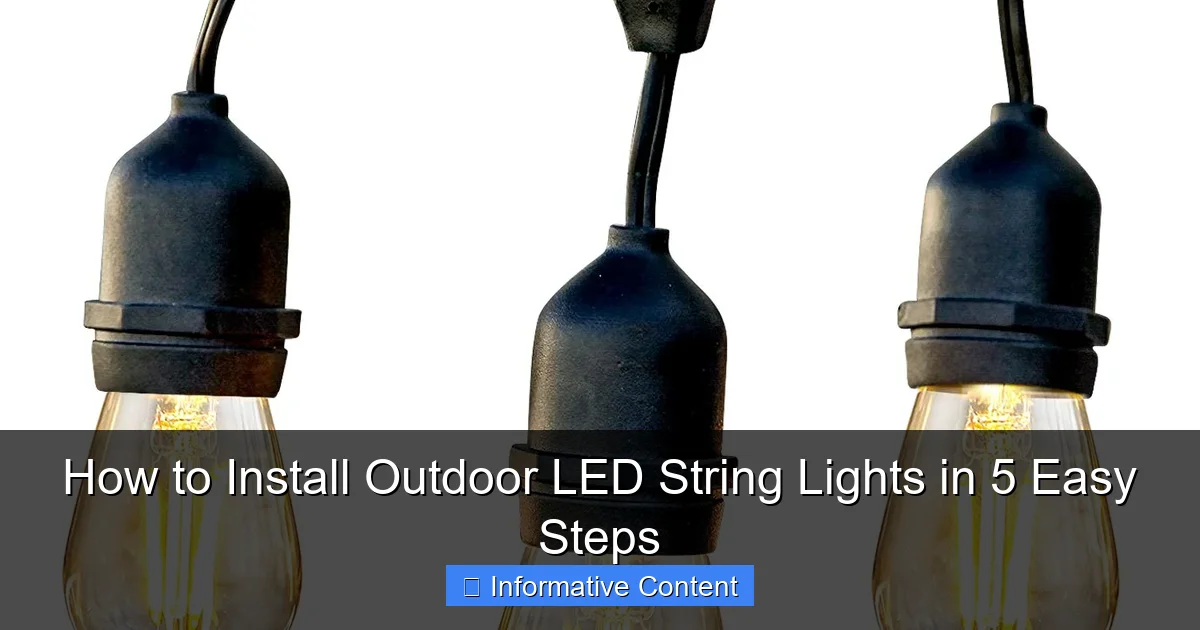
Visual guide about how to install outdoor led string lights
Image source: m.media-amazon.com
Sketch a Simple Diagram
Grab a piece of paper or use a free app like Sketchpad or Google Drawings to sketch your outdoor space. Mark key features: trees, railings, pergolas, eaves, and any furniture. Then, sketch in where you want the lights to go. This doesn’t have to be perfect—just a rough idea to help you visualize. For example, if you have a rectangular patio, you might draw lines from one corner to the opposite, crisscrossing overhead like a canopy. Or if you’re lighting a deck with a pergola, you might draw lines along the beams or from the pergola to nearby trees.
Pro tip: Think about how people will move through the space. You don’t want lights dangling at eye level or blocking walkways. Aim for lights at least 7 feet (2.1 meters) off the ground for safety and comfort.
Measure Every Distance
Now, grab a tape measure and start measuring. Measure from your power source (usually an outdoor GFCI outlet) to the first anchor point, then between each anchor point. Write these down. For example:
- From outlet to first tree: 15 feet
- From tree to pergola: 20 feet
- From pergola to house eave: 10 feet
- From eave back to outlet: 5 feet (return path)
Add up the total length. Now, add 10% extra for slack, curves, and safety. If your total is 50 feet, buy lights for at least 55 feet. It’s always better to have a little extra than to run short.
Check for Power Access
LED string lights need power, and you can’t just plug them into an indoor outlet and run an extension cord outside. You need a GFCI (Ground Fault Circuit Interrupter) outlet on the exterior of your home. If you don’t have one, you can install one (hire an electrician if you’re not comfortable with wiring), or use a heavy-duty outdoor extension cord rated for wet conditions. Just make sure the outlet is protected from rain—ideally under an eave or covered by a weatherproof outlet box.
Example: My friend Sarah wanted to light her backyard but only had an indoor outlet. She installed a weatherproof outlet box on the side of her house, connected to the indoor circuit. It cost about $80 and took an electrician 30 minutes. Now she can plug in lights, a speaker, or even a mini fridge—all safely.
2. Choose the Right Outdoor LED String Lights
Not all string lights are created equal. Some are made for indoor use only. Others can’t handle moisture. And some burn out after one season. To avoid frustration, you need to pick the right type.
Look for Weather-Resistant Ratings
Check the product label for an IP (Ingress Protection) rating. For outdoor use, aim for at least IP44, which means the lights are protected against water splashes from any direction. For areas with heavy rain or snow, go for IP65 (dust-tight and protected against low-pressure water jets).
Also, look for lights labeled “outdoor use” or “weather-resistant.” Avoid anything labeled “indoor only” or “damp-rated” (which is for covered porches, not full exposure).
Pick the Right Bulb Style and Brightness
LED string lights come in different bulb shapes and brightness levels:
- Bulb Shape:
- Globe: Soft, diffused light—great for dining or relaxing.
- Edison: Vintage, warm glow—perfect for boho or rustic themes.
- Mini: Small, twinkly—ideal for wrapping trees or railings.
- Brightness (Lumens):
- 10–30 lumens per bulb: Cozy, ambient lighting.
- 40–60 lumens: Good for dining or reading.
- 70+ lumens: Bright, functional lighting (but can feel harsh).
For most patios, I recommend 20–40 lumens per bulb. It’s bright enough to see, but not so bright it feels like a parking lot.
Decide on Plug-In vs. Solar
- Plug-in: More reliable, brighter, and can run all night. Best if you have easy access to an outlet.
- Solar: Eco-friendly and wire-free, but less reliable in cloudy weather or during winter. Great for temporary setups or areas far from power.
Example: I used solar lights for a garden path last year. They looked magical on sunny days but barely glowed during a week of rain. Now I use plug-in lights for the main area and solar for accent paths.
Check for Smart Features (Optional)
Some LED string lights come with smart features like:
- App control (turn on/off, dim, change color)
- Voice control (via Alexa or Google Assistant)
- Timers and schedules
These are nice but not essential. If you’re on a budget, stick to basic plug-in lights. You can always add a smart plug later.
3. Gather Your Tools and Materials
Once you’ve planned your layout and chosen your lights, it’s time to gather the right tools. The good news? You probably already own most of them.
Essential Tools and Supplies
- Measuring tape (for double-checking distances)
- Stakes and string (to mark anchor points)
- Drill and drill bits (for wood or stucco)
- Hammer (for nails or stakes)
- Level (to keep lines straight)
- Outdoor-rated fasteners:
- S-hooks or carabiners: Easy to install and remove, great for trees or railings.
- Eye hooks or screw hooks: For wood or stucco—secure but require drilling.
- Adhesive clips or outdoor tape: For temporary setups or smooth surfaces (e.g., glass railings).
- Extension cords (outdoor-rated): If your outlet is far from the lights.
- Weatherproof outlet cover: To protect the plug connection.
- Zip ties (optional): For bundling extra cord.
Choosing the Right Fasteners
The key is to match the fastener to the surface:
- Wood (deck, pergola, fence): Use eye hooks or screw-in hooks. Drill a pilot hole first to avoid splitting.
- Stucco or brick: Use plastic anchors and screws, or outdoor adhesive clips (like 3M Command Outdoor).
- Trees: Use S-hooks or bungee cords to avoid damaging bark. Wrap the cord around the trunk or branches.
- Metal railings: Use magnetic clips or adhesive hooks (if the surface is smooth).
Pro tip: Buy extra fasteners. I always keep a few spare S-hooks and eye screws in my garage. You’ll need them when a hook rusts or a light falls.
Safety Gear
Even a simple install can be dangerous. Wear:
- Gloves (to protect your hands)
- Safety glasses (especially when drilling)
- Sturdy shoes (in case you need to climb a ladder)
4. Install the Anchor Points and Hang the Lights
Now comes the fun part: hanging the lights. This is where your planning pays off. Take your time—rushing leads to mistakes.
Mark and Install Anchor Points
Use stakes and string to mark where each anchor point will go. Then, install your fasteners:
- For eye hooks: Drill a pilot hole, then screw in the hook. Use a level to keep it straight.
- For S-hooks on trees: Wrap the cord around a sturdy branch, then hook the S-hook through the cord.
- For adhesive clips: Clean the surface with rubbing alcohol, then press the clip firmly for 30 seconds.
Space anchor points every 3–5 feet for support. Closer spacing (2–3 feet) is better for longer runs or heavy bulbs.
Unroll and Test the Lights
Before hanging, unroll the entire string and plug it in. Test every bulb. If one is out, check the connections or replace the bulb. It’s much easier to fix this now than after it’s 10 feet in the air.
Hang the Lights
Start at the power source and work outward. Here’s how:
- Plug the lights into the outlet (but don’t turn them on yet).
- Run the cord along your planned path, attaching it to each anchor point.
- Use S-hooks to connect the light strand to the anchor points. This makes it easy to remove later.
- Keep the cord taut but not stretched. A little slack prevents sagging, but too much looks messy.
- For long runs, use a support wire (like a thin galvanized steel cable) to carry the weight. Attach the lights to the wire with small clips or zip ties.
Example: On my pergola, I ran a support wire from one corner to the other, then clipped the lights to it. The wire holds the weight, so the lights don’t sag. It took an extra 10 minutes but looks so much better.
Manage the Power Cord
Keep the power cord neat and safe:
- Run it along a wall or railing, not across walkways.
- Use zip ties or clips to secure it every 3–4 feet.
- Cover the plug connection with a weatherproof outlet cover.
- If the cord is too long, bundle the excess with zip ties and tuck it behind a post or under furniture.
5. Secure, Test, and Maintain Your Lights
You’re almost done! Now it’s time to make sure your lights are safe, secure, and long-lasting.
Double-Check All Connections
Go back to each anchor point and make sure:
- All hooks are tight and secure.
- The cord isn’t rubbing against sharp edges (like a metal railing).
- The power cord isn’t stretched or dangling.
Test the Lights
Turn on the lights and walk around. Check for:
- Flickering bulbs (a sign of loose connections).
- Sagging lines (add more anchor points if needed).
- Glare (adjust the height or angle if the lights are too bright in your eyes).
Weatherproof the Setup
Protect your lights from the elements:
- Use outdoor-rated extension cords with rubber jackets.
- Cover the plug and outlet with a weatherproof cover.
- For long-term installations, consider conduit (plastic tubing) to protect the cord where it passes through walls or under decks.
Create a Maintenance Plan
LED lights can last 20,000–50,000 hours, but they still need care:
- Seasonal checks: In spring and fall, inspect the lights for damage, loose hooks, or frayed cords.
- Clean bulbs: Wipe them with a damp cloth to remove dust and bugs.
- Store properly: If you take the lights down in winter, coil them loosely and store in a dry, temperature-controlled place.
Example: My neighbor leaves his lights up year-round. Last winter, a squirrel chewed through the cord. Now he takes them down every fall and stores them in a plastic bin.
Data Table: Recommended Tools and Materials for Outdoor LED String Lights
| Tool/Material | Best For | Price Range (USD) | Notes |
|---|---|---|---|
| Outdoor LED String Lights (50 ft, IP44) | Patios, decks, pergolas | $20–$50 | Look for 20–40 lumens per bulb |
| S-hooks (stainless steel) | Trees, railings, existing hooks | $5–$10 for 20 | Easy to install and remove |
| Eye hooks (galvanized) | Wood, pergolas, fences | $8–$15 for 10 | Drill pilot holes to avoid splitting |
| Outdoor adhesive clips | Smooth surfaces (glass, stucco) | $10–$20 for 15 | Clean surface with alcohol first |
| Weatherproof outlet cover | Protect plug connections | $8–$12 | Essential for safety |
| Outdoor extension cord (25 ft) | Powering lights far from outlet | $15–$30 | Look for “wet-rated” label |
| Support wire (galvanized steel) | Long runs, heavy bulbs | $10–$20 for 50 ft | Use with clips or zip ties |
Final Thoughts: Enjoy Your Glowing Outdoor Space
There you have it—five simple steps to transform your backyard into a magical, glowing retreat. From planning your layout to testing the lights, every step is designed to be safe, efficient, and stress-free. And the best part? You don’t need to be an electrician or a DIY pro. All you need is a little patience, the right tools, and a vision for how you want your space to feel.
I’ll never forget the first night I turned on my string lights. My family gathered around the patio table, laughing under the soft glow. My kids pointed at the lights like they were stars. It was simple, beautiful, and totally worth the effort. That’s the power of outdoor LED string lights—they don’t just light up a space. They create memories.
So go ahead. Grab your tools, pick your favorite lights, and get started. Your dream outdoor space is just a few steps away. And when you’re sitting under those twinkling lights with a cold drink and good company, you’ll know: this was one of the best decisions you ever made for your home.
Frequently Asked Questions
How do I install outdoor LED string lights safely?
To install outdoor LED string lights safely, always use lights rated for outdoor use and avoid overloading circuits. Turn off power sources when connecting lights and use waterproof connectors to protect connections from weather damage.
What tools do I need to install outdoor LED string lights?
You’ll need a ladder, hooks or mounting clips, a tape measure, and possibly a drill for permanent installations. For temporary setups, zip ties or adhesive hooks work well to secure the lights without damaging surfaces.
Can I install outdoor LED string lights on a wooden fence?
Yes, you can easily install outdoor LED string lights on a wooden fence using screw-in hooks or zip ties. Ensure the lights are spaced evenly and avoid over-tightening to prevent damage to the fence or light cords.
How do I power outdoor LED string lights without an outlet nearby?
Use a weatherproof extension cord or solar-powered LED string lights to eliminate the need for a nearby outlet. For longer distances, consider a low-voltage transformer or a battery-powered setup for flexibility.
How far apart should I space hooks for outdoor LED string lights?
Space hooks or clips 12–18 inches apart to support the weight of the lights and prevent sagging. For heavier commercial-grade lights, use shorter intervals (8–12 inches) for added stability.
Can I install outdoor LED string lights on a pergola?
Yes, you can install outdoor LED string lights on a pergola by attaching them to beams or rafters using hooks or zip ties. Plan the layout to ensure even coverage and avoid tangling the cords.