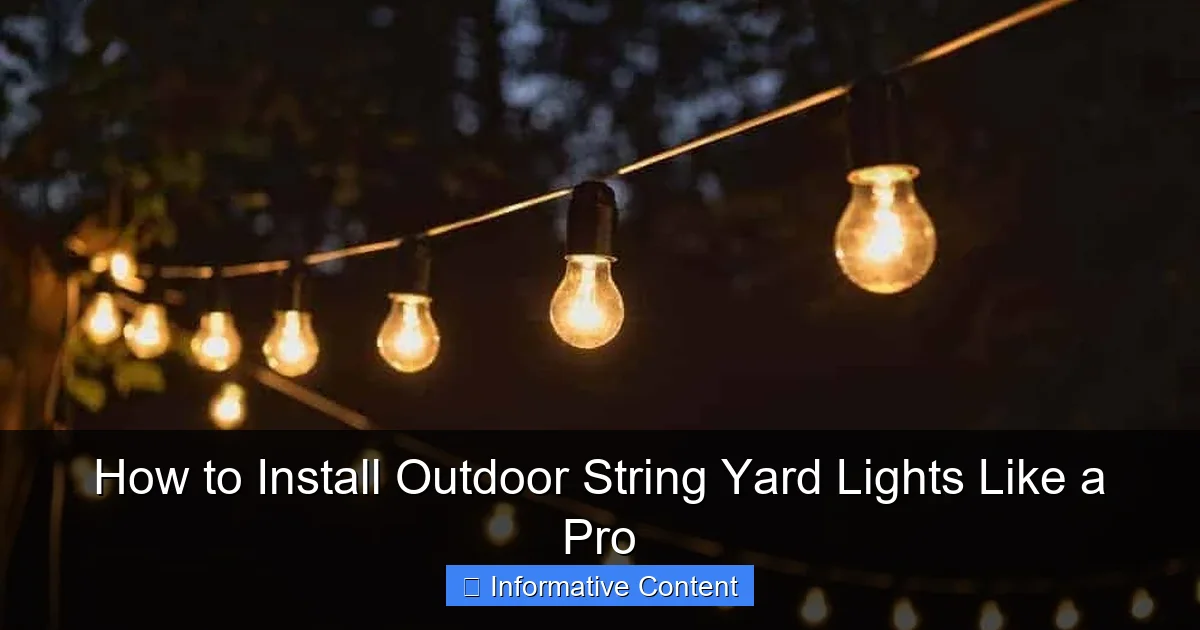
Featured image for how to install outdoor string yard lights
Image source: homestratosphere.com
Transform your outdoor space with perfectly hung string lights by planning your layout and securing durable mounting hardware first. Use weather-resistant lights and proper spacing to ensure safety, longevity, and a professional glow. With the right tools and a few simple steps, you’ll create a stunning ambiance that’s both functional and Instagram-worthy.
Key Takeaways
- Plan your layout: Sketch light placement before installing to avoid mistakes.
- Use durable hardware: Choose weather-resistant hooks, screws, and cables.
- Measure spacing accurately: Keep bulbs 12–24 inches apart for even lighting.
- Check power sources: Ensure outdoor-rated extension cords and GFCI outlets.
- Secure connections: Waterproof all splices and plug points to prevent hazards.
- Test before finalizing: Verify lights work before securing all hardware.
📑 Table of Contents
- Why Outdoor String Lights Transform Your Yard
- Step 1: Plan Your Layout Like a Designer
- Step 2: Choose the Right Outdoor String Lights
- Step 3: Gather Tools and Prep Your Space
- Step 4: Hang the Lights with Precision
- Step 5: Power and Safety Considerations
- Step 6: Maintain Your Lights for Longevity
- Final Thoughts: Enjoy Your Glow
Why Outdoor String Lights Transform Your Yard
Picture this: It’s a warm summer evening, the sun has dipped below the horizon, and your backyard is bathed in a soft, golden glow. Friends and family are gathered around, laughter fills the air, and the only thing missing is that perfect ambiance—outdoor string lights. These aren’t just decorations; they’re mood setters, conversation starters, and the secret ingredient to turning your yard into an outdoor living room. I still remember the first time I strung up lights in my own backyard. I was skeptical—would it look cheesy? Would the wires be a tangled mess? But the moment I flipped the switch, I was hooked. The space felt cozier, more inviting, and suddenly, my yard became the place where memories were made.
Installing outdoor string yard lights isn’t just about aesthetics—it’s about functionality, safety, and creating a space you’ll actually want to use. Whether you’re hosting a barbecue, enjoying a quiet night with a book, or just unwinding after work, the right lighting can make all the difference. But let’s be honest: the process can feel overwhelming if you’ve never done it before. Where do you start? How do you avoid common pitfalls? And most importantly, how do you do it like a pro—without spending a fortune or spending hours troubleshooting? That’s exactly what we’re going to cover here. From planning your layout to choosing the right lights and securing them safely, this guide will walk you through every step, with tips and tricks I’ve picked up over years of trial, error, and backyard makeovers.
Step 1: Plan Your Layout Like a Designer
Measure Your Space and Identify Anchor Points
Before you even unbox a single light, take a walk around your yard and think like a designer. Start by measuring the area you want to light. Are you covering a patio, a pergola, or the entire backyard? Use a measuring tape or pacing (your stride length) to get rough dimensions. This helps you estimate how much lighting you’ll need and where the anchor points will be. Anchor points are crucial—they’re the structures or trees where you’ll attach your lights. Look for sturdy options: eaves, posts, fences, or large trees with strong branches. For example, if you have a pergola, those beams are perfect. If not, a sturdy tree with a thick limb (at least 6 inches in diameter) can work, but avoid thin branches that might snap under tension.
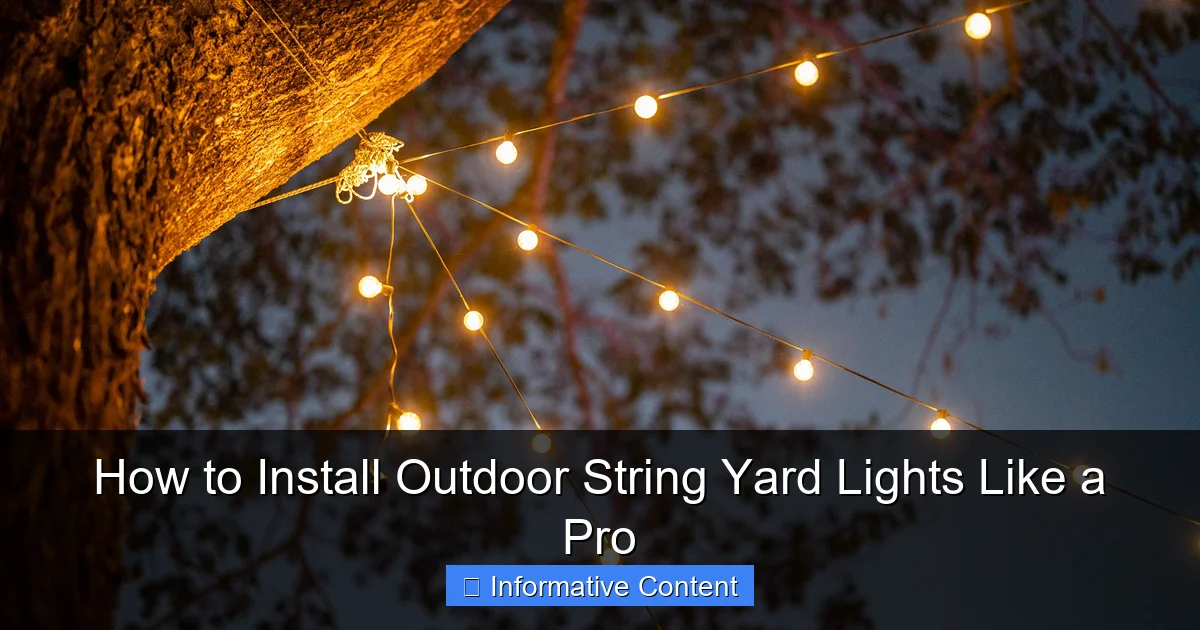
Visual guide about how to install outdoor string yard lights
Image source: cdn.mos.cms.futurecdn.net
Sketch a Rough Design
Grab a piece of paper and sketch your yard, marking where your anchor points are. Then, plan your light layout. Do you want a straight line across the patio? A crisscross pattern over a dining area? Or a canopy of lights over a seating zone? A simple zigzag pattern (like a “Z”) can cover more area without needing extra anchor points. Pro tip: Leave a little slack in your design. Lights sag slightly when installed, and you don’t want them pulling tight or straining the connections. I learned this the hard way when I once strung lights too tightly—they looked great at first, but after a few windy nights, one snapped loose and dangled like a sad icicle.
Consider the View and Function
Think about how you’ll use the space. Will you be dining under the lights? Then focus on even, bright coverage over the table. If it’s a lounge area, softer, ambient lighting works better. Also, consider sightlines—don’t block pathways or create glare in someone’s eyes. For instance, if your lights are above a seating area, angle them slightly downward to avoid blinding guests. And don’t forget about the neighbors! If your yard is close to theirs, avoid shining lights directly into their windows. A little consideration goes a long way.
Step 2: Choose the Right Outdoor String Lights
Types of String Lights: Pros and Cons
Not all string lights are created equal. Here’s a quick breakdown of the most common types:
- Incandescent: Classic warm glow, but less energy-efficient and shorter lifespan. Great for occasional use (e.g., holiday parties) but not ideal for year-round lighting.
- LED: Energy-efficient, long-lasting, and available in warm or cool tones. My personal favorite—they’re brighter, use less power, and can last 25,000+ hours. Some even have smart features (like dimming or color-changing).
- Solar: Eco-friendly and no wiring needed, but brightness depends on sunlight exposure. Best for areas with full sun during the day.
- Edison-style (vintage bulbs): Adds a retro, cozy vibe but can be fragile. Look for weather-resistant versions if you’re using them outdoors.
Key Features to Look For
When shopping, keep these features in mind:
- Weather resistance: Check the IP rating (IP44 or higher for outdoor use). This means the lights can handle rain, wind, and humidity.
- Bulb type: Shatterproof bulbs (like polycarbonate) are safer, especially if you have kids or pets.
- Length and spacing: Standard spacing is 12 inches between bulbs, but some have 6-inch spacing for denser light. Measure your layout to ensure you have enough strands—and don’t forget to account for connections (you’ll need a little extra length).
- Plug type: Some have end-to-end connectors for linking strands, while others have a male plug on one end and a female socket on the other. The latter is more versatile for custom layouts.
Real-World Example: My Pergola Setup
For my pergola, I chose 25-foot LED string lights with 12-inch spacing and an IP65 rating. I linked four strands (totaling 100 feet) to cover the 12×16-foot structure. The warm white tone matched my wooden beams perfectly, and the dimmable feature let me adjust brightness for different moods. Total cost? Around $120—worth every penny for the ambiance they created.
Step 3: Gather Tools and Prep Your Space
Essential Tools You’ll Need
You don’t need a full toolkit, but these basics make the job easier:
- Measuring tape: For precise measurements.
- Drill and bits: For screwing in hooks (if needed).
- Screwdriver: For tightening hooks or clips.
- Ladder: For reaching high anchor points (safety first!).
- Zip ties or cable clips: For securing wires and preventing sagging.
- Weatherproof sealant: To protect electrical connections (if you’re splicing wires).
- Outdoor-rated extension cords: If your power source isn’t nearby.
Prep Your Anchor Points
Before hanging lights, prep your anchor points:
- For wood (pergola, fence, etc.): Use cup hooks, eye screws, or heavy-duty zip ties. Pre-drill holes to avoid splitting the wood.
- For trees: Use tree-friendly methods like tree straps (wide, non-stretching nylon) or bungee cords. Avoid wire or thin zip ties—they can cut into the bark and damage the tree.
- For concrete or brick: Use masonry screws with anchors or adhesive hooks designed for outdoor use.
Pro tip: If you’re using hooks, install them slightly higher than your planned light height. This gives you room to adjust for sagging later.
Test Your Lights First
Unpack your lights and plug them in before hanging. Check for:
- Dead bulbs (replace them now, not after installation).
- Loose connections or frayed wires.
- Proper operation (dimming, color-changing, etc.).
I once skipped this step and spent an hour hanging a strand—only to find it didn’t work. Lesson learned: always test first!
Step 4: Hang the Lights with Precision
Start from the Power Source
Always begin at the power source (outlet, timer, or solar panel). This reduces the need for long extension cords and keeps your layout tidy. If you’re using multiple strands, connect them end-to-end before hanging. For example, if you have a 15-foot patio, you might use two 8-foot strands linked together.
Secure the First and Last Anchor Points
Attach your first hook or anchor point, then run the light strand to the last anchor point. Don’t fully tighten yet—you’ll need to adjust tension. For a straight line, use a level to ensure it’s even. For a zigzag or crisscross pattern, mark your anchor points with tape or stakes first.
Hang the Strand with Proper Tension
Here’s where many people go wrong: hanging lights too tightly or too loosely. Aim for a slight sag (about 6–12 inches in the middle of a 10-foot span). This prevents strain on the connections and looks more natural. Use these methods:
- For hooks: Wrap the cord around the hook, then use a zip tie or knot to secure it. Don’t tie directly to the hook—this can damage the cord.
- For zip ties: Thread the tie through the light’s loop (if it has one) and around the anchor point. Tighten just enough to hold—don’t crush the cord.
- For trees: Wrap the strap or cord around the limb, then attach the light strand to the strap. Avoid knots that can slip.
Use Cable Clips for Long Runs
If you’re covering a long distance (e.g., 20+ feet), use cable clips every 3–4 feet to prevent sagging. For extra support, add a middle anchor point (like a temporary pole or tree branch). I once used a retractable clothesline pole to support a 30-foot span—it worked like a charm!
Step 5: Power and Safety Considerations
Outdoor Outlets and Extension Cords
Always use outdoor-rated extension cords with a ground fault circuit interrupter (GFCI). This protects against shocks and short circuits. If your outlet isn’t GFCI, install a GFCI adapter or upgrade the outlet (hire an electrician if unsure). Never run cords under rugs, furniture, or across walkways—this creates tripping hazards and can damage the cord.
Weatherproof Connections
Outdoor connections are vulnerable to moisture. Protect them with:
- Weatherproof outlet covers (for outdoor sockets).
- Electrical tape or heat-shrink tubing (for spliced wires).
- Plastic bags or conduit (for temporary protection during storms).
For permanent setups, consider burying cords in PVC conduit (at least 18 inches deep) or using underground-rated cables.
Timers and Smart Controls
Timers or smart plugs let you automate your lights. I use a Wi-Fi smart plug to turn my lights on at sunset and off at midnight—no fumbling with switches. Some lights even have built-in timers (check the manual). Pro tip: Set the timer to turn on 30 minutes before sunset for a seamless transition.
Step 6: Maintain Your Lights for Longevity
Regular Checks and Cleaning
Outdoor lights take a beating from weather, dust, and bugs. Every few months, inspect them for:
- Frayed wires or loose connections.
- Corroded plugs (clean with a wire brush or replace).
- Dead bulbs (replace promptly to avoid straining the circuit).
To clean, wipe bulbs and cords with a damp cloth and mild soap. Avoid harsh chemicals that can damage plastic.
Seasonal Storage
If you live in a cold climate, consider taking down lights in winter. Store them in a dry, temperature-controlled space (like a garage or closet). Coil them loosely around a piece of cardboard or a reel to prevent tangling. For year-round setups, use weatherproof covers or bring cords indoors during heavy storms.
Troubleshooting Common Issues
Here’s a quick table for common problems and fixes:
| Issue | Likely Cause | Fix |
|---|---|---|
| One strand not working | Loose connection or dead bulb | Check connections; replace bulbs |
| Flickering lights | Loose wire or faulty bulb | Tighten connections; replace bulb |
| Cord sagging | Too much tension or weak anchor | Adjust tension; add support clips |
| Lights won’t turn off | Timer malfunction | Reset timer or replace |
Final Thoughts: Enjoy Your Glow
Installing outdoor string yard lights might seem daunting at first, but once you break it down into steps, it’s totally doable—even if you’re not a DIY expert. The key is to plan carefully, choose the right lights for your space, and prioritize safety. I’ll never forget the first night I turned on my own backyard lights. The glow wasn’t just on the trees and patio—it was on my face too, because I was so proud of what I’d created. And that’s the magic of this project: it’s not just about the lights; it’s about the joy they bring.
Whether you’re lighting a cozy nook or an expansive yard, take your time, follow these steps, and don’t be afraid to experiment. Maybe start with a small section, get comfortable, then expand. And remember: a little imperfection is part of the charm. Slight sags, a bulb that flickers occasionally—these quirks add character, just like the people who gather under the lights. So go ahead, flip that switch, and enjoy your transformed outdoor space. After all, the best projects are the ones that make your home feel like, well, home.
Frequently Asked Questions
How do I install outdoor string yard lights without damaging my house?
Use removable hooks, adhesive clips, or tension rods to hang lights without nails or screws. For permanent fixtures, use corrosion-resistant hardware and sealant to protect surfaces from water damage.
What’s the best way to plan the layout for outdoor string yard lights?
Sketch your yard, marking anchor points (trees, posts, or eaves) and measuring distances to ensure even spacing. Leave 10-15% extra length for adjustments and use LED string lights to reduce power needs.
How do I connect outdoor string lights safely to a power source?
Use outdoor-rated extension cords and connect lights end-to-end (if manufacturer-approved) without exceeding the maximum wattage. Plug into a GFCI outlet with a weatherproof cover to prevent shocks.
Can I install outdoor string yard lights in winter or rainy climates?
Yes, but choose weatherproof (IP65+) lights with UV-resistant cords and secure all connections with waterproof tape. Avoid installing during heavy rain or snow to ensure safety and longevity.
How do I hide cords when installing outdoor string lights?
Route cords under deck railings, through conduit pipes, or use cord covers that match your landscape. For ground-level runs, bury them under mulch (not soil) or use decorative cord hiders.
Do I need a transformer for my outdoor string yard lights?
Only if using low-voltage lights (12-24V), which require a transformer to step down household voltage. Mains-voltage lights plug directly into outdoor outlets, but always check the manufacturer’s specifications.