Featured image for how to know if you can use string lights outdoors
Image source: clipartmag.com
Always check the IP (Ingress Protection) rating first—only use string lights rated IP44 or higher for safe outdoor use. Look for labels like “outdoor-rated” or “weather-resistant” and ensure plugs and connectors are protected from moisture and direct exposure. Never assume indoor lights are safe outside—using non-rated lights risks electrical hazards and fire.
Key Takeaways
- Check the IP rating: Ensure lights have IP44 or higher for outdoor use.
- Look for UL certification: Verified outdoor lights meet strict safety standards.
- Inspect materials: Choose UV-resistant, waterproof, and weatherproof designs.
- Avoid indoor-only lights: They lack protection against moisture and sun damage.
- Use GFCI outlets: Prevent shocks by plugging into ground-fault protected circuits.
- Secure connections: Elevate plugs and use waterproof covers to avoid hazards.
📑 Table of Contents
- How to Know If You Can Use String Lights Outdoors Safely
- Check the IP Rating: The First Clue to Outdoor Safety
- Look for the UL or ETL Mark: Safety Certification Matters
- Know the Difference: Indoor vs. Outdoor String Lights
- Assess Your Installation: Location, Exposure, and Setup
- LED vs. Incandescent: Which Is Better for Outdoors?
- Data Table: Quick Reference Guide for Outdoor String Lights
- Final Thoughts: Safety First, Beauty Second
How to Know If You Can Use String Lights Outdoors Safely
Picture this: It’s a warm summer evening, the stars are out, and your backyard is glowing with soft, twinkling lights. You’ve strung up your favorite string lights along the patio, wrapped them around the trees, and even draped them over the fence. It feels magical—like your own private oasis. But then it hits you: Are these lights actually safe to use outside? You’re not alone in wondering. Many of us have stood in the middle of our dreamy setup, only to pause and ask, “Wait, are these even rated for outdoor use?”
The truth is, not all string lights are created equal. Some are built to brave the elements, while others are strictly indoor-only. Using the wrong kind outside can lead to flickering, fire hazards, or even electrical shock. But don’t worry—this guide is here to help you make smart, safe choices. Whether you’re planning a cozy patio dinner, a festive holiday display, or a permanent outdoor lighting setup, we’ll walk you through how to know if you can use string lights outdoors safely. No jargon, no sales pitches—just honest, practical advice to keep your space beautiful and secure.
Check the IP Rating: The First Clue to Outdoor Safety
When you’re deciding if your string lights can go outside, the IP (Ingress Protection) rating is your first and most important clue. Think of it like a weather report for your lights—it tells you exactly how well they can handle dust, water, and other outdoor elements.
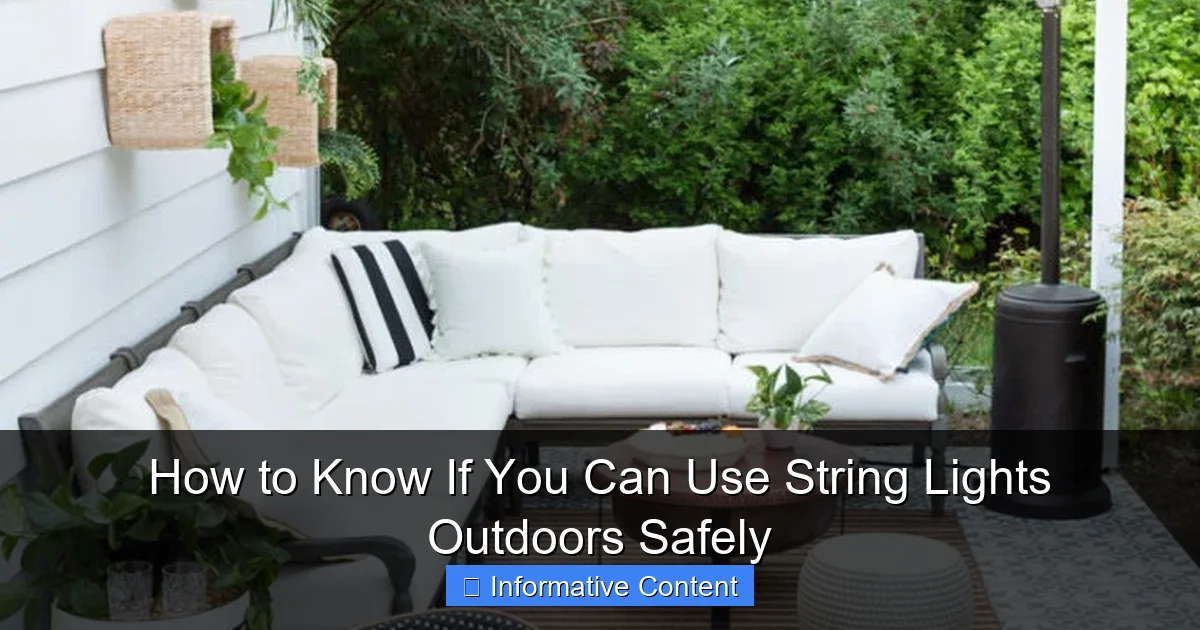
Visual guide about how to know if you can use string lights outdoors
Image source: homestoriesatoz.com
What Is an IP Rating?
An IP rating is a two-digit code (like IP44 or IP65) printed on the packaging or in the product manual. The first digit (0–6) measures protection against solid objects like dust and fingers. The second digit (0–9) measures protection against liquids, especially water.
- First digit: 6 means fully dust-tight. 4 means protected against solid objects larger than 1mm (like wires or small tools).
- Second digit: 4 means protected against splashes from any direction. 5 means protected against low-pressure water jets. 6 means protected against powerful jets. 7 and 8 indicate immersion in water (rare for string lights).
For outdoor string lights, you generally want an IP44 or higher. This means they can handle rain, windblown dust, and occasional splashes. If your lights have an IP65 rating, even better—they’re built for harsher conditions.
Real-World Example: A Rainy Night Test
Let’s say you’re in Seattle, where drizzle is practically a lifestyle. You buy string lights labeled IP44 and hang them under a covered porch. One rainy evening, a gust of wind blows water sideways onto the lights. Thanks to the IP44 rating, the lights continue working safely. But if those same lights had an IP20 (indoor-only) rating, the moisture could seep into the sockets, causing short circuits or even sparks. That’s the difference between safe and risky.
Pro tip: Don’t just trust the product name. Look for the actual IP rating. A label that says “weather-resistant” isn’t enough—it’s marketing fluff unless backed by a real IP number.
Look for the UL or ETL Mark: Safety Certification Matters
Beyond the IP rating, the next thing to check is safety certification. This is your peace-of-mind seal. It means an independent lab tested the lights to meet strict electrical and fire safety standards.
What Do UL and ETL Mean?
UL (Underwriters Laboratories) and ETL (Intertek Testing Services) are two of the most trusted safety certification organizations in North America. If your string lights have a UL Listed or ETL Listed mark, it means they’ve passed rigorous tests for:
- Overheating
- Electrical insulation
- Water resistance (if rated for outdoor use)
- Durability under stress (like being pulled or bent)
These marks are usually printed on the plug, the cord, or the packaging. They’re not always flashy, but they’re essential. For example, a UL mark might look like a tiny “UL” in a circle, often with “Listed” underneath.
Why Certification Isn’t Optional for Outdoor Use
Imagine you’re hosting a backyard BBQ. Kids are running around, someone spills a drink, and suddenly water touches the lights. If the lights are UL or ETL certified, the internal wiring and insulation are designed to prevent sparks or shocks—even if wet. But if they’re uncertified, you’re rolling the dice. Cheap, uncertified lights might work fine at first, but over time, exposure to moisture and temperature changes can degrade insulation, leading to dangerous failures.
One homeowner in Florida learned this the hard way. They used uncertified “outdoor-style” lights for a year. During a thunderstorm, the lights sparked and melted part of the cord. The fire department confirmed the lights lacked proper insulation and certification. A small oversight led to a big scare.
Bottom line: Always look for UL or ETL when buying lights for outdoor use. It’s not just a sticker—it’s a safety promise.
Know the Difference: Indoor vs. Outdoor String Lights
Here’s a common mistake: buying “outdoor-looking” lights and assuming they’re safe for outside. Just because lights have bulbs that look like they belong in a garden doesn’t mean they’re built for it. Let’s break down the key differences between indoor and outdoor string lights.
Materials and Build Quality
Outdoor lights are made with:
- Thicker, UV-resistant plastic or rubber cords (to resist sun damage and cracking)
- Sealed sockets (to keep water and insects out)
- Weatherproof bulbs (often LED, which generate less heat and last longer)
- Corrosion-resistant wiring (to handle humidity and temperature swings)
Indoor lights, on the other hand, often have:
- Thin, brittle cords that crack in cold or sun
- Open sockets that collect moisture and debris
- Incandescent bulbs that overheat and aren’t efficient outdoors
- No UV protection, so they yellow or degrade in sunlight
Plug and Power Source
Outdoor-rated lights often have grounded plugs (three prongs) and may include a built-in fuse or surge protector. Some even have a weatherproof cover for the connection point between lights and extension cords. Indoor lights usually have two-prong plugs and no protection for connections.
Example: You buy a set of “vintage-style” Edison bulbs. They look perfect for your pergola. But the plug is two-prong, the cord is thin vinyl, and the sockets aren’t sealed. That’s a red flag. Even if the package says “for patios,” if it lacks an outdoor rating, it’s not safe for prolonged outdoor use.
Labeling Tricks to Watch For
Manufacturers sometimes use vague terms like:
- “Weather-resistant” (no IP rating)
- “For covered porches” (not fully outdoor)
- “Indoor/Outdoor” (but only if used temporarily)
Don’t rely on these phrases. Always check for:
- An IP rating of IP44 or higher
- UL or ETL certification
- Clear labeling like “For Outdoor Use” or “Rated for Wet Locations”
Assess Your Installation: Location, Exposure, and Setup
Even if your lights are rated for outdoor use, where and how you install them can make or break their safety and longevity. A few smart choices can turn a risky setup into a worry-free one.
Direct vs. Indirect Exposure
Not all outdoor spots are equal. Consider:
- Direct exposure: Lights hanging in an open yard, fully exposed to sun, rain, and wind. Here, you need IP65 or higher, UV-resistant cords, and strong mounting hardware.
- Indirect exposure: Lights under a covered porch, pergola, or awning. IP44 is usually enough, but still avoid placing lights where water can pool (like near downspouts).
- Semi-protected: Lights near windows or under eaves. These get less direct rain but still need outdoor-rated protection.
Mounting and Hanging Tips
How you hang the lights matters as much as the lights themselves:
- Use outdoor-rated clips or hooks (not nails or tape, which can damage cords or create fire hazards).
- Avoid overstretching the cord. If it’s taut, it can pull on sockets or create weak points. Leave a little slack—like a gentle “S” shape between mounts.
- Keep lights away from pools, sprinklers, or water features. Even IP65 lights aren’t meant to be submerged.
- Use a drip loop near the plug: let the cord hang down before connecting to the outlet. This prevents water from running along the cord into the plug.
Power Source Safety
Never plug outdoor string lights into an indoor outlet without a proper connection. Use:
- Outdoor-rated GFCI (Ground Fault Circuit Interrupter) outlets—they cut power if they detect a leak, preventing shocks.
- Weatherproof outlet covers to protect the connection from rain.
- Heavy-duty outdoor extension cords (rated for at least 13 amps and labeled “for outdoor use”).
One homeowner in Colorado learned this when they used an indoor extension cord outside. During a snowstorm, the cord shorted and tripped the breaker. The lights were fine, but the cord was damaged. Switching to an outdoor-rated cord fixed the issue.
LED vs. Incandescent: Which Is Better for Outdoors?
When it comes to outdoor string lights, LED is almost always the better choice. Here’s why—and when incandescent might still work (with caveats).
Why LED Wins for Outdoor Use
LED string lights offer:
- Lower heat output—they don’t get hot, so they’re safer around plants, fabrics, and kids.
- Energy efficiency—use up to 80% less power than incandescent. Great for long-term use.
- Longer lifespan—often 25,000 to 50,000 hours. That’s years of evenings under the stars.
- Better durability—LEDs are sealed in epoxy, so they’re more shock- and moisture-resistant.
- Weather resistance—most LED outdoor lights are built with IP44 or higher ratings.
When Incandescent Might Work (With Caution)
Incandescent string lights are cheaper and give a warm, nostalgic glow. But they come with risks:
- High heat—bulbs can reach 200°F (93°C), a fire risk near flammable materials.
- Fragile filaments—break easily in wind or cold.
- Shorter lifespan—often 1,000 to 3,000 hours. You’ll be replacing bulbs every season.
- Energy waste—they use more power and generate more heat, which can degrade sockets faster.
That said, incandescent lights can be used outdoors if:
- They’re clearly labeled “for outdoor use” with IP44+ and UL/ETL certification.
- They’re installed in a covered area (like a fully enclosed porch).
- They’re not left on for long periods (to reduce heat buildup).
Real-World Trade-Off
One couple in California wanted the classic incandescent “twinkle” for their wedding reception. They used certified outdoor-rated incandescent lights under a covered tent. The lights worked perfectly—but the next morning, several bulbs had cracked from overnight condensation. They switched to LED for future events. The glow was slightly different, but the reliability was worth it.
Data Table: Quick Reference Guide for Outdoor String Lights
| Feature | Outdoor-Safe Lights | Indoor-Only Lights | What to Look For |
|---|---|---|---|
| IP Rating | IP44 or higher (e.g., IP44, IP65, IP67) | IP20 or no rating | Must be clearly labeled on packaging |
| Safety Certification | UL Listed or ETL Listed mark | No certification or “CE” (not for US use) | Check plug, cord, or manual |
| Cord Material | Thick rubber or UV-resistant plastic | Thin vinyl or PVC | Rubber feels more flexible and durable |
| Bulb Type | LED (preferred), or outdoor-rated incandescent | Standard incandescent or unrated LED | LED: cooler, longer-lasting |
| Plug Type | Grounded (3-prong), often with fuse | Two-prong, no fuse | 3-prong = safer for outdoor use |
| Labeling | “For Outdoor Use,” “Rated for Wet Locations” | “Indoor Use Only,” “Decorative” | Ignore vague terms like “weather-resistant” |
Use this table as a checklist when shopping. Print it or save it on your phone—it’ll help you make quick, confident decisions at the store or online.
Final Thoughts: Safety First, Beauty Second
Outdoor string lights can transform your space into something magical. But that magic shouldn’t come at the cost of safety. By checking the IP rating, looking for UL or ETL certification, understanding the differences between indoor and outdoor lights, installing them wisely, and choosing LED over incandescent, you can enjoy beautiful, safe lighting all year round.
Remember: a few extra minutes of research before buying can save you from flickering lights, fire hazards, or costly repairs. And when in doubt, go with the safer option. Your backyard—and your peace of mind—are worth it.
So next time you’re standing under those twinkling lights, sipping a drink, and feeling the breeze, you can relax knowing your setup is as safe as it is stunning. That’s the real glow: confidence. Now go light up your world—safely.
Frequently Asked Questions
How can I tell if my string lights are safe for outdoor use?
Check the product packaging or label for an “outdoor-rated” or “IP44” (or higher) waterproof rating. If it’s not clearly marked, assume the lights are for indoor use only.
What does an outdoor-rated string light mean?
Outdoor-rated string lights are designed with weather-resistant materials and seals to protect against rain, UV rays, and temperature changes. These features ensure safe use in exposed environments.
Can I use indoor string lights outside temporarily?
No, even short-term exposure to moisture or humidity can damage indoor lights and create fire hazards. Always use lights specifically rated for outdoor use when placing them outside.
How to know if you can use string lights outdoors without a label?
If the label is missing, examine the plug and cord—outdoor versions often have thicker insulation and a polarized plug. When in doubt, contact the manufacturer to confirm outdoor suitability.
Are LED string lights safer for outdoor use?
Yes, LED string lights generate less heat and consume less power, reducing fire risks. However, they must still be certified for outdoor use to withstand weather conditions.
Do outdoor string lights need a special outlet?
Outdoor string lights should be plugged into a GFCI (Ground Fault Circuit Interrupter) outlet, which shuts off power during electrical faults to prevent shocks and damage.