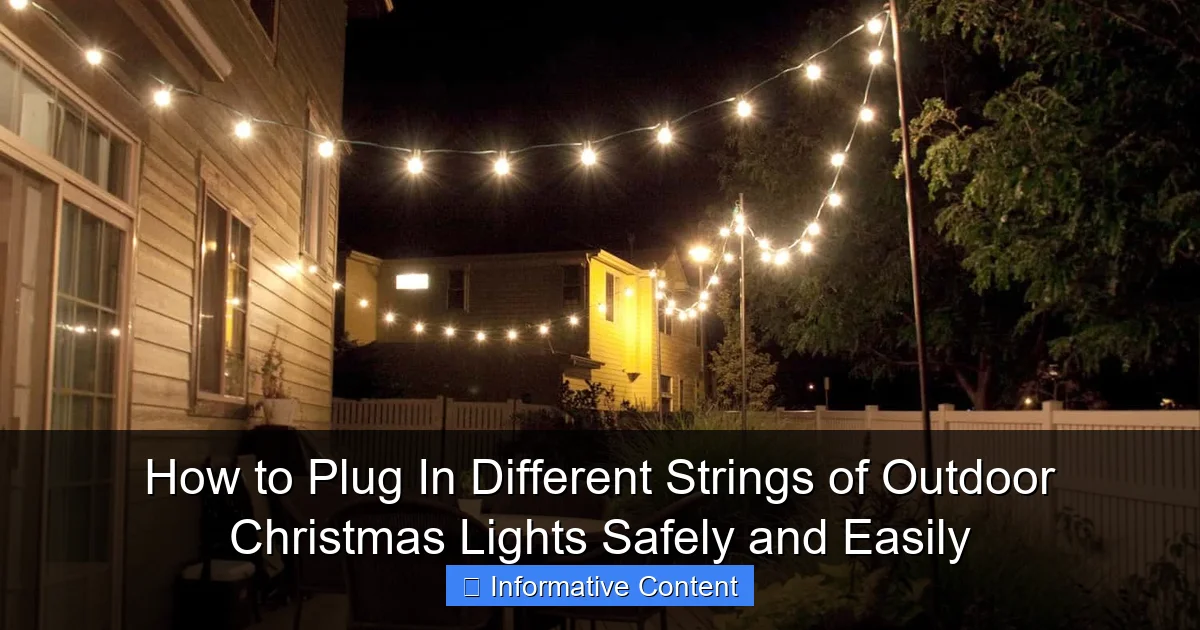
Featured image for how to plug in different strings of outdoor christmas lights
Image source: wehangchristmaslights.com
Always use outdoor-rated extension cords and GFCI outlets to safely power multiple strings of Christmas lights. Connect lights in series—end-to-end or via a central hub—while staying within the manufacturer’s recommended wattage and string limits to prevent overheating and electrical hazards. For easy, tangle-free setup, plan your layout and use timers or smart plugs to automate lighting schedules.
Key Takeaways
- Check wattage limits: Never exceed your circuit’s capacity to prevent overheating.
- Use outdoor-rated extension cords: Ensure cords are weatherproof and UL-listed for safety.
- Inspect lights before plugging: Look for frayed wires or broken sockets to avoid hazards.
- Plug into GFCI outlets: Use ground fault circuit interrupters for outdoor electrical safety.
- Limit daisy-chaining: Connect no more than 3 light strands unless specified by the manufacturer.
- Secure connections with covers: Use waterproof covers to protect plugs from moisture and damage.
📑 Table of Contents
- How to Plug In Different Strings of Outdoor Christmas Lights Safely and Easily
- Understanding Your Christmas Light Types and Power Needs
- Choosing the Right Extension Cords and Power Strips
- Connecting Multiple Strings of Lights Safely
- Managing Power Distribution and Circuit Load
- Weatherproofing and Safety Best Practices
- Data Table: Recommended Cords and Connectors by Use Case
- Final Thoughts: Light Up Safely and Joyfully
How to Plug In Different Strings of Outdoor Christmas Lights Safely and Easily
Every winter, as the days grow shorter and the air turns crisp, I find myself standing in my driveway, string of Christmas lights in one hand and a tangled mess of extension cords in the other. It’s a familiar scene for many of us—trying to figure out how to plug in different strings of outdoor Christmas lights without tripping a breaker, creating a fire hazard, or spending half the night untangling wires. But here’s the good news: with a little planning and the right tools, you can light up your home safely, efficiently, and with minimal stress.
Whether you’re decking the halls with classic white icicles, colorful LED strands, or animated light projectors, the way you plug in and connect your outdoor lights matters. Done wrong, you risk overloaded circuits, damaged fixtures, or even safety hazards. Done right, your holiday display can shine brightly all season long. In this guide, I’ll walk you through the ins and outs of plugging in different types of outdoor Christmas lights—from understanding power needs to choosing the right extension cords and avoiding common mistakes. Think of it as a friendly chat over hot cocoa, where I share what’s worked for me (and what hasn’t).
Understanding Your Christmas Light Types and Power Needs
Before you even reach for a plug, it’s essential to know what kind of lights you’re working with. Not all Christmas lights are created equal, and each type has its own power demands and connection quirks. Understanding these differences will help you avoid overloading circuits and ensure your display runs smoothly.
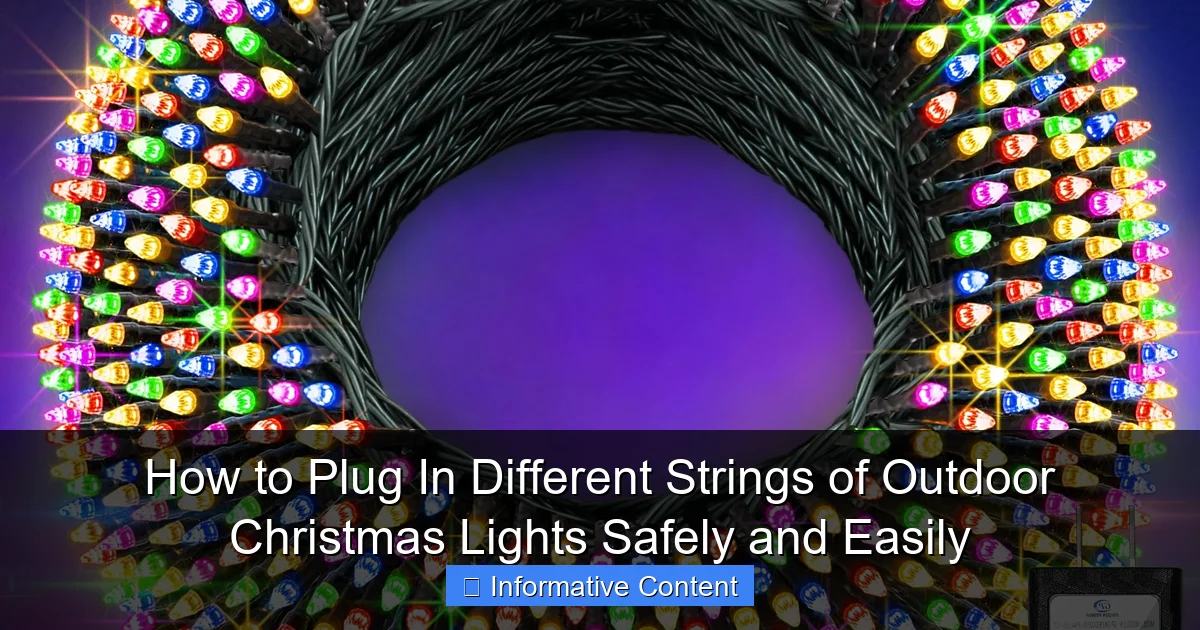
Visual guide about how to plug in different strings of outdoor christmas lights
Image source: images-na.ssl-images-amazon.com
Incandescent vs. LED Lights: The Power Difference
Let’s start with the basics. Incandescent lights use traditional bulbs that heat a filament to produce light. They’re the classic, warm-glowing strands many of us grew up with. But they’re also power-hungry—typically using 5 to 10 watts per bulb. That means a 100-bulb strand could consume 500 to 1,000 watts. If you’re running multiple strands, that adds up fast.
LED lights, on the other hand, are far more energy-efficient. A 100-bulb LED strand might use only 5 to 15 watts total—yes, total. That’s a huge difference. LEDs run cooler, last longer, and are much safer for outdoor use. They’re also more durable in cold weather and less likely to blow a fuse. If you’re still using incandescents, consider upgrading—especially if you have a large display.
Plug-in vs. Battery-Powered vs. Solar Options
Most outdoor lights are plug-in, meaning they need access to an electrical outlet. But you might also have battery-powered mini lights for wreaths or garlands, or solar-powered spotlights or path markers. These don’t need to be plugged in, which is great for hard-to-reach spots. However, solar lights need direct sunlight during the day to charge, and battery-powered ones require regular replacements (or rechargeable batteries).
For your main display, plug-in lights are usually the best choice—but only if you plan your power sources wisely. A good rule of thumb: LEDs are ideal for long runs; incandescents should be limited to short, decorative accents.
Check the Label: Voltage, Wattage, and Amperage
Every light strand comes with a label or tag that lists key specs: voltage (usually 120V for North America), wattage (total power draw), and amperage (current). These numbers are your roadmap to safe plugging. For example, a strand rated at 40.8 watts draws about 0.34 amps (since watts ÷ volts = amps). Most household circuits are 15 or 20 amps, so you can calculate how many strands you can safely plug in before tripping a breaker.
Pro tip: Add up the total amps of all connected lights. If you’re close to 15 amps (or 80% of a 20-amp circuit), consider using a separate outlet or circuit.
Choosing the Right Extension Cords and Power Strips
Now that you know your lights’ power needs, it’s time to talk about the tools that deliver electricity to them: extension cords and power strips. Using the wrong ones is one of the most common causes of holiday light mishaps—from melted plugs to blown breakers.
Outdoor-Rated Extension Cords: What to Look For
Never use indoor extension cords outside. They’re not waterproof, lack proper insulation, and can become brittle in cold weather. Instead, look for outdoor-rated extension cords labeled “SJTW” or “SJTOW.” These are designed for outdoor use, with weather-resistant jackets and grounded (three-prong) plugs.
Pay attention to gauge (thickness). The lower the gauge number, the thicker the wire and the more power it can carry. For Christmas lights:
- 16-gauge: Good for short runs (up to 25 feet) and LED lights
- 14-gauge: Better for longer runs or incandescent strands
- 12-gauge: Best for high-wattage setups or multiple strands in series
For example, I use a 14-gauge, 25-foot outdoor cord for my roofline lights. It handles the distance and the mix of LED and incandescent strands without overheating.
Using Outdoor Power Strips and Timers
An outdoor power strip (also called a surge protector) is a game-changer. It gives you multiple outlets in one weatherproof box, so you can plug in several light strands without running multiple cords to different outlets. Look for one with:
- Weatherproof cover
- Ground fault circuit interrupter (GFCI) protection
- At least 4–6 outlets
Even better: pair it with a timer. A simple mechanical or digital timer lets you set your lights to turn on at dusk and off at bedtime. No more remembering to flip the switch—and no wasted energy. I use a digital timer with a photocell (light sensor) that automatically turns on at sunset. It’s been a lifesaver on cloudy days.
Avoiding Cord Overload and Daisy-Chaining
One mistake I made early on was daisy-chaining extension cords—plugging one into another. This increases resistance, reduces voltage, and can cause overheating. Instead, use a single long cord or a power strip with built-in outlets.
Also, don’t overload a single outlet. Most outlets are rated for 15 amps, but it’s safest to stay under 12 amps (80% rule). If you need more outlets, run a second cord to a different circuit or use a splitter box (a weatherproof hub that connects to one outlet but provides multiple outputs).
Connecting Multiple Strings of Lights Safely
Once you’ve got the right cords, the next step is connecting your light strands. This is where many people run into trouble—especially with older incandescent sets or mismatched types.
Using End-to-End Connectors (Series vs. Parallel)
Many light strands have end-to-end connectors, allowing you to plug one strand into the next. But there’s a catch: not all strands are designed to be connected. Check the label—most LED sets say “connect up to 25 sets,” while incandescents may only allow 2–3.
Why the difference? LEDs draw so little power that you can safely link many together. Incandescents, with their higher wattage, can overload the circuit if too many are connected. For example, my 100-bulb LED icicle lights say “connect up to 30 sets.” I’ve safely connected 20 across my eaves with no issues. But my old incandescent garland only allows 2—any more, and the fuse blows.
Using Multi-String Connectors and Splitters
If you need to run lights in multiple directions (e.g., roofline, trees, and porch), use a multi-string connector or Y-splitter. These devices take one power source and split it into two or three outputs. They’re perfect for creating a starburst effect or covering different areas from one outlet.
Just make sure the connector is outdoor-rated and matches your cord gauge. I use a 3-way splitter to power my roof lights, front yard trees, and porch railing—all from one outlet. It keeps everything organized and reduces cord clutter.
Mixing Light Types: What Works and What Doesn’t
Can you mix LED and incandescent strands on the same circuit? Technically yes, but it’s not ideal. LEDs have a constant voltage draw, while incandescents can cause voltage drops when they heat up. This can lead to flickering or inconsistent brightness.
If you must mix them, keep incandescents to a minimum and use a dedicated circuit or separate power strip. Better yet, replace older incandescents with LEDs—you’ll save energy and reduce risk.
Managing Power Distribution and Circuit Load
Even with the right cords and connectors, you can still overload your home’s electrical system. The key is managing how much power you’re drawing from each circuit.
Calculating Total Load: Amps and Watts
To avoid tripping a breaker, calculate the total load on each circuit. Here’s how:
- Find the wattage of each light strand (usually on the label)
- Divide by 120 (standard voltage) to get amps: Watts ÷ 120 = Amps
- Add up the amps for all strands on the same circuit
- Stay under 12 amps for a 15-amp circuit (80% rule)
For example, if you have:
- 5 LED strands: 10 watts each → 0.083 amps each → 0.415 amps total
- 2 incandescent strands: 400 watts each → 3.33 amps each → 6.66 amps total
Total: 7.075 amps—safe for one circuit. But add one more incandescent, and you’re over 10 amps. Risky.
Using Separate Circuits for High-Load Areas
If your display includes high-wattage items (like light projectors, inflatables, or large incandescent sets), consider using separate circuits. For example, plug roof lights into one outlet (Circuit A), and lawn inflatables into another (Circuit B). This spreads the load and reduces the chance of a breaker trip.
You can also use a dedicated outdoor outlet. If your home has one, great! If not, you might want to install one (hire an electrician for safety). I added a GFCI outlet near my garage last year, and it’s been a game-changer.
Monitoring with a Circuit Tester or Smart Plug
For extra peace of mind, use a circuit tester or smart plug. A tester plugs into an outlet and shows if the wiring is correct. A smart plug (like a TP-Link Kasa) lets you monitor power usage via an app and even turn lights on/off remotely. I use one to check if my lights are drawing too much power—no more midnight breaker trips.
Weatherproofing and Safety Best Practices
Outdoor lights face rain, snow, wind, and temperature swings. Without proper protection, even the best setup can fail—or worse, become a safety hazard.
Sealing Connections with Weatherproof Covers
Every plug connection is a potential entry point for moisture. Use weatherproof covers (also called cord protectors) to seal joints. These rubber or plastic sleeves slide over the plug and create a watertight seal. I use them on every outdoor connection, even under eaves.
For extra protection, wrap connections with electrical tape or use self-sealing tape (like Rescue Tape). It’s flexible, waterproof, and easy to remove in spring.
Elevating Cords and Avoiding Tripping Hazards
Never run cords across walkways or driveways where they can be tripped over or run over. Use cord covers (plastic channels) or run cords along fences or gutters. I clip my cords to the roofline with plastic hooks to keep them off the ground.
If you must cross a path, use a ramp-style cord protector that people can walk over safely.
Regular Checks and Maintenance
Check your lights and cords weekly. Look for:
- Frayed or cracked insulation
- Loose plugs
- Overheating (warm cords or plugs)
- Flickering or dimming
Replace any damaged cords immediately. A frayed wire can cause a short or fire. I keep a spare set of cords and connectors in my garage—just in case.
Data Table: Recommended Cords and Connectors by Use Case
| Use Case | Recommended Cord Gauge | Max Distance | Recommended Connector | Notes |
|---|---|---|---|---|
| Short LED strand (25 ft) | 16-gauge | 25 ft | End-to-end or power strip | Safe for 1–2 LED sets |
| Long LED run (50 ft) | 14-gauge | 50 ft | Multi-string splitter | Use with timer |
| Incandescent strand (100 bulbs) | 12-gauge | 25 ft | Dedicated outlet | Limit to 2–3 strands |
| Multiple directions (trees, roof, porch) | 14-gauge | 30 ft | 3-way splitter + power strip | Use weatherproof covers |
| High-wattage (projectors, inflatables) | 12-gauge | 20 ft | Smart plug + GFCI outlet | Use separate circuit |
Final Thoughts: Light Up Safely and Joyfully
Decorating your home for the holidays should be fun, not stressful. By understanding your light types, choosing the right cords and connectors, managing power loads, and weatherproofing your setup, you can create a dazzling display that’s as safe as it is beautiful.
Remember: how to plug in different strings of outdoor Christmas lights isn’t just about making them work—it’s about doing it in a way that protects your home, your family, and your peace of mind. Start with LEDs when possible, use outdoor-rated gear, avoid overloading circuits, and always seal your connections.
And don’t forget the little things—like a timer to save energy, a smart plug to monitor usage, and a few extra cords on hand for emergencies. After all, the best holiday light display is one that shines brightly, safely, and brings joy all season long.
Now grab that cocoa, plug in those lights, and enjoy the glow. You’ve got this.
Frequently Asked Questions
How do I safely connect multiple outdoor Christmas lights without overloading circuits?
To safely connect multiple strings of outdoor Christmas lights, use a GFCI outlet and ensure the total wattage doesn’t exceed 80% of the circuit’s capacity (typically 1,440 watts for a 15-amp circuit). Plug in lights closest to the power source first, then work outward.
Can I plug different types of outdoor Christmas lights (LED and incandescent) into the same string?
It’s not recommended to mix LED and incandescent lights on the same string, as their power requirements differ. However, you can run separate strings on the same circuit, provided the total load stays within safe limits. Always check manufacturer guidelines.
How do I plug in outdoor Christmas lights when there’s no nearby outlet?
Use outdoor-rated extension cords or a heavy-duty extension reel to reach distant outlets. Ensure the cord’s gauge matches the load (16-gauge for short runs, 14- or 12-gauge for longer distances or high-wattage lights).
What’s the best way to plug in outdoor Christmas lights on a timer?
Use an outdoor-rated timer with a built-in photocell or programmable settings. Plug the timer into the outlet first, then connect your outdoor Christmas lights to the timer to automate on/off schedules and reduce energy waste.
How can I avoid tangled cords when plugging in multiple strings of lights?
Use zip ties or cord clips to secure connections between light strings, and route cords along fences or edges to keep them organized. Always unplug and unwind lights before connecting new segments to prevent tangles.
Is it safe to daisy-chain outdoor Christmas lights?
Daisy-chaining is safe if you follow the manufacturer’s maximum string limit (usually 3–5 for incandescent, more for LED). Overloading connections can cause overheating, so always check the packaging and use in-line fuses for added protection.