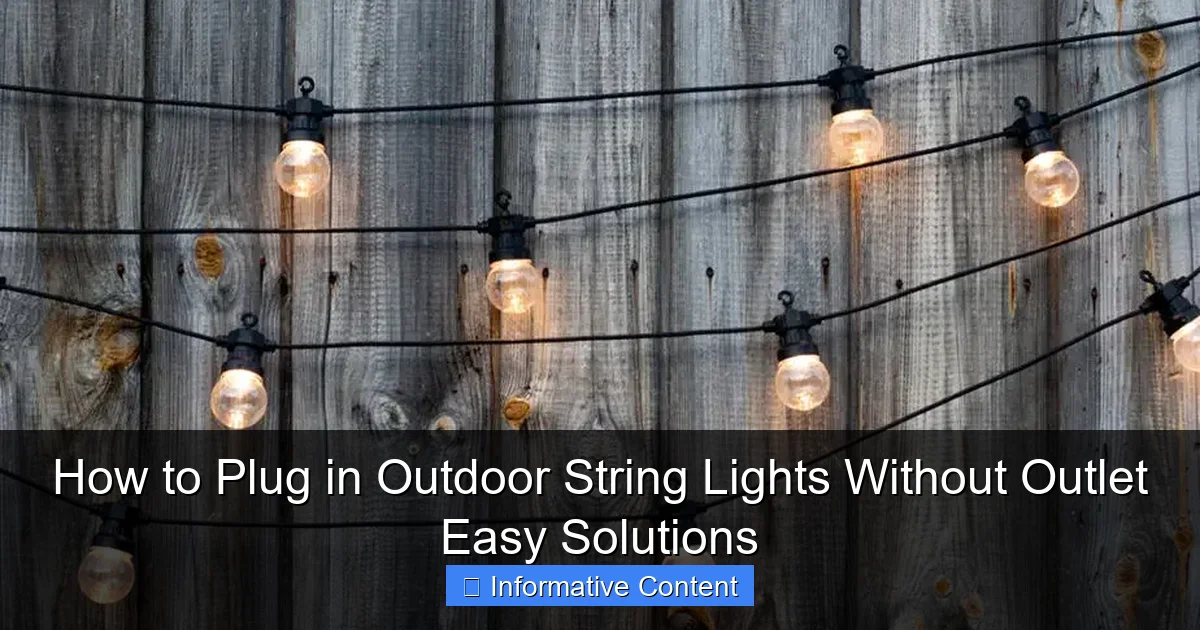
Featured image for how to plug in outdoor string lights without outlet
Image source: owntheyard.com
No outdoor outlet? No problem—solar-powered string lights and battery-operated options let you illuminate your space without any electrical hookup. For a reliable setup, consider using an indoor outlet with a weatherproof extension cord cover or a low-voltage transformer to safely power your lights from inside. These easy, code-compliant solutions ensure your outdoor ambiance stays bright, safe, and hassle-free all season long.
Key Takeaways
- Use solar-powered lights: Harness sunlight for energy with no wiring needed.
- Try battery-operated strings: Ideal for temporary setups with easy portability.
- Install an outdoor-rated extension cord: Safely extend power from indoor outlets.
- Opt for low-voltage LED systems: Reduce power needs and increase safety.
- Use a power bank with USB lights: Convenient for small, flexible lighting setups.
- Position lights near garage outlets: Maximize existing access without overloading circuits.
📑 Table of Contents
- How to Plug in Outdoor String Lights Without Outlet: Easy Solutions
- 1. Use Solar-Powered String Lights: The Eco-Friendly Choice
- 2. Battery-Powered String Lights: Portable and Flexible
- 3. Use a Portable Power Station (Power Bank on Steroids)
- 4. Use Extension Cords (Safely and Discreetly)
- 5. Install a Weatherproof Outdoor Outlet (Permanent Solution)
- 6. Creative Alternatives and Hacks
- Final Thoughts: Light Up Your Space Your Way
How to Plug in Outdoor String Lights Without Outlet: Easy Solutions
Imagine this: you’ve planned the perfect evening—soft music, good food, and a warm atmosphere under the stars. You’ve strung up your favorite outdoor string lights, ready to set the mood. But when it’s time to turn them on… nothing. No power. No outlet. Just a string of unlit bulbs mocking your dreamy vision.
We’ve all been there. Outdoor string lights are a simple way to add charm and warmth to your patio, garden, or balcony. But without an outdoor electrical outlet, many people assume their lighting dreams are over. The good news? You absolutely can plug in outdoor string lights without an outlet nearby. With a few clever, safe, and affordable solutions, you can light up your outdoor space just as you imagined—no electrician required.
1. Use Solar-Powered String Lights: The Eco-Friendly Choice
Solar-powered string lights have come a long way in the last few years. Once dim and unreliable, today’s models are bright, durable, and perfect for ambient lighting. They’re also the easiest way to light up your yard without an outlet.
Visual guide about how to plug in outdoor string lights without outlet
Image source: housebrighten.com
How Solar String Lights Work
These lights come with a small solar panel (usually attached to a stake) that collects sunlight during the day. The energy is stored in a rechargeable battery (often NiMH or lithium-ion), which powers the LEDs at night. Most kits include an on/off switch and a timer, so you don’t have to worry about leaving them on all night.
Example: I used solar string lights for my backyard wedding. We placed the solar panel in a sunny spot behind a bush—out of sight but still getting 6+ hours of direct sun. The lights turned on automatically at dusk and stayed lit for 8 hours. No wires, no outlets, no hassle.
Pros and Cons of Solar Lights
- Pros:
- Zero electricity cost
- No extension cords or outlets needed
- Easy to install and move
- Environmentally friendly
- Many come with remote controls or motion sensors
- Cons:
- Performance depends on sunlight (cloudy days = dimmer lights)
- Battery lifespan is 1–3 years (but easily replaceable)
- Not ideal for very bright or long-term lighting
- Some cheaper models have short lifespans
Tips for Best Performance
- Place the solar panel in full sun for at least 6–8 hours daily. Even a small shadow can reduce charging.
- Clean the panel monthly with a damp cloth to remove dust and pollen.
- Choose warm white LEDs for a cozy, inviting glow (cool white feels more clinical).
- Look for IP65 or higher waterproof ratings—this ensures they can handle rain and snow.
- Buy extra batteries—they’re inexpensive and extend the life of your lights.
Pro tip: If you live in a region with long, dark winters, consider solar lights with a “low-light” mode or ones that store more energy. Some even have a USB charging backup!
2. Battery-Powered String Lights: Portable and Flexible
If solar isn’t an option—maybe you’re in a shaded yard or want lights for a one-time event—battery-powered string lights are your next best bet. These are incredibly versatile and come in many styles, from vintage Edison bulbs to fairy lights.
Types of Battery-Powered Lights
- AA/AAA battery packs: Common, affordable, and easy to replace. Great for short-term use or small spaces.
- Rechargeable lithium battery packs: More expensive upfront but cost-effective long-term. Often come with USB charging.
- Built-in batteries: Found in higher-end models. Charge via USB or wall adapter. Last longer but harder to replace.
Example: I used a set of USB-rechargeable fairy lights for a birthday party in my treehouse. The battery lasted 10 hours—more than enough for the event. Afterward, I just plugged it into my laptop to recharge.
How Long Do Batteries Last?
This depends on the battery type and brightness setting. Here’s a rough estimate:
| Battery Type | Brightness Level | Estimated Runtime | Best For |
|---|---|---|---|
| 3x AA (alkaline) | High | 4–6 hours | Short events, small areas |
| 3x AA (rechargeable) | Medium | 8–10 hours | Backyard, patio, camping |
| Built-in lithium (USB) | High | 12–16 hours | All-night use, frequent events |
| Built-in lithium (USB) | Low (timer) | 20+ hours | Overnight ambiance |
Installation Tips
- Use waterproof battery boxes—especially if placing near the ground or in damp areas.
- Hide the battery pack in a planter, behind a rock, or under a decorative cover.
- Use a timer or remote control to save battery and avoid manual on/off.
- Carry a spare battery pack for long events.
Note: Avoid leaving batteries in extreme heat or cold. It shortens their lifespan and can cause leaks.
3. Use a Portable Power Station (Power Bank on Steroids)
Think of a portable power station as a giant power bank for your home. It’s not just for camping—it’s perfect for outdoor lighting, especially if you want plug-in string lights without an outlet.
What Is a Portable Power Station?
It’s a rechargeable battery unit with AC outlets, USB ports, and sometimes even DC inputs. You charge it indoors (via wall outlet or solar panel), then carry it outside to power your lights, speakers, or even a mini-fridge.
Example: I used a 200W power station to run 50 feet of plug-in string lights for a backyard movie night. The station lasted 6 hours—plenty for the film and cleanup. The next day, I recharged it while making coffee.
Choosing the Right Power Station
Not all power stations are equal. Consider:
- Wattage: Check your string lights’ wattage. Most are under 50W, but some (like LED clusters) can be 100W+.
- Capacity (Wh): Higher Wh = longer runtime. A 100Wh station runs a 10W light for ~10 hours.
- Portability: Look for handles, wheels, or lightweight models (under 15 lbs).
- Charging options: Can it charge via solar, car outlet, or wall? This adds flexibility.
- Outlets: Make sure it has at least one AC outlet and one USB-C for charging phones.
Pros and Cons
- Pros:
- Powers any plug-in light (not just LEDs)
- Rechargeable and reusable
- Silent operation (no generator noise)
- Can power other devices (speakers, projectors)
- Cons:
- Higher upfront cost ($100–$300)
- Heavier than battery packs
- Takes 4–8 hours to recharge (unless solar)
Pro tip: Pair your power station with a solar panel for a truly off-grid setup. Some kits even have built-in solar charging!
4. Use Extension Cords (Safely and Discreetly)
Sometimes, the simplest solution is the best: run an extension cord from an indoor outlet to your outdoor lights. But safety is key—this method requires caution.
Choosing the Right Extension Cord
- Use outdoor-rated cords (look for “SJTW” or “SJTOW” on the label).
- Check the gauge: 16-gauge for short runs (<25 ft), 14-gauge for longer runs or multiple lights.
- Use a cord with a GFCI (Ground Fault Circuit Interrupter)—it cuts power if there’s a short, preventing shocks.
- Choose a waterproof, UV-resistant cord—it won’t crack in sunlight or rain.
Safe Installation Tips
- Never run cords under rugs, furniture, or doorways—this causes tripping and overheating.
- Use cord covers or bury the cord (if permitted by local codes). You can also run it along baseboards or under deck railings.
- Keep the plug indoors—never leave a plugged-in cord outside. Moisture can cause shorts.
- Use a timer to avoid leaving lights on all night.
- Inspect cords monthly for cracks, fraying, or damage.
Example: I ran a 50-foot outdoor-rated extension cord from my kitchen outlet to my backyard pergola. I used a cord cover to protect it from rain and foot traffic. The lights worked perfectly for a summer party—no one even noticed the cord!
When to Avoid Extension Cords
This method isn’t ideal for:
- Long-term installations (use permanent solutions instead)
- Areas with heavy foot traffic (tripping hazard)
- Regions with strict electrical codes (check with a local electrician)
5. Install a Weatherproof Outdoor Outlet (Permanent Solution)
If you plan to use outdoor lights regularly, consider installing a weatherproof outlet. It’s a one-time investment that gives you endless flexibility.
DIY vs. Professional Installation
- DIY: Only if you’re experienced with electrical work. You’ll need to:
- Run wiring from an indoor circuit
- Install a GFCI outlet
- Use conduit and weatherproof boxes
- Follow local building codes
- Professional: Hire a licensed electrician. It costs $200–$500 but ensures safety and code compliance.
Choosing the Right Outlet
- Use a GFCI outlet—it’s required by code for outdoor use.
- Get a weatherproof cover (in-use cover) that seals even with a cord plugged in.
- Place it in a dry, sheltered spot—under eaves, near doors, or on a post.
- Consider adding multiple outlets if you have several light zones.
Example: After years of using extension cords, I finally had an electrician install an outlet on my back porch. Now I can plug in my string lights, speakers, and even a string of Christmas lights—all without tripping over cords.
Benefits of a Permanent Outlet
- Unlimited power for any device
- No need to remember batteries or solar charging
- Clean, clutter-free look
- Adds value to your home
6. Creative Alternatives and Hacks
Sometimes, the best solutions aren’t in the manual. Here are a few creative, budget-friendly ideas to get your lights glowing—no outlet required.
Use Car Battery + Inverter (for emergencies)
Need lights for a one-time event? A car battery and a 12V-to-120V inverter can power your string lights for hours. Just make sure to:
- Use a deep-cycle battery (not your car starter battery)
- Keep the inverter in a dry, ventilated area
- Don’t run it for more than 4–6 hours to avoid draining the battery
Note: This is a short-term fix, not a permanent solution.
DIY Solar + Battery Hybrid
Combine solar and battery power for reliability. Use a solar panel to charge a power station or battery pack during the day, then run your lights at night. Some kits even have built-in solar charging.
Use LED Candles or Lanterns
Not all lighting needs to be string-based. LED pillar candles, flameless lanterns, or hanging mason jar lights create a similar cozy vibe—with zero wiring. I used these for a romantic dinner under the trees. The flickering glow was magical, and I didn’t need a single outlet.
String Lights with USB Plugs
Some modern string lights come with USB connectors. Plug them into a power bank, laptop, or even a USB outlet in your car. I’ve used these on camping trips and for small balconies.
Repurpose Indoor Lights (Carefully)
Some indoor string lights are labeled “indoor/outdoor.” If yours are, you can use them outside—but only if protected from rain and direct sun. Use a covered porch or pergola, and never leave them unattended in wet conditions.
Final Thoughts: Light Up Your Space Your Way
You don’t need an outdoor outlet to enjoy the magic of string lights. Whether you choose solar, battery-powered, portable power stations, extension cords, or a permanent outlet, there’s a solution that fits your space, budget, and lifestyle.
I’ve used every method on this list—sometimes all in one season! For everyday use, I rely on solar lights. For parties, I use a power station. And for the holidays, I plug into my outdoor outlet. The key is choosing the right tool for the job.
Remember: safety first. Water and electricity don’t mix, so always use weatherproof gear, check cords regularly, and follow manufacturer guidelines. And don’t be afraid to mix and match—combine solar lights with battery-powered lanterns for a layered, inviting look.
Now go ahead—string up those lights, invite your friends, and enjoy your beautifully lit outdoor space. The stars aren’t the only things shining tonight.
Frequently Asked Questions
How can I power outdoor string lights without an outlet?
Use solar-powered string lights or a portable power station with USB/DC outlets. Solar lights charge during the day and turn on automatically at night, while power stations offer flexible placement.
What are the easiest solutions to plug in outdoor string lights without outlet access?
Run an extension cord from an indoor outlet through a window or door, or install a weatherproof outdoor outlet (with professional help). Both methods provide reliable power for your lights.
Can I use batteries to power outdoor string lights?
Yes, battery-operated string lights with rechargeable or replaceable batteries are a convenient option. They’re portable but may require frequent battery changes for longer use.
Are there wireless outdoor string lights that don’t need an outlet?
Solar-powered and battery-operated string lights are truly wireless. Solar lights are ideal for sunny areas, while battery-powered ones work well in shaded spaces.
How do I hide extension cords when plugging in outdoor string lights?
Use cord covers, bury the cord in a shallow trench (with outdoor-rated cords), or run it along walls/fences with clips. Always ensure cords are rated for outdoor use.
Can I use a power bank to power outdoor string lights without an outlet?
Yes, if your lights are USB-powered, a high-capacity power bank can work. Check voltage requirements to ensure compatibility and avoid overloading the power bank.