Featured image for how to repair outdoor string lights
Image source: thumbs.dreamstime.com
Repairing outdoor string lights is easier than you think—start by unplugging and inspecting for visible damage like frayed wires or burnt-out bulbs. Replace faulty bulbs, use waterproof wire connectors for breaks, and test each section to ensure a safe, lasting glow. With basic tools and a little patience, you can restore your lights and extend their lifespan without costly replacements.
Key Takeaways
- Inspect bulbs first: Check for loose, burnt-out, or broken bulbs and replace them promptly.
- Test the strand: Use a plug-in tester or multimeter to identify electrical faults quickly.
- Secure connections: Tighten bulb sockets and seal wire joints to prevent moisture damage.
- Repair broken wires: Cut and splice damaged sections, then insulate with waterproof connectors.
- Protect from weather: Install lights under eaves or use outdoor-rated extension cords.
- Store properly off-season: Remove and coil lights loosely to avoid tangling and breakage.
📑 Table of Contents
- Why Outdoor String Lights Are More Than Just Decor
- Understanding Your Outdoor String Lights: The Basics
- Diagnosing the Problem: Step-by-Step Troubleshooting
- How to Repair Outdoor String Lights: Practical Fixes
- Preventing Future Damage: Maintenance and Care
- When to Repair vs. Replace: Making the Smart Choice
- Bringing the Glow Back: Final Thoughts
Why Outdoor String Lights Are More Than Just Decor
There’s something magical about stepping into a backyard lit by the soft, warm glow of outdoor string lights. Whether it’s a summer barbecue, a cozy evening on the porch, or a holiday gathering, these lights set the mood and make memories. I remember one summer when my family hosted an outdoor movie night. The kids were giggling, the popcorn was flowing, and the string lights—strung across the patio like stars—created the perfect ambiance. But then, one bulb flickered and died. Then another. By the end of the night, half the strand was dark. My heart sank. It felt like the magic had been stolen.
That night taught me something important: outdoor string lights are more than just decorations. They’re storytellers, mood-setters, and mood-boosters. And when they stop working, it’s not just an inconvenience—it’s a small emotional loss. The good news? Most issues with outdoor string lights are fixable. With a little know-how, patience, and the right tools, you can bring that glow back to life. In this guide, I’ll walk you through how to repair outdoor string lights step by step—no electrician required. Whether you’re dealing with a single dead bulb, a tangled mess, or a full strand failure, we’ve got you covered.
Understanding Your Outdoor String Lights: The Basics
Before you start fixing anything, it helps to know what you’re working with. Not all string lights are created equal, and understanding the type you have can save you time, frustration, and unnecessary replacements.
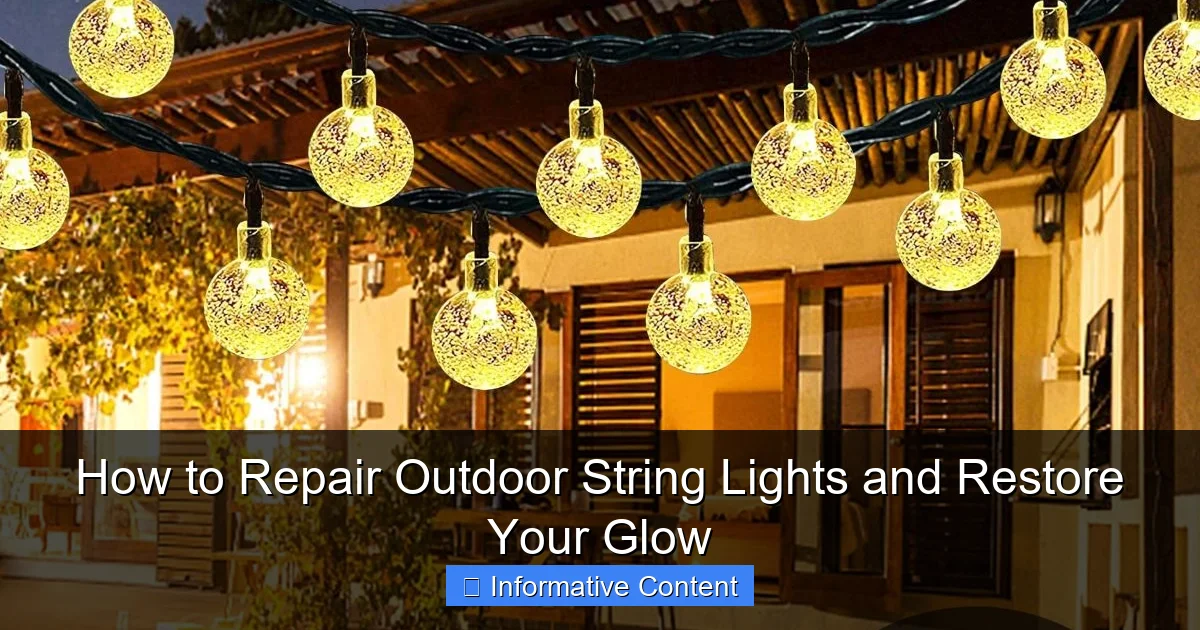
Visual guide about how to repair outdoor string lights
Image source: jardineriaon.com
Types of Outdoor String Lights
- Incandescent bulbs: The classic, warm-glow lights. They’re less energy-efficient and burn out faster, but many people love their nostalgic look. These often have replaceable bulbs.
- LED bulbs: Energy-efficient, long-lasting, and more durable. Most modern outdoor lights are LED, but they can’t always be replaced individually—some are soldered in.
- Plug-in vs. solar-powered: Plug-in lights draw power from an outlet, while solar lights charge during the day. Solar models may need battery or panel checks.
- Series vs. parallel wiring: Series-wired strands go dark if one bulb fails. Parallel-wired strands keep working even if a bulb burns out. Knowing this helps diagnose problems.
For example, my movie-night disaster happened because I had a series-wired incandescent strand. One bad bulb took out the whole section. I didn’t know that at the time—I just kept replacing bulbs, only to find the same issue. Once I learned the difference, I was able to troubleshoot smarter.
Common Components and Their Roles
- Bulbs: The light source. Can be screw-in, push-in, or soldered.
- Socket: Holds the bulb and connects it to the wiring.
- Wiring: Carries electricity from the plug to each bulb. Look for fraying, kinks, or exposed copper.
- Plug and fuse: The plug often has a small fuse inside. A blown fuse can kill the entire strand.
- Connectors: Some strands have male/female ends to connect multiple sets. These can corrode over time.
Tip: Take a photo of your light strand before unplugging it. This helps you remember how bulbs are oriented or if any were already loose.
Diagnosing the Problem: Step-by-Step Troubleshooting
Before you dive into repairs, you need to figure out what’s wrong. Jumping straight to bulb replacement or splicing wires without a diagnosis can lead to wasted time and effort. Here’s how to diagnose outdoor string light issues like a pro.
Step 1: Check the Obvious
Start simple. Is the strand plugged in? Is the outlet working? Try plugging in a phone charger or lamp to confirm. Sometimes, a tripped GFCI outlet (common in outdoor areas) is the culprit. Press the “Reset” button on the outlet. If it trips again, you may have a short circuit or moisture issue.
Also, check the plug’s fuse. Most outdoor plugs have a small fuse compartment. Use a small screwdriver to open it. If the fuse is blackened or broken, replace it with an identical one (usually 3–5 amps). This is one of the most overlooked fixes—and one of the easiest.
Step 2: Test Individual Bulbs and Sockets
Now, inspect each bulb. Look for:
- Blackened glass (sign of burnout)
- Filament break (in incandescent bulbs)
- Bulbs that are loose or wobbly
Use a bulb tester (available at hardware stores for under $10) to check if bulbs are functional. Or, swap a known-good bulb into each socket. If the working bulb doesn’t light, the socket or wiring is the issue.
For LED strands, some bulbs are soldered. In that case, skip testing individual bulbs and move to the next step.
Step 3: Identify Wiring and Connection Issues
Look for:
- Frayed or chewed wires (rodents love outdoor cords)
- Kinks or bends that may have broken internal wires
- Corroded connectors between strands
- Water damage (look for green crust or white powder on metal parts)
Wiggle the wire near each socket while the lights are on. If lights flicker, you’ve found a loose or broken wire. This is a common issue after winter or storms.
Step 4: Use a Multimeter (Optional but Helpful)
If you have a multimeter, you can test for continuity (electrical flow) in the wiring. Set it to the continuity or ohms setting. Touch one probe to the plug’s hot prong, the other to the socket’s metal contact. A beep means the circuit is complete. No beep? You’ve got a break.
This tool is especially useful for long strands or hard-to-reach areas. But don’t worry—if you don’t have one, you can still fix most issues with visual checks and trial-and-error.
Step 5: Rule Out Environmental Damage
Outdoor lights face sun, rain, snow, and wind. Over time, UV rays can crack plastic sockets, and moisture can corrode metal. If your lights have been up for years, consider:
- Are the sockets brittle or cracked?
- Is the plug housing discolored or melted?
- Do the bulbs look foggy or filled with condensation?
If yes, it might be time to replace the whole strand—or at least the damaged section.
How to Repair Outdoor String Lights: Practical Fixes
Now that you’ve diagnosed the problem, let’s fix it. Here are the most common repairs, from simple swaps to more advanced fixes.
Replacing a Single Bulb
This is the easiest fix—if your strand allows it. For screw-in bulbs, simply unscrew the bad one and replace it with an identical bulb (same wattage and voltage). For push-in bulbs, gently pull straight out. Some have a small tab—press it to release.
Pro tip: Always unplug the strand first. Even if the fuse is blown, it’s safer to assume the line is live.
If the new bulb doesn’t work, the socket might be damaged. Look inside for bent or broken metal contacts. Use a small flathead screwdriver to gently bend the contacts upward so they touch the bulb properly.
Fixing a Damaged Socket
If the socket is cracked or corroded, you can replace it. Here’s how:
- Cut the wire about 2 inches on either side of the socket.
- Strip the insulation from the wire ends (about 1/2 inch).
- Buy a replacement socket (match the bulb type and wire gauge).
- Connect the wires using wire nuts: twist the matching colors (usually black to black, white to white), then cap with a wire nut.
- Secure the connection with electrical tape for extra protection.
- Insert the bulb and test.
Note: If the socket is part of a soldered LED strand, skip this. You’ll need to solder the wires, which we’ll cover next.
Soldering Broken Wires (For Advanced DIYers)
If a wire is cut or broken, soldering is the most durable fix. You’ll need:
- Soldering iron
- Rosin-core solder
- Heat-shrink tubing
- Wire strippers
Steps:
- Cut out the damaged section.
- Strip about 1/2 inch of insulation from each end.
- Twist the matching wires together.
- Heat the joint with the soldering iron and apply solder until it flows smoothly.
- Slide heat-shrink tubing over the joint and shrink with a heat gun (or hair dryer).
Caution: Soldering requires practice. If you’re new, practice on scrap wire first. And always wear safety glasses.
Repairing Corroded Connectors
If you have multiple strands connected, check the male/female connectors. Corrosion can block power. Clean them with:
- Isopropyl alcohol and a cotton swab
- Fine-grit sandpaper (for stubborn corrosion)
After cleaning, apply a small amount of dielectric grease (available at auto stores) to prevent future corrosion.
Replacing the Plug
A damaged plug is dangerous. If it’s cracked, melted, or the fuse keeps blowing, replace it:
- Cut the old plug off.
- Strip the wire ends.
- Insert them into a new outdoor-rated plug (follow the manufacturer’s instructions).
- Secure and test.
Tip: Choose a plug with a built-in fuse for added safety.
Preventing Future Damage: Maintenance and Care
Repairing outdoor string lights is great, but preventing problems is even better. A little maintenance can save you from future headaches—and keep your glow shining year after year.
Seasonal Storage Tips
At the end of the season, don’t just toss your lights in a box. Instead:
- Untangle carefully: Wrap them around a cardboard tube or use a string light reel. Avoid knots.
- Clean bulbs and sockets: Wipe with a dry cloth. For stubborn grime, use a damp cloth and dry thoroughly.
- Store in a dry, cool place: A garage or closet works. Avoid attics or basements with extreme temps.
- Use silica gel packs: Toss a few in the storage container to absorb moisture.
I once stored my lights in a plastic bin in the garage. A few months later, I found green corrosion on the sockets—moisture had seeped in. Now I use sealed containers with desiccants.
Weatherproofing Your Lights
- Use outdoor-rated extension cords: They’re thicker and more water-resistant.
- Elevate plugs and connectors: Use a plastic box or hang them off the ground to avoid puddles.
- Seal connections with silicone: Apply a small bead around male/female connectors to block moisture.
- Install under eaves or pergolas: This reduces direct exposure to rain and sun.
For solar lights, clean the solar panels monthly with a soft cloth. Dirt blocks sunlight and reduces charging efficiency.
Regular Inspection Schedule
Check your lights twice a year:
- Spring: Before hanging, test all bulbs and sockets.
- Fall: After taking them down, inspect for damage.
Replace bulbs or sockets that show wear. It’s cheaper and safer than waiting for a failure.
Choosing Durable Replacement Parts
When buying new bulbs or sockets, look for:
- UV-resistant materials: Prevents yellowing and cracking.
- Waterproof ratings (IP65 or higher): For wet locations.
- UL or ETL certification: Ensures safety standards.
Invest in quality—it pays off in longevity.
When to Repair vs. Replace: Making the Smart Choice
Not every broken strand is worth fixing. Sometimes, replacement is the better option. Here’s how to decide.
Signs It’s Time to Replace
- More than 20% of bulbs are dead or flickering: If you’re replacing bulbs constantly, the wiring may be failing.
- Widespread corrosion or brittle sockets: This suggests age-related decay.
- Frequent fuse blowing: Could indicate a short circuit or internal damage.
- LED strands with soldered bulbs: If multiple LEDs fail, the circuit board may be damaged—and not repairable at home.
For example, I had a 10-year-old LED strand where every third bulb was dead. The sockets were fine, but the internal wiring had degraded. No amount of bulb replacement helped. I replaced the whole strand—and got a newer, more efficient model with replaceable LEDs.
When Repair Makes Sense
- One or two dead bulbs: Easy fix.
- Minor wire damage: A few inches of fraying or a clean cut.
- Corroded connectors: Clean and reseal.
- Blown fuse: Quick and cheap.
Also, if your lights have sentimental value—like the ones from my movie night—repairing them can be worth the effort, even if it’s not the most economical choice.
Cost Comparison Table
| Issue | Repair Cost | Replacement Cost | Recommended Action |
|---|---|---|---|
| One dead bulb | $0.50–$2 | $15–$50 | Repair |
| Blown fuse | $2–$5 | $15–$50 | Repair |
| Frayed wire (3 inches) | $5–$10 (tools + materials) | $15–$50 | Repair |
| Corroded connectors (2 strands) | $3–$7 (cleaner + grease) | $30–$100 | Repair |
| Multiple dead LEDs (soldered) | $50+ (soldering tools + labor) | $20–$60 | Replace |
| Brittle, cracked sockets (entire strand) | $20–$40 (sockets + labor) | $15–$50 | Replace |
This table shows that for minor issues, repair is almost always cheaper. But for widespread damage or complex LED systems, replacement is often the smarter move.
Bringing the Glow Back: Final Thoughts
There’s a quiet satisfaction in fixing something yourself—especially when it brings back that soft, welcoming glow to your outdoor space. I’ll never forget the night I fixed my movie-night strand. I replaced the blown fuse, tightened a loose bulb, and wrapped a frayed wire with electrical tape. When I plugged it back in, the whole patio lit up. My kids cheered. The magic was back.
Repairing outdoor string lights isn’t just about saving money or reducing waste (though that’s important too). It’s about reclaiming those moments—the laughter, the quiet evenings, the sparkle in the dark. And now, with the knowledge you’ve gained, you’re ready to tackle any issue, from a single dead bulb to a tangled, weather-beaten mess.
Remember: how to repair outdoor string lights starts with understanding your setup, diagnosing the problem, and choosing the right fix. Don’t rush. Take your time. And if a repair feels too risky—like soldering near water—don’t hesitate to call a professional. Safety always comes first.
Your outdoor lights are more than wires and bulbs. They’re storytellers. And now, you’re the one holding the pen. So go ahead—restore your glow, one bulb at a time.
Frequently Asked Questions
How do I fix outdoor string lights that won’t turn on?
First, check the power source and ensure the outlet is working. Inspect the fuse in the plug (if applicable) and replace it if blown—this is often the quickest fix for non-functional outdoor string lights.
Why are only some bulbs out on my string lights?
This usually indicates a loose bulb, faulty socket, or broken filament. Tighten bulbs, test with a known-working bulb, or use a voltage detector to pinpoint the issue in the string.
Can I repair outdoor string lights with a cut or frayed wire?
Yes, but safety first: disconnect power. Cut out the damaged section, strip the wires, and reconnect using waterproof wire nuts or a weatherproof splice kit for lasting results.
How do I troubleshoot flickering outdoor string lights?
Flickering may stem from loose bulbs or a failing connection. Tighten all bulbs and check for corrosion in sockets—clean with a cotton swab and rubbing alcohol if needed.
What’s the best way to waterproof repaired outdoor string lights?
After repairs, seal connections with heat-shrink tubing or silicone sealant. For extra protection, store plugs and splices inside a waterproof electrical box during use.
How often should I inspect my outdoor string lights for damage?
Inspect your outdoor string lights at least twice a year—before peak seasons (summer/holidays). Look for cracks, frayed wires, or loose sockets to prevent bigger issues.