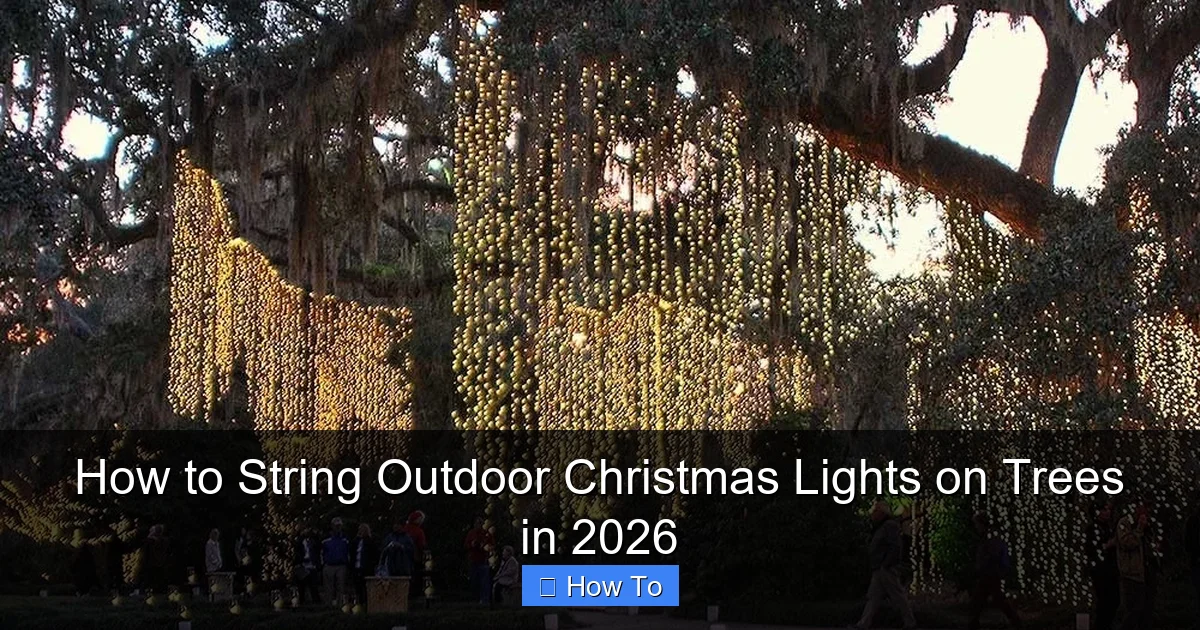
Featured image for how to string outdoor christmas lights on trees
Image source: menterarchitects.com
Wrap outdoor Christmas lights around tree trunks and branches in a spiral pattern, starting from the base and working upward for even, professional-looking coverage. Use commercial-grade, weather-resistant LED lights rated for outdoor use, and secure them with insulated clips—not nails or staples—to protect wires and tree bark. Always follow manufacturer spacing guidelines and connect no more than three light strands in series to prevent overloads and ensure a safe, dazzling 2026 holiday display.
How to String Outdoor Christmas Lights on Trees in 2026
Key Takeaways
- Plan your layout first: Sketch tree shapes and mark light placement for balanced coverage.
- Use outdoor-rated lights: Ensure all lights and extension cords are UL-listed for outdoor use.
- Start at the base: Wrap lights from the bottom up, keeping bulbs spaced evenly.
- Secure with light clips: Use plastic or adhesive clips to avoid damaging tree bark.
- Test before finalizing: Power on lights to check for outages or uneven brightness.
- Layer lights strategically: Combine string, net, and spotlights for depth and dimension.
Why This Matters / Understanding the Problem
Every year, as the holidays roll around, I get that familiar mix of excitement and dread: How to string outdoor Christmas lights on trees in 2026 without turning it into a two-day circus? If you’ve ever tangled yourself in a web of lights while balancing on a ladder, you know the struggle. It’s not just about aesthetics—it’s about doing it right, safely, and with minimal frustration.
Maybe you’ve tried before and ended up with uneven spacing, burnt-out strands, or lights that fall off by New Year’s. Or worse—lights that don’t even turn on because of a single bad bulb. I’ve been there. But after years of trial, error, and a few minor tree-related injuries (okay, just a scratch), I’ve cracked the code. This guide shares how to string outdoor Christmas lights on trees in 2026 with confidence, so you can enjoy a magical glow without the stress.
Whether you’re lighting up a small backyard maple or a towering pine, this method works. And no—you don’t need a professional installer. With a little prep and the right approach, you’ll have a display that’s safe, stunning, and built to last the season.
What You Need
Before you start, gather these tools and materials. Trust me—having everything ready saves time, frustration, and ladder trips. Here’s your checklist:

Visual guide about how to string outdoor christmas lights on trees
Image source: themprojects.com
- LED outdoor Christmas lights (more on this below)
- Extension cords (outdoor-rated, heavy-duty, GFCI-protected)
- Light clips or tree-friendly fasteners (avoid nails or staples)
- Ladder (telescoping or step ladder, depending on tree height)
- Measuring tape (to estimate light needs)
- Work gloves (for grip and protection from bark)
- Timer or smart plug (optional but highly recommended)
- Light tester (for checking strands before hanging)
- Zip ties (for securing cords or managing excess length)
- Bucket or tote (to carry tools and lights)
Pro tip: Skip incandescent lights. LED lights are cooler, more energy-efficient, last longer, and are less likely to overheat or damage trees. Plus, they’re easier to string—less weight, fewer bulbs to break.
For how to string outdoor Christmas lights on trees in 2026, the right gear is half the battle. And don’t forget: check your local weather. Wind, rain, and snow can affect your setup, so plan accordingly.
Step-by-Step Guide to How to String Outdoor Christmas Lights on Trees in 2026
Step 1: Choose the Right Lights and Test Them
Not all Christmas lights are created equal. For outdoor use, you need lights rated for outdoor conditions—look for an IP44 or higher rating. These can handle moisture and temperature swings. And again—go LED. They’re brighter, safer, and more efficient.
Before you hang a single strand, test every set of lights. Plug them in. Check for dead bulbs, flickering, or damaged cords. Nothing’s worse than climbing a ladder only to find your lights don’t work.
Personal insight: I once hung 150 feet of lights on a cedar tree, only to discover a single dead bulb in the middle strand. I had to take the whole thing down. Now? I test before I leave the garage.
For larger trees, consider net lights (for lower branches) and cascading string lights (for trunks and upper limbs). And if you’re going for a modern look, try smart color-changing LEDs—you can control them from your phone.
This step is crucial for how to string outdoor Christmas lights on trees in 2026—it prevents mid-project meltdowns and ensures a flawless glow.
Step 2: Measure the Tree and Estimate Light Needs
Grab your measuring tape. Start at the base of the trunk and measure up to the highest point you plan to light. Then, measure the circumference of the trunk and major branches.
As a rule of thumb, you’ll need about 100 lights per 1.5 feet of tree height for a full, bright look. For example, a 12-foot tree needs roughly 800 lights. But if you want a subtle glow, go with 50–75 per 1.5 feet.
For wrapping the trunk, use the circumference × height to estimate linear feet of lights. For branches, measure the length and multiply by 2–3 (for front and back lighting).
Warning: Don’t overdo it. Too many lights can look cluttered and strain your electrical system. Also, avoid wrapping too tightly—this can damage bark and restrict growth.
Pro tip: Sketch a quick diagram on paper. Mark where you’ll start, end, and add extension cords. This helps avoid “dead zones” and keeps spacing even. Planning ahead makes how to string outdoor Christmas lights on trees in 2026 way more efficient.
Step 3: Install a GFCI-Protected Power Source
Safety first. Outdoor electrical use requires a GFCI outlet (Ground Fault Circuit Interrupter). These shut off power if they detect a short or moisture—critical for wet conditions.
If your outdoor outlet isn’t GFCI, use a GFCI extension cord or install a weatherproof GFCI outlet box. Never daisy-chain multiple extension cords. Instead, use a heavy-duty, outdoor-rated power strip with surge protection.
Place the power source near the tree base, but not directly on the ground. Use a plastic bin or platform to keep it dry. And run the cord away from walkways to avoid tripping hazards.
Common mistake: I once ran an extension cord across the lawn and forgot to cover it. My neighbor’s dog chewed through it. Lesson learned: bury the cord under mulch or use a cord cover.
This step is non-negotiable for how to string outdoor Christmas lights on trees in 2026—it protects you, your lights, and your home.
Step 4: Start at the Base and Work Upward
Now, the fun begins. Start at the bottom of the trunk, about 6 inches above the ground. This prevents water pooling around the plug.
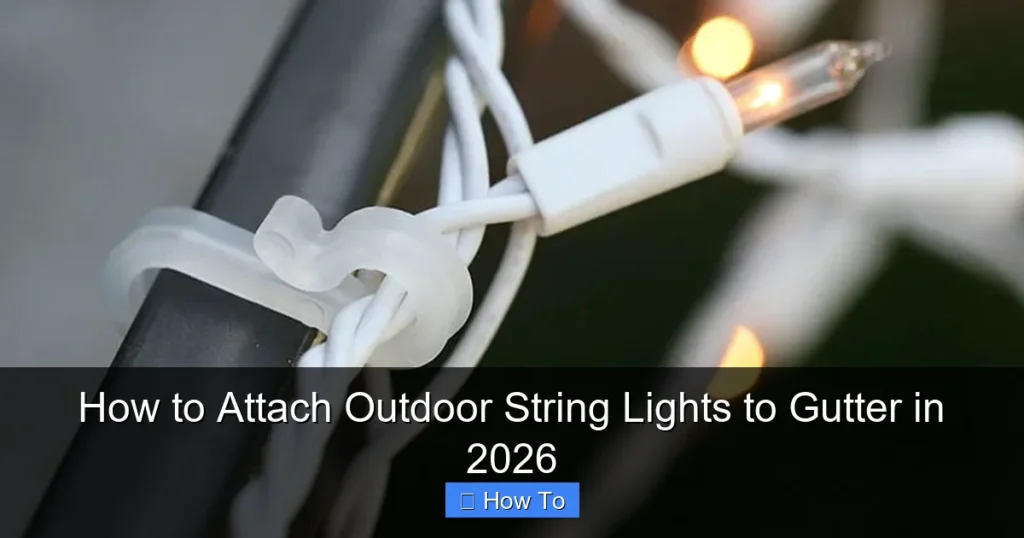
Use tree-friendly light clips—not nails, staples, or tape. These clips hook into the bark without damaging it. Space them every 6–8 inches vertically. Wrap the lights in a spiral pattern, keeping the bulbs facing outward.
As you go up, maintain even tension. Don’t pull too tight—this can stress the bark. And don’t let the lights sag—this creates uneven spacing.
Personal insight: I use a figure-eight motion: wrap one loop around the trunk, then skip a section to go up. This gives a fuller look without overloading the tree.
When you reach a branch junction, wrap the main trunk first, then move to the branch. Use branch clips (smaller than trunk clips) to secure lights along limbs. Keep the spacing consistent—about 6 inches between bulbs.
This method ensures even coverage and makes how to string outdoor Christmas lights on trees in 2026 look professional, not haphazard.
Step 5: Add Extension Cords Strategically
You’ll likely need multiple light strands. Don’t plug them all into one socket. Most outdoor outlets can handle 3–4 strands max (check the wattage rating on your lights).
Use outdoor-rated extension cords with male/female ends. Run them along the trunk, securing with clips every 12–18 inches. Avoid wrapping cords around branches—this can cause tangles and damage.
For large trees, consider a hub system: plug a multi-outlet power strip into the GFCI, then run separate cords to different sections. This reduces strain and makes troubleshooting easier.
Pro tip: Label each cord with a tag (e.g., “Top Branch,” “Left Limb”). This helps if you need to unplug or replace a section later.
And never connect more than three sets of mini lights in series (unless the manufacturer says otherwise). Overloading causes overheating and fire risk. This is a key part of how to string outdoor Christmas lights on trees in 2026 safely.
Step 6: Use Net Lights for Lower Branches
Net lights are a game-changer for lower limbs and bushes. They’re pre-arranged in a grid, so you just drape and secure them. No more measuring or spacing.
For trees, use them on the lower third of the trunk or on side branches. Clip them with branch-friendly fasteners. Overlap them slightly for full coverage.
Net lights are especially great for dense trees (like pines or firs) where wrapping is tricky. They also reduce ladder time—you can reach more from the ground.
Warning: Don’t use net lights on thin or fragile branches. The weight can snap them. Stick to sturdy limbs or the main trunk.
This step adds depth and makes your tree look fuller. It’s a smart shortcut in how to string outdoor Christmas lights on trees in 2026.
Step 7: Secure Cords and Manage Excess
After hanging the lights, go back and secure all cords. Use zip ties every 2–3 feet to keep them snug against the trunk. This prevents wind damage and keeps the look clean.
If you have extra cord length, coil it neatly near the base and secure with a zip tie. Don’t leave loose loops—they’re tripping hazards and can snag on tools.
For long runs, use cord clips with adhesive backing (for flat surfaces) or staple-free clips (for wood). These keep cords tidy without damaging your home or tree.
Common mistake: I once left a cord dangling near the driveway. My snowblower chewed through it in January. Now I always tuck and secure.
Good cord management is essential for how to string outdoor Christmas lights on trees in 2026—it’s not just about looks, it’s about longevity and safety.
Step 8: Install a Timer or Smart Plug
Set it and forget it. A timer or smart plug automates your lights. No more running outside to turn them on or off.
For timers, choose an outdoor-rated model with a waterproof cover. Set it to turn on at dusk and off at midnight (or your preferred time). Some even have random modes to deter porch pirates.
For smart plugs, use a Wi-Fi or Bluetooth-enabled model (like Kasa or TP-Link). Control lights from your phone, schedule on/off times, or integrate with Alexa/Google Home.
Personal insight: I use a smart plug with a “sunrise/sunset” setting. The lights turn on at dusk and off at 10 PM—no fumbling with timers in the cold.
This final touch makes how to string outdoor Christmas lights on trees in 2026 truly effortless.
Step 9: Do a Final Inspection
Before you celebrate, do a walk-around. Check for:
- Even spacing and coverage
- Secure clips and cords
- No dangling or loose strands
- All bulbs working
- No tripping hazards
Turn the lights on at night. Look for dark spots, flickering, or uneven brightness. Adjust as needed.
Pro tip: Take a photo. It’s easier to spot issues in a picture than in real time. Share it with family—they’ll love the preview!
This step ensures your display is flawless. It’s the last piece of how to string outdoor Christmas lights on trees in 2026.
Pro Tips & Common Mistakes to Avoid
Over the years, I’ve learned a few things the hard way. Here are my top tips and pitfalls to avoid:
- Don’t wrap too tightly. Tight wrapping can cut into the bark and harm the tree. Use clips, not tension.
- Skip the ladder if possible. For tall trees, use a pole light hanger. It attaches to a broom handle and lets you hang lights from the ground.
- Use warm-white LEDs. They mimic traditional incandescent lights and look more natural on trees. Cool white can feel harsh.
- Check the forecast. If a storm is coming, wait. Wind can knock down clips or damage lights.
- Store lights properly. After the season, coil lights loosely and store in a dry, cool place. Use reels or cardboard to prevent tangling.
Common mistake: I once used regular zip ties on a young tree. They cut into the bark as the tree grew. Now I only use expandable zip ties or tree-friendly straps.
And remember: less is more. A few well-placed strands look better than a chaotic tangle. Focus on quality, not quantity. These insights make how to string outdoor Christmas lights on trees in 2026 not just easier, but more beautiful.
FAQs About How to String Outdoor Christmas Lights on Trees in 2026
How many lights do I need for a 10-foot tree?
For a 10-foot tree, aim for 600–700 LED mini lights. That’s about 4–5 strands of 150-bulb lights. For a fuller look, go up to 800. Use net lights on lower branches to fill in gaps.
Can I leave outdoor lights up all winter?
Yes, but check the manufacturer’s rating. Most outdoor LEDs are designed for 3–6 months of continuous use. Use a timer to reduce wear. And take them down if temperatures drop below -20°F (-29°C)—extreme cold can damage electronics.
Are solar-powered lights good for trees?
Solar lights work, but they’re dimmer and less reliable. They need direct sun to charge, and winter days are short. Use them for accent lighting, not main displays. For how to string outdoor Christmas lights on trees in 2026, I recommend grid-powered LEDs.
How do I prevent lights from falling off in wind?
Use high-quality clips and secure cords every 2–3 feet. For windy areas, double-clip critical spots. And avoid wrapping loosely—tight, even spirals stay put. Also, check clips weekly during storms.
Can I use the same lights on multiple trees?
Yes! Plan your layout so cords can reach multiple trees from one GFCI outlet. Use Y-splitters or a power strip. Just don’t overload the circuit—stick to 3–4 strands max per outlet.
What’s the best way to store lights after the season?
Coil each strand loosely and store in a labeled bag or box. Use cardboard or a light reel to prevent tangling. Keep in a dry, temperature-stable area (like a garage or basement). Test them next year before hanging.
Do I need a permit to light trees in my yard?
Usually not. But check local ordinances. Some cities have rules about brightness, timing, or electrical use. If you’re in an HOA, check their guidelines. Most are cool with holiday lights—just don’t leave them on 24/7.
Final Thoughts
Stringing lights on trees isn’t just a chore—it’s a tradition. And with the right approach, it can be joyful, not frustrating. This guide to how to string outdoor Christmas lights on trees in 2026 gives you the tools, tips, and confidence to create a display that wows.
Remember: start with tested, outdoor-rated LEDs. Plan your layout. Use tree-friendly clips and secure cords. Automate with a timer. And don’t rush—take your time to get it right.
When you’re done, step back and enjoy. That warm glow isn’t just light—it’s magic. And you made it happen.
Now, grab your gloves, fire up the ladder, and let’s make this the brightest holiday yet. Happy lighting!