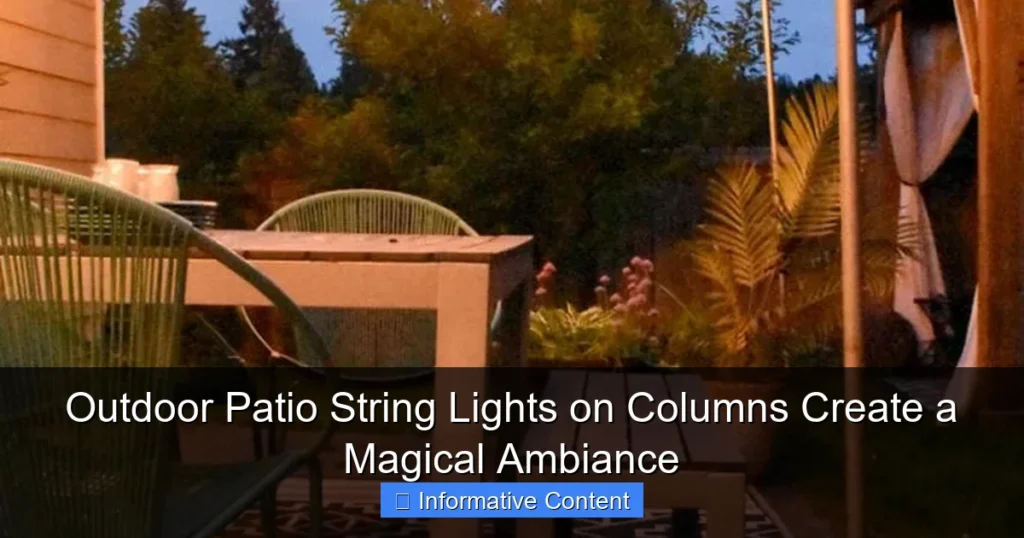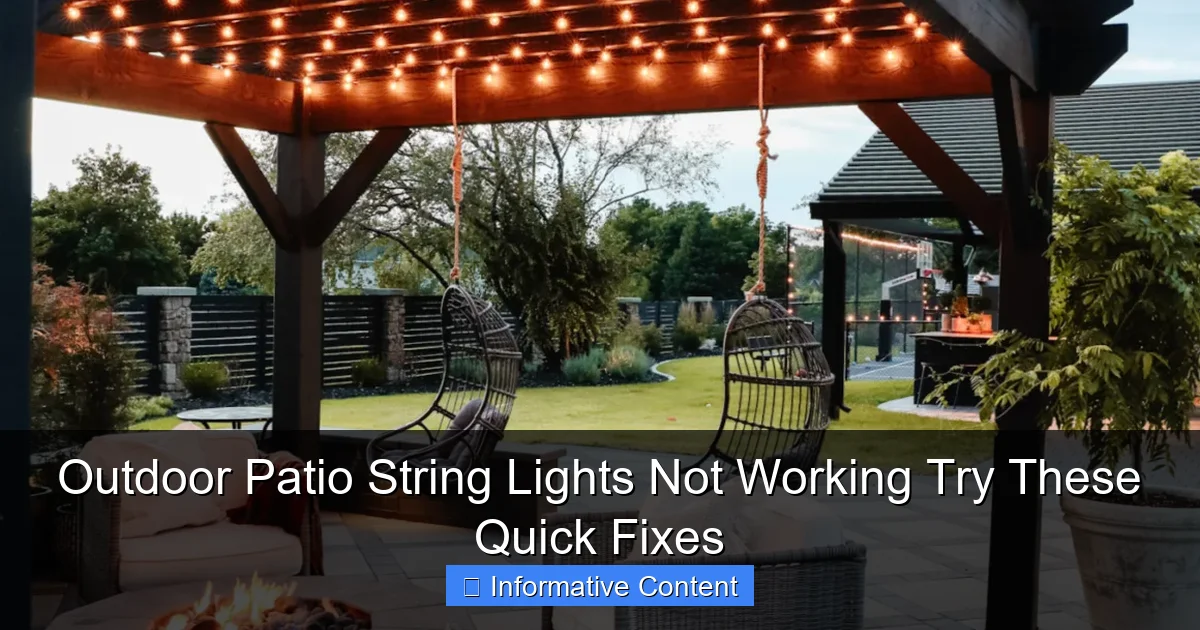
Featured image for outdoor patio string lights not working
Image source: nestingwithgrace.com
Check the power source and connections first—most outdoor patio string light failures stem from loose plugs, tripped breakers, or dead outlets. Inspect bulbs, fuses, and wiring for damage, and test with a multimeter if needed to pinpoint electrical issues. Quick fixes like replacing a single faulty bulb or resetting the GFCI outlet can restore your ambiance in minutes.
Key Takeaways
- Check the power source: Ensure the outlet or extension cord is functional and properly connected.
- Inspect for damaged bulbs: Replace any burnt-out or broken bulbs to restore light functionality.
- Test the fuse: Locate and replace a blown fuse in the plug if lights don’t turn on.
- Secure loose connections: Tighten bulb sockets and connections to prevent flickering or outages.
- Protect from weather: Use waterproof covers and avoid exposing plugs to rain or moisture.
- Use compatible bulbs: Verify bulbs match voltage and wattage requirements for safe, optimal performance.
📑 Table of Contents
- Why Your Outdoor Patio String Lights Stopped Working (And What to Do About It)
- 1. Check the Power Source and Connections
- 2. Diagnose the Light Bulbs and Sockets
- 3. Investigate the Wiring and Circuit Design
- 4. Address Environmental and Installation Issues
- 5. Consider the Age and Quality of Your Lights
- 6. Prevent Future Problems with Smart Maintenance
- Quick Reference: Common Fixes for Outdoor Patio String Lights
- Final Thoughts: Don’t Let a Dark Patio Ruin Your Evenings
Why Your Outdoor Patio String Lights Stopped Working (And What to Do About It)
There’s nothing quite like the cozy, inviting glow of outdoor patio string lights. Whether you’re hosting a summer barbecue, enjoying a quiet evening with a book, or simply unwinding after a long day, these lights transform your outdoor space into a magical retreat. But when your string lights suddenly stop working, that ambiance can quickly turn into frustration.
You’re not alone. Many homeowners face this issue—sometimes it’s a single bulb, other times the entire strand goes dark. The good news? Most problems are fixable with a little troubleshooting. No need to panic or rush out for a replacement just yet. In this guide, we’ll walk through the most common reasons your outdoor patio string lights are not working and share quick, practical fixes you can try at home. From checking the power source to diagnosing bulb and wiring issues, we’ve got you covered—with real-life examples and tips that actually work.
1. Check the Power Source and Connections
The first step when your outdoor patio string lights are not working is to rule out the simplest cause: power. It sounds obvious, but you’d be surprised how often the issue is as simple as a loose plug or a tripped breaker.
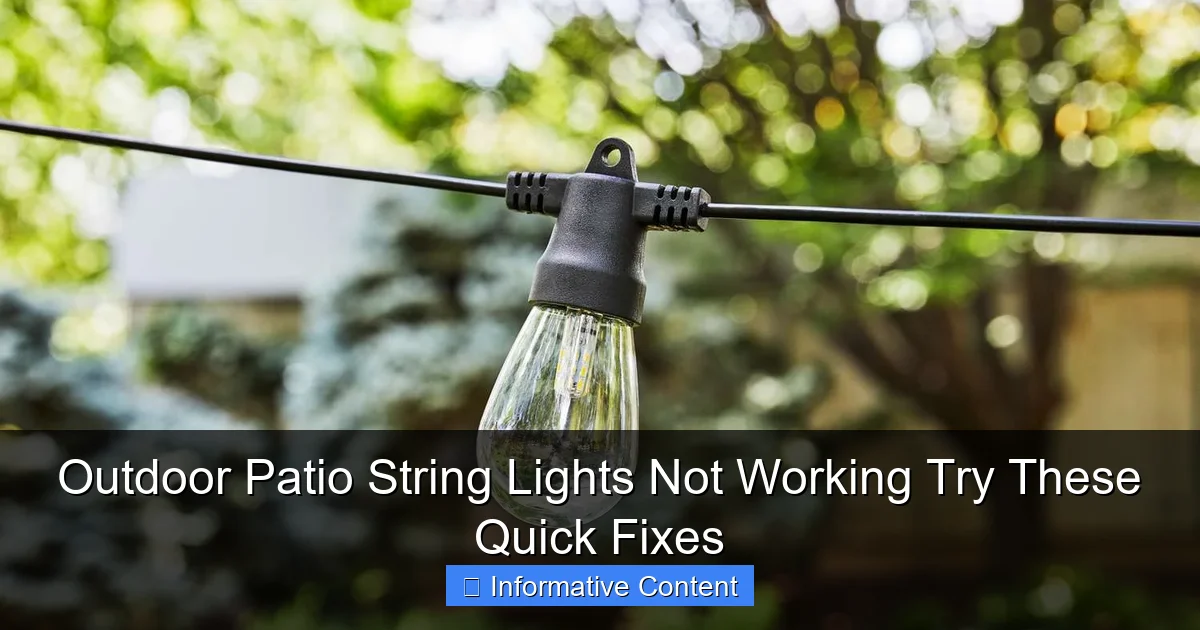
Visual guide about outdoor patio string lights not working
Image source: storables.com
Inspect the Outlet and GFCI
Start by checking if the outlet is receiving power. Plug in another device—like a phone charger or a fan—to confirm the outlet works. If it doesn’t, the problem may be with the outlet itself. For outdoor outlets, many are connected to a GFCI (Ground Fault Circuit Interrupter) outlet, often located indoors (like in a bathroom or garage) or on another outdoor outlet nearby.
For example, Sarah from Portland noticed her patio lights went out after a rainy weekend. She checked the outdoor outlet—it worked fine with a lamp. But when she tested the GFCI outlet in her basement, she found it had tripped due to moisture exposure. Resetting it brought her lights back to life instantly.
Tip: If the GFCI keeps tripping, it could signal a wiring issue or moisture in the circuit. In that case, consider calling an electrician to inspect the setup.
Test Extension Cords and Power Strips
Many people use extension cords or outdoor power strips to reach their patio lights. These can wear out over time, especially if left outside. Look for signs of fraying, melting, or loose connections. Try bypassing the extension cord by plugging the lights directly into a working outlet.
Another common mistake? Using indoor extension cords outdoors. These aren’t rated for moisture or UV exposure and can fail quickly. Always use cords labeled “outdoor” or “weather-resistant.”
Look for Loose or Corroded Plugs
Outdoor plugs are exposed to rain, wind, and temperature changes. Over time, the connection between the plug and the outlet can become loose or corroded. Try wiggling the plug gently to see if the lights flicker. If they do, the connection is unstable.
Fix: Unplug the lights, clean the plug prongs with a dry cloth or fine sandpaper, and ensure the outlet is dry. For added protection, use a weatherproof outlet cover or a drip loop (a downward loop in the cord before it reaches the outlet) to prevent water from running into the plug.
2. Diagnose the Light Bulbs and Sockets
If the power source is fine, the next suspect is the bulbs or sockets. This is especially common with older or frequently used string lights.
Check for Burned-Out Bulbs
Even LED bulbs can burn out, though it’s less common than with incandescent ones. A single dead bulb can sometimes take down an entire strand, especially if the lights are wired in series (common in older models).
To test, inspect each bulb. Look for:
- Blackened or cracked glass
- Loose filaments (in incandescent bulbs)
- Bulbs that are wobbly or not seated properly
Quick Tip: Use a bulb tester (available at hardware stores) or swap suspected bulbs with known working ones from another strand.
Test the Sockets
Sometimes the problem isn’t the bulb—it’s the socket. Corrosion, bent contacts, or broken springs inside the socket can prevent electricity from reaching the bulb.
Here’s how to check:
- Unplug the lights.
- Remove a bulb and inspect the socket. Look for greenish residue (corrosion), bent metal tabs, or debris.
- Clean the socket with a cotton swab and rubbing alcohol. Use needle-nose pliers to gently straighten bent contacts.
For example, Mark from Colorado found his entire strand was dark. After testing, he discovered three sockets had corroded contacts due to winter moisture. A quick clean with alcohol and a toothpick restored function to all but one bulb—which he replaced.
Use the Right Replacement Bulbs
Not all bulbs are created equal. Using the wrong wattage, voltage, or base type can cause flickering, dimming, or complete failure. Always match the bulb type, base size, and voltage specified by the manufacturer.
LED replacements are a great option—they last longer, use less energy, and are less likely to cause circuit overloads. But make sure they’re compatible with your strand’s design. Some older string lights aren’t designed for LED bulbs and may not work properly.
3. Investigate the Wiring and Circuit Design
If multiple bulbs are out or the entire strand is dark, the issue may lie in the internal wiring or circuit configuration.
Understand Series vs. Parallel Wiring
Most patio string lights use one of two wiring systems:
- Series wiring: If one bulb fails, the entire circuit breaks and all lights go out. This is common in older or budget models.
- Parallel wiring: Each bulb has its own circuit, so one dead bulb doesn’t affect the others. Found in higher-quality or newer LED strands.
If your outdoor patio string lights are not working and you have a series-wired strand, a single bad bulb or socket can kill the whole string. Parallel-wired lights are more reliable—but they can still have wiring faults.
Look for Damaged or Frayed Wires
Outdoor exposure takes a toll on wires. Sunlight degrades insulation, rodents chew through cords, and weather causes cracks. Inspect the entire length of the cord for:
- Visible cuts or splits in the insulation
- Exposed copper wires
- Kinks or sharp bends
If you find damage, do not attempt to tape it up and reuse—this creates a fire hazard. Instead, cut out the damaged section and splice the wires using a weatherproof wire connector (available at hardware stores). Or, replace the entire strand for safety.
Test for Continuity
For the DIY-savvy, a multimeter can help test the circuit’s continuity. Set the meter to the ohms (Ω) setting, unplug the lights, and touch the probes to the plug’s metal prongs. A reading near zero means the circuit is intact. No reading or infinite resistance suggests a break in the wire.
Note: This method works best if you’re comfortable with basic electrical tools. If not, consider calling a professional.
4. Address Environmental and Installation Issues
Outdoor lights face unique challenges—rain, wind, heat, cold, and pests. These factors can cause premature failure if not properly managed.
Moisture and Water Intrusion
Water is the #1 enemy of outdoor electrical devices. Even “weather-resistant” lights can fail if water seeps into sockets or plugs.
Common signs of water damage:
- Flickering lights during or after rain
- Bulbs that work intermittently
- Corrosion on sockets or plugs
Prevention tips:
- Use weatherproof string lights with sealed sockets and rubber gaskets.
- Install lights under eaves, pergolas, or covered patios when possible.
- Use outdoor-rated zip ties to secure cords and prevent sagging (which can collect water).
- Consider solar-powered string lights—they eliminate cords and reduce moisture risks.
Overheating and Sun Exposure
Direct sunlight can overheat LED drivers and shorten bulb life. In hot climates, lights left on for hours in full sun may shut off due to thermal protection.
Fix: Use lights with UV-resistant insulation and install them in shaded areas. Or, use a timer to limit on-time to 4–6 hours per night.
Rodent and Pest Damage
Mice, squirrels, and insects love to chew on wires. If you notice gnaw marks or shredded insulation, inspect the entire cord. Replace any damaged sections immediately.
Prevention: Run cords through PVC conduit or metal sleeves. Avoid draping cords on the ground or near trees where animals climb.
5. Consider the Age and Quality of Your Lights
Not all string lights are built to last. Cheaper models often use thin wires, weak sockets, and low-grade bulbs—making them more prone to failure.
When to Replace vs. Repair
Ask yourself: How old are these lights? Most quality outdoor string lights last 3–5 years with regular use. If yours are older than that, frequent issues may be a sign it’s time to upgrade.
Consider replacing if:
- You’ve repaired them multiple times
- The wiring is brittle or cracked
- You’re using incandescent bulbs (less efficient, shorter life)
- The manufacturer is unknown or discontinued
On the other hand, if the lights are under 2 years old and only one or two bulbs are out, repair is likely worth the effort.
Upgrade to Durable, Smart Options
Modern string lights offer better performance and longevity. Look for:
- LED bulbs: Last 20,000+ hours, use 80% less energy
- Parallel wiring: Individual bulb circuits
- Smart features: App or voice control (via Alexa/Google Home), dimming, scheduling
- Weatherproof ratings: IP65 or higher for dust and water resistance
For example, after her third strand failed in two years, Lisa upgraded to smart LED string lights with a 5-year warranty. Now she controls them from her phone, and they’ve survived two hurricanes—still working perfectly.
6. Prevent Future Problems with Smart Maintenance
Once you get your lights working again, don’t wait for the next failure. A little maintenance goes a long way.
Seasonal Care Tips
- Spring: Inspect for winter damage. Clean sockets and replace any worn bulbs.
- Summer: Check for overheating. Use timers to reduce on-time during heatwaves.
- Fall: Remove leaves and debris from cords. Disconnect lights during storms.
- Winter: If possible, take down lights or store them in a dry place. At minimum, unplug during heavy snow or ice.
Storage Best Practices
Improper storage can damage cords and sockets. Avoid:
- Twisting or knotting cords tightly
- Leaving lights in damp basements or garages
- Storing near sharp tools or chemicals
Pro tip: Use a light reel or wrap cords loosely around a piece of cardboard to prevent tangling.
Create a Troubleshooting Kit
Keep a small kit on hand with:
- Extra bulbs (LED or incandescent, as needed)
- Weatherproof wire connectors
- Multimeter or bulb tester
- Rubbing alcohol and cotton swabs
- Outdoor-rated zip ties
This way, you can fix issues quickly instead of waiting for a trip to the store.
Quick Reference: Common Fixes for Outdoor Patio String Lights
| Problem | Likely Cause | Quick Fix | Prevention |
|---|---|---|---|
| Entire strand dark | Tripped GFCI, blown fuse, or series bulb failure | Reset GFCI, check breaker, test bulbs | Use parallel-wired lights, install GFCI covers |
| Flickering lights | Loose bulb, corroded socket, or water damage | Clean socket, tighten bulb, inspect for moisture | Use sealed sockets, install drip loops |
| Partial strand out | Damaged wire or broken socket | Inspect wiring, splice damaged section | Use conduit, avoid sharp bends |
| Lights won’t turn on after rain | Water in plug or socket | Unplug, dry completely, clean with alcohol | Use weatherproof plugs, install under cover |
| Overheating or shutting off | Too much sun, poor ventilation, or old bulbs | Relocate to shade, replace with LEDs | Use UV-rated cords, limit on-time |
Final Thoughts: Don’t Let a Dark Patio Ruin Your Evenings
When your outdoor patio string lights are not working, it’s easy to feel defeated. But as we’ve seen, most issues have simple, affordable solutions. From checking the GFCI to replacing a single bulb, you don’t need to be an electrician to bring the magic back to your outdoor space.
Remember: prevention is just as important as repair. Invest in quality lights, protect them from the elements, and perform regular checks. With a little care, your patio lights can last for years—providing warmth, beauty, and countless memorable moments under the stars.
So next time your lights go dark, don’t panic. Grab your toolkit, follow these steps, and get ready to enjoy your glowing oasis once again. After all, the best moments happen when the lights are on—and you’re right there, basking in their glow.
Frequently Asked Questions
Why are my outdoor patio string lights not working?
Check if the power source is functioning and ensure the outlet is receiving electricity. Loose connections, tripped breakers, or a faulty plug are common causes of outdoor patio string lights not working.
Can weather damage cause my outdoor string lights to stop working?
Yes, exposure to rain, snow, or extreme temperatures can corrode wiring or damage bulbs. Inspect for moisture in sockets or frayed cords, especially if the lights stopped working after a storm.
How do I troubleshoot flickering outdoor patio string lights?
First, tighten any loose bulbs and replace burned-out ones. Flickering can also indicate a voltage drop, so avoid connecting too many strands or using an undersized extension cord.
Do I need a special outlet for outdoor patio string lights?
Yes, always use a GFCI-protected outlet for outdoor patio string lights to prevent electrical hazards. Test the outlet with another device to confirm it’s working properly.
Why do only some bulbs on my outdoor string lights work?
This often points to a loose bulb, broken filament, or a damaged section of the circuit. Test bulbs individually and check for wire breaks or water damage in the non-working segment.
Can I fix outdoor patio string lights with a bad plug or cord?
Yes, if the plug or cord is damaged, you can cut and splice in a new plug or replace the entire cord. Always disconnect the lights from power before attempting repairs.