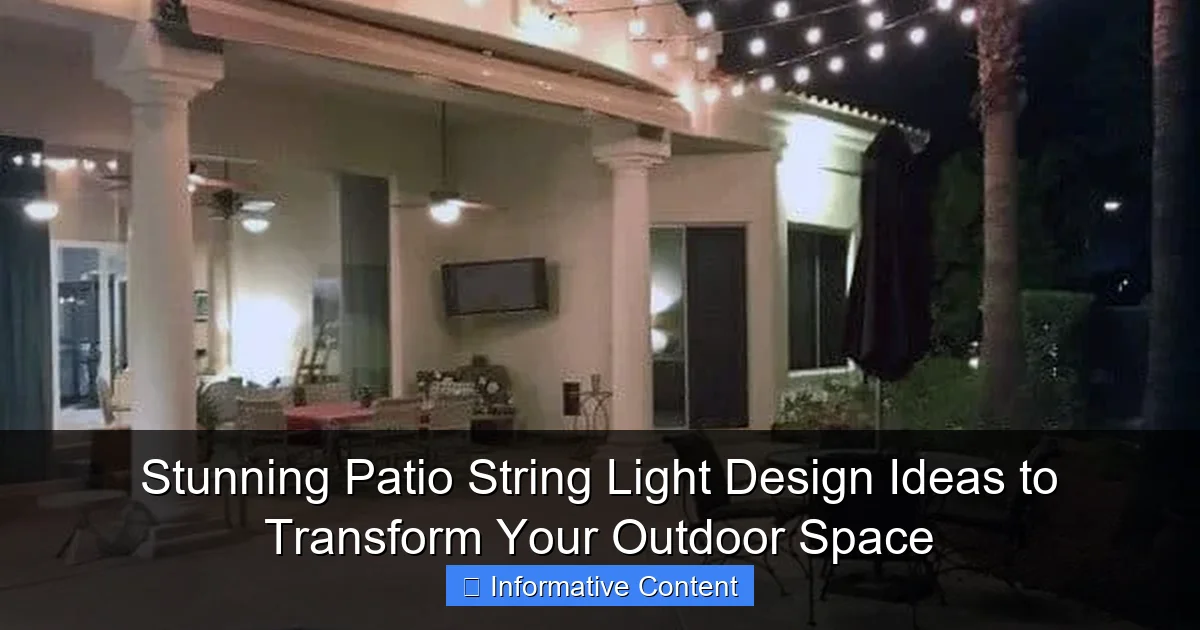
Featured image for patio string light design
Image source: nextluxury.com
Patio string lights instantly elevate any outdoor space, blending ambiance with style through versatile, eye-catching designs. From draped canopies and zigzag patterns to illuminated pergolas and hanging globes, these creative arrangements turn ordinary patios into enchanting retreats perfect for entertaining or relaxing. Discover how strategic placement and unique configurations can maximize charm and functionality in your backyard oasis.
Key Takeaways
- Plan your layout: Sketch light placement before installation for balanced, intentional coverage.
- Mix bulb styles: Combine globe, Edison, and fairy lights for layered visual interest.
- Anchor securely: Use poles, hooks, or existing structures to prevent sagging over time.
- Control with tech: Add smart plugs or dimmers for adjustable ambiance and convenience.
- Highlight features: Wrap lights around trees, railings, or pergolas to accent architecture.
- Weatherproof wisely: Choose outdoor-rated, shatterproof bulbs for safety and durability.
📑 Table of Contents
- Stunning Patio String Light Design Ideas to Transform Your Outdoor Space
- Choosing the Right String Lights for Your Patio
- Creative String Light Layouts to Match Your Patio Style
- Enhancing Your Design with Smart Features and Accessories
- Seasonal and Themed String Light Ideas
- Common Mistakes and How to Avoid Them
- Comparing Popular String Light Options
- Final Thoughts: Light Up Your Patio with Confidence
Stunning Patio String Light Design Ideas to Transform Your Outdoor Space
There’s something magical about stepping into a backyard or patio after sunset and being greeted by the soft, warm glow of string lights. It’s not just about illumination—it’s about atmosphere. Whether you’re hosting a summer barbecue, enjoying a quiet evening with a book, or sharing a glass of wine with friends, the right patio string light design can turn an ordinary outdoor area into a cozy, inviting retreat.
I remember the first time I strung lights across my small back patio. I had no plan—just a set of basic Edison-style bulbs and some zip ties. But when I flipped the switch, the whole space transformed. It felt like I’d added a new room to my home. That moment sparked a journey into the world of outdoor lighting, and I’ve since experimented with everything from minimalist layouts to dramatic canopy effects. In this guide, I’ll share what I’ve learned, from choosing the right bulbs to creating designs that elevate your space—no matter how big or small it is.
Choosing the Right String Lights for Your Patio
Before diving into creative layouts, it’s essential to pick the right type of string lights. Not all lights are created equal, and the wrong choice can leave your patio feeling too bright, too dim, or even unsafe. The good news? There are plenty of options to match your style, budget, and practical needs.
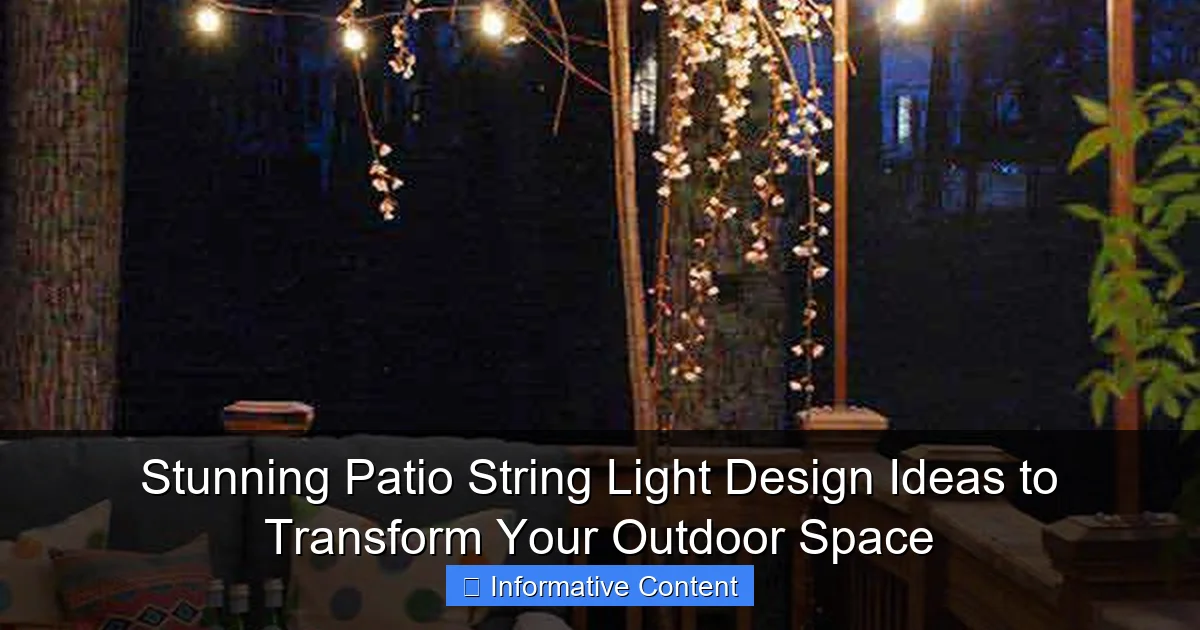
Visual guide about patio string light design
Image source: homemydesign.com
Types of String Lights: Pros and Cons
- Incandescent (Edison-style): These are the classic bulbs with visible filaments. They emit a warm, golden glow (around 2200K–2700K), perfect for creating a nostalgic, romantic vibe. However, they consume more energy and burn out faster than LEDs. I used these for my first setup—they looked beautiful but needed replacing every year.
- LED String Lights: Energy-efficient, long-lasting (up to 25,000 hours), and available in a range of color temperatures. Cool white (4000K+) gives a modern, crisp look; warm white (2700K–3000K) mimics incandescent warmth. Some even offer color-changing or app-controlled options. A bit pricier upfront, but worth it in the long run.
- Solar-Powered Lights: Great for areas without easy access to outlets. They charge during the day and turn on automatically at dusk. However, brightness varies, and cloudy days can reduce performance. Ideal for low-maintenance setups or renters who can’t drill into walls.
- Plug-In vs. Battery-Operated: Plug-in lights offer consistent brightness and are best for permanent installations. Battery-powered ones are portable but require frequent battery changes—fine for temporary setups or small spaces.
Key Features to Consider
- Bulb Shape and Size: Globe, teardrop, and Edison bulbs are popular. Larger bulbs (like G40) create a bolder visual impact; smaller ones (S14) are more subtle. Mixing sizes can add depth—try larger bulbs in the center and smaller ones at the edges.
- Wire Color: Black or green wires blend into trees and dark surfaces; white wires work better against light-colored walls or ceilings. I once used white wires against a dark fence—they stood out like a sore thumb!
- Spacing: Bulbs spaced 6–12 inches apart offer balanced coverage. Closer spacing = denser light; wider spacing = softer, more spread-out glow. For a minimalist look, go wider. For a festive feel, go tighter.
- Dimmable Options: Dimmable lights let you adjust brightness for different moods—bright for dining, dim for relaxation. Not all LED lights are dimmable, so check the packaging.
Weather Resistance and Safety
Outdoor lights must withstand rain, wind, and UV exposure. Look for an IP rating of IP44 or higher (indicates protection from water splashes and dust). For coastal areas, choose corrosion-resistant materials like stainless steel or plastic. Always use outdoor-rated extension cords and avoid overloading circuits. I learned this the hard way when my lights flickered after a storm—now I use a GFCI outlet for safety.
Creative String Light Layouts to Match Your Patio Style
Once you’ve chosen your lights, it’s time to design. The layout you pick should complement your patio’s shape, furniture, and purpose. Here are my favorite designs, tested in my own backyard and friends’ spaces.
1. The Classic Canopy (Perfect for Dining Areas)
Suspend lights in a grid or crisscross pattern overhead, creating a “roof” of light. This works best under a pergola, gazebo, or between two trees.
- How to do it: Use eye hooks or zip ties to attach lights to the structure. For a crisscross, run strings diagonally from corner to corner, then add horizontal strings for density.
- Pro tip: Leave a small gap (1–2 feet) between each string to avoid a “cobweb” look. I once packed them too tightly—it felt overwhelming, not cozy.
- Style match: Ideal for farmhouse, boho, or rustic patios. Pair with wooden furniture and linen tablecloths.
2. The Floating “Cloud” Effect (Great for Small Patios)
Create a cluster of lights that looks like a glowing cloud, suspended above a seating area.
- How to do it: Use a central anchor point (like a tree branch or hook) and attach strings of varying lengths. Let the lights drape naturally, like stalactites.
- Pro tip: Use a mix of bulb sizes for visual interest. I added small fairy lights around the edges for a twinkling effect.
- Style match: Works with modern, minimalist, or eclectic spaces. Perfect for intimate conversations.
3. The Linear Run (Ideal for Narrow Spaces)
Run lights in straight lines along walls, railings, or fences. This is my go-to for small patios with limited overhead space.
- How to do it: Use adhesive clips or hooks to secure lights every 12–18 inches. Keep the lines parallel and evenly spaced.
- Pro tip: Add a second row of lights at a lower height (like under a railing) to create depth. I did this with my balcony—it felt twice as spacious.
- Style match: Suits contemporary, industrial, or urban patios. Pair with metal furniture and geometric planters.
4. The “Starlight” Ceiling (For Flat-Roofed Patios)
If your patio has a solid roof (like a lanai), mimic the night sky with randomly spaced lights.
- How to do it: Use a grid of nails or hooks on the ceiling. Attach lights at different heights for a 3D effect.
- Pro tip: Use a mix of warm white and soft white lights for a natural twinkle. I once used all cool white—it felt like a hospital!
- Style match: Great for tropical, coastal, or Mediterranean patios. Add rattan furniture and palm plants.
5. The “Framed” Look (Highlighting Key Areas)
Use lights to outline your patio’s shape or highlight a specific feature, like a fire pit or dining table.
- How to do it: String lights along the perimeter, or create a rectangular frame around a focal point.
- Pro tip: Add a second layer of lights inside the frame for extra brightness. I framed my grill area—it became the heart of every cookout.
- Style match: Works with any style. Especially effective for patios with strong architectural lines.
Enhancing Your Design with Smart Features and Accessories
String lights don’t have to be static. With a few smart upgrades, you can make your patio lighting dynamic, energy-efficient, and even more beautiful.
Smart Controls: Set the Mood with Your Phone
- Smart plugs: Plug your lights into a smart outlet (like TP-Link Kasa or Wemo) to turn them on/off via an app or voice commands (Alexa, Google Assistant).
- Smart bulbs: Some LED string lights have built-in Wi-Fi or Bluetooth. Change colors, set schedules, or sync with music. I use these for parties—my friends love the color-changing modes!
- Motion sensors: Automatically turn lights on when someone enters the patio. Great for security and convenience.
Timers and Photocells: Hands-Free Operation
No more running outside to flip the switch. A timer lets you set lights to turn on at sunset and off at bedtime. A photocell (light sensor) does the same thing automatically. I use a timer for my dining area—it turns on at 7 PM, just in time for dinner.
Decorative Add-Ons: Elevate the Look
- Light clips and hooks: Use clear adhesive clips for a “floating” effect, or decorative hooks (like copper or black metal) to match your patio’s style.
- Light covers: Frosted or colored sleeves can soften harsh bulbs or add a pop of color. I use red covers for holiday parties.
- Fairy lights and garlands: Layer tiny LED fairy lights around larger bulbs for a magical, layered glow. I wrap them around railings and planters.
- Light poles: For open yards, use freestanding poles to hang lights without trees or structures. I added two poles to my backyard—it’s like having a private outdoor lounge.
Energy Efficiency: Save Money and the Planet
LED lights use up to 80% less energy than incandescent. Combine them with solar panels or a smart timer to reduce your carbon footprint. I switched to solar-powered fairy lights for my garden—they’ve run every night for two years with zero electricity cost.
Seasonal and Themed String Light Ideas
One of my favorite things about string lights is how easy they are to adapt for holidays, seasons, and special events. With a few tweaks, your patio can feel fresh and exciting all year round.
Summer Vibes: Tropical and Relaxed
- Color: Warm white or soft yellow. Add a few colored bulbs (like turquoise or coral) for a beachy feel.
- Layout: Canopy or “cloud” style. Drape lights over palm trees or hammocks.
- Accessories: String lights wrapped around bamboo poles, or hung in mason jars with seashells inside.
- Pro tip: Add citronella candles or tiki torches for ambiance and bug protection. I use these every summer—no more swatting mosquitoes!
Fall Cozy: Warm and Inviting
- Color: Amber, orange, or warm white. Avoid cool tones—they clash with fall’s natural palette.
- Layout: Linear runs along fences or railings. Frame a fire pit area with lights.
- Accessories: Wrap lights around pumpkins or gourds. Use burlap or plaid fabric to cover light strands.
- Pro tip: Add a string of mini lanterns for extra warmth. I hang them from my pergola—it feels like a cabin in the woods.
Winter Magic: Festive and Sparkly
- Color: Warm white, cool white, or multicolor. For a “snowy” look, use frosted bulbs.
- Layout: “Starlight” ceiling or canopy. Add icicle-style lights for a winter wonderland.
- Accessories: Hang lights in clear glass orbs, or wrap them around pinecones and evergreen branches.
- Pro tip: Use battery-powered lights for areas without outdoor outlets. I use them for my front porch—no extension cords needed.
Special Events: Birthdays, Weddings, and More
- Birthday: Use bright colors (pink, blue, green) and add paper lanterns or tassels. I once made a “light tunnel” for my niece’s party—she loved running through it!
- Wedding: Go for elegant simplicity: warm white lights in a canopy, with fairy lights in centerpieces. Avoid flashing or strobe modes—they’re distracting.
- Dinner party: Use dimmable lights and add candles for a soft, romantic glow. I set my lights to 50% brightness—it’s just enough to see your plate.
Common Mistakes and How to Avoid Them
Even the best patio string light design can go wrong with a few simple mistakes. Here’s what I’ve learned from my own missteps—and how you can avoid them.
Overcrowding the Lights
More isn’t always better. Too many lights can feel chaotic, not cozy. Stick to one primary layout (like a canopy) and add subtle accents (like fairy lights) instead of layering multiple bold designs.
Ignoring the Power Source
Always check if you have enough outlets and extension cords. Avoid daisy-chaining too many lights—it can overload the circuit. I once connected five strands to one outlet—the breaker tripped, and my lights went dark mid-party. Now I use a power strip with surge protection.
Choosing the Wrong Bulb Temperature
Cool white lights (4000K+) feel clinical; warm white (2700K–3000K) feels inviting. Test bulbs indoors first. I bought cool white lights once—they made my patio feel like a parking lot!
Neglecting Maintenance
Dirt, dust, and weather can dull your lights. Clean bulbs with a soft cloth and mild soap. Check for loose bulbs or frayed wires every few months. I replace a few bulbs each spring—it keeps the whole string looking fresh.
Forgetting About Safety
- Use outdoor-rated lights and cords.
- Secure lights properly to avoid tripping hazards.
- Keep cords away from high-traffic areas. I once tripped over a loose cord—my wine glass didn’t survive.
Not Planning for the Future
Think long-term. Use hooks or clips that can be easily moved. If you rent, avoid permanent installations. I used adhesive clips on my rental patio—they left no marks, and I took the lights with me when I moved.
Comparing Popular String Light Options
To help you choose, here’s a quick comparison of some top-rated string lights I’ve tested or used.
| Brand/Model | Type | Bulb Spacing | Length | Weather Resistance | Smart Features | Best For |
|---|---|---|---|---|---|---|
| Brightech Ambience Pro | LED, Edison-style | 6 inches | 48 ft | IP65 (dust/water resistant) | None | Dining areas, pergolas |
| Philips Hue Outdoor String Lights | LED, color-changing | 12 inches | 40 ft | IP65 | App control, voice commands | Parties, themed events |
| Sunlite Solar String Lights | Solar-powered, warm white | 8 inches | 33 ft | IP44 | Auto on/off at dusk/dawn | Renters, low-maintenance |
| Twinkle Star Fairy Lights | LED, battery-powered | 4 inches | 16 ft | IP65 | Timer, 8 lighting modes | Decorations, small spaces |
| GE Enbrighten Color Effects | LED, color-changing | 12 inches | 24 ft | IP65 | Remote control, preset modes | Holidays, kids’ play areas |
Note: Prices and availability vary. Always check for sales—I’ve found great deals on Amazon during Prime Day.
Final Thoughts: Light Up Your Patio with Confidence
Patio string light design isn’t just about aesthetics—it’s about creating a space that feels like an extension of your home. Whether you want a cozy nook for reading, a vibrant area for entertaining, or a magical spot for stargazing, the right lighting can make it happen. Start with a clear vision, choose quality lights that suit your needs, and don’t be afraid to experiment. I’ve changed my layout every year, and each time, my patio feels brand new.
Remember, the best design is one that reflects your personality and lifestyle. Use this guide as a starting point, but trust your instincts. And if you make a mistake? That’s okay. I’ve had plenty of “oops” moments—like the time I strung lights too low and kept hitting my head. Learn from them, adjust, and keep going. With a little creativity and the right lights, your patio can be a place where memories are made, year after year.
Now go grab those lights, step outside, and let your imagination shine. Your perfect outdoor oasis is just a few strings away.
Frequently Asked Questions
What are the best patio string light design ideas for small spaces?
For compact patios, opt for geometric patterns like zigzags or clusters to maximize visual impact without overwhelming the area. Mini globe lights or Edison-style bulbs work well to create a cozy, intimate ambiance.
How do I choose the right color temperature for my patio string lights?
Warm white (2700K–3000K) is ideal for a welcoming, inviting glow, while cool white (4000K+) suits modern designs. Consider your outdoor decor and mood—warm hues complement wood and greenery beautifully.
Can I install patio string lights without damaging my walls or trees?
Yes! Use removable adhesive hooks, zip ties on railings, or freestanding poles to avoid drilling. For trees, wrap lights loosely around branches to prevent damage and allow growth.
What’s the most energy-efficient option for patio string light design?
LED string lights are the top choice, using up to 80% less energy than incandescent bulbs. Pair them with a solar-powered battery or timer for even greater efficiency.
How can I create a unique layout with patio string lights?
Try unconventional shapes like cascading “waterfalls,” zigzag lines, or overlapping canopies. Use dimmers or smart bulbs to customize brightness and color for different occasions.
Are there weather-resistant patio string lights for year-round use?
Absolutely! Look for lights with an IP65 rating or higher, ensuring they withstand rain, snow, and UV exposure. Store them indoors during extreme weather to prolong lifespan.