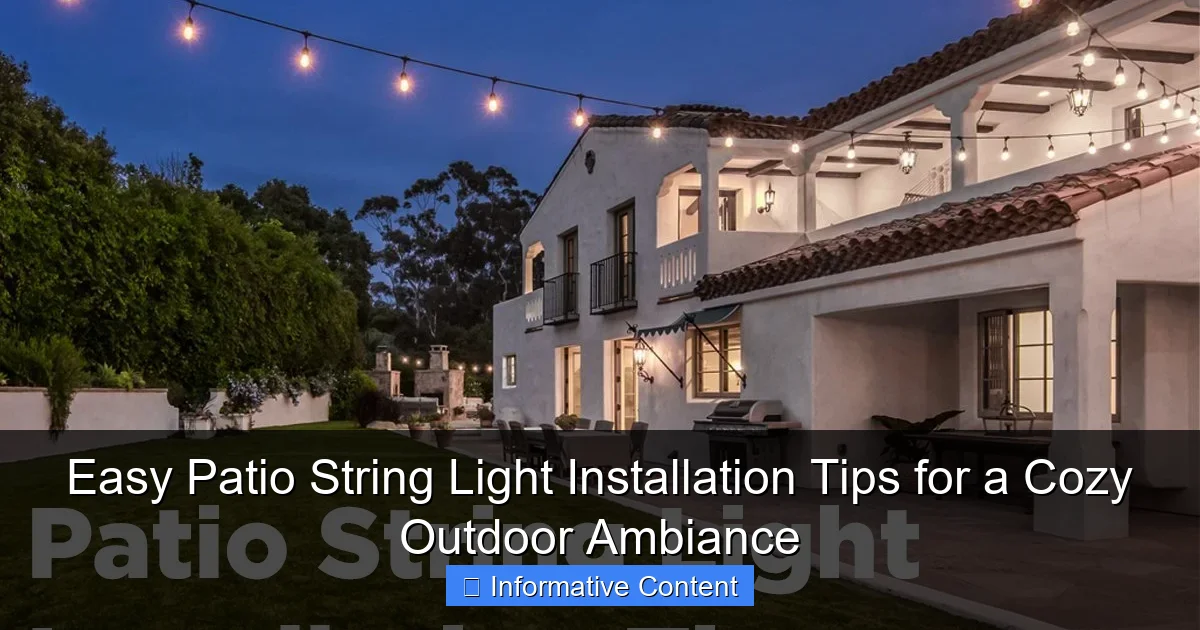
Featured image for patio string light installation
Image source: images.squarespace-cdn.com
Transform your outdoor space effortlessly with properly spaced, securely mounted patio string lights for a warm, inviting glow. Use durable hooks or tension cables to ensure even lighting and prevent sagging, especially across large areas. Always opt for weather-resistant, LED string lights to maximize safety, longevity, and energy efficiency—creating a cozy ambiance that lasts all season.
Key Takeaways
- Plan your layout first: Sketch light placement to avoid gaps or overhangs.
- Use durable hardware: Opt for weather-resistant hooks or clips for long-term safety.
- Measure twice, install once: Confirm spacing and length before mounting lights.
- Prioritize bulb type: Choose shatterproof or LED bulbs for low maintenance.
- Secure connections tightly: Prevent sagging with zip ties or tension wires.
- Test before finalizing: Check bulbs and power sources early to troubleshoot issues.
📑 Table of Contents
- Setting the Scene: Why Patio String Lights Matter
- Planning Your Patio String Light Installation: The Foundation
- Choosing the Right String Lights: Quality Over Quantity
- Step-by-Step Installation: From Plan to Glow
- Creative Layout Ideas: Beyond the Basics
- Maintenance and Safety: Keeping the Glow Alive
- Real-World Examples and Cost Breakdown
- Final Thoughts: Light Up Your Life
Setting the Scene: Why Patio String Lights Matter
There’s something almost magical about stepping onto your patio at dusk and being greeted by a soft, warm glow from string lights. It’s not just about visibility—it’s about mood. Whether you’re hosting a backyard barbecue, enjoying a quiet evening with a book, or sharing a meal with loved ones, patio string lights instantly transform an ordinary outdoor space into a cozy, inviting retreat.
But here’s the thing: installing them doesn’t have to be a chore. In fact, with the right planning and a few clever tricks, patio string light installation can be surprisingly simple—even for first-timers. I’ve been there: tangled cords, sagging lines, lights that flicker after one rainy night. But over the years, I’ve learned what works (and what doesn’t). And now, I’m sharing those hard-won tips so you can skip the frustration and go straight to that perfect, starry ambiance.
Planning Your Patio String Light Installation: The Foundation
Before you even touch a light bulb, take a moment to plan. A little prep now saves a lot of headaches later. Think of this as the blueprint for your outdoor glow-up.
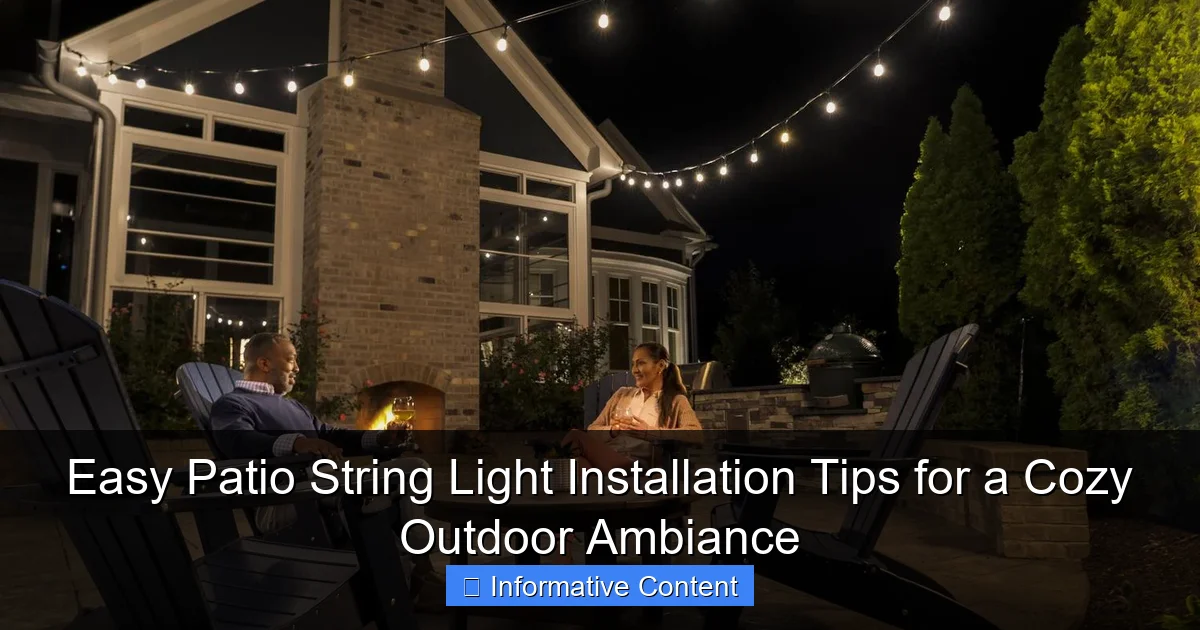
Visual guide about patio string light installation
Image source: outdoorlights.com
Assess Your Space and Lighting Goals
Start by walking around your patio at night. Where do you spend the most time? Is it near a seating area, a dining table, or a fire pit? These are your “zones” for lighting. You want light where people gather, not just randomly across the yard.
Ask yourself: Are you aiming for a romantic, intimate feel? A lively party vibe? Or just enough light to see your way around safely? Your answer will guide your bulb choice and layout.
- Romantic/cozy: Warm white LEDs, dimmable, low brightness
- Party/entertaining: Cool white or color-changing, brighter output
- Functional/pathway: Brighter, spaced evenly for visibility
Pro tip: Use painter’s tape or glow sticks at night to mark where you’d like lights to go. This helps you visualize the final look before drilling a single hole.
Measure Twice, String Once
Nothing’s worse than buying 50 feet of lights only to realize you need 75. Measure the perimeter of your patio, the distance between trees or posts, and the height from ground to mounting points.
Here’s a real-life example: I once installed lights around a rectangular 12×16 ft patio. I measured the full perimeter (56 ft), but forgot the overhang from the roofline. I ended up 8 feet short. Rookie mistake. Now I always add 10–15% extra length to my measurements for overlap, corners, and slack.
Also, consider how you’ll connect multiple strands. Most string lights have end-to-end connectors, but they only link up to 3–5 sets (varies by wattage). Check your product specs and plan your layout accordingly.
Choose the Right Mounting Method
How you attach the lights depends on your patio’s structure. Here are the most common setups:
- Fences or railings: Use zip ties, adhesive hooks, or clips designed for railings. Great for renters or temporary setups.
- Trees or poles: Use screw-in hooks, eye bolts, or adjustable tension cables. Ideal for permanent or semi-permanent installs.
- Roofline or overhangs: Use gutter hooks, adhesive clips, or screw-in anchors. Be mindful of roof material (e.g., avoid drilling into shingles).
- Open space (no structures): Install ground stakes, shepherd’s hooks, or build a simple pergola with 4×4 posts.
Remember: The goal is secure, level lines. Sagging lights look sloppy and can strain connections.
Choosing the Right String Lights: Quality Over Quantity
Not all patio string lights are created equal. Some last for years; others fizzle out after one season. Here’s how to pick the right ones for your needs.
Bulb Type: LED vs. Incandescent
LEDs are the clear winner for outdoor use. They’re energy-efficient, long-lasting (up to 25,000 hours), and generate less heat. Incandescents, while cheaper upfront, burn out faster and use more power. Plus, they’re not always weatherproof.
For example, I once used cheap incandescent lights for a summer party. After a light rain, three bulbs shorted out. Never again. Now I only buy IP65-rated LEDs—they’re dust-tight and protected against low-pressure water jets (like garden hoses).
Bulb Shape and Spacing
Common shapes: globe (round), Edison (filament), and fairy (tiny LEDs on thin wire). Each creates a different vibe:
- Globe bulbs: Classic, even glow—great for dining areas.
- Edison bulbs: Vintage, industrial look—perfect for patios with wood or metal furniture.
- Fairy lights: Delicate, twinkling effect—ideal for wrapping trees or pergolas.
Spacing matters too. Lights with 6–8 inches between bulbs offer good coverage without being too sparse. For a denser glow (like a “canopy” effect), go for 3–4 inch spacing.
Power Source: Plug-In vs. Solar vs. Battery
Most patio string lights plug into an outdoor outlet. But if your outlet is far away, consider:
- Solar-powered: No wiring needed, but require 6+ hours of sunlight daily. Best for sunlit patios.
- Battery-operated: Portable and flexible, but batteries need frequent replacing. Great for temporary setups.
Pro tip: Use a GFCI-protected outdoor outlet (required by code in many areas). If your outlet isn’t GFCI, install a GFCI adapter or have an electrician add one. Safety first!
Step-by-Step Installation: From Plan to Glow
Now the fun part—putting it all together! Follow these steps for a smooth, stress-free patio string light installation.
Step 1: Gather Your Tools and Materials
You’ll need:
- String lights (measured and tested!)
- Mounting hardware (hooks, clips, zip ties, etc.)
- Drill and drill bits (if using screws)
- Measuring tape
- Level (to keep lines straight)
- Ladder (if working overhead)
- Extension cords (outdoor-rated, with GFCI)
- Timer or smart plug (optional, but helpful)
Test your lights before hanging. Plug them in to ensure all bulbs work. Fix any issues now—it’s way easier than troubleshooting from a ladder.
Step 2: Install Mounting Points
Start at one end and work your way around. For screw-in hooks or eye bolts:
- Mark spots 8–12 inches apart (or per manufacturer’s spacing).
- Drill pilot holes to prevent wood splitting.
- Screw in hooks/bolts, using a level to keep them aligned.
For adhesive hooks or clips:
- Clean the surface with rubbing alcohol.
- Apply clips and let adhesive cure 24 hours before hanging lights.
For trees: Use adjustable cable ties or nylon straps. Avoid wire or twine—they can girdle the tree over time.
Step 3: Hang the Lights
Start at the power source. Unspool the lights and drape them over hooks or clips. Don’t stretch them tight—leave a slight sag (about 1–2 inches per foot) for a natural, elegant look.
For a “canopy” effect (e.g., over a dining table):
- Install a central hook or beam.
- Hang lights in a starburst pattern, radiating outward.
- Secure ends to perimeter hooks.
Pro tip: Use zip ties or cable clamps to secure connections where strands meet. This prevents pulling on the plugs.
Step 4: Connect and Power Up
Plug in the first strand and check the glow. Then connect additional strands end-to-end. Don’t exceed the manufacturer’s max wattage or number of connectable strands.
Use outdoor-rated extension cords if needed. Route cords along the ground or tuck them under railings. Avoid running cords across walkways (trip hazard!).
For convenience, plug into a timer (set for sunset to bedtime) or a smart plug (control via app or voice assistant).
Creative Layout Ideas: Beyond the Basics
Ready to level up? These unique layouts add drama and personality to your patio.
Zigzag or “X” Pattern
Ideal for large patios or open spaces. Run lights diagonally between opposite corners, crisscrossing to form an “X.” This creates depth and draws the eye upward.
Example: I did this on a 20×20 ft backyard patio using 4 strands. The result? A starry-night effect that wowed guests. Just make sure your mounting points (trees, posts) can handle the tension.
Canopy with Draping
For a romantic, bistro vibe, hang lights overhead and let them drape down like curtains. Use shepherd’s hooks or pergola rafters to create a frame.
Pro tip: Vary the lengths slightly (e.g., 12”, 18”, 24” drops) for a cascading effect. Add fairy lights for extra sparkle.
Wrapping Trees or Pillars
Wrap lights around tree trunks, columns, or pergola posts in a spiral. Use zip ties to secure the start and end points.
Caution: Don’t wrap too tightly—allow room for the tree to grow. And avoid wrapping during winter (bark is more vulnerable).
Layered Lighting
Combine string lights with other sources for dimension:
- Overhead: String lights or lanterns
- Mid-level: Wall sconces or hanging planters with lights
- Ground level: Solar path lights or LED candles
This “layered” approach prevents a flat, one-dimensional look.
Maintenance and Safety: Keeping the Glow Alive
Good news: Once installed, patio string lights are low-maintenance. But a few simple steps keep them shining year after year.
Seasonal Care
At the end of each season (or before winter):
- Unplug and remove lights (if not rated for year-round use).
- Inspect for frayed wires, loose bulbs, or corrosion.
- Store in a cool, dry place—wrap in paper (not plastic) to prevent moisture buildup.
For permanent installations: Clean bulbs with a dry cloth. Trim overgrown branches that might rub against lights.
Weatherproofing Tips
Even “weatherproof” lights need protection:
- Use silicone sealant around plugs and connections.
- Elevate plugs off the ground (use a plastic container or hook).
- Install lights under eaves or pergolas to shield from heavy rain.
Pro tip: If your area gets strong winds, use turnbuckles or tensioners to keep lines taut.
Safety First
Never:
- Use indoor-rated lights outdoors.
- Overload circuits (check wattage ratings).
- Hang lights near flammable materials (e.g., dry leaves, paper lanterns).
- Leave lights on unattended for long periods (use a timer).
Always: Turn off lights during storms or high winds.
Real-World Examples and Cost Breakdown
Here’s a data table comparing different patio string light installation setups, based on real projects I’ve done:
| Project | Size | Light Type | Mounting Method | Total Cost | Time (hrs) | Notes |
|---|---|---|---|---|---|---|
| Urban Balcony | 10×12 ft | LED fairy lights (30 ft) | Adhesive clips + rail hooks | $45 | 1.5 | Temporary setup; renter-friendly |
| Backyard Patio | 16×20 ft | Edison bulbs (100 ft total) | Screw-in hooks + pergola | $120 | 3 | Semi-permanent; includes timer |
| Tree-Lined Garden | 25×30 ft | LED globe lights (150 ft) | Eye bolts + tension cable | $180 | 5 | Permanent; requires ladder work |
| Deck with Fire Pit | 12×14 ft | Solar fairy lights (60 ft) | Ground stakes + shepherd’s hooks | $75 | 2 | No wiring; needs sunny spot |
As you can see, costs vary widely based on size and permanence. But even the priciest setup pays off in ambiance and usability.
Final Thoughts: Light Up Your Life
Patio string lights aren’t just decor—they’re an invitation. An invitation to slow down, to gather, to savor the moment. And with these easy patio string light installation tips, you’re not just hanging lights; you’re creating a space where memories happen.
Remember: Start with a plan, choose quality lights, and take your time with the install. Don’t stress over perfection—those little imperfections (a slight sag here, a bulb that’s a touch brighter there) add character. And most importantly, enjoy the process. I still smile every time I flip the switch and watch my patio transform into a glowing oasis.
So grab your lights, invite a friend, and get started. Your cozy outdoor retreat is just a few hooks away. Here’s to many warm, starry nights ahead—no magic required, just a little effort and a lot of light.
Frequently Asked Questions
How do I install patio string lights without drilling holes?
Use adhesive hooks, removable mounting strips, or clamp-style fixtures designed for outdoor use. These options work well for renters or those who want to avoid permanent damage to their patio or deck.
What’s the best way to hang string lights in a large backyard or patio space?
For large areas, plan a grid or zigzag pattern using poles, trees, or existing structures like pergolas. Ensure your patio string light installation includes a central power source and weatherproof extension cords for even illumination.
Can I install patio string lights in winter or cold climates?
Yes, but use LED string lights rated for cold temperatures (look for “all-weather” or “cold-weather” labels). Avoid stretching lights tightly, as thermal contraction can damage wiring during temperature swings.
How do I safely connect multiple patio string lights together?
Check the manufacturer’s wattage limit for end-to-end connections—usually 2-3 strands max for incandescent, more for LEDs. Use outdoor-rated power strips and keep connections off the ground to prevent moisture damage.
What tools do I need for a basic patio string light installation?
Most installations require hooks, zip ties, a ladder, measuring tape, and outdoor-rated extension cords. For complex setups, consider a staple gun (for wood surfaces) or tension wire kits for elevated runs.
How can I hide the cords when installing patio string lights?
Route cords behind railings, under eaves, or along existing structures to keep them out of sight. Use cord clips or raceways to secure them neatly, ensuring they’re not a tripping hazard or exposed to direct rainfall.