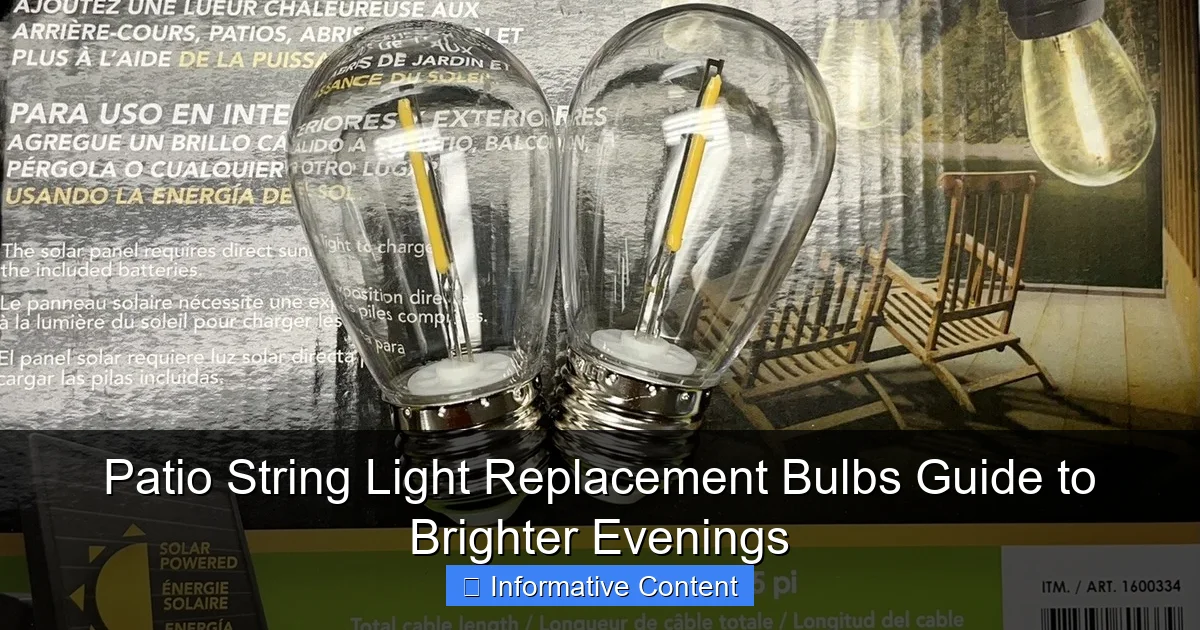
Featured image for patio string light replacement bulbs
Image source: i.ebayimg.com
Choosing the right patio string light replacement bulbs can transform your outdoor space with reliable brightness and long-lasting performance. LED bulbs offer energy efficiency, weather resistance, and a range of color temperatures to match any ambiance—making them the top choice for modern outdoor lighting. Don’t settle for dim or flickering lights; upgrade with the right replacements for brighter, more inviting evenings.
Key Takeaways
- Choose LED bulbs: Opt for energy-efficient, long-lasting LEDs to save on power and replacements.
- Check bulb shape: Match the bulb style (e.g., S14, G40) to your string light sockets.
- Prioritize weatherproofing: Select bulbs rated for outdoor use to withstand rain and UV exposure.
- Adjust brightness: Pick bulbs with the right lumens (100–200) for ambient patio lighting.
- Verify voltage: Ensure bulbs match your string lights’ voltage (120V or 24V) to avoid damage.
- Buy extras: Keep spare bulbs on hand to quickly replace burnt-out ones and maintain ambiance.
📑 Table of Contents
Why Replacing Patio String Light Bulbs Matters
There’s something magical about the soft glow of patio string lights on a warm summer evening. They turn a simple backyard into a cozy retreat, perfect for late-night conversations, barbecues, or just unwinding after a long day. I remember my first patio setup—a string of vintage-style Edison bulbs draped across the pergola. The ambiance was unforgettable, but a few months in, one bulb after another started flickering out. I assumed the entire strand was doomed. Then I discovered patio string light replacement bulbs—a simple, affordable fix that saved my favorite outdoor feature.
Many people don’t realize that string lights are often modular. Instead of replacing the whole set when one bulb fails, you can swap in new ones. This not only saves money but also reduces waste. Whether your lights are for year-round use or seasonal gatherings, knowing how to choose, install, and maintain replacement bulbs ensures your evenings stay bright and inviting. In this guide, we’ll walk through everything you need to know about patio string light replacement bulbs, from types and sizes to troubleshooting and smart upgrades.
Understanding Your String Light System
How String Lights Work (And Why Bulbs Fail)
Patio string lights come in two main configurations: series and parallel. In a series circuit, all bulbs are linked in a single path. If one bulb burns out or is removed, the entire strand goes dark—like a chain reaction. This is common in older or cheaper sets. Parallel circuits, on the other hand, have each bulb on its own path. If one fails, the rest stay lit. Most modern outdoor string lights use parallel wiring, making them more reliable and easier to repair.
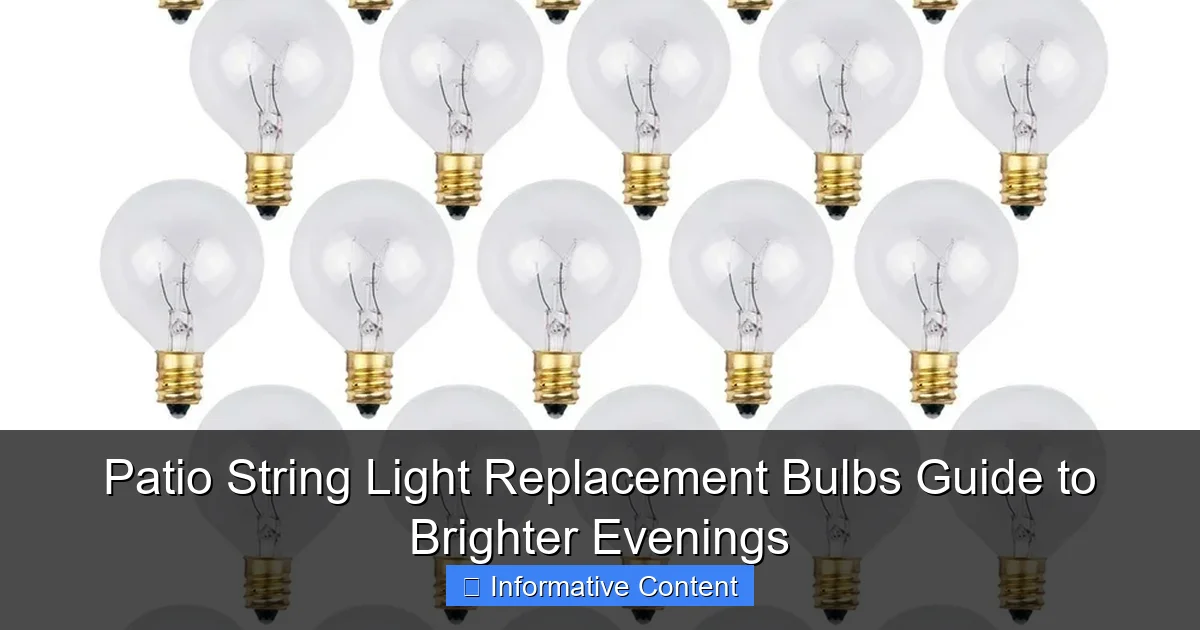
Visual guide about patio string light replacement bulbs
Image source: i5.walmartimages.com
Bulb failure can happen for several reasons:
- Age and heat: Over time, the filament in incandescent bulbs wears out. LED bulbs last longer but can still degrade due to heat or moisture.
- Moisture exposure: Even weatherproof bulbs can corrode if seals fail or if water pools in the socket.
- Voltage fluctuations: Power surges or using bulbs with the wrong wattage can shorten bulb life.
- Physical damage: Bumping or wind can crack bulbs or loosen connections.
Knowing your light type helps you choose the right patio string light replacement bulbs. For example, if your strand goes dark when one bulb is removed, it’s likely a series circuit—so you’ll need to replace the dead bulb immediately to restore function.
Identifying Your Socket Type and Bulb Size
Before buying replacements, identify your socket type. This is usually marked on the socket or the original bulb packaging. Common types include:
- E12 (Candelabra): Small base, often used for decorative or vintage-style bulbs.
- E17 (Intermediate): Slightly larger than E12, common in mid-sized patio lights.
- E26 (Standard/Medium): The same base as most household bulbs, used in larger outdoor strands.
Next, check the bulb shape and size. Look for labels like:
- ST58: A teardrop-shaped bulb with a 58mm diameter, popular for Edison-style lights.
- A19: The classic “light bulb” shape, 19/8 inches wide, used in some modern outdoor sets.
- G40: Globe-shaped, 40mm diameter, often used in bistro lights.
Pro tip: Take a photo of your current bulb (with the base visible) and bring it to the store or use it to search online. This avoids ordering the wrong size. I once bought E12 bulbs for what I thought was an E26 strand—only to realize they were too small. Lesson learned!
Choosing the Right Replacement Bulbs
Incandescent vs. LED: The Great Debate
This is the big question: Should you stick with incandescent bulbs or upgrade to LED? Let’s break it down.
Incandescent bulbs are the classic choice. They emit a warm, golden glow that many people love. They’re cheap upfront and easy to find. However, they have major downsides:
- High energy use (40-60 watts per bulb)
- Short lifespan (1,000-2,000 hours)
- Fragile filaments that break easily
- Heat output (can be a fire hazard if near flammable materials)
LED bulbs, on the other hand, are the modern favorite. They’re more expensive initially (usually $2–$5 per bulb), but they last 25,000–50,000 hours—up to 50 times longer than incandescent. They use 80% less energy and stay cool to the touch. Plus, they come in a range of color temperatures (warm white, cool white, daylight) and even color-changing options.
For patio string light replacement bulbs, I recommend LED—especially if your lights are on for hours each night. The long-term savings on energy and replacements make up for the initial cost. One friend switched to LED and hasn’t changed a bulb in three years. Her electricity bill dropped by $15/month during summer.
Color Temperature and Brightness: Setting the Mood
Not all “white” light is the same. Color temperature, measured in Kelvins (K), affects the mood of your space:
- 2700K–3000K: Warm white. Cozy, inviting, like candlelight. Ideal for dining areas or lounging.
- 3500K–4000K: Cool white. Crisp and clean, good for task lighting (e.g., outdoor kitchens).
- 5000K+: Daylight. Bright and energizing, but can feel harsh for relaxation.
For most patios, 2700K–3000K is perfect. It mimics the golden hour of sunset. I once used 4000K bulbs for a party—everyone complained it felt like an office. Switched to 2700K, and the vibe instantly improved.
Brightness is measured in lumens. A 40W incandescent bulb produces about 450 lumens. LED equivalents range from 400–800 lumens. For ambiance, 400–600 lumens per bulb is plenty. Over-lighting can ruin the cozy effect.
Dimmable and Smart Bulb Options
Want more control? Consider dimmable or smart bulbs.
- Dimmable bulbs let you adjust brightness with a remote or switch. Great for transitioning from dinner to movie night. Just ensure your string light is dimmer-compatible (check the product specs).
- Smart bulbs connect to Wi-Fi or Bluetooth. Control them via app, voice (Alexa/Google Assistant), or schedule automatic on/off times. Some even change color or pulse to music. Brands like Philips Hue and LIFX make outdoor-rated smart bulbs, though they’re pricier ($15–$25 each).
Smart bulbs are a splurge, but worth it if you entertain often. I use smart bulbs for holidays—programming red and green lights for Christmas or spooky orange for Halloween. The kids love it!
Where to Buy Replacement Bulbs (And What to Avoid)
Trusted Retailers and Online Stores
You can find patio string light replacement bulbs almost anywhere, but quality varies. Here’s where to look:
- Hardware stores (Home Depot, Lowe’s): Great for in-person inspection. Staff can help match bulbs.
- Specialty lighting stores: Offer high-quality, weatherproof bulbs. Prices are higher, but reliability is better.
- Online retailers (Amazon, Walmart, eBay): Huge selection, but read reviews. Look for “outdoor-rated” and “wet location” tags.
- Manufacturer websites: If your string lights are from a known brand (e.g., Brightech, Gerson), check their site. They often sell direct.
Avoid generic “bargain bin” bulbs. They may not be weatherproof or could have inconsistent quality. I once bought a 20-pack of $1 bulbs online. Half burned out in a month, and the color was uneven (some were yellow, others blue).
Reading Labels: What to Look For
When comparing bulbs, check these labels:
- Wet Location Rated: Essential for outdoor use. Means the bulb can handle rain, snow, and humidity.
- IP Rating: Ingress Protection. Look for IP44 or higher. IP44 resists splashes; IP65 is dust-tight and jet-water resistant.
- Voltage: Most outdoor bulbs are 120V (standard in the US). Match your strand’s voltage.
- Lifespan: LED bulbs often list “rated life” in hours (e.g., 25,000 hours).
- Warranty: Reputable brands offer 1–3 year warranties.
Pro tip: Buy extras. Store a few spare bulbs in a sealed bag with silica gel to prevent moisture damage. I keep a “patio light emergency kit” in my garage—saved me during a surprise rainstorm last summer.
Installation and Maintenance Tips
Step-by-Step Replacement Guide
Swapping out a bulb is easy, but do it right to avoid damage:
- Unplug the strand: Safety first! Never handle bulbs with the power on.
- Remove the old bulb: Grip the base (not the glass) and twist counterclockwise. If it’s stuck, use a rubber glove for grip.
- Inspect the socket: Look for corrosion, dirt, or bent contacts. Clean with a cotton swab and rubbing alcohol if needed.
- Insert the new bulb: Align the base and twist clockwise until snug. Don’t overtighten—this can crack the socket.
- Test the strand: Plug it in. If it doesn’t light, check the bulb orientation and socket.
For series circuits: Replace the dead bulb immediately. If you leave it out, the strand stays dark.
Preventing Future Failures
Extend your bulbs’ life with these tips:
- Use surge protectors: Power strips with surge protection prevent voltage spikes from damaging bulbs.
- Seal sockets: Apply dielectric grease to the base before installing. This repels moisture and prevents corrosion.
- Elevate the strand: Hang lights so they don’t touch the ground or pool water. Use hooks or clips.
- Take them down seasonally: If you live in a harsh climate, store lights indoors during winter. Moisture and cold shorten lifespan.
One reader shared a genius hack: She wraps her sockets with electrical tape after installing bulbs. It’s not pretty, but it keeps water out. I tried it—no bulb failures in two years!
Data Table: Popular Replacement Bulbs Compared
| Brand | Bulb Type | Base Size | Color Temp (K) | Lumens | Lifespan (hrs) | Price (per bulb) | Weatherproof |
|---|---|---|---|---|---|---|---|
| Philips LED | G40 Globe | E12 | 2700 | 500 | 25,000 | $4.50 | Yes (IP44) |
| Feit Electric | ST58 Edison | E26 | 3000 | 450 | 20,000 | $3.95 | Yes (IP44) |
| LIFX Mini | Smart Color | E26 | 2500–9000 | 800 | 25,000 | $22.99 | Yes (IP65) |
| GE Vintage | Incandescent | E17 | 2200 | 250 | 1,500 | $1.20 | Yes (IP44) |
| Brightech | LED Edison | E26 | 2700 | 400 | 30,000 | $5.00 | Yes (IP65) |
Final Thoughts: Keep Your Patio Shining
Patio string lights are more than just decorations—they’re mood-setters, conversation starters, and a little slice of magic in your backyard. When bulbs fail, don’t toss the whole strand. With the right patio string light replacement bulbs, you can restore the glow in minutes. Whether you choose long-lasting LEDs, smart bulbs, or classic incandescents, the key is matching the bulb to your system and environment.
Remember: Invest in quality. A $5 LED bulb that lasts 10 years beats a $1 incandescent that dies in months. Keep spares on hand, protect your sockets, and don’t be afraid to experiment with color and brightness. Your patio deserves to shine—literally and figuratively. So next time a bulb burns out, smile. You’ve got this. Happy lighting, friend. May your evenings be as bright as your memories.
Frequently Asked Questions
What type of bulbs work best for patio string light replacement?
LED bulbs are ideal for patio string light replacement bulbs due to their energy efficiency, long lifespan, and warm glow. They’re also weather-resistant, making them perfect for outdoor use year-round.
How do I know what size replacement bulbs to buy?
Check your string light’s socket type (usually E12 or E17) and bulb shape (like G40 or S14) before purchasing. Most packaging or product descriptions for patio string light replacement bulbs will list these details.
Can I mix different bulb types in my patio string lights?
It’s not recommended—mixing wattages or bulb types (e.g., incandescent and LED) can cause uneven lighting or damage the circuit. Stick to the same bulb type and wattage for consistent performance.
Are patio string light replacement bulbs waterproof?
Most replacement bulbs are designed with weather-resistant coatings or IP44+ ratings, but always verify the product description. Look for “damp-rated” or “wet-rated” labels for heavy rain or snow areas.
How long do LED replacement bulbs last for patio lights?
High-quality LED patio string light replacement bulbs can last 15,000–25,000 hours, or roughly 5–10 years with regular use. Their durability makes them a cost-effective choice over time.
Why do some of my patio string lights flicker or burn out quickly?
Flickering or early burnout can result from voltage surges, loose sockets, or using incompatible bulbs. Ensure your bulbs match the string light’s specifications and inspect sockets for debris or damage.