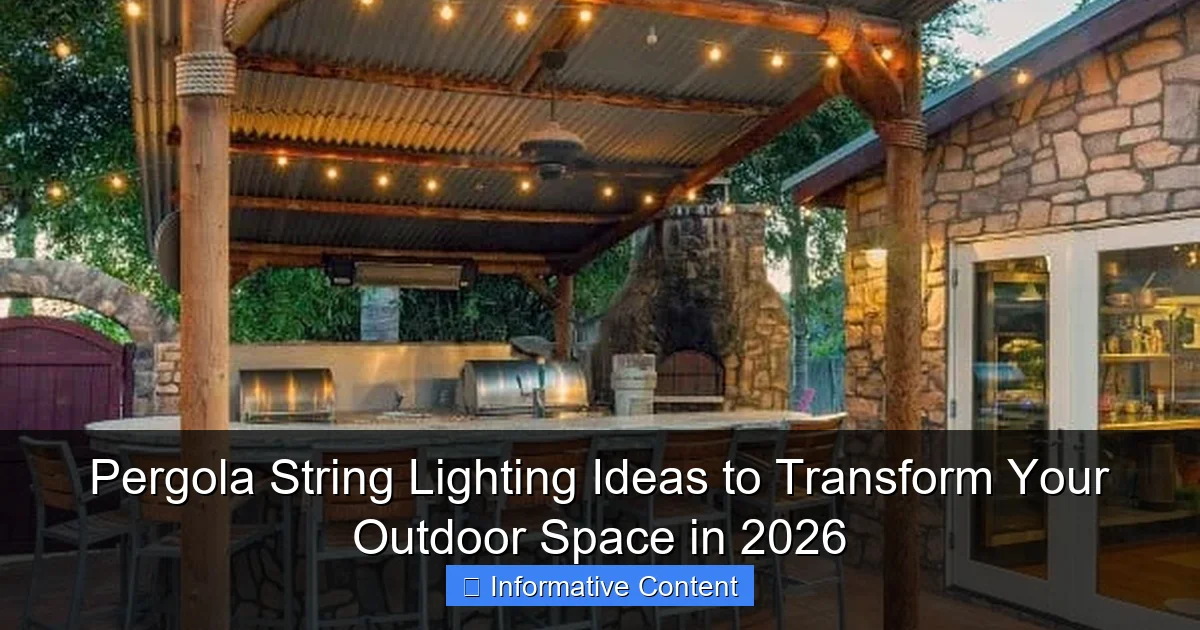
Featured image for pergola string lighting
Image source: nextluxury.com
Transform your pergola into a captivating nighttime oasis with strategic string lighting that blends ambiance and functionality in 2026. From energy-efficient LEDs to smart, color-changing bulbs, today’s options offer effortless customization for any mood or occasion. Elevate your outdoor space with weather-resistant, easy-to-install designs that turn simple gatherings into unforgettable experiences.
Key Takeaways
- Choose warm LEDs: Opt for 2700K-3000K bulbs to create a cozy, inviting glow.
- Layer lighting: Combine string lights with spotlights for depth and functionality.
- Weatherproof matters: Use IP65-rated lights to ensure durability in all conditions.
- Spacing is key: Hang bulbs 6-12 inches apart for balanced, even illumination.
- Smart controls: Install dimmers or app-controlled lights for effortless ambiance shifts.
- Mix styles: Pair Edison bulbs with fairy lights for visual interest and charm.
📑 Table of Contents
- Why Pergola String Lighting Is the Secret to Your Dream Outdoor Space
- How Pergola String Lighting Works (And Why It’s So Popular)
- Top Pergola String Lighting Ideas for 2026
- How to Install Pergola String Lighting (Step-by-Step Guide)
- Common Mistakes to Avoid (And How to Fix Them)
- Energy Efficiency, Cost, and Sustainability: What You Need to Know
- Conclusion: Light Up Your Life (Literally)
Why Pergola String Lighting Is the Secret to Your Dream Outdoor Space
Imagine stepping outside on a warm summer evening, the air filled with the soft hum of conversation and laughter. Above you, delicate strands of light twinkle like stars, casting a warm, inviting glow over your pergola. This isn’t just a dream—it’s a reality that’s easier to achieve than you think. Pergola string lighting has become the go-to solution for transforming outdoor spaces into cozy, magical retreats, and in 2026, it’s bigger (and better) than ever.
Whether you’re hosting a backyard barbecue, enjoying a quiet night with a book, or celebrating a special occasion, the right lighting can completely change the mood of your outdoor area. I learned this firsthand when I installed string lights over my own pergola last year. What started as a simple weekend project turned into the most-used part of my backyard. Suddenly, my patio went from “meh” to “must-visit.” And the best part? You don’t need to be an electrician or spend a fortune to get that same magic.
How Pergola String Lighting Works (And Why It’s So Popular)
Let’s start with the basics: pergola string lighting isn’t just about hanging lights—it’s about creating atmosphere. These lights are typically long strands of LED or incandescent bulbs, often shaped like mini lanterns, globes, or even Edison-style filaments, that are strung across the beams of a pergola. The result? A soft, diffused light that’s perfect for relaxing or entertaining.
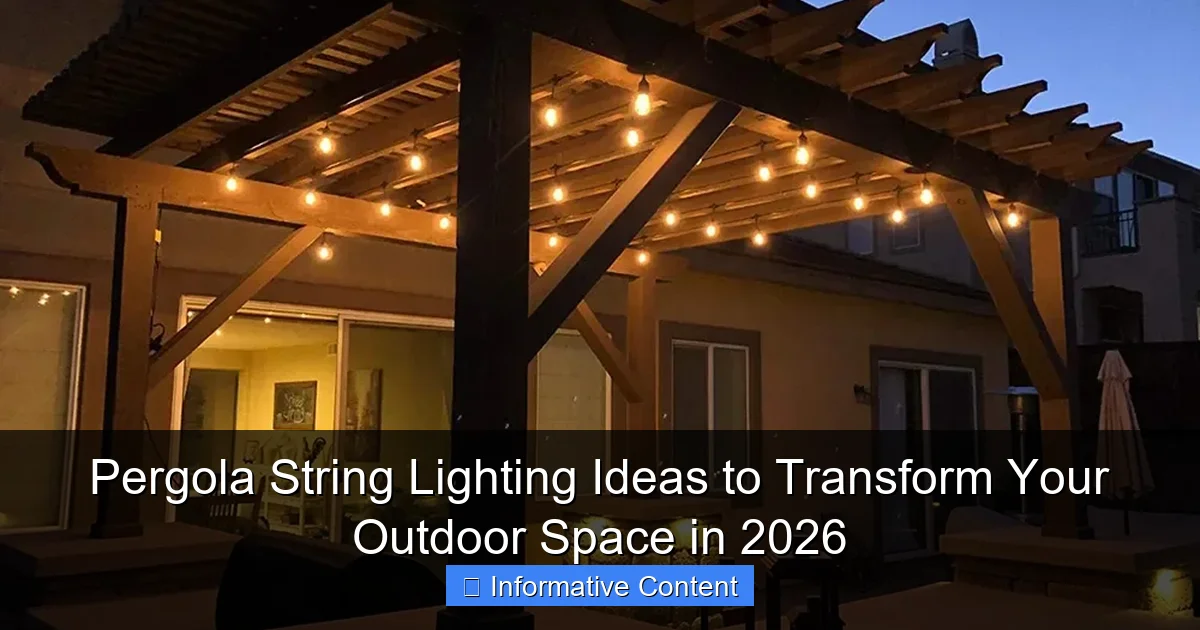
Visual guide about pergola string lighting
Image source: robbreport.com
Types of String Lights for Pergolas
Not all string lights are created equal. Here’s a quick breakdown of the most popular types:
- LED String Lights: Energy-efficient, long-lasting, and cool to the touch. Great for year-round use and available in warm white, cool white, and color options.
- Incandescent String Lights: Classic, warm glow with a vintage feel. Slightly more fragile and less efficient than LEDs, but beloved for their nostalgic charm.
- Solar-Powered String Lights: Eco-friendly and easy to install—no wiring needed. Best for areas with consistent sunlight, though they may dim on cloudy days.
- Smart String Lights: Wi-Fi or Bluetooth-enabled, allowing you to control color, brightness, and even set schedules via an app. Ideal for tech-savvy users who want customization.
Why Pergolas Are Perfect for String Lighting
Pergolas are natural lighting frames. Their open-beam structure gives you anchor points to drape, crisscross, or zigzag lights without needing extra hardware. Plus, the height creates a canopy effect—lights hang above eye level, reducing glare and creating a soft, overhead glow. I’ve seen pergolas with just a single strand of lights look stunning, while others go all out with multiple layers for a “starry sky” effect. The beauty is in the flexibility.
Real-Life Example: A Cozy Backyard Transformation
Take my friend Sarah, who lives in Seattle. Her pergola was underused because it felt too dark at night. She installed 100-foot LED string lights (warm white, 2700K) in a crisscross pattern across the beams. Total cost? Under $80. Now, her family eats dinner outside most nights, and she’s hosted three birthday parties under that twinkling canopy. “It’s like we added a second living room,” she told me. “And my kids call it ‘the magic roof.’”
Top Pergola String Lighting Ideas for 2026
2026 is all about personalization and blending style with function. Here are the trending ideas that’ll make your pergola stand out—without breaking the bank.
1. The “Starburst” Effect
Instead of straight lines, hang lights in a radial pattern from the center of the pergola. Use a central hook or ring, then drape strands outward like spokes. This creates a dramatic focal point, especially if you use globe-shaped bulbs. Pro tip: Add a few longer strands that drape down like vines for extra texture.
2. Layered Lighting (The “Canopy” Look)
Combine multiple types of lights for depth. For example:
- Hang a base layer of warm white LEDs in parallel lines.
- Add a second layer of color-changing smart lights in a crisscross pattern.
- Drop a few strands of fairy lights or icicle lights along the edges for a “dripping” effect.
This works wonders for larger pergolas. I tried this in my backyard last fall, and guests couldn’t stop asking, “How did you make it look like a fairy tale?”
3. Themed Lighting
Match your lights to your outdoor decor:
- Bohemian: Use multicolored bulbs with tassels or fabric covers.
- Modern Farmhouse: Stick to warm Edison-style bulbs with black or bronze cords.
- Coastal: Try blue-white LEDs with seashell-shaped covers.
Sarah’s “nautical” theme (blue lights + rope-style cords) was a hit at her summer party. “It felt like we were dining on a yacht,” her husband joked.
4. Motion and Sound-Activated Lights
For high-tech flair, try smart lights that react to movement or music. Some brands offer lights that pulse with your playlist or brighten when someone walks under the pergola. I tested a set during a movie night—lights synced to the soundtrack, and it was unforgettable. Just be sure to test them during daylight to avoid overstimulation.
5. “Hidden” Lighting
Want a sleek, modern look? Conceal lights under the pergola’s beams using clips or adhesive strips. This creates a floating effect, as if the bulbs are hanging in mid-air. Great for minimalist designs. Caution: Make sure cords are secured to prevent tripping hazards.
How to Install Pergola String Lighting (Step-by-Step Guide)
Installing string lights doesn’t have to be intimidating. With the right tools and a little patience, you can do it in a weekend.
Step 1: Plan Your Layout
Before buying lights, sketch your pergola and decide:
- How many strands you need (measure the perimeter and beam length).
- Where to place anchors (e.g., beams, posts, or nearby trees).
- Power source location (outlet, extension cord, or solar).
I once bought too many lights and ended up with a tangled mess. Measure twice, buy once!
Step 2: Choose the Right Hardware
You’ll need:
- Hooks or eye screws: Use stainless steel or weatherproof types for durability.
- Zip ties or cord clips: For securing cords along beams.
- Extension cords (if needed): Opt for outdoor-rated, heavy-duty cords.
For wooden pergolas, pre-drill holes to avoid splitting the wood. For metal, use magnetic hooks or adhesive clips.
Step 3: Hang the Lights
Start at one end and work your way across. For parallel lines:
- Attach hooks every 12–18 inches along the beams.
- String lights between hooks, keeping them taut but not stretched.
- Use a ladder and a helper—safety first!
For crisscross patterns, tie lights at diagonal angles, creating an “X” shape. I recommend using a template (like a cardboard cutout) to test spacing before finalizing.
Step 4: Power and Test
Connect to a power source and test all bulbs. If using smart lights, pair them with your app. Pro tip: Plug into a GFCI outlet for safety, especially in rainy climates.
Step 5: Weatherproofing
To extend lifespan:
- Use silicone sealant around plug connections.
- Store cords in a waterproof box when not in use.
- Trim any loose branches that could snag lights.
Sarah’s lights survived three Seattle winters because she used weatherproof hooks and covered the plug with a plastic bag when it rained.
Common Mistakes to Avoid (And How to Fix Them)
Even the best plans can go sideways. Here’s what I’ve learned from my own mishaps and others’.
Overcrowding the Pergola
More lights aren’t always better. Too many strands can create glare or look chaotic. Aim for 1–2 strands per 10 feet of beam length. I once hung four strands and ended up with a “disco ball” effect—not relaxing at all. Now I stick to two layers max.
Ignoring the Power Source
Extension cords can be eyesores or tripping hazards. If you can’t hide them under rugs or planters, consider:
- Installing an outdoor outlet (hire an electrician).
- Using solar-powered lights.
- Running cords through PVC pipes (painted to match your pergola).
Sarah solved this by routing cords through a hollow wooden post.
Choosing the Wrong Bulb Color
Cool white (4000K+) can feel sterile; warm white (2700K) is cozier. For dining areas, 2700K–3000K is ideal. I made the mistake of using cool white once—my backyard felt like a parking lot. Switched to warm white, and it was instantly inviting.
Skipping Maintenance
String lights collect dust, pollen, and bird droppings. Clean them every 3–6 months with a damp cloth (unplug first!). Replace any flickering bulbs promptly—they can shorten the lifespan of the entire strand.
Forgetting About Wind
Loose cords can whip in the wind, damaging lights or pergola beams. Use zip ties every 2–3 feet to secure cords. In windy areas, opt for heavier-duty lights with thicker cords.
Energy Efficiency, Cost, and Sustainability: What You Need to Know
Let’s talk numbers. Pergola string lighting can be budget-friendly and eco-conscious—if you choose wisely.
Energy Costs: LED vs. Incandescent
LEDs use up to 80% less energy than incandescent bulbs. Here’s a quick comparison for a 100-foot strand running 4 hours/night:
| Type | Bulb Count | Wattage | Monthly Cost (at $0.12/kWh) | Lifespan |
|---|---|---|---|---|
| LED | 50 | 10W | $0.14 | 25,000 hours |
| Incandescent | 50 | 50W | $0.72 | 1,000 hours |
Over 5 years, LEDs save you about $35 in electricity (plus fewer bulb replacements). Solar lights take it further—zero energy costs, but require 6+ hours of daily sun.
Upfront Costs and ROI
- Basic LED strand: $15–$30
- Smart lights: $40–$100
- Solar lights: $20–$50
- Installation hardware: $10–$25
Total for a DIY setup: $50–$150. Compared to a $1,000+ outdoor lighting system, it’s a steal. And the ROI? Sarah’s backyard became her family’s favorite hangout—she calls it “the best $80 we ever spent.”
Sustainability Tips
- Choose recyclable packaging and energy-efficient LEDs.
- Don’t toss old strands—some brands offer recycling programs.
- Use smart timers to avoid leaving lights on all night.
I’ve reused my old LED strands for holiday decor—double the value!
Conclusion: Light Up Your Life (Literally)
Your pergola is more than a structure—it’s a blank canvas for memories. With pergola string lighting, you can turn ordinary evenings into moments you’ll cherish. Whether you go for a simple crisscross pattern or a high-tech smart setup, the key is to make it *yours*.
Start small. Test one strand. See how it feels. Then, like me, you might find yourself adding more—and using your outdoor space more than you ever thought possible. In 2026, the trend isn’t just about lights; it’s about connection. Connection to nature, to loved ones, and to the joy of a space that truly feels like home. So grab some string lights, invite your friends, and let the magic begin. After all, the best stories start under a sky—even if it’s just your backyard.
And remember: the perfect lighting isn’t about perfection. It’s about the laughter, the quiet moments, and the glow that makes everything feel just right.
Frequently Asked Questions
What are the best pergola string lighting ideas for 2026?
Pergola string lighting ideas for 2026 focus on energy-efficient LED options, smart controls, and unique shapes like globe, Edison, or cascading lights. Consider dimmable and color-changing lights to adapt to different moods and occasions. These trends blend style and functionality for a stunning outdoor transformation.
How do I install string lights on a pergola without damaging it?
Use removable hooks, adhesive clips, or zip ties to secure pergola string lighting without drilling or permanent alterations. Ensure the lights are evenly spaced and follow the pergola’s structure for a polished look. Always check the weight of the lights to avoid sagging or strain.
Can I use pergola string lights year-round?
Yes, if you choose weather-resistant, outdoor-rated pergola string lighting with UV and water protection. Look for IP65 or higher-rated lights to withstand rain, snow, and sun. Proper storage during extreme weather can also extend their lifespan.
What type of bulbs work best for pergola string lighting?
LED bulbs are ideal for pergola string lighting due to their energy efficiency, durability, and low heat output. Edison-style or vintage bulbs add a cozy, retro vibe, while globe lights create a modern, elegant ambiance. Choose based on your desired aesthetic and brightness needs.
How do I power pergola string lights if there’s no nearby outlet?
Use solar-powered pergola string lights or a weatherproof extension cord with a GFCI outlet for safety. Alternatively, consider battery-operated lights or a portable power station for remote areas. Solar options are eco-friendly and eliminate the need for wiring.
Are smart pergola string lights worth it?
Smart pergola string lighting lets you control brightness, colors, and schedules via app or voice assistants, adding convenience and versatility. They’re perfect for creating dynamic atmospheres or automating lighting for events. While pricier upfront, their long-term benefits justify the investment.