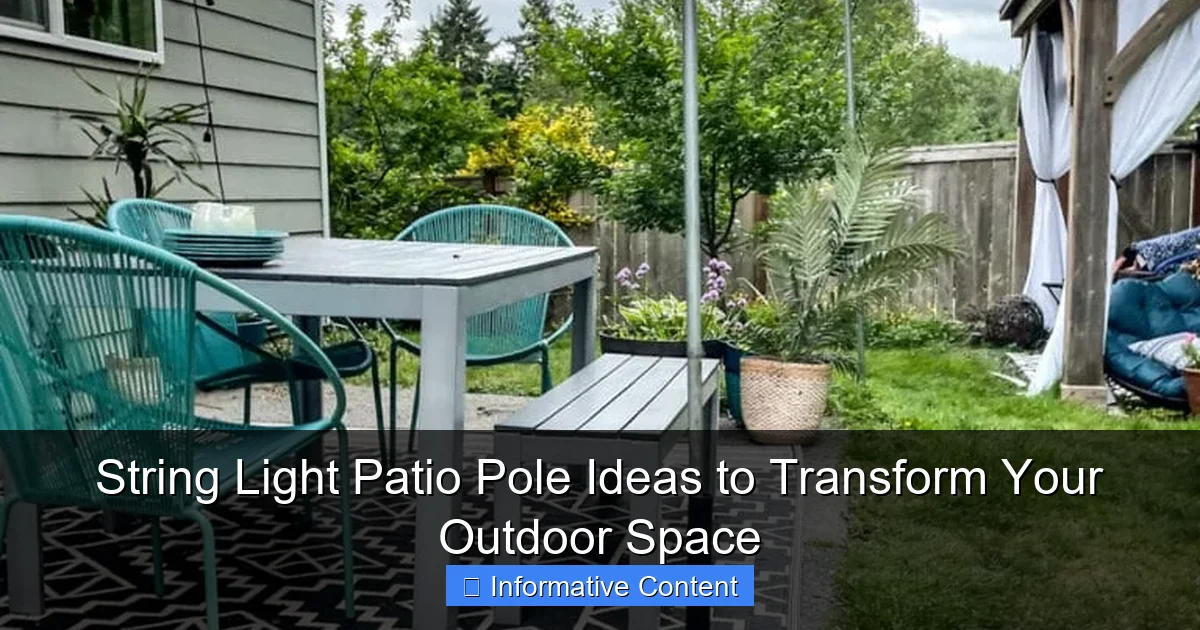
Featured image for string light patio pole
Image source: jessicawellinginteriors.com
String light patio poles are the ultimate solution for elevating your outdoor ambiance, offering both functionality and style. From DIY installations to sleek commercial designs, these poles create a magical glow that transforms patios, gardens, and decks into enchanting retreats. Perfect for year-round entertaining, they’re a must-have for anyone looking to blend practicality with captivating aesthetics.
Key Takeaways
- Choose sturdy poles: Ensure durability with weather-resistant materials like steel or aluminum.
- Plan spacing wisely: Space poles 8–10 feet apart for balanced, even light distribution.
- Use adjustable heights: Install telescoping poles for flexible lighting and easy maintenance.
- Anchor securely: Prevent tipping with concrete footings or weighted bases for stability.
- Mix styles creatively: Combine poles with trees, railings, or fences for layered effects.
- Prioritize safety: Always check electrical codes and use outdoor-rated lights and cords.
📑 Table of Contents
- Why String Light Patio Poles Are a Game-Changer for Your Backyard
- Understanding String Light Patio Poles: What They Are and Why You Need Them
- Choosing the Right String Light Patio Pole: A Buyer’s Guide
- Creative String Light Patio Pole Ideas for Every Style
- Installation Tips: How to Set Up Your String Light Patio Poles (Without Losing Your Mind)
- Maintaining Your String Light Patio Poles: Keep Them Looking Great Year-Round
- Data Table: Recommended Pole Spacing for Different Layouts
- Final Thoughts: Your Outdoor Oasis Awaits
Why String Light Patio Poles Are a Game-Changer for Your Backyard
Picture this: You’re sitting outside on a warm summer evening, the sun has just dipped below the horizon, and the air is buzzing with the sound of crickets. You flip a switch, and suddenly, your patio is bathed in a soft, golden glow. The magic? String light patio poles. These simple yet transformative additions can turn any outdoor space into a cozy, inviting retreat—no matter the size.
Whether you’re hosting a backyard barbecue, enjoying a quiet night with a book, or planning a romantic dinner under the stars, string lights add warmth and ambiance. But here’s the catch: Without proper support, they’re just dangling wires. That’s where string light patio poles come in. They give your lights structure, style, and stability, making them the unsung heroes of outdoor decor. In this post, I’ll share practical ideas, design tips, and real-world examples to help you choose and use the perfect patio poles for your space.
Understanding String Light Patio Poles: What They Are and Why You Need Them
What Are String Light Patio Poles?
At their core, string light patio poles are vertical supports designed to hold up outdoor string lights. They come in various materials—like metal, wood, or PVC—and can be freestanding or anchored into the ground. Think of them as the “trees” of your backyard, giving your lights a place to hang without relying on walls, gutters, or existing structures.
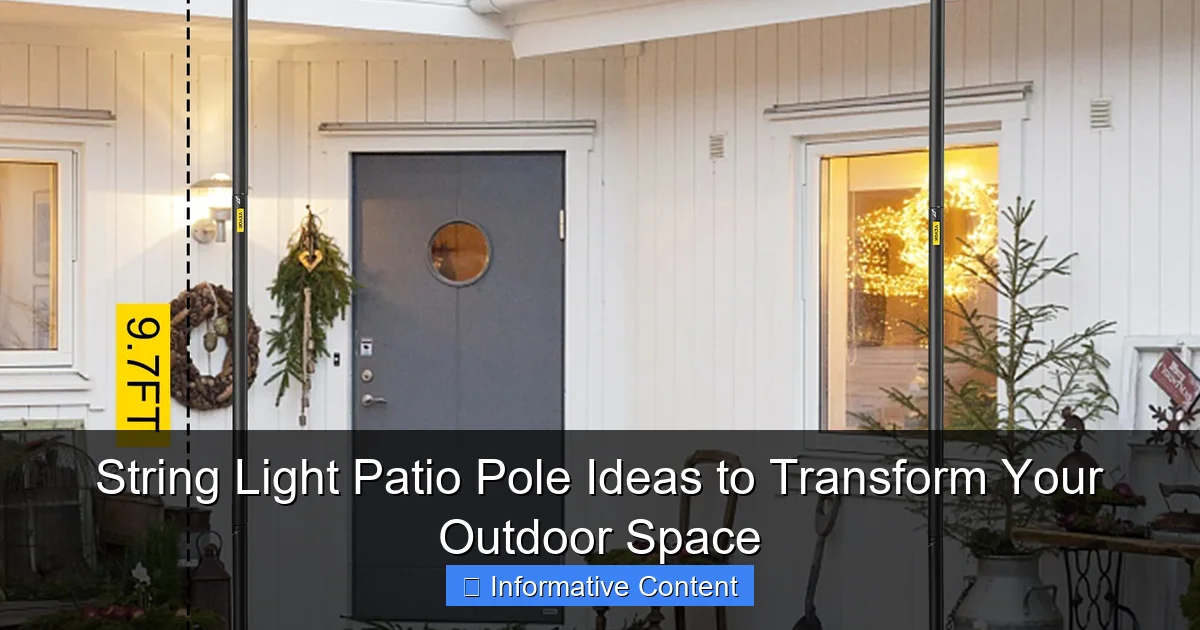
Visual guide about string light patio pole
Image source: d2qc09rl1gfuof.cloudfront.net
For example, my neighbor Sarah wanted to light up her small courtyard but didn’t have enough walls or eaves for traditional mounting. She used two sleek black metal poles to create a canopy effect, and now her space feels like a boutique hotel terrace. That’s the power of a well-placed pole.
Why You Shouldn’t Skip the Poles (Even If You Think You Can DIY)
Sure, you could drape lights between trees or over a pergola—but what if your yard is open? Or the trees are too far apart? Or you’re renting and can’t drill into surfaces? Poles solve these problems. Here’s why they’re worth the investment:
- Versatility: Use them in any space, from patios to grassy yards.
- Durability: High-quality poles withstand wind, rain, and snow.
- Aesthetic control: Choose designs that complement your decor (e.g., rustic wood, modern metal).
- No damage: Avoid drilling into rental homes or historic structures.
Pro tip: If you’re on a budget, start with one or two poles and add more as needed. Even a single pole can anchor a corner of your space, creating a “focal point” for lighting.
Choosing the Right String Light Patio Pole: A Buyer’s Guide
Material Matters: Wood, Metal, or PVC?
The material you choose affects both durability and style. Here’s a quick breakdown:
- Metal (steel, aluminum, wrought iron):
- Pros: Weather-resistant, long-lasting, sleek designs (great for modern patios).
- Cons: Can rust if not coated (opt for powder-coated finishes).
- Wood (cedar, pine, reclaimed):
- Pros: Natural warmth, blends with gardens, DIY-friendly.
- Cons: Requires sealing/staining; may warp in wet climates.
- PVC:
- Pros: Lightweight, affordable, no rust/rot.
- Cons: Less sturdy in high winds; may look “cheap” if not styled well.
My take: For coastal or rainy areas, go metal. For a cottage garden, wood is perfect. PVC works well for temporary setups or renters.
Height and Stability: Don’t Let Your Lights Topple
Pole height is critical. Too short, and the lights feel cramped. Too tall, and they’re hard to hang or look disproportionate. Aim for:
- 8–10 feet for most patios (allows for 2–3 ft of clearance under lights).
- 10–12 feet for large yards or “canopy” effects (e.g., lights crisscrossing between poles).
Stability is equally important. Look for poles with:
- Wide bases (for freestanding models).
- Ground stakes (for permanent installations).
- Sandbags or weights (for added security in windy areas).
Example: My friend Mark used 10-foot aluminum poles with 18-inch ground stakes for his lakeside cabin. After a summer of storms, not a single light sagged.
Design Features to Consider
Not all poles are created equal. Here are features that matter:
- Hook placement: Top hooks are best for “canopy” lighting; mid-height hooks work for bistro-style strings.
- Adjustability: Some poles telescope for custom heights.
- Modularity: Poles that connect (e.g., with crossbars) let you create pergola-like structures.
- Portability: Collapsible designs are great for renters or seasonal setups.
Creative String Light Patio Pole Ideas for Every Style
Modern Minimalism: Clean Lines and Monochrome
Love a sleek, contemporary look? Pair matte black metal poles with white Edison bulbs for a high-end vibe. Try this layout:
- Place two 10-foot poles 12–15 feet apart.
- Hang a single strand of lights in a straight line between them.
- Add a third pole behind the seating area to create a “light frame” around your patio.
Bonus: Use smart string lights to control color and brightness via an app. I did this for a client’s rooftop deck, and the result was like a chic urban lounge.
Rustic Charm: Wood and Warmth
For a cozy, farmhouse feel, opt for weathered wood poles with amber or warm-white bulbs. Ideas:
- Stagger 8-foot poles in a zigzag pattern across a garden path.
- Use reclaimed wood poles with crossbeams to mimic a pergola (see table below for spacing tips).
- Add lanterns to the poles for extra glow.
Real-life example: A client in Vermont used cedar poles and vintage-style bulbs to transform her backyard into a “forest retreat.” The lights felt like fireflies in the trees!
Bohemian Oasis: Layered and Lush
Want a free-spirited, eclectic space? Mix multiple pole types and light layers:
- Combine 12-foot metal poles (for height) with shorter wooden poles (for texture).
- Hang lights at varying heights: low strings near seating, high strings overhead.
- Add sheer fabric panels between poles for a “festival” vibe.
Pro tip: Use colorful bulbs (e.g., red, blue, or multicolor) for a playful touch. Just avoid overdoing it—stick to 2–3 colors max.
Small Space Solutions: Maximize Every Inch
Got a tiny balcony or patio? No problem! Use compact poles and clever layouts:
- Install a single 7-foot pole in a corner, then angle lights to a nearby wall or railing.
- Use a “T-shaped” pole with arms to hold lights horizontally (great for narrow spaces).
- Add a mirror to the opposite wall to amplify the light.
My neighbor’s 4×6-foot balcony felt twice as big with this trick. The pole doubled as a plant stand too—win-win!
Installation Tips: How to Set Up Your String Light Patio Poles (Without Losing Your Mind)
Step 1: Plan Your Layout (Measure Twice, Install Once)
Before buying poles, map your space. Ask:
- Where will people sit, eat, or walk?
- How far apart are your poles? (See the spacing table below.)
- Will the lights block views or pathways?
Use painter’s tape to mark pole locations. This lets you “test” the layout before committing.
Step 2: Secure the Poles (The Right Way)
Installation depends on your pole type:
- Freestanding poles: Place on a level surface. Add sandbags or weights (e.g., 20-lb bags) to the base for wind resistance.
- Ground-mounted poles: Dig 12–18-inch holes, insert poles, and fill with quick-set concrete (for permanent setups). For softer soil, use longer stakes.
- Wall-mounted poles: Only use if your walls are sturdy (e.g., brick, concrete). Avoid vinyl siding or drywall.
Caution: If using concrete, let it cure for 24–48 hours before hanging lights.
Step 3: Hang the Lights (Pro Techniques)
Don’t just drape lights—use these tricks for a polished look:
- Use S-hooks or carabiners: They make adjustments easy and prevent tangling.
- Start from the center: Hang the middle of the string first, then work outward to avoid sagging.
- Leave slack: Lights expand/contract with temperature. Aim for a slight “sag” (1–2 inches per foot) for a natural drape.
- Test before finalizing: Turn on the lights at night to check spacing and brightness.
Maintaining Your String Light Patio Poles: Keep Them Looking Great Year-Round
Seasonal Care: Protecting Your Investment
Outdoor poles endure sun, rain, snow, and wind. Here’s how to protect them:
- Spring: Clean poles with mild soap and water. Inspect for rust (metal) or rot (wood).
- Summer: Check for loose hooks or sagging lights. Tighten connections as needed.
- Fall: Trim nearby branches to prevent debris buildup. Store poles if you live in a snowy climate.
- Winter: For permanent poles, remove lights to prevent ice damage. Cover poles with a breathable fabric (e.g., canvas).
Wood poles need extra love: Reapply sealant every 1–2 years. Metal poles with powder coating rarely need more than a rinse.
Troubleshooting Common Issues
Even the best setups have hiccups. Here’s how to fix them:
- Sagging lights: Add a third pole or use turnbuckles to tighten strings.
- Flickering bulbs: Check for loose connections or water in sockets. Replace damaged cords.
- Pole wobbling: Add weights to the base or re-secure stakes.
- Discoloration: Metal poles can fade in direct sun. Paint with outdoor spray paint (match the original color).
Pro tip: Keep spare bulbs and fuses on hand. A single burnt-out bulb can ruin the whole ambiance!
When to Upgrade (and When to Repair)
Replace poles if they’re:
- Cracked, warped, or rusted through (safety hazard).
- Too short for your current layout (e.g., you’ve expanded your patio).
- Stylistically outdated (e.g., you’ve redesigned your outdoor space).
Repair if they’re:
- Stable but need cosmetic fixes (e.g., peeling paint, loose hooks).
- Functionally sound but require minor adjustments (e.g., adding crossbars).
Data Table: Recommended Pole Spacing for Different Layouts
| Layout Type | Pole Height (ft) | Pole Spacing (ft) | Light String Length (ft) | Best For |
|---|---|---|---|---|
| Straight Line | 8–10 | 12–15 | 15–20 | Small patios, balconies |
| Canopy (crisscross) | 10–12 | 15–20 | 25–30 | Large yards, dining areas |
| Zigzag | 8–10 | 8–10 (staggered) | 12–15 per strand | Gardens, pathways |
| Corner Frame | 7–9 | 6–8 (from wall) | 10–12 | Narrow spaces, seating nooks |
Note: Spacing depends on light weight and wind exposure. Add 2–3 ft to spacing for heavy-duty bulbs (e.g., LED clusters).
Final Thoughts: Your Outdoor Oasis Awaits
String light patio poles aren’t just practical—they’re the secret to creating a space that feels alive after dark. Whether you’re drawn to sleek metal, rustic wood, or a boho mix, the right poles can elevate your patio from “meh” to “magical.” And the best part? You don’t need a designer’s budget or a contractor’s skills. With a little planning, the right tools, and these ideas, you’ll have a glowing outdoor retreat in no time.
Remember: Lighting is about emotion, not just visibility. So experiment! Try different layouts, bulb colors, and pole heights until your space feels just right. After all, your backyard is an extension of your home—it deserves to shine.
Now go grab a pole, string some lights, and watch your outdoor space transform. The stars (and your string lights) are waiting.
Frequently Asked Questions
What is a string light patio pole and how does it work?
A string light patio pole is a freestanding or ground-mounted structure designed to hang outdoor string lights without relying on trees or walls. These poles typically feature crossbars, hooks, or tension systems to support lights at adjustable heights, creating a stable, elevated display.
How do I choose the right string light patio pole for my space?
Consider the pole’s height, material (e.g., steel, aluminum, or wood), and installation type (in-ground, weighted base, or clamp-on). For larger patios, taller poles with sturdy bases prevent sagging, especially when spanning wide areas with heavy-duty string lights.
Can I install a string light patio pole on a concrete patio?
Yes! Use a weighted base or a clamp-on design to avoid drilling into concrete. Many modern string light patio pole kits include sandbag-ready bases or deck-mount brackets for secure, damage-free setups.
Are string light patio poles weather-resistant?
Most poles are made from rust-proof materials like powder-coated steel or aluminum, making them suitable for year-round outdoor use. Always check the product’s weather rating and opt for UV-resistant finishes if leaving lights up in direct sunlight.
How far apart should I place my string light patio poles?
For standard string lights, space poles 8–12 feet apart to avoid sagging. Use a tension wire or support cable between poles if spanning longer distances or using heavier Edison-style bulbs.
Can I use a string light patio pole for other decorations?
Absolutely! These poles work well for hanging lanterns, fabric drapes, or seasonal décor like flags or wind chimes. Their versatility makes them a year-round string light patio pole solution for any outdoor aesthetic.