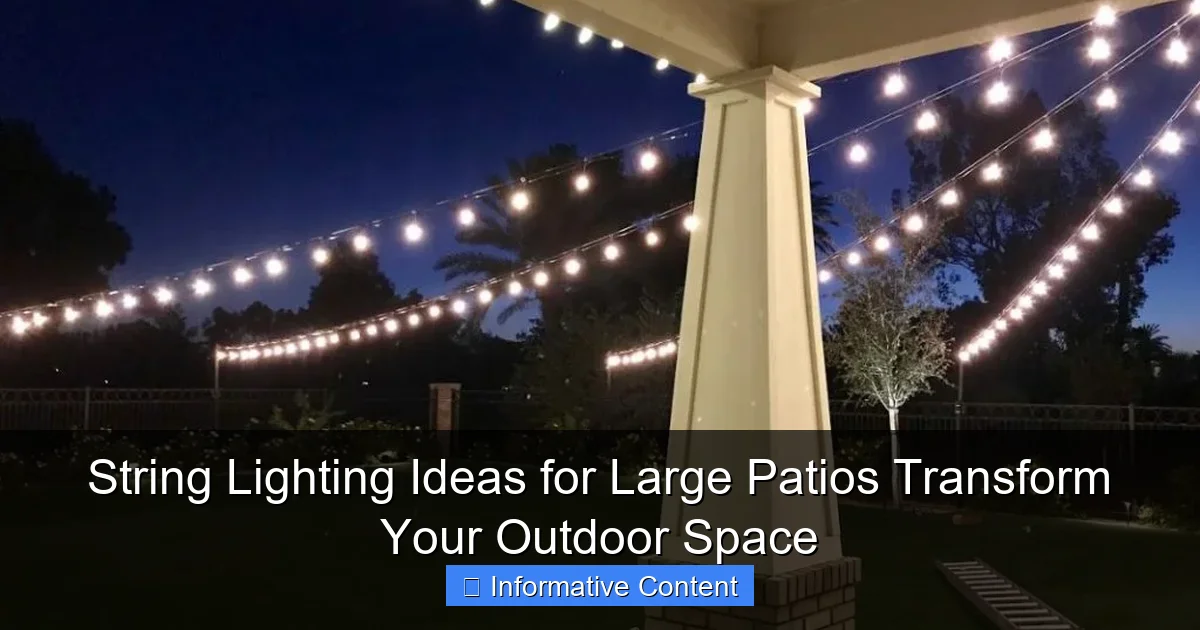
Featured image for string lighting ideas for large patios
Image source: stayofftheroof.com
Transform your large patio into a captivating nighttime oasis with strategic string lighting that blends ambiance and functionality. From draped overhead canopies to zigzag patterns between trees or pergolas, these creative ideas maximize coverage while adding warmth and style—perfect for entertaining or relaxing under the stars.
Key Takeaways
- Plan layout first: Map lights to highlight zones, not just cover space.
- Use commercial-grade strands: They withstand weather and cover long distances reliably.
- Mix bulb shapes: Combine globe and Edison styles for layered, dynamic ambiance.
- Install dimmers: Adjust brightness to match moods, from lively to intimate.
- Anchor securely: Use poles, hooks, or existing structures to prevent sagging.
- Add timers/smart controls: Automate on/off times for effortless, energy-efficient use.
📑 Table of Contents
- Why String Lighting is a Game-Changer for Large Patios
- Planning Your Layout: Start with a Vision
- Choosing the Right String Lights: Types, Bulbs, and Power
- Creative String Lighting Ideas for Large Patios
- Installation Tips: Safety, Durability, and Maintenance
- Real-World Examples and Data: What Works (and What Doesn’t)
- Final Thoughts: Light Up Your Life—Responsibly and Beautifully
Why String Lighting is a Game-Changer for Large Patios
Picture this: you’re hosting a backyard barbecue, the sun has just dipped below the horizon, and the air is warm with laughter and the sizzle of grilled food. You hit the switch, and suddenly, your patio transforms into a magical oasis—twinkling lights stretch across the space, casting a warm, golden glow over your guests. This isn’t just lighting; it’s an experience. String lighting for large patios is more than a decorative choice—it’s a way to extend the usability of your outdoor space, create a mood, and even make your home feel more inviting.
But let’s be honest: lighting a large patio isn’t as simple as draping a few fairy lights over a bush. It takes planning, the right materials, and a little creativity to avoid a dim, patchy, or overly bright result. Whether you’re aiming for a romantic dinner under the stars or a lively outdoor party, the right string lighting ideas for large patios can make all the difference. From layout strategies to bulb choices and power solutions, this guide will walk you through everything you need to know to create a stunning, functional, and safe lighting setup that feels as good as it looks.
Planning Your Layout: Start with a Vision
Measure, Map, and Mark
Before you buy a single bulb, take time to assess your space. A large patio often includes multiple zones—dining, lounging, cooking, and maybe even a fire pit or water feature. Each area may need different lighting levels or styles. Start by measuring the total square footage of your patio. Then, sketch a simple layout on paper or use a digital tool like Google SketchUp or even a napkin drawing (yes, really).
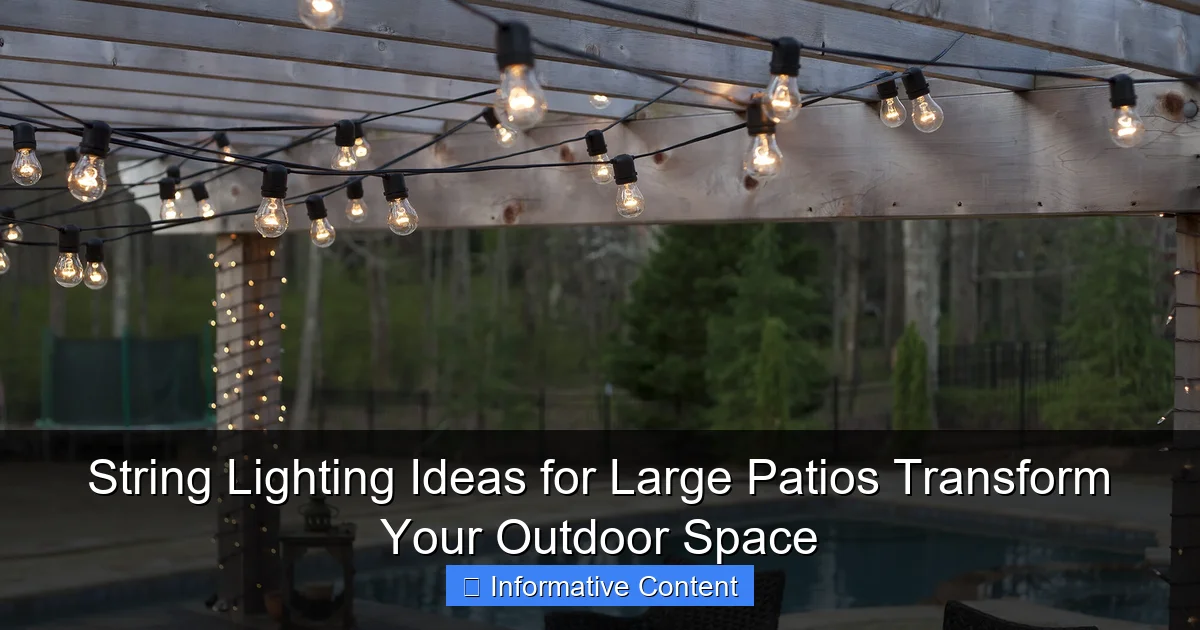
Visual guide about string lighting ideas for large patios
Image source: img.yardenvy.com
Ask yourself: Where do people gather? Where do you need task lighting (like near a grill or kitchen bar)? Where should the ambiance be softer and more intimate? Use masking tape or stakes to mark key points—posts, trees, railings, or eaves—where you might anchor your lights. This “dry run” helps you visualize spacing and avoid over- or under-lighting.
Choose Your Mounting Points
For large patios, you’ll likely need more than just existing structures. Trees, pergolas, and house eaves are natural anchors, but don’t overlook creative options:
- Freestanding poles: Metal or wooden posts can be installed at corners or midpoints. These work great for open patios without overhead structures.
- Ceiling-mounted tracks: If you have a covered patio, consider installing a track system (like those used in commercial spaces) to run lights in a grid or crisscross pattern.
- Fence or railing attachments: Use hooks or zip ties to secure lights along existing boundaries. Just ensure they’re weatherproof and won’t damage the material.
Tip: Space anchor points 8–12 feet apart for optimal light distribution. Too far, and the lights will sag; too close, and you’ll waste materials.
Think in Zones, Not Just One Big Grid
Instead of one massive grid of lights, break your patio into zones. For example:
- A dining zone with a tight grid of warm white bulbs overhead.
- A lounge area with string lights wrapped around a pergola or hung in a canopy style.
- A pathway or entry with low-voltage fairy lights along the edge.
This approach not only looks better but also lets you control lighting independently—perfect for transitioning from dinner to stargazing.
Choosing the Right String Lights: Types, Bulbs, and Power
Bulb Types: Incandescent vs. LED
The bulb type you choose affects everything—brightness, energy use, lifespan, and even the mood.
- Incandescent: Classic, warm glow with a vintage feel. They’re dimmable and cast soft shadows, but they use more energy and burn out faster. Great for mood lighting, not ideal for all-night use.
- LED: Energy-efficient, long-lasting (often 25,000+ hours), and available in warm white, cool white, or color-changing options. Modern LEDs mimic the warmth of incandescent but with 80% less energy. A top choice for string lighting ideas for large patios.
Pro tip: Look for “warm white” LEDs (2700K–3000K) for a cozy, inviting feel. Cool white (4000K+) can feel too clinical for outdoor relaxation.
Socket Size and Spacing
String lights come in various socket sizes—S14 (medium), S19 (large), or mini (small). For large patios, avoid mini lights—they’re too dim and can get lost in the space.
- S14 bulbs: 12–18 inches apart. Best for general ambiance and even coverage.
- S19 bulbs: 24 inches apart. Ideal for a bold, industrial look or when you want fewer strings.
Spacing matters: closer bulbs = brighter, more uniform light; wider spacing = dramatic, starry-night effect.
Power Solutions: Plug-In, Solar, or Hardwired?
Power is a big deal for large setups. Here’s what to consider:
- Plug-in (AC): Most common. Use heavy-duty outdoor extension cords and GFCI outlets. Limit daisy-chaining to 3–4 strings to avoid overloading circuits.
- Solar-powered: Eco-friendly and easy to install—no wires. But they’re less reliable in cloudy areas and may not stay lit all night. Best for accent lighting, not primary sources.
- Low-voltage (12V) systems: Safer and more efficient for large areas. Requires a transformer, but you can run longer strings without voltage drop. Great for permanent installations.
Example: For a 40×20 ft patio, a low-voltage system with a 600W transformer can power 20+ strings without dimming at the end.
Creative String Lighting Ideas for Large Patios
Canopy or “Ceiling” Grid
Create the illusion of a starry sky by installing a grid of string lights overhead. Use a pergola, or install a simple frame with wooden beams or metal cables. Run lights in both directions (north-south and east-west) for a true canopy effect.
- Use S14 LED bulbs, spaced 12 inches apart.
- Hang from eye hooks or turnbuckles for tension and adjustability.
- Add a dimmer switch to control brightness.
Bonus: This setup doubles as a rain cover if you add a clear polycarbonate panel above.
Crisscross or “X” Pattern
For patios with posts or trees at the corners, run strings diagonally in an “X” shape. This adds visual interest and spreads light evenly across the space.
- Start from one corner post to the opposite tree, then cross over to the other two points.
- Use turnbuckles to keep tension and prevent sagging.
- Mix in a few strands of Edison-style bulbs for a rustic touch.
Tip: Use black or brown wire to blend into the background, or white for a modern look.
Layered Lighting: Mix Heights and Textures
Don’t limit yourself to one plane. Combine overhead strings with:
- Wall-mounted sconces or fairy lights along railings.
- String lights wrapped around tree trunks or pillars.
- Path lights or LED rope lights along walkways.
This layered approach adds depth and ensures no dark corners. For example, hang a canopy overhead, wrap lights around your pergola posts, and add fairy lights to a nearby hedge.
Color and Themed Lighting
Want to set a specific mood? Try color-changing LEDs or themed bulbs:
- Warm white: Classic, cozy, and universally flattering.
- Soft amber or orange: Mimics candlelight—perfect for romance.
- Color-changing (RGB): Use a remote to switch from white to blue (for a pool party) or red (for a holiday vibe). Just don’t overdo it—stick to one dominant color with white as a base.
Example: For a summer party, start with warm white, then shift to soft blue at midnight for a cool, relaxed feel.
DIY Chandeliers or Hanging Clusters
For a focal point, create a DIY chandelier using a metal ring, wooden hoop, or even a repurposed ladder. Hang multiple strings from it, varying the lengths to create a cascading effect.
- Use S19 bulbs for drama.
- Suspend from a pergola beam or ceiling hook.
- Add greenery or paper lanterns for extra texture.
This works especially well over a dining table or fire pit.
Installation Tips: Safety, Durability, and Maintenance
Use the Right Hardware
Outdoor lighting faces wind, rain, and temperature swings. Use:
- Stainless steel or galvanized hooks and turnbuckles—they resist rust.
- UV-resistant zip ties for temporary or semi-permanent mounting.
- Weatherproof wire clips to guide strings along eaves or railings.
Avoid nails or screws that can damage surfaces or create tripping hazards.
Prevent Sagging and Wind Damage
Sagging strings look messy and can break bulbs. To prevent it:
- Use turnbuckles every 10–15 feet to adjust tension.
- Install a center support (like a pole or hook) for long runs.
- Choose heavier-duty strings with thicker wire and reinforced sockets.
For windy areas, consider “wind-resistant” strings with sealed bulbs or use a grid pattern (which is naturally more stable).
Weatherproofing and Safety
Always use outdoor-rated lights and extension cords. Check for UL or ETL certification. Never use indoor strings outside—they’re not sealed against moisture.
- Use GFCI outlets to prevent shocks.
- Seal all outdoor electrical connections with waterproof tape or covers.
- Turn off lights during storms or heavy rain.
Tip: Install a timer or smart switch so lights turn off automatically—saving energy and extending bulb life.
Maintenance: Keep Them Looking Great
Even the best setup needs care:
- Wipe bulbs and sockets with a damp cloth every few months.
- Check for loose connections or frayed wires annually.
- Replace burnt-out bulbs promptly to maintain even lighting.
For solar lights, clean the panels monthly to ensure maximum charging.
Real-World Examples and Data: What Works (and What Doesn’t)
Let’s look at three real patio setups to see how these ideas play out in practice. Each highlights a different approach to string lighting ideas for large patios, with pros, cons, and lessons learned.
Case Study 1: The Modern Grid (40×25 ft Covered Patio)
- Layout: 3×3 grid of S14 LED strings (9 total), spaced 12 ft apart.
- Power: Low-voltage system (600W transformer).
- Mounting: Ceiling-mounted eye hooks with turnbuckles.
- Result: Bright, even coverage. Guests loved the “indoor-outdoor” feel. Dimmer switch added flexibility.
- Challenge: Initial cost was higher due to transformer and installation, but long-term energy savings made it worth it.
Case Study 2: Rustic Crisscross (30×20 ft Open Patio)
- Layout: Diagonal “X” pattern with S19 Edison bulbs.
- Power: Plug-in (2 extension cords, GFCI outlet).
- Mounting: Trees at two corners, metal posts at the other two.
- Result: Dramatic, cozy atmosphere. Great for evening gatherings.
- Challenge: Lights sagged slightly after a few months. Fixed with turnbuckles.
Case Study 3: Layered Garden Oasis (50×30 ft Multi-Zone Patio)
- Layout: Canopy over dining, fairy lights on hedges, path lights on walkways.
- Power: Mix of plug-in (canopy) and solar (path/hedge lights).
- Mounting: Pergola for canopy, zip ties for hedges.
- Result: Magical, immersive feel. Guests felt like they were in a garden retreat.
- Challenge: Solar lights dimmed early on cloudy days. Added a backup battery pack for reliability.
Comparison Table: String Lighting Setup Costs & Performance
| Setup Type | Bulb Type | Power Source | Est. Cost (40×20 ft) | Energy Use | Lifespan | Best For |
|---|---|---|---|---|---|---|
| Grid (LED) | S14 LED | Low-voltage | $400–$600 | Low | 25,000+ hrs | Even, bright coverage; permanent installs |
| Crisscross (Edison) | S19 Incandescent | Plug-in | $200–$300 | High | 1,000–2,000 hrs | Rustic, moody ambiance; short-term use |
| Layered (Mixed) | LED + Solar | Hybrid | $350–$500 | Medium | LED: 25k hrs; Solar: 3–5 yrs | Large, multi-zone patios; eco-conscious |
| Canopy (RGB) | Color-changing LED | Plug-in | $300–$450 | Medium | 15,000–20,000 hrs | Parties, themed events; mood shifting |
Final Thoughts: Light Up Your Life—Responsibly and Beautifully
String lighting for large patios isn’t just about adding light—it’s about crafting an experience. Whether you’re hosting a quiet family dinner or a lively summer bash, the right lighting sets the tone, extends your outdoor season, and makes your home feel more connected to nature. But as we’ve seen, it’s not a one-size-fits-all solution. It’s about understanding your space, choosing the right tools, and being willing to experiment.
Start small if you’re unsure. Try a single string over your dining table and see how it feels. Add a few more as you go. Remember: lighting is flexible. You can adjust spacing, switch bulb types, or even reconfigure the layout as your needs change. The best string lighting ideas for large patios are the ones that reflect your lifestyle—cozy, vibrant, or somewhere in between.
And don’t forget the practical side. Invest in quality hardware, use safe power sources, and maintain your setup. A little upfront effort saves headaches (and potential hazards) down the road. With the right approach, your patio can become the most magical room in your home—one twinkle at a time.
Frequently Asked Questions
What are the best string lighting ideas for large patios?
For large patios, consider using commercial-grade LED string lights spaced evenly across the area, or create a canopy effect by crisscrossing them between posts or trees. Dimmable bulbs and warm white tones help achieve a cozy ambiance while providing ample illumination.
How do I install string lights on a large patio without trees or structures?
Use freestanding poles, pergolas, or attach lights to the eaves of your home and anchor the ends to ground stakes or heavy planters. For a seamless look, run wires through conduit or use tension cables for support across open spaces.
Can I use solar-powered string lights for large patios?
Yes, solar-powered string lights are a great eco-friendly option for large patios, especially if you install high-capacity solar panels in sunny areas. Opt for models with remote batteries to ensure consistent brightness throughout the evening.
How many string lights do I need for a large patio?
Measure your patio’s perimeter and desired coverage area—plan for 1.5 to 2 times the length for a layered or draped effect. For large patios, combine multiple strands and use a power source with sufficient wattage to avoid overloading.
What type of string lighting is weatherproof for large patios?
Look for commercial-grade string lights with a high IP rating (e.g., IP65 or higher) and shatterproof bulbs to withstand rain, wind, and sun. Always check manufacturer guidelines for safe outdoor use in extreme conditions.
Are there creative string lighting ideas for large patios beyond basic overhead lines?
Absolutely! Try wrapping lights around railings, outlining seating zones, or suspending them in geometric patterns using hooks or cables. For a unique touch, mix string lights with lanterns or fairy lights in glass jars.