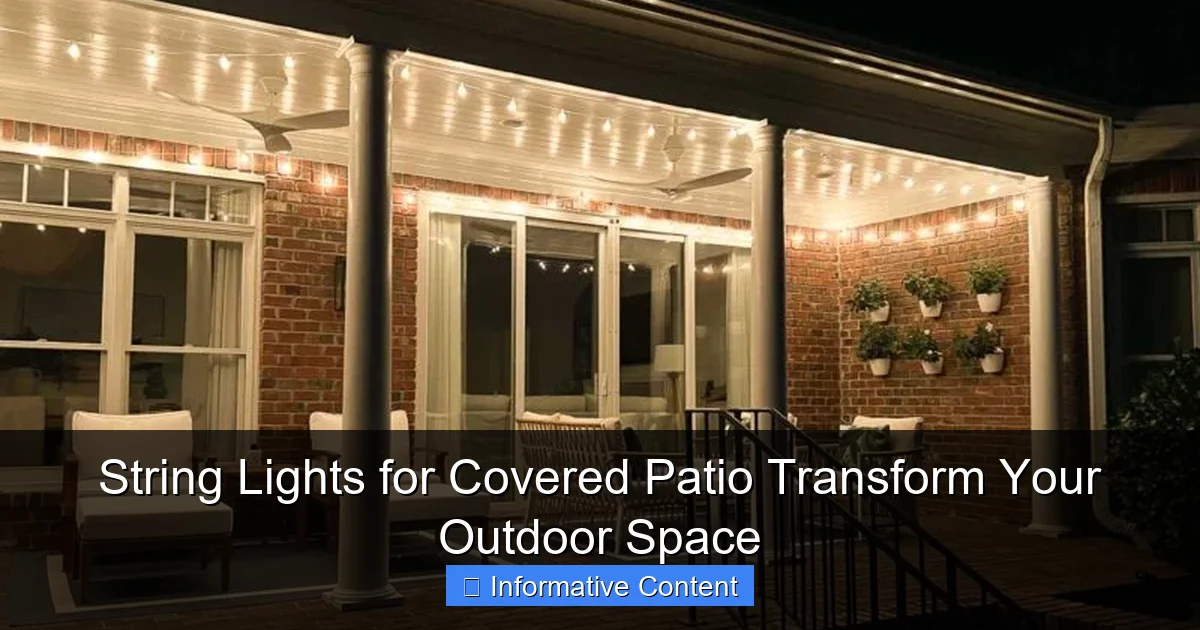
Featured image for string lights for covered patio
Image source: drivenbydecor.com
String lights for covered patios instantly elevate your outdoor ambiance, blending style and function for year-round enjoyment. Designed to resist moisture and UV rays, these durable lights offer warm, inviting illumination perfect for dining, relaxing, or entertaining—without the worry of weather damage. Transform your space effortlessly with energy-efficient LED options and easy installation.
Key Takeaways
- Choose weatherproof lights: Ensure durability with IP65-rated string lights for covered patios.
- Opt for warm white LEDs: Create a cozy ambiance with energy-efficient, soft lighting.
- Measure your space: Buy 10–15% extra length for seamless, flexible installation.
- Use dimmers or smart controls: Adjust brightness easily for mood or occasion.
- Install with clips or hooks: Protect structures and simplify setup without damage.
- Mix string styles: Combine globe and fairy lights for layered visual interest.
📑 Table of Contents
- Why String Lights Are the Secret to a Magical Covered Patio
- Choosing the Right String Lights for Your Covered Patio
- Installation Tips: Making It Look Professional (Even If You’re Not)
- Design Ideas to Elevate Your Covered Patio Lighting
- Weatherproofing and Maintenance: Keeping Your Lights Looking Great
- Real-World Examples: How People Use String Lights on Their Covered Patios
- Final Thoughts: Light Up Your Life (Literally)
Why String Lights Are the Secret to a Magical Covered Patio
There’s something undeniably enchanting about stepping onto your covered patio at dusk, only to be greeted by a soft, warm glow that wraps around the space like a cozy hug. That’s the magic of string lights for covered patio—they don’t just add light; they transform the mood, turning a simple outdoor area into a personal retreat. I remember the first time I strung up a set of fairy lights on my own covered patio. It was a rainy evening, and instead of feeling cooped up, I felt like I was sitting in a secret garden, sheltered from the world. The lights danced off the ceiling beams and cast gentle shadows on the walls, making the space feel alive.
Whether you use your covered patio for family dinners, late-night reading, or weekend barbecues, the right lighting can make all the difference. And while there are many outdoor lighting options—sconces, lanterns, spotlights—string lights for covered patio stand out for their versatility, ease of installation, and ability to create ambiance without overwhelming the space. They’re like the “little black dress” of outdoor decor: timeless, adaptable, and always appropriate. In this guide, we’ll explore everything you need to know to choose, install, and enjoy the perfect string lights for your covered patio—no electrician required.
Choosing the Right String Lights for Your Covered Patio
Not all string lights are created equal. When you’re shopping for string lights for covered patio, it’s easy to get overwhelmed by the sheer variety: Edison bulbs, fairy lights, LED clusters, solar-powered, plug-in, dimmable, color-changing… the list goes on. Let’s break it down so you can make a choice that fits your space, style, and needs.
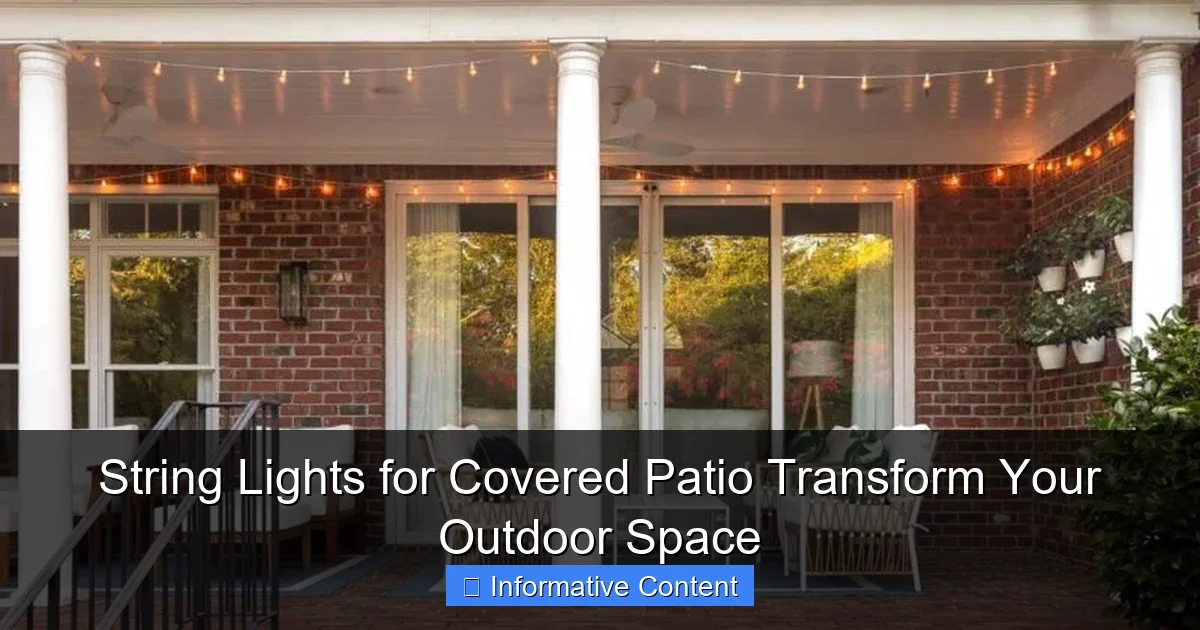
Visual guide about string lights for covered patio
Image source: drivenbydecor.com
Types of Bulbs: Warm vs. Cool, LED vs. Incandescent
First, consider the bulb type. For a covered patio, warm white LED lights are usually the best bet. They emit a soft, golden glow (around 2700K–3000K) that mimics candlelight—perfect for creating a cozy, inviting atmosphere. Cool white or daylight bulbs (4000K+) tend to feel clinical and harsh, more suited for task lighting than relaxation.
LEDs are also more energy-efficient, longer-lasting (some up to 50,000 hours), and generate less heat than incandescent bulbs. That’s a big plus for covered patios, where heat can build up. Incandescent bulbs, while nostalgic and warm, burn out faster and use more electricity. Plus, many modern LED string lights now come with vintage-style Edison bulbs, so you get the best of both worlds: retro charm with modern efficiency.
Length, Spacing, and Bulb Density
Next, think about how much light you need and how you want it distributed. For a standard 12×16 ft covered patio, a 25–50 ft string light with bulbs spaced 6–8 inches apart usually works well. Too few bulbs, and the light feels sparse; too many, and it can look like a Christmas parade.
Here’s a quick tip: measure your patio’s perimeter and ceiling beams (if you plan to drape lights overhead). Then, buy string lights that are about 10–20% longer than the total length you need. This gives you room for creative draping, loops, or extra slack for outlets and connections.
For example, if your patio has a 40-foot perimeter, go for a 50-foot string. If you want to zigzag across the ceiling, add another 10–15 feet for good measure. And if you’re layering multiple strands, make sure they’re compatible (same voltage, plug type, and connector style).
Power Source: Plug-In vs. Solar
This is a big decision. Plug-in string lights are reliable and bright, but they require access to an outdoor-rated electrical outlet. If your covered patio doesn’t have one, you may need to run an extension cord (use a heavy-duty, weatherproof one) or install a new outlet—something to consider if you’re not handy with tools.
Solar-powered string lights are a great alternative. They charge during the day and turn on automatically at dusk. No cords, no outlets, no fuss. But they do have downsides: they’re usually dimmer than plug-in lights, and their performance depends on sunlight. If your patio is heavily shaded or you live in a cloudy region, solar may not give you the brightness you want.
My personal favorite? A hybrid approach: use solar lights for subtle ambient lighting and keep a plug-in set on hand for special occasions or darker nights. It’s the best of both worlds.
Installation Tips: Making It Look Professional (Even If You’re Not)
Installing string lights for covered patio isn’t rocket science, but a few smart tricks can make your setup look polished and last longer. The goal is to create a seamless, intentional look—not a tangled mess that looks like it was thrown up in a hurry.
Plan Your Layout First
Before you start hammering or drilling, sketch out your lighting design. Do you want lights:
- Along the perimeter of the roof or ceiling?
- Draped in a zigzag or crisscross pattern overhead?
- Looped around support beams or columns?
- Framed around windows or doorways?
I once skipped this step and ended up with lights that sagged in the middle and tangled with the patio umbrella. Not a good look. Now, I always use painter’s tape to mark where I want each anchor point. It’s temporary, doesn’t damage surfaces, and gives me a visual guide.
Use the Right Hardware
For covered patios, you’ll likely be attaching lights to wood, stucco, metal, or vinyl. Here’s what works best for each:
- Wood or composite decking: Use eye hooks or cup hooks. They’re easy to screw in and blend in nicely.
- Stucco or concrete: Use concrete anchors or masonry screws with a drill. Avoid nails—they can crack the surface.
- Metal beams or pergolas: Use magnetic hooks (if the metal is ferrous) or zip ties for a non-permanent option.
- Vinyl siding or soffits: Use adhesive hooks or siding clips designed for outdoor use. These won’t damage the surface.
Pro tip: install hooks or anchors every 2–3 feet to prevent sagging. And always leave a little slack between anchor points—this helps the lights move with the wind and reduces strain on the wires.
Hide the Cords (Yes, It’s Possible)
One of the biggest complaints about outdoor string lights? The cords. They’re often visible, tangled, or tripping hazards. Here’s how to fix it:
- Run cords along roof beams or under eaves using cord clips or zip ties.
- Use a cord cover (like a raceway) painted to match your patio color.
- If you’re using plug-in lights, route the cord behind furniture or planters to hide it.
- For solar lights, position the panel where it gets sun but the cord is hidden (e.g., behind a gutter).
Bonus: if you’re handy, you can even run the cord through a small conduit or PVC pipe for a super-clean look. It’s a bit more work, but it’s worth it for a high-end finish.
Design Ideas to Elevate Your Covered Patio Lighting
Now that you’ve got the basics down, let’s talk style. String lights for covered patio aren’t just about function—they’re a design tool. With a little creativity, you can use them to highlight architectural features, define zones, or even change the mood of your space.
Create a Ceiling Canopy
One of my favorite tricks: drape lights in a crisscross or “web” pattern across the ceiling. This creates a canopy effect that makes the space feel enclosed and intimate—perfect for a romantic dinner or a quiet evening with a book. Use a grid of 4–6 anchor points (like a tic-tac-toe board) and weave the lights diagonally between them. The result? A starry-night look that’s surprisingly easy to achieve.
Frame Your Space
Use string lights to outline the edges of your patio. Wrap them around support columns, run them along the roofline, or frame your outdoor dining table. This technique draws the eye and makes the space feel more defined. For example, if you have a rectangular patio, run lights along all four sides, then add a few vertical drops from the ceiling to create “curtains” of light.
Highlight Key Features
Got a fire pit, a water feature, or a cozy reading nook? Use string lights to spotlight them. For instance, wrap lights around the base of a tree or plant them in a pot near your favorite chair. You can even use mini string lights in glass jars or lanterns for a whimsical touch. I once saw a patio where the owner hung mason jars with fairy lights inside along the railing—it looked like fireflies were floating in the air.
Layer Your Lighting
Don’t rely on string lights alone. Combine them with other light sources for depth and dimension:
- Overhead: String lights for general ambiance.
- Task lighting: A pendant or floor lamp near your dining table.
- Accent lighting: Solar path lights or spotlights on plants or art.
- Decorative lighting: LED candles in lanterns or fairy lights in glass vases.
This layered approach prevents the space from feeling flat or one-dimensional. Think of it like a lighting recipe: a little of this, a little of that, and voilà—you’ve got a space that feels warm, inviting, and perfectly lit.
Weatherproofing and Maintenance: Keeping Your Lights Looking Great
Your covered patio protects you from rain and snow, but it doesn’t make your lights invincible. Wind, humidity, dust, and UV rays can all take a toll. Here’s how to keep your string lights for covered patio in top shape—year after year.
Choose Weather-Resistant Lights
Look for lights rated IP65 or higher. This means they’re dust-tight and protected against water jets. Most quality outdoor string lights have this rating, but it’s worth double-checking. Avoid “indoor/outdoor” lights unless they explicitly say they’re for permanent outdoor use.
Also, check the cord: it should be thick, rubberized, and labeled for outdoor use. Thin, flimsy cords can crack or short out in cold weather.
Inspect Regularly
Every few months, give your lights a once-over. Look for:
- Frayed or cracked wires
- Loose bulbs or connectors
- Corroded sockets (especially if you live near the ocean)
- Signs of insect nests or mold
If you spot any of these, replace the affected section or the whole strand. It’s better to be safe than sorry—especially with electricity.
Clean and Store Properly
At the end of the season (or if you’re not using the lights for a while), take them down and clean them. Gently wipe the bulbs and cords with a damp cloth and mild soap. Let them dry completely before storing.
Store them in a cool, dry place—not in a hot attic or damp basement. I like to wrap each strand around a piece of cardboard or a reel to prevent tangling. Label the box with the length, color, and power type so you can find it easily next year.
Protect from Wind
Even on a covered patio, wind can be an issue. If you live in a windy area, consider:
- Using shorter strands (less surface area to catch wind)
- Adding extra anchors or ties
- Choosing lights with flexible, lightweight cords
- Taking them down during storms or high winds
I learned this the hard way—my first set of lights flew off the patio during a storm and got tangled in the neighbor’s tree. Not fun.
Real-World Examples: How People Use String Lights on Their Covered Patios
Sometimes, the best inspiration comes from real-life examples. Here are a few setups I’ve seen (and loved) that show the versatility of string lights for covered patio.
The Cozy Reading Nook
One reader, Sarah, has a small covered patio with a built-in bench and bookshelf. She used a 25-foot warm white string light to frame the bench and shelf, then added a small floor lamp with a linen shade. The result? A quiet, book-friendly corner that’s perfect for rainy afternoons. She even added a few fairy lights in a glass jar on the shelf for extra charm.
The Outdoor Dining Room
Mark and Lisa transformed their covered patio into a full outdoor dining room. They hung a 50-foot strand in a crisscross pattern over the table, then added dimmable LED bulbs so they could adjust the brightness for dinner parties or movie nights. They also ran a second strand along the roofline to create a “frame” around the space. “It feels like we’re eating under the stars,” Lisa told me.
The Entertaining Hub
For larger patios, string lights can define different zones. Take the case of the Rivera family, who have a 20×20 ft covered patio with a dining area, lounge, and grill station. They used three separate strands: one over the dining table, one along the lounge area, and one wrapped around the grill hood. Each strand is on a separate timer, so they can light up just the area they’re using. They also added a few solar path lights along the walkway for safety.
| Patio Size | Recommended String Light Length | Bulb Spacing | Best Use Case |
|---|---|---|---|
| 10×12 ft | 25–30 ft | 6–8 inches | Small reading nook or coffee area |
| 12×16 ft | 40–50 ft | 6–12 inches | Dining or lounge area |
| 15×20 ft+ | 60+ ft (use multiple strands) | 8–12 inches | Entertaining or multi-zone setups |
Final Thoughts: Light Up Your Life (Literally)
There’s a reason string lights for covered patio are a favorite among homeowners, designers, and DIYers alike: they’re affordable, easy to install, and instantly transform a space. Whether you’re after a cozy nook for two or a lively area for entertaining, the right lighting can make your covered patio feel like an extension of your home—not just an afterthought.
Remember, it’s not about perfection. It’s about creating a space that feels good to you. Maybe that’s a simple strand along the roofline. Or maybe it’s a complex canopy of lights with dimmers, timers, and layers. Whatever your vision, start small, experiment, and don’t be afraid to tweak as you go.
And here’s my final tip: don’t wait for a special occasion to enjoy your lights. Turn them on just because. Light up your patio after a long day. Invite a friend over for tea under the glow. Or sit there alone, with a book and a glass of wine, and let the lights wrap around you like a warm blanket.
Because at the end of the day, your covered patio isn’t just a place—it’s a feeling. And with the right string lights for covered patio, you can bottle that feeling and keep it lit all year long.
Frequently Asked Questions
What are the best string lights for a covered patio?
The best string lights for a covered patio are weather-resistant, energy-efficient LED options with adjustable brightness. Look for UL-listed or damp-rated lights to ensure safety and durability in covered outdoor spaces.
Can I leave string lights for covered patios up year-round?
Yes, if you choose commercial-grade or all-weather string lights designed for outdoor use. Always check the product’s IP rating (IP65 or higher) to confirm it can handle moisture and temperature changes.
How do I install string lights on a covered patio without drilling holes?
Use adhesive hooks, tension rods, or magnetic mounts for a damage-free setup. For wooden beams, try heavy-duty zip ties or removable clips to secure the lights while preserving your patio structure.
What type of bulbs are ideal for string lights for covered patios?
LED bulbs are ideal—they’re energy-efficient, long-lasting, and emit less heat than incandescent bulbs. Edison-style LEDs add a warm, decorative touch while staying safe for covered areas.
How many string lights do I need for my covered patio?
Measure the perimeter or layout area of your patio, then add 10–20% extra for draping or overlapping. For example, a 20-foot patio may need 24–25 feet of lights for optimal coverage.
Are solar-powered string lights suitable for covered patios?
Solar-powered lights work if your covered patio gets direct sunlight for 6–8 hours daily. For shaded areas, opt for battery-powered or plug-in string lights to ensure consistent brightness.