Featured image for stringing commercial patio lights
Image source: outdoorlights.com
Transform your outdoor space with expertly strung commercial patio lights to create a vibrant, inviting ambiance perfect for dining, entertaining, or relaxation. Choose weather-resistant, high-lumen LED strings and plan your layout strategically—along railings, pergolas, or overhead grids—for even illumination and lasting durability. With the right tools and safety precautions, you’ll achieve a professional, energy-efficient glow that enhances any commercial patio setting.
Key Takeaways
- Plan your layout: Measure space and sketch light placement for even coverage.
- Choose durable lights: Opt for commercial-grade, weather-resistant LED string lights.
- Use proper hardware: Install hooks, clips, or cables rated for outdoor use.
- Ensure power access: Position outlets nearby and use outdoor-rated extension cords.
- Test before hanging: Check all bulbs and connections to avoid rework later.
- Secure connections: Use waterproof covers for plugs to prevent short circuits.
📑 Table of Contents
- Why Stringing Commercial Patio Lights Is Worth the Effort
- Planning Your Patio Lighting Layout: Start with Purpose
- Choosing the Right Commercial Patio Lights
- Installation Methods: From Simple to Structural
- Wiring, Power, and Safety: The Behind-the-Scenes Work
- Maintenance, Upgrades, and Seasonal Care
- Data Table: Commercial Patio Light Comparison
- Final Thoughts: Light Up Your Space with Confidence
Why Stringing Commercial Patio Lights Is Worth the Effort
Imagine this: it’s a warm summer evening, the air is still, and laughter fills the space around your outdoor seating area. The sun dips below the horizon, and suddenly, your patio transforms into a glowing oasis. Stringing commercial patio lights isn’t just about adding brightness—it’s about creating an atmosphere. Whether you run a bustling restaurant, a cozy café, or manage a hotel’s outdoor lounge, the right lighting can turn a functional space into a destination.
But let’s be honest: lighting up a commercial patio isn’t as simple as hanging a few fairy lights from your backyard tree. You’re dealing with larger spaces, higher foot traffic, safety regulations, and the need for durability. That’s where this guide comes in. I’ve spent years working with business owners, designers, and electricians to install, troubleshoot, and refine outdoor lighting setups. From the initial planning to the final bulb test, I’ll walk you through every step—no fluff, just practical, real-world advice. Whether you’re lighting up a 20-foot bistro terrace or a sprawling rooftop bar, stringing commercial patio lights can elevate your space in ways you might not expect.
Planning Your Patio Lighting Layout: Start with Purpose
Before you even pick up a drill or a light string, stop and ask: What do I want this space to feel like? Is it romantic and intimate? Energetic and social? Calm and relaxing? Your goal shapes your entire lighting strategy. For example, a wine bar might use soft, warm lights in clusters, while a rooftop cocktail lounge might opt for vibrant, color-changing LEDs to match the mood of the crowd.
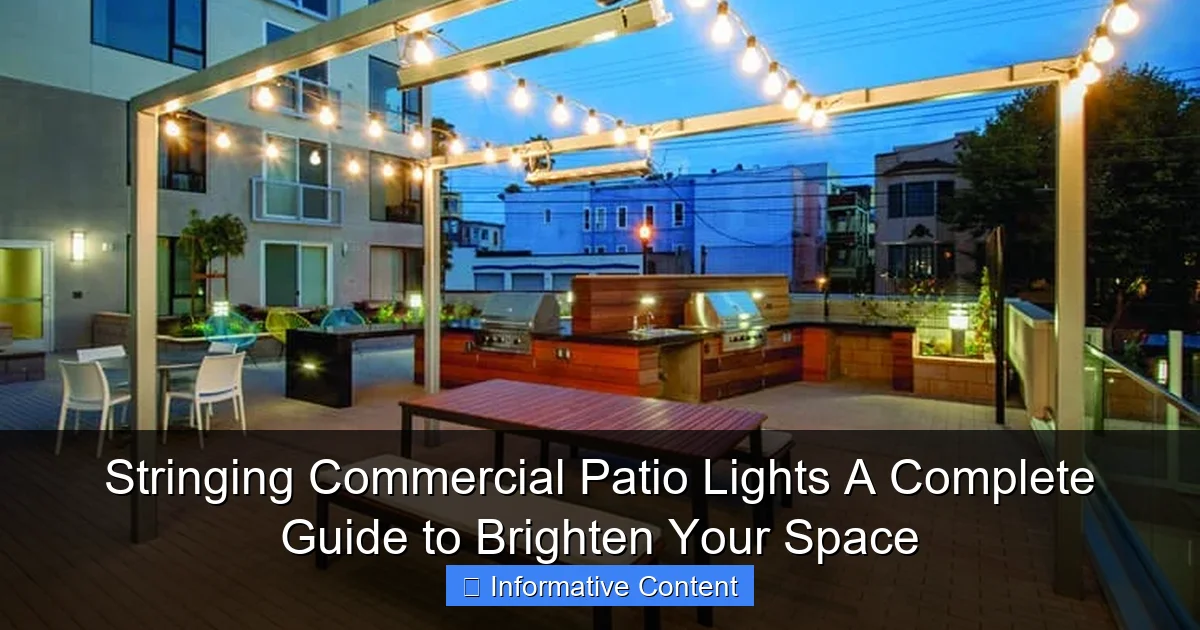
Visual guide about stringing commercial patio lights
Image source: i.pinimg.com
Assess Your Space and Use Case
Take a walk around your patio at different times of day and night. Notice where people gather, where shadows fall, and where safety might be a concern (like near stairs or uneven flooring). Measure the length, width, and height of your space. Are there existing structures you can use—like pergolas, railings, or trees? Or will you need to install poles, brackets, or overhead wires?
Here’s a real example: A café owner in Portland wanted to create a “secret garden” vibe on their small side patio. We mapped out the space and realized they had a metal awning on one side and a brick wall on the other. Instead of trying to string lights across the open sky (which would’ve required poles and anchors), we used the awning and wall as anchor points, creating a canopy of warm white lights. It felt cozy, safe, and didn’t require major construction.
Determine Light Density and Spacing
Too few lights and the space feels dim and uninviting. Too many, and it looks like a carnival. A good rule of thumb for stringing commercial patio lights is to space bulbs every 6 to 12 inches for ambient glow, or every 18 to 24 inches for a more subtle, starry effect. For larger areas, consider using “light zones”—clusters of lights over seating areas, with fewer lights in walkways.
Pro tip: Use painter’s tape to mark light placement on your walls or structures before installing anything. This lets you visualize the layout and make adjustments without drilling holes. One restaurant owner in Austin used this trick and realized their original plan was too sparse—they added 20% more bulbs and instantly improved the ambiance.
Factor in Power and Accessibility
Commercial spaces need reliable power. Will you use outdoor-rated extension cords? Dedicated circuits? Solar-powered lights? If you’re using plug-in strings, make sure you have GFCI (ground fault circuit interrupter) outlets nearby. These are required by code in most commercial outdoor areas and prevent shocks in wet conditions.
Also, consider how you’ll maintain the lights. If your setup is 15 feet in the air, you’ll need a ladder or lift to change bulbs. That’s why many businesses opt for LED strings with long lifespans (25,000+ hours) and weatherproof construction. One hotel in Colorado switched to commercial-grade LEDs after replacing incandescent bulbs every few weeks—now they only check them twice a year.
Choosing the Right Commercial Patio Lights
Not all lights are created equal. When stringing commercial patio lights, you need products that can handle wind, rain, UV exposure, and constant use. Let’s break down your options.
Types of Lights: LEDs vs. Incandescent
LED lights are the clear winner for commercial use. They use up to 80% less energy, last 10–20 times longer, and run cooler than incandescent bulbs. Most commercial LED strings are rated for 25,000 to 50,000 hours of use. They’re also more durable—less likely to break if bumped or exposed to weather.
Incandescent lights are cheaper upfront but cost more over time due to higher energy use and frequent bulb replacements. They’re also more fragile and generate heat, which can be a safety hazard near flammable materials (like wooden pergolas or fabric awnings).
One bar in Miami tried incandescent lights for a “vintage” look but switched to LEDs after three bulbs blew during a summer storm. The LEDs now provide the same warm glow with zero maintenance for over two years.
Bulb Shapes and Colors
Commercial patio lights come in various styles:
- Globe lights (round bulbs) create a soft, even glow—ideal for dining areas.
- Edison bulbs (exposed filaments) add a retro, industrial vibe—great for rooftop lounges.
- Candelabra bulbs (flame-shaped) mimic candles—perfect for intimate settings.
- Mini lights (tiny LEDs) offer a subtle, twinkling effect—ideal for large canopies.
Color temperature matters too. Warm white (2700K–3000K) feels cozy and inviting. Cool white (4000K–5000K) is brighter and more energetic—good for high-traffic areas. Some commercial strings offer color-changing options (RGB), but use these sparingly. A splash of color can be fun, but too much feels gimmicky.
Durability and Weather Resistance
Look for lights with an IP65 rating or higher. This means they’re dust-tight and protected against low-pressure water jets (like rain or sprinklers). Avoid “indoor/outdoor” labels unless they specify commercial use. Many residential-grade lights can’t handle constant exposure to sun and wind.
Also, check the wire gauge. Thicker wires (16-gauge or 18-gauge) are more durable and handle longer runs without voltage drop. One event space in Seattle used thin 20-gauge strings for a large patio and noticed dimming at the end of the line. Switching to 16-gauge wires fixed the issue instantly.
Installation Methods: From Simple to Structural
How you install your lights depends on your space, budget, and desired look. Here are the most common (and effective) methods for stringing commercial patio lights.
Using Existing Structures
The easiest and most cost-effective method. Attach lights to:
- Railings or fences (use zip ties or S-hooks)
- Pergolas or awnings (attach with eye hooks or turnbuckles)
- Walls or posts (use mounting clips or adhesive pads)
Pro tip: Use commercial-grade mounting clips instead of nails or screws. Clips are easier to install, don’t damage surfaces, and allow for seasonal removal. One café in Austin used adhesive clips on their stucco wall—no drilling, no holes, and the lights stayed put through two rainy seasons.
Overhead Wire Systems
For large open spaces (like rooftop decks or open-air courtyards), install a permanent wire system. Use aircraft cable (also called stainless steel wire rope) stretched between poles, walls, or anchors. Attach lights to the cable with S-hooks or carabiners.
This method requires more upfront work but creates a clean, professional look. It also prevents sagging and keeps lights at a consistent height. A hotel in Denver used this system across a 60-foot rooftop—after a few years, they only needed to tighten the cable once.
Freestanding Poles and Bollards
When you lack anchor points, install poles. Use:
- Metal bollards (stainless steel or powder-coated)—great for walkways
- Ground-mounted poles (cement or sand-filled bases)—ideal for open patios
- Telescoping poles—adjustable and removable
One brewery in Chicago added four ground-mounted poles to their patio. They ran lights between the poles and existing building corners, creating a starburst effect. The poles also doubled as planters—win-win.
Creative Alternatives
Don’t be afraid to think outside the box. Some businesses use:
- Hanging planters with built-in lights—adds greenery and glow
- Lighted umbrellas—portable and functional
- Fence-mounted string lights—great for privacy screens
A rooftop bar in New York used lighted umbrellas over each table. Not only did it provide ambient light, but guests could adjust the brightness—perfect for different times of night.
Wiring, Power, and Safety: The Behind-the-Scenes Work
Even the most beautiful lights won’t last if the wiring is unsafe or inefficient. Let’s talk about the practical side of stringing commercial patio lights.
Calculating Power Needs
Every light string draws a certain amount of power (measured in watts). Most commercial LED strings use 10–30 watts per 25-foot run. To avoid overloading circuits:
- Add up the total wattage of all strings.
- Make sure your circuit can handle at least 1.5x that load (e.g., 150 watts of lights need a 225-watt circuit).
- Never daisy-chain more than 3–4 strings unless the manufacturer specifies it.
Example: A patio with 10 strings (25 watts each) = 250 watts total. Use a 20-amp circuit (2400-watt capacity) with a GFCI breaker. This gives you room for future expansion.
Using Transformers and Timers
For large installations, use a low-voltage transformer (12V or 24V). This reduces energy use and makes the system safer. Pair it with a digital timer or smart controller to turn lights on/off automatically.
One restaurant in San Francisco used a timer to turn lights on at 5:30 PM and off at 11:00 PM—no staff needed to remember. They also added a motion sensor for security lights.
Safety First: Codes and Best Practices
Follow local electrical codes. Key rules:
- Use only outdoor-rated, commercial-grade equipment.
- All outlets must be GFCI-protected.
- Wires must be secured and not create tripping hazards.
- Hire a licensed electrician for hardwired installations.
One bar in New Orleans got fined for using indoor extension cords outdoors. They switched to weatherproof, commercial-grade cords—problem solved.
Maintenance, Upgrades, and Seasonal Care
Your lights will last longer if you treat them right. Here’s how to keep your commercial patio lights shining year after year.
Regular Cleaning and Inspection
Dirt, pollen, and salt (in coastal areas) can dull bulbs and damage wires. Every 3–6 months:
- Wipe bulbs with a dry microfiber cloth.
- Check for frayed wires, loose connections, or water damage.
- Tighten loose clips or hooks.
One hotel in Florida inspects their lights every spring before peak season. They replace 5–10 bulbs annually—preventing a total outage.
Seasonal Removal and Storage
If you live in a snowy or stormy climate, consider removing lights in winter. Store them in a dry, temperature-controlled space. Coil strings loosely to avoid kinking wires.
For permanent installations, use weatherproof covers for outlets and transformers. A café in Vermont uses silicone caps on all outdoor sockets—no corrosion in five years.
Upgrading Over Time
Technology improves. You might want to:
- Switch to smart lights (controllable via app or voice)
- Add dimmers for mood control
- Integrate with other systems (e.g., music or HVAC)
A rooftop bar in Los Angeles upgraded to app-controlled RGB lights. Now they can change colors for holidays, events, or themed nights—no manual adjustments.
Data Table: Commercial Patio Light Comparison
| Feature | LED String Lights | Incandescent String Lights | Smart LED Lights |
|---|---|---|---|
| Avg. Lifespan | 25,000–50,000 hours | 1,000–2,000 hours | 25,000+ hours |
| Energy Use | Low (10–30W per 25ft) | High (100–150W per 25ft) | Low (15–40W per 25ft) |
| Weather Resistance | IP65 or higher | IP44 (basic) | IP65 or higher |
| Color Options | Warm white, cool white, RGB | Warm white only | RGB, dimmable, app-controlled |
| Cost (25ft string) | $30–$80 | $15–$30 | $50–$150 |
| Best For | Most commercial patios | Temporary or low-budget | High-tech, interactive spaces |
This table helps you compare options at a glance. Remember: the cheapest option isn’t always the best. LEDs may cost more upfront but save money and hassle in the long run.
Final Thoughts: Light Up Your Space with Confidence
Stringing commercial patio lights isn’t just a task—it’s an investment in your business’s atmosphere, safety, and guest experience. When done right, the glow of your lights becomes part of your brand. I’ve seen quiet patios turn into bustling evening hotspots, and simple seating areas become Instagram-worthy destinations—all because of thoughtful lighting.
Start small if you’re unsure. Try one section, test different bulbs, and get feedback from customers. Use what works, tweak what doesn’t. And remember: lighting is as much about shadow and contrast as it is about brightness. A well-placed dim light can be more inviting than a floodlight.
Whether you’re running a café, a hotel, or a rooftop bar, the goal is the same: to create a space where people want to stay. With the right planning, durable lights, and smart installation, you’ll not only brighten your patio—you’ll brighten your business. So grab your tools, trust your vision, and let the lights guide the way. Your guests (and your bottom line) will thank you.
Frequently Asked Questions
How do I choose the right commercial patio lights for my space?
Consider the size of your patio, desired brightness, and bulb type (LED for energy efficiency). Look for weatherproof, commercial-grade string lights with durable, commercial patio lights rated for outdoor use.
What’s the best way to plan the layout for stringing commercial patio lights?
Map your patio’s dimensions and mark anchor points (e.g., poles, walls, or trees). Leave slack for curves and ensure even spacing to avoid dark spots while stringing commercial patio lights.
Can I install commercial patio lights myself, or should I hire a professional?
DIY installation is possible for simple layouts, but hire a professional for complex setups or high-voltage wiring. Always follow local electrical codes for safety.
How do I ensure my patio lights are weatherproof and long-lasting?
Choose lights with IP65 or higher weather resistance and UV-protected cords. Use waterproof connectors and avoid overloading circuits to maximize lifespan.
What are the best hanging techniques for commercial patio lights?
Use sturdy hooks, zip ties, or commercial-grade mounting clips to secure lights. Maintain a 6–8 inch sag between anchor points to prevent tension damage.
How can I troubleshoot flickering or dim lights in my setup?
Check for loose connections, damaged bulbs, or overloaded circuits. Ensure all bulbs are properly seated and the power source matches the lights’ voltage requirements.