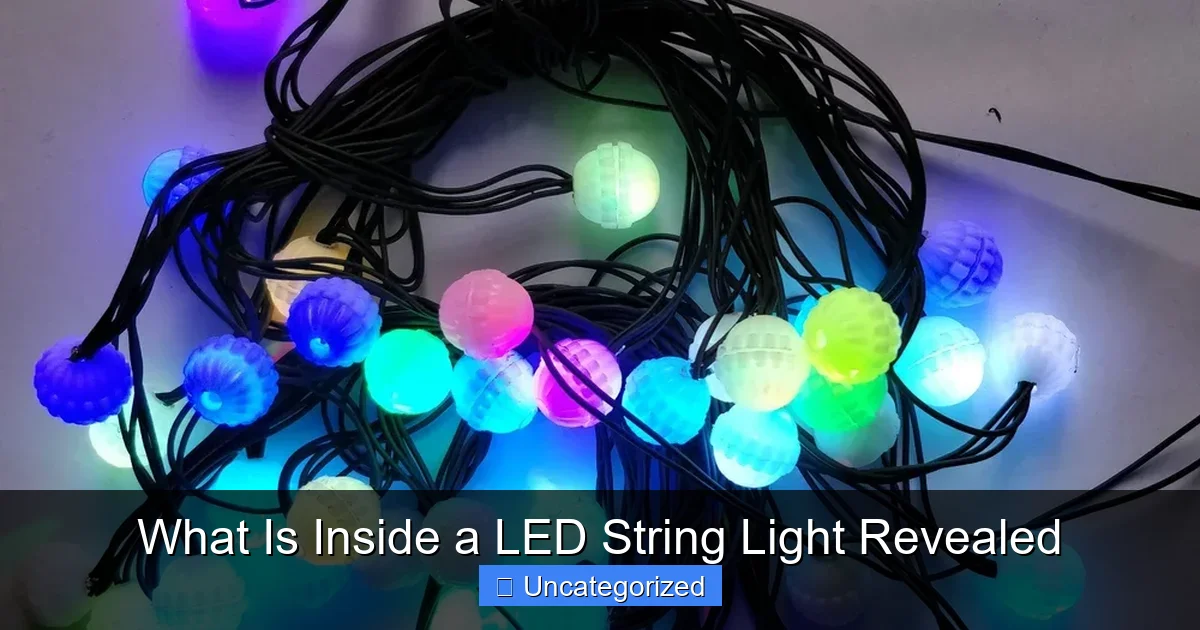
Featured image for what is inside a led string light
Image source: 5.imimg.com
LED string lights are powered by tiny, energy-efficient light-emitting diodes mounted on a flexible circuit board, all encased in a protective silicone or plastic coating. Inside, a series of microchips and resistors regulate voltage and ensure consistent brightness, while thin copper wires connect each LED in parallel for reliable performance. This compact, weather-resistant design makes them durable, long-lasting, and perfect for both indoor and outdoor use.
Key Takeaways
- LED bulbs: Energy-efficient, long-lasting semiconductor lights.
- Wiring: Thin, insulated copper wires ensure safe conductivity.
- Resistors: Protect LEDs by regulating electrical current.
- Controller: Adjusts brightness, color, and lighting modes.
- Power source: Requires low-voltage DC for optimal performance.
- Encapsulation: Waterproof coatings protect internal components.
📑 Table of Contents
- What Is Inside a LED String Light Revealed
- The Core: Understanding the LED Chip
- Wiring and Circuit Design: The Nervous System of the String
- Encapsulation and Protective Coatings: Weatherproofing the Lights
- Control Systems: Smart Features and User Interfaces
- Power Sources and Energy Efficiency: How the Lights Stay Lit
- Maintenance, Safety, and Troubleshooting Tips
What Is Inside a LED String Light Revealed
LED string lights have become a staple in modern home decor, event styling, and holiday celebrations. Their warm, twinkling glow transforms spaces into magical environments, but have you ever wondered what’s really inside those delicate strands of light? While they may look simple on the surface, LED string lights are marvels of engineering, combining multiple materials and components to deliver efficient, durable, and safe illumination. From backyard patios to wedding venues, these lights are everywhere—but their inner workings remain a mystery to most.
Whether you’re a DIY enthusiast, an electrician, or simply curious about how everyday technology functions, understanding the anatomy of a LED string light offers valuable insight. This guide dives deep into the components, materials, and engineering principles that make these lights tick. We’ll explore everything from the tiny semiconductor chips to the protective casings, wiring, and control systems. By the end of this article, you’ll not only know what is inside a LED string light, but also how to choose, maintain, and troubleshoot them like a pro.
The Core: Understanding the LED Chip
At the heart of every LED string light lies the LED (Light Emitting Diode) chip—a tiny semiconductor that emits light when an electric current passes through it. Unlike traditional incandescent bulbs that rely on heated filaments, LEDs produce light through electroluminescence, making them far more energy-efficient and longer-lasting.
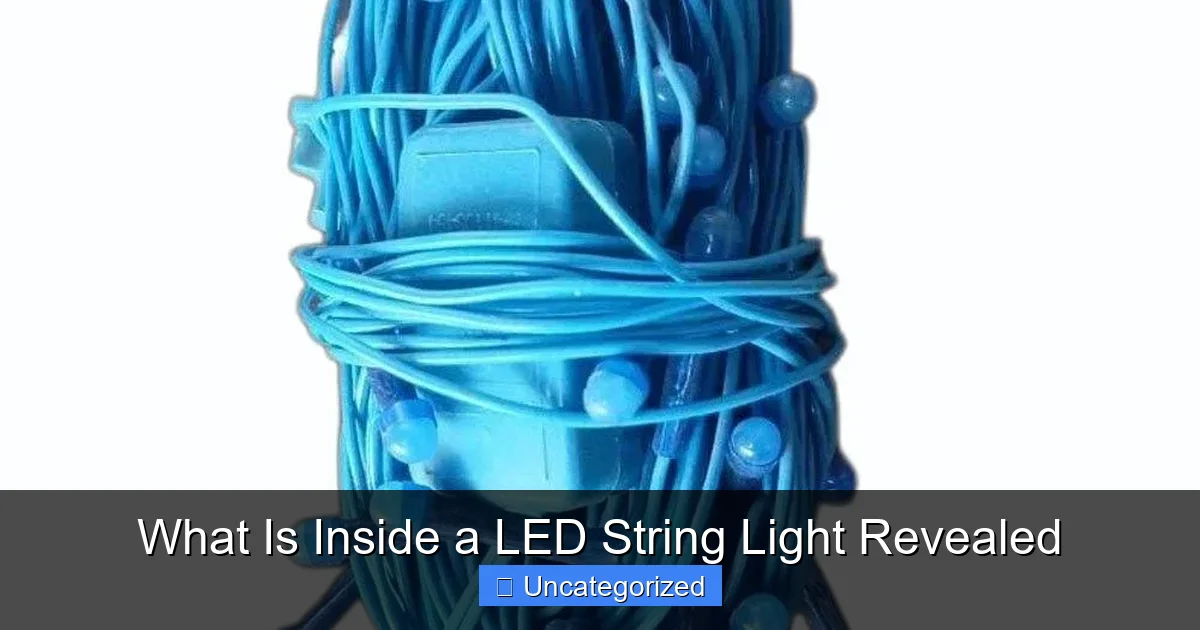
Visual guide about what is inside a led string light
Image source: 5.imimg.com
Semiconductor Materials Used in LEDs
The LED chip is typically made from compound semiconductor materials such as Gallium Nitride (GaN), Gallium Arsenide (GaAs), or Indium Gallium Nitride (InGaN), depending on the desired color and brightness. For example:
- Red and yellow LEDs: Often use Aluminum Gallium Indium Phosphide (AlGaInP) for high efficiency.
- Blue, white, and green LEDs: Utilize Indium Gallium Nitride (InGaN), which enables high-brightness output and is the foundation of white LEDs.
White LEDs, the most common type in string lights, are created by coating a blue LED chip with a phosphor layer (usually Yttrium Aluminum Garnet or YAG). When the blue light excites the phosphor, it emits a broad spectrum of visible light, mimicking natural white light. This process is known as phosphor conversion.
Size and Packaging of the LED Chip
LED chips are microscopic—often measuring just 0.2 mm to 1 mm in size. To protect them and improve light extraction, they are mounted onto a die carrier (also called a submount) made of ceramic or metal. This carrier is then encapsulated in a lens or dome, typically made of silicone or epoxy. The lens not only protects the delicate chip from moisture, dust, and physical damage but also helps shape and direct the light beam.
For example, in a 20-foot string with 50 LEDs, each LED chip is individually packaged and connected in series or parallel circuits. The packaging ensures consistent performance across all units, even in outdoor conditions.
Efficiency and Lifespan
One of the reasons LED string lights last so long (up to 50,000 hours) is the low heat generation at the chip level. Traditional bulbs lose up to 90% of energy as heat, while LEDs convert over 80% of energy into light. This efficiency translates into lower electricity bills and reduced fire risk—especially important for extended indoor or outdoor use.
Wiring and Circuit Design: The Nervous System of the String
While the LED chip is the star, the wiring and circuit design form the backbone of the string light. These components ensure that electricity flows smoothly, safely, and consistently to every LED along the line.
Conductive Wires and Strand Configuration
Most LED string lights use copper wires due to their excellent conductivity, flexibility, and resistance to corrosion. The wires are typically insulated with PVC (polyvinyl chloride) or silicone for safety and durability. Depending on the design, the wiring can be configured in two main ways:
- Series Circuit: LEDs are connected end-to-end. If one LED fails, the entire string may go dark (though modern designs often include bypass diodes to prevent total failure).
- Parallel Circuit: Each LED has its own independent path to the power source. This allows the rest of the string to remain lit even if one LED burns out—ideal for long-term installations.
Hybrid configurations (series-parallel) are also common, especially in longer strings (e.g., 100+ LEDs), to balance voltage drop and reliability.
Voltage Regulation and Power Supply
LEDs require low voltage (typically 2–3.6 volts per chip), but household outlets provide 120V (US) or 230V (EU). To bridge this gap, LED strings include a power adapter or driver that converts high-voltage AC to low-voltage DC. This driver is usually integrated into the plug or housed in a small box along the cord.
For example, a 50-LED string might operate at 24V DC, with the driver stepping down 120V AC and converting it to safe DC current. Some advanced models use constant current drivers to maintain stable brightness regardless of fluctuations in input voltage.
Resistors and Current Limiting
To prevent LEDs from drawing too much current and overheating, current-limiting resistors are added to the circuit. These resistors are often embedded near the plug or distributed along the string. For instance, a 100-LED string might have one resistor per 10 LEDs to ensure uniform current distribution.
Tip: If you’re building a custom LED string, always calculate the correct resistor value using Ohm’s Law (R = (Vsupply – Vled) / Iled) to avoid damaging the LEDs.
Connectors and End Caps
Most LED strings feature end-to-end connectors (male and female) that allow multiple strands to be linked together. These connectors are sealed with silicone or rubber gaskets to prevent moisture ingress. Additionally, the final LED is capped with a sealed end cap to complete the circuit and protect the wiring.
Encapsulation and Protective Coatings: Weatherproofing the Lights
Outdoor LED string lights must withstand rain, snow, UV exposure, and temperature swings. To survive these conditions, manufacturers use advanced encapsulation and protective materials.
Silicone and Epoxy Encapsulation
Each LED is individually encapsulated in silicone or epoxy resin. This clear, durable material protects the chip and internal connections from moisture, dust, and mechanical stress. Silicone is preferred for outdoor use because it remains flexible in extreme cold and resists yellowing from UV exposure.
For example, high-quality patio lights use IP65-rated silicone encapsulation, meaning they are dust-tight and protected against low-pressure water jets.
PVC and Silicone Cable Jackets
The main wire jacket is made of flexible PVC or silicone. Silicone jackets are more expensive but offer superior performance in freezing temperatures (down to -50°C) and resist cracking over time. PVC is common in budget models and works well indoors or in mild climates.
UV-Resistant Coatings
Sunlight contains UV radiation that can degrade plastics and cause yellowing or brittleness. To combat this, manufacturers add UV stabilizers to the wire jacket and LED lenses. This ensures the lights maintain their clarity and flexibility for years, even when hung year-round in sunny areas.
Waterproof Connectors and Seals
Outdoor-rated strings use waterproof connectors with rubber gaskets and threaded seals. Some models even feature self-sealing end caps that expand when heated, creating an airtight seal. When purchasing for outdoor use, always check the IP (Ingress Protection) rating—IP44 for splash resistance, IP65 for jet protection, and IP67 for temporary submersion.
Example: A wedding planner in Florida might choose IP67-rated LED strings for a beachfront ceremony to ensure reliability during unexpected rain showers.
Control Systems: Smart Features and User Interfaces
Modern LED string lights go far beyond simple on/off functionality. They now include sophisticated control systems that enhance usability, safety, and customization.
Remote Controls and Wireless Modules
Many LED strings come with infrared (IR) or radio frequency (RF) remote controls. These allow users to adjust brightness, change colors, and switch between lighting modes (e.g., steady, blinking, fade, twinkle) without touching the lights.
For example, a 100-LED RGB string might offer 16 color options and 8 dynamic effects, all controlled via a palm-sized remote. RF remotes have a longer range (up to 100 feet) and work through walls, unlike IR remotes that require line-of-sight.
Smart Connectivity (Wi-Fi and Bluetooth)
Smart LED strings integrate with home automation systems via Wi-Fi or Bluetooth. Using apps like Google Home, Alexa, or Tuya, users can schedule lighting, sync with music, or control lights remotely from a smartphone.
Tip: When choosing a smart string, check for compatibility with your preferred ecosystem. Some require a hub (e.g., Philips Hue), while others connect directly to Wi-Fi (e.g., LIFX).
Microcontrollers and Memory Chips
At the core of the control system is a microcontroller unit (MCU)—a small computer-on-a-chip that stores lighting patterns and processes user commands. The MCU is programmed with firmware that dictates behavior, such as how quickly colors transition or how bright the lights should be at night.
Some strings also include non-volatile memory to remember the last used settings after power is restored—a convenient feature for holiday displays.
Motion Sensors and Timers
Advanced models may include motion sensors (for security lighting) or built-in timers that turn the lights on/off at scheduled times. For example, a porch string might activate at sunset and shut off at midnight, conserving energy and enhancing safety.
Power Sources and Energy Efficiency: How the Lights Stay Lit
Understanding the power source is crucial for choosing the right LED string for your needs, whether it’s plug-in, battery-operated, or solar-powered.
Plug-In vs. Battery-Powered Strings
Most residential LED strings are plug-in models, drawing power from a wall outlet via a low-voltage adapter. These are ideal for permanent installations and offer the brightest, most consistent performance.
Battery-powered strings use AA or AAA batteries (or built-in rechargeable cells) and are perfect for portable use, such as camping or table centerpieces. However, they have shorter run times (4–8 hours) and may dim over time as batteries deplete.
Solar-Powered LED Strings
Eco-friendly solar-powered strings include a small solar panel that charges a rechargeable lithium-ion or NiMH battery during the day. At night, the stored energy powers the LEDs. These are excellent for garden pathways or balconies with access to sunlight.
Note: Solar strings work best in full sun. In cloudy climates, performance may vary, so consider models with backup USB charging.
Energy Consumption and Savings
LEDs use up to 90% less energy than incandescent bulbs. Here’s a comparison of energy use for a 20-foot string:
| Light Type | LED String (50 LEDs) | Incandescent String (50 bulbs) |
|---|---|---|
| Power Consumption | 2.4 watts | 25 watts |
| Annual Energy Cost (6 hrs/day) | $0.52 | $5.48 |
| Lifespan | 50,000 hours | 1,000 hours |
| CO2 Emissions (annual) | 4.8 lbs | 50 lbs |
As shown, switching to LED saves money and reduces environmental impact. For a household using 10 strings, the annual savings could exceed $50.
Overload Protection and Safety Certifications
Quality LED strings include fuses or surge protectors in the power adapter to prevent overheating or fire in case of a short circuit. Look for safety certifications like UL (USA), CE (Europe), or RoHS, which ensure the product meets strict electrical and environmental standards.
Maintenance, Safety, and Troubleshooting Tips
Even the best LED strings require proper care to last. Here’s how to maintain them and fix common issues.
Cleaning and Storage
After use, gently wipe the lights with a dry or slightly damp cloth. Avoid harsh chemicals or submersion in water. For long-term storage, coil the string loosely and store in a cool, dry place to prevent tangling and wire damage.
Common Problems and Fixes
- Flickering lights: Check for loose connections or a failing driver. Replace the power adapter if needed.
- Partial string dark: In series strings, a single failed LED can cause this. Use a LED tester to locate the dead bulb and replace it.
- Remote not working: Replace batteries in the remote or reset the receiver module.
- Overheating adapter: Unplug immediately. Ensure the adapter is in a well-ventilated area and not covered.
Safety Precautions
Never exceed the maximum number of connectable strings (usually 3–5 for 120V systems). Overloading can cause fire hazards. Also, avoid using damaged cords or frayed wires—replace the entire string if insulation is compromised.
Tip: For outdoor use, install lights at least 12 inches away from flammable materials like dry leaves or fabric.
Upgrading and Customization
Want to personalize your lights? Consider addressable LED strings (e.g., WS2812B), which allow individual LED control via programming. With an Arduino or Raspberry Pi, you can create custom light shows synchronized to music or weather.
From the tiny semiconductor chip to the rugged protective casing, every component inside a LED string light plays a vital role in delivering safe, beautiful, and energy-efficient illumination. Understanding what is inside a LED string light empowers you to make smarter purchasing decisions, extend the lifespan of your lights, and even experiment with advanced setups. Whether you’re decorating for a holiday, setting the mood for a dinner party, or lighting up a backyard, knowing the technology behind the glow enhances both appreciation and utility. So the next time you plug in a string of twinkling lights, remember: it’s not just magic—it’s science, engineering, and thoughtful design working in harmony.
Frequently Asked Questions
What components make up a LED string light?
A LED string light consists of multiple LED bulbs connected by thin electrical wires, a power source (like batteries or a plug-in adapter), and often a small control box for settings like brightness or flashing modes. Some also include resistors to regulate current and protect the LEDs.
Are LED string lights safe to leave on overnight?
Yes, most modern LED string lights are designed with low heat emission and energy-efficient components, making them safe for extended use. However, always check the manufacturer’s guidelines to ensure compliance with safety standards.
What is inside a LED string light that makes it energy efficient?
The secret lies in the LED bulbs themselves, which use semiconductor technology to convert electricity into light with minimal heat loss. Combined with low-voltage wiring and efficient power supplies, this reduces energy consumption significantly compared to traditional bulbs.
Can I replace the bulbs in a LED string light?
Some LED string lights have replaceable bulbs, especially if they use socketed LEDs, but many are permanently sealed. Check the product manual—if the bulbs are soldered or molded, replacement may not be feasible.
What causes LED string lights to flicker or change colors?
Flickering or color changes are usually controlled by a built-in microchip in the control box, which manages voltage and current to create different lighting effects. Faulty connections or low batteries can also cause irregular flickering.
How are LED string lights powered—what’s inside the plug or battery pack?
The power source contains either batteries (for portable versions) or a plug-in adapter that steps down household voltage to a safe level. The adapter converts AC to low-voltage DC to power the LEDs efficiently and safely.

