Featured image for what to use to hang patio string lights
Image source: cdn.thewirecutter.com
Use sturdy mounting hardware like outdoor-rated hooks, eye screws, or zip ties designed for weather resistance to securely hang patio string lights. For a polished look and maximum safety, anchor lights to eaves, railings, or trees using durable, UV-resistant materials that prevent sagging and withstand the elements. Avoid nails or weak adhesives—opt for solutions that balance strength, aesthetics, and long-term reliability.
Key Takeaways
- Use sturdy anchor points: Secure lights to beams, poles, or walls for stability.
- Measure spacing first: Plan light placement to avoid sagging or uneven lines.
- Choose weatherproof hooks: Opt for rust-resistant materials for long-lasting outdoor use.
- Install tension cables: Prevent drooping with a guide wire for heavy-duty support.
- Test before finalizing: Hang temporarily to adjust height and ambiance.
- Use zip ties: Neatly secure lights to railings or fences for quick setup.
📑 Table of Contents
- What to Use to Hang Patio String Lights for Perfect Ambiance
- Understanding Your Space and Lighting Goals
- Best Tools and Hardware for Hanging Patio String Lights
- Creative and Practical Hanging Methods
- Weatherproofing and Safety Considerations
- Step-by-Step Installation Guide
- Data Table: Recommended Hardware by Use Case
- Final Thoughts: Creating Lasting Ambiance
What to Use to Hang Patio String Lights for Perfect Ambiance
There’s something magical about the soft glow of patio string lights. They turn a simple backyard into a cozy retreat, a place where memories are made—whether it’s a quiet evening with a book or a lively gathering with friends. I still remember the first time I strung up lights in my own backyard. I stood back, sipping a glass of wine, and felt that instant sense of pride and peace. But getting there? That was a bit of a journey. I learned the hard way that hanging patio string lights isn’t just about draping them from a tree and calling it a day. The right tools and techniques make all the difference between a droopy, tangled mess and a beautifully lit space that feels intentional and inviting.
If you’ve ever stared at your patio, wondering, “What do I even use to hang these things?”—you’re not alone. From poles and hooks to tension cables and zip ties, the options can feel overwhelming. But don’t worry. In this guide, I’ll walk you through everything you need to know to hang your patio string lights like a pro. We’ll cover the best hardware, smart placement tips, and even how to plan your layout so your space looks amazing—no guesswork required. Whether you’re going for a boho-chic look or a sleek, modern vibe, the right approach will help you create that perfect ambiance you’re after.
Understanding Your Space and Lighting Goals
Assess the Layout and Structure
Before you even buy a single hook or pole, take a good look at your patio or outdoor space. Ask yourself: What’s already here? Are there trees, railings, eaves, or posts you can use? Or is your space more open, like a deck with no natural anchor points? This assessment is crucial because it determines what tools and methods will work best for hanging patio string lights.
For example, if you have a pergola, you’re in luck—those beams are ideal for mounting lights. But if you’re working with a flat-roofed patio or a large open yard, you’ll need to get creative with freestanding poles or overhead cables. I once tried to hang lights across a wide patio with no existing structures, and my first attempt—using flimsy garden stakes—resulted in sagging lines after just one windy night. Lesson learned: know your space first.
Define Your Desired Ambiance
What kind of mood are you going for? A romantic, twinkling canopy? A bright, festive party vibe? Or maybe a soft, subtle glow for evening relaxation? Your lighting goals will influence not only the type of string lights you choose but also how and where you hang them.
For a romantic feel, consider draping lights overhead in gentle curves or zigzags, creating a canopy effect. For a more energetic, social space, you might opt for straight, evenly spaced lines that illuminate a dining or seating area. And if you want flexibility, think about using dimmable LED lights or smart bulbs that let you adjust brightness and color temperature.
One friend of mine wanted a “fairy garden” look in her small courtyard. She used mini LED string lights with a warm white glow, weaving them through potted plants and along a low wooden fence. The result? A whimsical, intimate space that felt like stepping into another world. The key was matching the lighting style to the mood—something you can do too with a little planning.
Measure Your Space Accurately
Grab a measuring tape and map out the distances between anchor points. This helps you determine how many light strands you’ll need and whether you’ll need to use extension cords or multiple power sources. A common mistake is underestimating the length—don’t forget to add extra for draping or looping.
For instance, if you’re spanning 20 feet from a wall to a tree, you’ll likely need a 25-foot strand to allow for some sag (which actually helps with visual appeal). Also, check the spacing of the bulbs—closer spacing gives a denser light, while wider spacing creates a more scattered, starry effect.
Best Tools and Hardware for Hanging Patio String Lights
Hooks and Screw Eyes
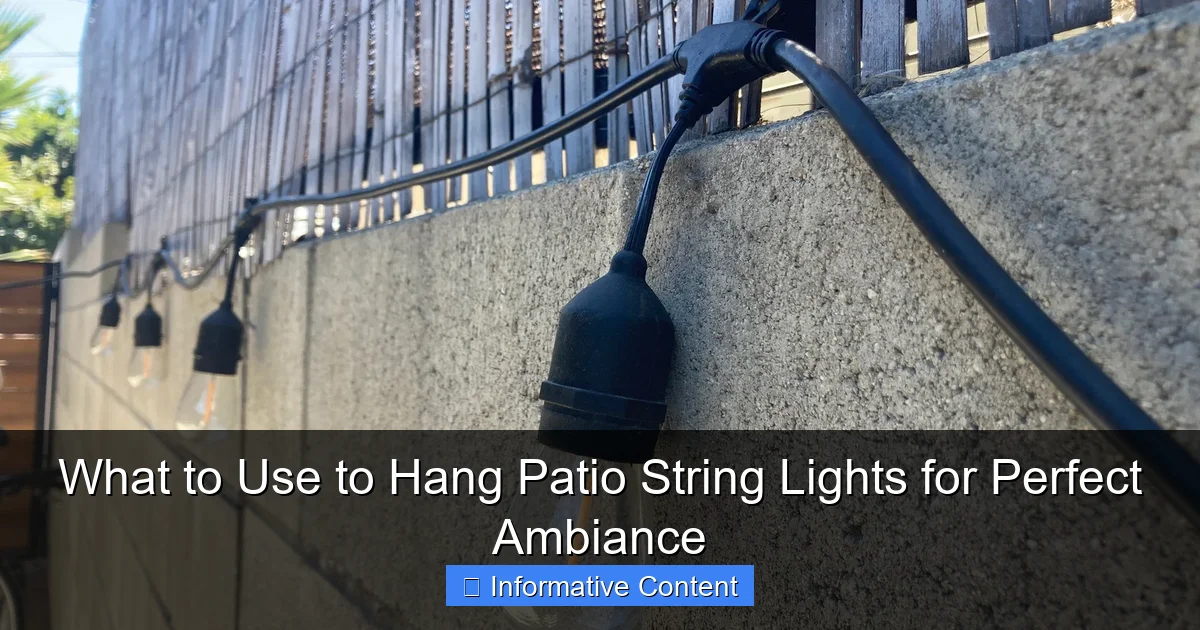
One of the most reliable and affordable options for hanging patio string lights is using screw-in hooks or eye hooks. These small metal fixtures screw directly into wood, brick, or concrete and provide a secure anchor point. They’re perfect for pergolas, eaves, fences, and wooden posts.
For wood, use stainless steel or galvanized hooks to prevent rust. For masonry, you’ll need anchors and screws—drill a pilot hole, insert the anchor, and screw in the hook. I’ve used these on my own pergola, and they’ve held strong through rain, wind, and even a few storms. Just make sure they’re spaced evenly—about every 4 to 6 feet—to prevent sagging.
Pro tip: Use cup hooks for a cleaner look. They have a small cup at the end that holds the light strand in place, reducing the risk of slipping. And if you want to avoid permanent marks, consider removable adhesive hooks—but only for lighter strands and low-wind areas.
Zip Ties and Cable Clips
For a quick, temporary setup—or if you’re renting or not allowed to drill—zip ties and cable clips are lifesavers. They’re especially useful for attaching lights to railings, fences, or existing structures without damaging them.
Use UV-resistant zip ties so they don’t degrade in the sun. I once used regular zip ties on a metal railing, and after a few months, they cracked and the lights fell. Not a great look. Also, avoid over-tightening, which can damage the wire insulation.
Cable clips with adhesive backing are great for smooth surfaces like glass, metal, or painted wood. Just clean the surface first and press firmly. They’re not as strong as screws, but for lightweight LED strands, they’re more than enough.
Freestanding Poles and Tension Cables
If your space lacks natural anchor points, freestanding poles or tension cables are game-changers. These allow you to create overhead lighting in open areas like decks, patios, or backyards with no trees or structures.
Freestanding poles are usually made of metal or durable plastic and can be weighted with sand or water at the base for stability. Some models have adjustable heights (6 to 10 feet) and built-in hooks. I used a pair of these to create a “light tunnel” over a walkway, and it instantly elevated the space.
Tension cables are another smart solution. You stretch a stainless steel cable between two anchor points—like poles, trees, or walls—and hang the lights from it. This method gives a clean, professional look and prevents sagging. Use turnbuckles to adjust tension and keep the cable taut. Just make sure your anchors can support the weight and tension.
Clips and Clamps for Railings and Beams
For patios with railings, balconies, or exposed beams, adjustable clips and spring clamps are incredibly useful. These grip onto edges without screws or adhesives, making them ideal for renters or temporary setups.
Look for clips designed specifically for string lights—they often have rubber padding to protect surfaces and a hook or loop to hold the wire. I’ve used these on a second-floor balcony, and they held up beautifully through summer and fall. Just avoid placing them too close to the edge, where wind could pull them off.
Creative and Practical Hanging Methods
Using Trees and Natural Features
Trees are a natural choice for hanging patio string lights, especially if they’re sturdy and well-placed. Wrap lights around trunks or drape them between branches for a whimsical, organic look. But be gentle—don’t tie lights directly around thin branches or bark, as this can damage the tree over time.
Instead, use tree-friendly hooks or straps. These wrap around the trunk or branch with a soft fabric or rubber material, holding the lights without harming the tree. I once used nylon straps on a large oak, and after two years, there was no sign of damage.
For a “starry sky” effect, run lights from a central tree to surrounding structures. Or create a canopy by tying lights to multiple trees in a grid pattern. Just make sure the branches can support the weight—especially if you’re using heavier incandescent bulbs.
Installing Overhead Cables or Ropes
An overhead cable system gives a clean, modern look and works well for large patios or yards. You can use stainless steel cable, paracord, or even heavy-duty nylon rope. The key is tension—keep it tight to prevent sagging.
Start by securing one end to a sturdy anchor (like a post or wall), stretch the cable across, and attach the other end. Use turnbuckles to fine-tune the tension. Then, hang your lights from the cable using S-hooks, zip ties, or light-specific clips.
I helped a neighbor set this up over his deck, and he loved how it made the space feel “finished.” He even added a dimmer switch for mood lighting. Pro tip: Use a cable with a UV-resistant coating to prevent fraying in sunlight.
Mounting on Pergolas and Gazebos
Pergolas and gazebos are perfect for hanging patio string lights—they offer built-in support and structure. You can attach lights directly to the beams using hooks, zip ties, or even small eye bolts.
For a dramatic effect, run lights along the perimeter and then zigzag them across the top. Or create a “light ceiling” by installing a secondary frame (like a grid of wires or a lightweight wooden lattice) just below the roof.
One couple I know installed a retractable shade sail over their pergola and hung lights from it. When the sail was up, the lights were hidden; when it was down, the lights created a magical glow. Clever, right?
Weatherproofing and Safety Considerations
Choose Weather-Resistant Materials
Outdoor string lights and hardware must be rated for outdoor use. Look for lights with an IP rating of at least IP44 (protection from splashing water). For hardware, choose stainless steel, galvanized metal, or UV-resistant plastic.
I once bought cheap plastic hooks for a beachside patio—within a month, they were warped from salt air and sun. Not worth the savings. Invest in quality materials, and they’ll last years.
Secure Connections and Avoid Overloading
Always use outdoor-rated extension cords and avoid daisy-chaining more than three light strands unless the manufacturer says it’s safe. Overloading can cause overheating and fire hazards.
Use GFCI (ground fault circuit interrupter) outlets for added safety—they cut power if they detect a ground fault, which is crucial outdoors where moisture is present. And never run cords across walkways where they can be tripped over or damaged.
Protect Wires from Damage
Keep wires off the ground and away from sharp edges. Use conduit or wire loom to protect exposed sections. If lights are near a grill or fire pit, ensure they’re at least 3 feet away to avoid melting or fire risk.
And remember: never hang lights near power lines or use metal poles during storms. Safety first, ambiance second.
Step-by-Step Installation Guide
Plan Your Layout
Sketch a simple diagram of your space, marking anchor points and light paths. Decide where you’ll place hooks, poles, or cables. This helps avoid mid-installation surprises.
Install Anchors and Hardware
Mount hooks, poles, or tension cables according to your plan. Double-check spacing and alignment. Use a level if needed for straight lines.
Hang the Lights
Start at one end and work your way across. Drape or clip the lights into place, leaving a little slack for movement. Avoid pulling them too tight.
Test and Adjust
Plug in the lights and turn them on. Look for dark spots, sagging, or flickering. Adjust spacing or add extra supports as needed.
Final Touches
Hide cords with cable covers or tuck them behind furniture. Add dimmers or timers for convenience. Step back and admire your handiwork!
Data Table: Recommended Hardware by Use Case
| Use Case | Recommended Hardware | Best For | Durability | Notes |
|---|---|---|---|---|
| Pergola or eaves | Stainless steel cup hooks | Permanent, clean look | High (5+ years) | Use pilot holes to avoid splitting wood |
| Railings or fences | Zip ties (UV-resistant) or railing clips | Temporary or rental-friendly | Medium (2–3 years) | Check for tight fit; replace annually |
| Open yard or deck | Freestanding poles or tension cables | Large, open spaces | High | Weight poles for wind resistance |
| Trees | Tree-friendly straps or hooks | Natural, organic look | High | Avoid wrapping lights directly around bark |
| Smooth surfaces (glass, metal) | Adhesive cable clips | Non-permanent setups | Low–Medium (1–2 years) | Clean surface before applying |
Final Thoughts: Creating Lasting Ambiance
Hanging patio string lights isn’t just about adding light—it’s about transforming a space into something warm, inviting, and uniquely yours. The right tools and techniques make all the difference, but so does patience and planning. I’ve had setups that took a few tries to get just right, but each time, the effort was worth it. There’s nothing quite like sitting under your own handmade canopy of light, watching the stars come out.
Remember, the goal isn’t perfection—it’s ambiance. Whether you use screws, straps, poles, or cables, what matters is that your space feels comfortable and joyful. And with the tips in this guide, you’re well on your way to creating a patio that’s not just lit, but truly alive.
So grab your tools, measure your space, and start hanging. Your perfect outdoor oasis is just a few lights away.
Frequently Asked Questions
What hardware do I need to hang patio string lights securely?
To hang patio string lights safely, use sturdy hardware like screw-in hooks, eye bolts, or zip ties for wood structures. For masonry or stucco, opt for wall anchors with hooks or adhesive clips designed for outdoor use.
Can I use nails to hang patio string lights?
While nails can work temporarily, they’re not ideal for long-term setups as they may loosen or damage surfaces. Screw-in hooks or adhesive clips are better for a secure, damage-free hold.
What to use to hang patio string lights on a pergola or gazebo?
For pergolas or gazebos, use zip ties, cable clips, or S-hooks to attach lights to beams or rafters. Ensure the materials are UV-resistant to withstand outdoor conditions.
Are adhesive hooks safe for hanging patio string lights?
Yes, heavy-duty outdoor adhesive hooks (rated for 5+ lbs) work well for smooth surfaces like stucco or metal. Clean the surface first and avoid using them on textured or weak materials.
How do I hang string lights without drilling holes?
Use tension rods, adhesive clips, or magnetic hooks for a no-drill solution. These are great for renters or temporary setups but may not support very heavy light strings.
What’s the best way to hang patio string lights between trees?
Use durable outdoor-rated zip ties, bungee cords, or coated steel cables to anchor lights to trees. Wrap trunks with soft rope to protect bark and ensure a tight, weather-resistant hold.