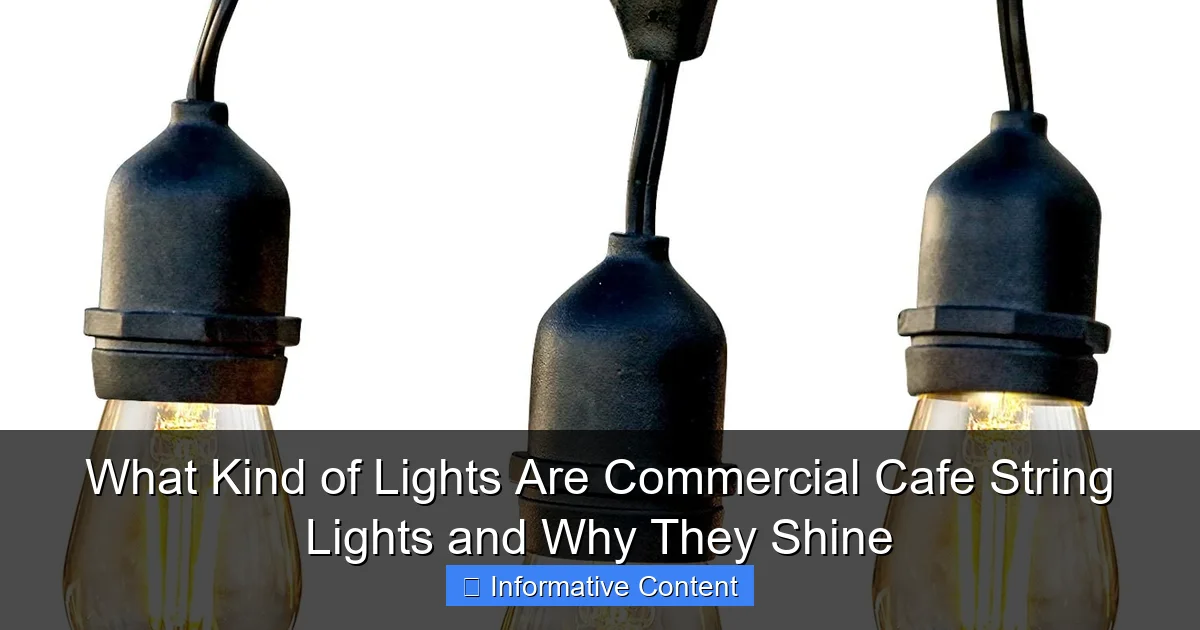
Featured image for what kind of lights are commercial cafe string light
Image source: ratedlocks.com
Commercial cafe string lights are durable, weather-resistant lighting solutions designed for long-term outdoor and indoor use in restaurants, patios, and event spaces. Typically featuring LED bulbs on heavy-duty, commercial-grade cables, they combine energy efficiency with bright, ambient illumination that enhances atmosphere while reducing maintenance and power costs.
Key Takeaways
- Commercial-grade LEDs ensure durability and long-lasting brightness for outdoor use.
- Weatherproof ratings like IP65 protect against rain, wind, and UV damage.
- Edison-style bulbs offer warm, inviting light perfect for cafe ambiance.
- Heavy-duty cords resist fraying and support extended string lengths safely.
- Energy-efficient operation reduces costs without sacrificing brightness or quality.
- Plug-and-play installation simplifies setup for both indoor and outdoor spaces.
📑 Table of Contents
- What Kind of Lights Are Commercial Cafe String Lights and Why They Shine
- Defining Commercial Cafe String Lights: More Than Just Decor
- Types of Bulbs Used in Commercial Cafe String Lights
- Design and Installation: How Commercial Cafe String Lights Are Built
- Energy Efficiency, Lifespan, and Maintenance: The Practical Side
- Where and How to Use Commercial Cafe String Lights (With Real Examples)
- Choosing the Right Commercial Cafe String Lights: A Buyer’s Guide
What Kind of Lights Are Commercial Cafe String Lights and Why They Shine
Picture this: you’re sitting at a cozy outdoor bistro on a warm summer evening. The sun has just dipped below the horizon, and above you, a canopy of softly glowing lights stretches from one end of the patio to the other. The atmosphere is relaxed, romantic, and effortlessly stylish. Chances are, you’re under the spell of commercial cafe string lights—the unsung heroes of outdoor ambiance.
These aren’t just your average Christmas tree lights. Commercial cafe string lights are engineered for durability, beauty, and performance in real-world hospitality settings. Whether you’re a restaurant owner, event planner, or someone dreaming of a backyard oasis, understanding what makes these lights special can transform your space. They’ve become a staple in cafes, bars, weddings, rooftop lounges, and even urban parks. But what exactly are they? How do they differ from regular string lights? And why do they seem to always look so good? Let’s pull back the curtain and explore the world of commercial cafe string lights—no marketing fluff, just honest, practical insights.
Defining Commercial Cafe String Lights: More Than Just Decor
When you hear “commercial cafe string lights,” think of them as the workhorses of outdoor lighting. They’re designed not just to look pretty but to survive the elements, handle frequent use, and maintain a consistent glow night after night. Unlike decorative indoor string lights that might last one holiday season, these are built for the long haul.
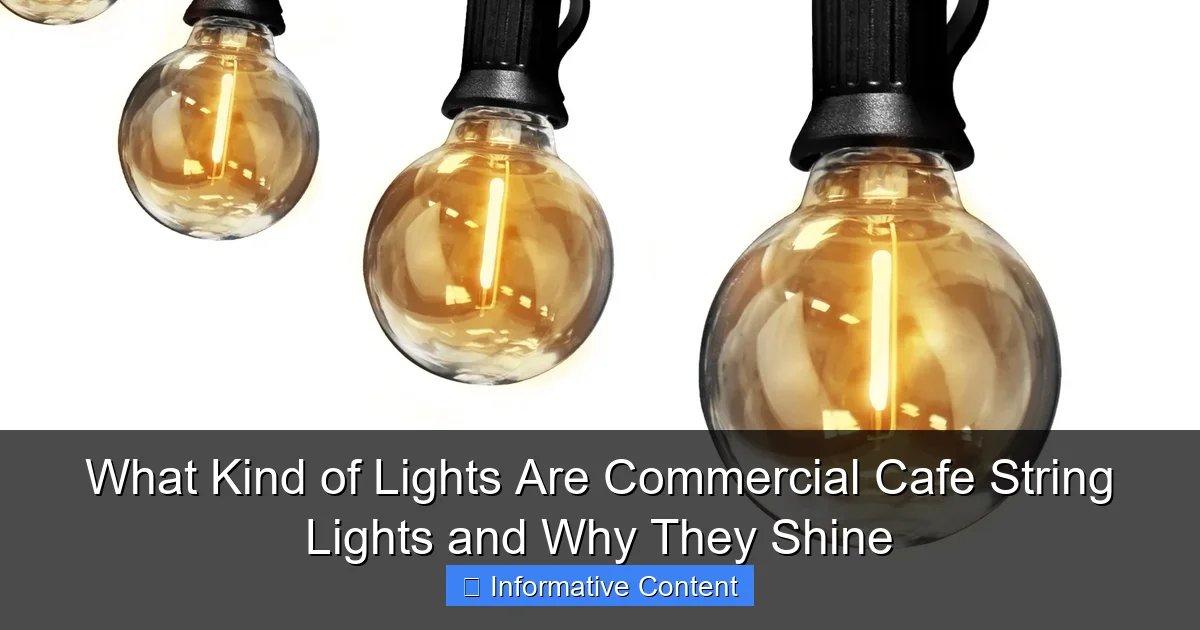
Visual guide about what kind of lights are commercial cafe string light
Image source: bfasset.costco-static.com
Built for the Real World
Commercial cafe string lights are typically used in restaurants, cafes, event venues, and outdoor dining areas. They’re installed permanently or semi-permanently, often spanning patios, pergolas, or open-air spaces. This means they need to withstand wind, rain, UV exposure, and temperature swings—something most residential lights simply can’t handle.
For example, a bistro in Portland might use these lights year-round, enduring heavy rains in winter and intense summer sun. The lights need to resist corrosion, fading, and electrical failure. That’s why commercial-grade models use weatherproof materials like rubber-coated cords, UV-resistant bulbs, and reinforced sockets.
Not All String Lights Are Created Equal
It’s easy to confuse commercial cafe string lights with cheaper, seasonal versions. But here’s the key difference: commercial-grade lights are UL-listed or ETL-certified for outdoor use. This means they’ve passed rigorous safety and performance tests. Look for labels like “Wet Rated” or “IP65”—these indicate the lights can handle rain, snow, and even direct water exposure.
One common mistake? Buying “outdoor-rated” lights from big-box stores that still aren’t built for continuous use. I once helped a friend set up lights for her taco stand. She bought a $20 strand from a discount store. Within two weeks, half the bulbs burned out, and the cord started fraying. We replaced them with commercial cafe string lights—same price, but they’re still going strong two years later.
Why “Cafe” in the Name?
The term “cafe” isn’t just branding. It refers to the European-inspired bistro culture where string lights are used to create intimate, inviting outdoor dining spaces. Think Parisian sidewalk cafes or Italian piazzas at dusk. The lighting style became a global trend, and manufacturers started labeling products specifically for this use case.
Today, “commercial cafe string lights” is a category defined by function: ambient, warm lighting that enhances the guest experience without glare or harshness. They’re not task lights—they’re mood lights with a purpose.
Types of Bulbs Used in Commercial Cafe String Lights
The magic of commercial cafe string lights isn’t just in the string—it’s in the bulbs. The type of bulb affects brightness, energy use, lifespan, and even color temperature. Let’s break down the most common options.
Incandescent Bulbs: Warm, Nostalgic, but Less Efficient
Traditional incandescent bulbs are still used in some commercial settings, especially for vintage or retro aesthetics. They emit a warm, golden glow (around 2200K–2700K), which feels cozy and inviting. Think of old-school Edison bulbs with exposed filaments.
Pros:
- Rich, warm light perfect for intimate settings
- Flicker effect mimics candlelight
- Instant on—no warm-up time
Cons:
- High energy consumption (60–100 watts per bulb)
- Short lifespan (1,000–2,000 hours)
- Get hot—can be a safety issue in crowded spaces
Best for: Historic districts, vintage-themed cafes, or spaces where ambiance trumps efficiency.
LED Bulbs: The Modern Standard
Today, most commercial cafe string lights use LED bulbs. They’ve revolutionized outdoor lighting with their efficiency, durability, and design flexibility.
Pros:
- Energy efficient—uses 80–90% less power than incandescent
- Long lifespan (25,000–50,000 hours)
- Cool to the touch—safe for kids and pets
- Available in warm white (2700K–3000K), cool white, and color-changing options
- Dimmable and compatible with smart controls
Cons:
- Higher upfront cost (though cheaper long-term)
- Some cheaper LEDs have poor color rendering (CRI)
Real-world example: A rooftop bar in Miami switched from incandescent to LED commercial cafe string lights. Their monthly electricity bill dropped by $120, and maintenance calls went from weekly to almost never. The owner said, “I didn’t realize how much heat those old bulbs were throwing off until we switched. Now the space feels cooler—literally and visually.”
Edison-Style LEDs: Best of Both Worlds
Love the look of vintage bulbs but want LED benefits? Edison-style LEDs give you the exposed filament design with LED efficiency. They’re now the go-to for many cafes and restaurants.
Look for models with high CRI (Color Rendering Index)—ideally 90+—for true-to-life colors. A high CRI means reds, greens, and skin tones look natural under the light, which matters when people are dining or taking photos.
Shatterproof and Plastic Bulbs: Safety First
In high-traffic areas, glass bulbs are a liability. Many commercial cafe string lights use shatterproof acrylic or polycarbonate bulbs. These won’t break if knocked or dropped, making them ideal for busy patios, bars, and events.
Tip: If you’re installing lights near a dance floor or a space with lots of movement, always go shatterproof. It’s not just about safety—it’s about avoiding cleanup nightmares.
Design and Installation: How Commercial Cafe String Lights Are Built
Commercial cafe string lights aren’t just about the bulbs—they’re a complete system. The cord, sockets, connectors, and mounting hardware all play a role in performance and longevity.
Heavy-Duty Cords and Sockets
The cord is usually made of 18-gauge or 16-gauge SJTW rubber—a thick, flexible, weather-resistant material. Unlike flimsy indoor cords, these can handle being coiled, stretched, and exposed to moisture.
Sockets are spaced 12 to 24 inches apart, depending on the model. Closer spacing (12–18″) gives a denser glow, ideal for intimate seating areas. Wider spacing (24″) works better for large patios or pergolas where you want a more open feel.
Pro tip: Check the socket design. Some have rubber gaskets that seal around the bulb, preventing water ingress. Others have open sockets—fine in dry climates, but risky in rainy areas.
Plug-and-Play vs. Hardwired
Most commercial cafe string lights are plug-and-play with standard 120V plugs. This makes installation easy—just plug into an outdoor GFCI outlet. But for permanent installations, hardwired models are available.
Hardwired lights connect directly to your electrical system, often controlled by a switch or dimmer. This is common in restaurants where lights are part of the permanent decor. The downside? Requires an electrician, but the result is cleaner and more reliable.
Connectors and Expandability
One major advantage of commercial models: end-to-end connectors. You can link multiple strands together to cover large areas. Look for lights with male/female connectors on both ends—this lets you create custom lengths without splicing wires.
Example: A wedding venue uses 50-foot strands connected end-to-end to light a 200-foot reception area. Each strand has 25 bulbs, so they can adjust spacing by adding or removing sections. No dead zones, no messy extensions.
Caution: Don’t exceed the manufacturer’s recommended total wattage or strand count. Overloading can cause overheating or tripped breakers.
Mounting Options: Hanging with Purpose
How you hang the lights matters as much as the lights themselves. Common methods:
- Ceiling hooks or eye screws—for permanent installations on pergolas or roofs
- Zip ties or cable clips—temporary or semi-permanent, great for events
- Wire rope systems—for large spans, like between buildings or trees
For a clean, professional look, use a guide wire or support cable. Run a thin, high-tensile wire (like aircraft cable) across the space, then attach the string lights to it. This prevents sagging and keeps the lights level, even in wind.
DIY tip: If you’re using trees, wrap the cord around the trunk with a tree strap—never use nails or screws, which can damage the tree and create a fire hazard.
Energy Efficiency, Lifespan, and Maintenance: The Practical Side
Commercial cafe string lights aren’t just about looks—they’re a long-term investment. Let’s talk about what really matters: how much they cost to run, how long they last, and how much work they require.
Energy Use: LEDs Save Big
Here’s a real comparison:
| Light Type | Bulb Wattage | Bulbs per 50-ft Strand | Total Wattage | Monthly Cost (8 hrs/night) |
|---|---|---|---|---|
| Incandescent | 60W | 25 | 1,500W | $21.60 |
| LED | 5W | 25 | 125W | $1.80 |
| Edison LED | 7W | 25 | 175W | $2.52 |
Assumptions: $0.12/kWh, 8 hours of use per night, 30 days/month.
As you can see, switching from incandescent to LED can save over $200 per year per strand. Multiply that by multiple strands, and the savings are significant.
Lifespan: How Long Do They Last?
Commercial LED string lights typically last 25,000 to 50,000 hours. At 8 hours per night, that’s 8 to 17 years. Incandescent bulbs? Maybe 1–2 years with regular use.
But lifespan depends on quality. Cheaper LEDs might fail in 5,000 hours. Look for brands with good warranties—3 to 5 years is standard for commercial models.
Maintenance: Less Than You Think
One of the best things about commercial cafe string lights? They’re low-maintenance.
- LEDs rarely burn out—if one fails, it’s usually a wiring issue, not the bulb
- No bulb changes—just wipe down the cords and bulbs occasionally
- Weatherproof design—no need to take them down in winter (unless you’re in an extreme climate)
That said, inspect them seasonally. Check for:
- Frayed cords or exposed wires
- Loose sockets or connectors
- Corrosion on metal parts
Simple tip: Use a garden hose to gently rinse off dust and pollen. Avoid pressure washers—they can damage seals and sockets.
Where and How to Use Commercial Cafe String Lights (With Real Examples)
Commercial cafe string lights aren’t just for cafes. Their versatility makes them perfect for a wide range of spaces and events. Let’s explore some creative uses.
Restaurants and Bars
Outdoor dining areas come alive with cafe lights. A Mexican cantina in Austin uses Edison-style LEDs spaced 18 inches apart over a 40-foot patio. The warm glow highlights the colorful tiles and creates a festive vibe. They run them from 5 PM to midnight—no issues after 3 years.
Tip: Use dimmable LEDs to adjust brightness. Brighter for early dinner, softer for late-night cocktails.
Weddings and Events
Wedding planners love commercial string lights for their reliability. A beachfront wedding in Malibu used 100 feet of shatterproof LED strands between palm trees. The lights survived wind, salt air, and a late-night dance party. The bride said, “I didn’t worry about anything—the lights just worked.”
Pro tip: Rent or buy with quick-connect systems for easy setup and takedown.
Backyard and Home Use
You don’t need a business to enjoy these lights. A suburban family in Colorado installed a 30-foot strand over their deck. They use it for summer BBQs, movie nights, and even homework (with a brighter task light nearby). The kids love it, and the parents love the low energy bill.
Tip: Pair with solar-powered path lights for a complete outdoor lighting system.
Urban and Public Spaces
Cities use commercial cafe string lights to activate public areas. A downtown plaza in Seattle installed 200 feet of LED strands over a pedestrian walkway. Crime rates dropped, and foot traffic increased—proof that good lighting improves safety and community.
Creative Ideas You Might Not Have Considered
- Under pergola beams—creates a “floating” effect
- Along fence lines—defines boundaries and adds charm
- In trees (with tree straps)—makes a magical canopy
- Inside tents or marquees—for events with no ceiling
Choosing the Right Commercial Cafe String Lights: A Buyer’s Guide
With so many options, how do you pick the right lights? Here’s what to consider.
1. Location and Climate
Are you in a rainy, snowy, or salty environment? Choose IP65-rated or higher lights with rubber cords and sealed sockets. For dry climates, you have more flexibility.
2. Aesthetic Goals
Want vintage charm? Go for Edison-style LEDs. Prefer sleek and modern? Try globe or G40 bulbs. Match the style to your space.
3. Budget and Long-Term Value
Yes, commercial lights cost more upfront—$100 to $300 per 50-foot strand. But factor in energy savings, lifespan, and maintenance. A $150 LED strand can save you $500+ over 5 years.
4. Installation Complexity
DIY-friendly? Look for plug-and-play models with connectors. For permanent setups, consider hardwired options with dimmers.
5. Certifications and Safety
Always buy UL-listed or ETL-certified lights. Avoid “outdoor” labels without certification—they may not be safe for continuous use.
Final tip: Buy one strand first. Test it in your space. Check brightness, color, and ease of installation. If it works, scale up.
Commercial cafe string lights are more than just decoration—they’re a tool for creating connection, comfort, and beauty. Whether you’re lighting a bustling bistro or a quiet backyard, the right lights can turn any space into a destination. They’re durable, efficient, and timeless. And that’s why they continue to shine—literally and figuratively—year after year.
Frequently Asked Questions
What kind of lights are commercial cafe string lights?
Commercial cafe string lights are durable, weather-resistant lighting solutions designed for outdoor and indoor use in cafes, patios, and event spaces. They typically feature LED bulbs (often Edison-style) on heavy-duty, shatterproof cords rated for long-term commercial use.
Are commercial cafe string lights different from regular string lights?
Yes. Unlike standard decorative lights, commercial cafe string lights use thicker gauge wiring, UV-resistant materials, and commercial-grade LEDs to withstand daily wear, extreme temperatures, and prolonged use.
What type of bulbs do commercial cafe string lights use?
Most use energy-efficient, dimmable LED bulbs with warm white or soft amber tones (2700K-3000K) to create a cozy ambiance. Many feature vintage-style commercial cafe string lights with exposed filaments for a trendy aesthetic.
Can I leave commercial cafe string lights up year-round?
Most are designed for permanent installation with IP65+ waterproof ratings and weatherproof sockets. However, always check manufacturer guidelines for extreme climates or seasonal storage recommendations.
Do commercial cafe string lights use a lot of electricity?
No. High-quality LED commercial cafe string lights consume up to 80% less energy than incandescent versions while offering 25,000+ hours of lifespan, making them cost-effective for businesses.
What spacing works best for cafe string lights in a restaurant?
For even illumination, space strands 6-8 feet apart in a grid or zigzag pattern. Overhead installations typically hang 7-9 feet high to avoid glare while maximizing coverage.