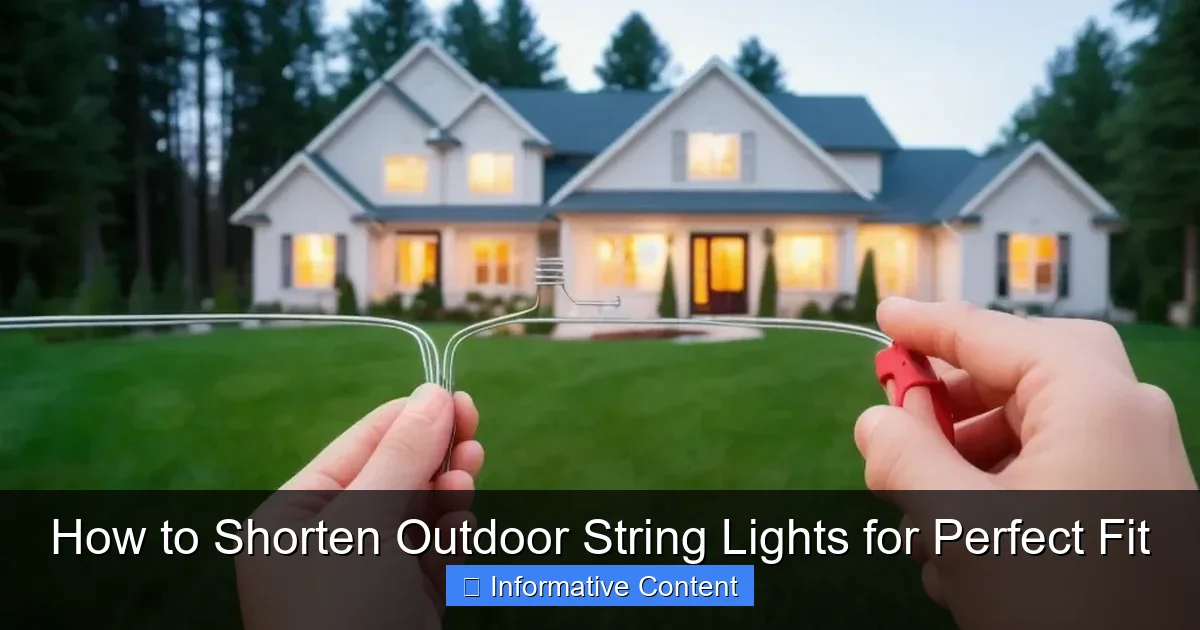
Featured image for how to shorten outdoor string lights
Image source: lastinglights.com
Shorten outdoor string lights safely by cutting only at designated cut points to maintain waterproofing and electrical integrity. Always disconnect power, measure carefully, and seal cut ends with silicone to prevent moisture damage and extend bulb life. A precise fit enhances both safety and ambiance in any outdoor space.
Key Takeaways
- Measure twice, cut once: Ensure precise length before modifying lights.
- Use manufacturer guidelines: Follow instructions to avoid voiding warranties.
- Seal cut ends properly: Prevent moisture damage with waterproof connectors.
- Test before finalizing: Check functionality after shortening the string.
- Opt for plug-free ends: Simplify installation with pre-terminated cords.
- Plan for extra length: Allow slack for future adjustments or repairs.
📑 Table of Contents
- Why You Should Shorten Your Outdoor String Lights
- Understanding Your String Light Type: The First Step
- Tools and Materials You’ll Need
- Step-by-Step: How to Shorten Plug-and-Play Lights
- Shortening Continuous Loop Lights (With a New Plug)
- Alternative: Non-Cut Solutions for Excess Length
- Data Table: Cutting Guide by Light Type
- Final Thoughts: Make Your Lights Work for You
Why You Should Shorten Your Outdoor String Lights
Imagine this: you’ve finally set up your outdoor string lights for a cozy backyard dinner. You’re excited—until you notice they’re too long. The extra length is tangled, dragging on the ground, or creating awkward loops. It’s frustrating, right? You didn’t buy them to be a tripping hazard or an eyesore. You bought them to create a warm, inviting ambiance. But sometimes, even the most beautiful lighting setup can go sideways when the lights don’t fit your space perfectly.
The good news? You don’t need to return them or buy new ones. You can shorten outdoor string lights to fit your space like a glove. Whether you’re wrapping them around a pergola, draping them across a patio, or lining a fence, a custom fit makes all the difference. Not only does it look cleaner, but it also reduces wear, prevents tangling, and makes your setup safer. In this guide, I’ll walk you through the how to shorten outdoor string lights process step by step—no electrical degree required. I’ve done this more times than I can count, and I’ve learned a few tricks (and made a few mistakes) along the way. Let’s get started.
Understanding Your String Light Type: The First Step
Before you reach for the scissors or wire cutters, pause. Not all outdoor string lights are created equal. The method you use to shorten them depends entirely on their design and wiring. Jumping in without knowing the type could mean damaging the lights or creating a fire hazard. So, let’s break down the most common types and what they mean for your project.
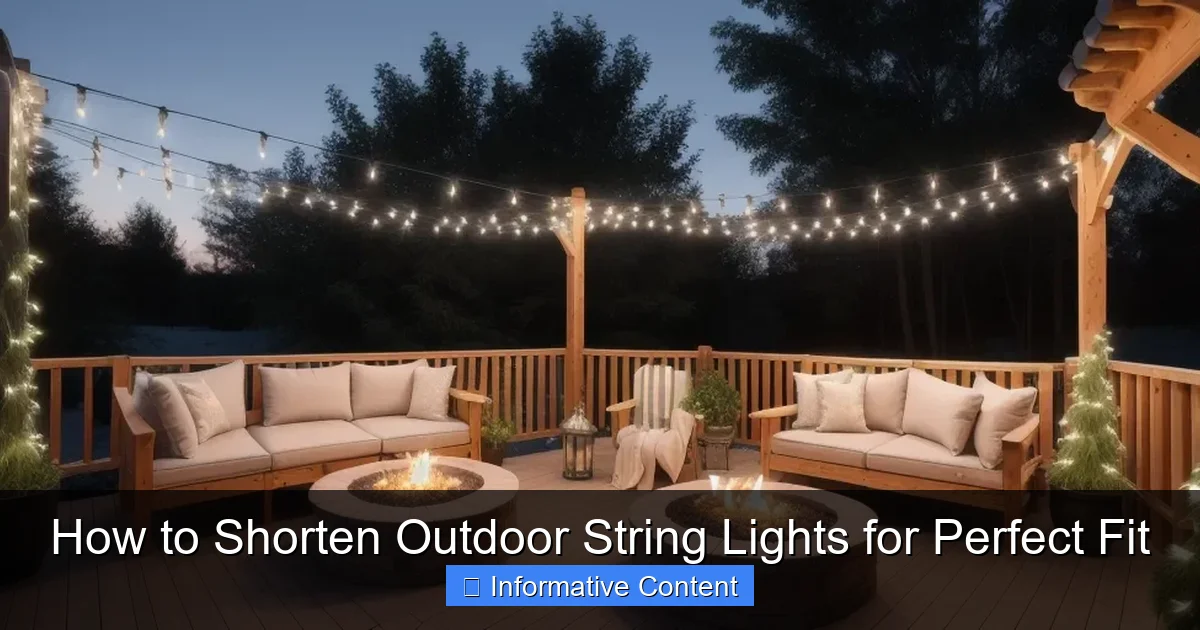
Visual guide about how to shorten outdoor string lights
Image source: lastinglights.com
1. Plug-and-Play (End-to-End) Lights
These are the most common. They have a plug on one end and a socket (or dead end) on the other. You can often connect multiple strands together. They’re great for beginners because they’re simple and widely available.
- How they work: Electricity flows from the plug, through each bulb socket, and stops at the end.
- Can you cut them? Yes, but only if they’re designed for it. Some brands (like GE or Brightown) have “cuttable” versions with clear markings where you can safely snip.
- What to look for: A small “cut here” symbol or a gap between sockets where the wire is exposed. If there’s no marking, do not cut.
Tip: I once cut a strand without checking—big mistake. The entire section after the cut went dark because I severed the return wire. Always verify the cut points!
2. Continuous Loop (No Plug) Lights
These form a loop—no plug, no end. You power them by connecting a transformer or plug-in adapter somewhere along the line. Think of them like a necklace of lights.
- How they work: The circuit is closed. Power comes from a central point, not the end.
- Can you cut them? Yes, but you’ll need to add a new plug after cutting. This requires basic wiring skills.
- What to look for: Two wires running side by side. Cutting one breaks the circuit; cutting both requires re-termination.
Personal note: I used these on my pergola. I cut them in half, added plugs, and now I have two separate strands—perfect for my space.
3. Smart or App-Controlled Lights
These connect to Wi-Fi or Bluetooth and are often more complex internally. They may have a controller box or built-in electronics.
- Can you cut them? Usually no. Cutting them often disrupts the signal or power to the controller.
- Alternative: Use zip ties or clips to bundle excess length neatly instead of cutting.
4. Solar-Powered String Lights
These have a small solar panel that charges a battery during the day. The lights turn on at night.
- Can you cut them? Only if the solar panel is on a separate wire. If the panel is inline with the lights, cutting will disable the entire system.
- Best practice: Keep the solar panel intact and only shorten the lighted portion if possible.
Tools and Materials You’ll Need
You don’t need a full workshop to shorten outdoor string lights, but having the right tools makes it easier, safer, and more professional-looking. Here’s what I always keep in my toolkit:
Essential Tools
- Wire cutters/strippers: A must for clean cuts and removing insulation. I use a small pair of flush-cut wire cutters—they’re precise and don’t leave jagged edges.
- Electrical tape: For sealing exposed wires after cutting. Use weather-resistant tape for outdoor use.
- Heat-shrink tubing (optional but recommended): Better than tape for long-term weatherproofing. Slide it on before cutting, then shrink it with a hairdryer.
- Multimeter (optional): Helps test continuity after cutting to ensure the circuit is still closed.
- Needle-nose pliers: For twisting wires together or crimping connectors.
- Measuring tape: To measure your desired length before cutting.
Optional (But Helpful) Materials
- Replacement plug kit: If you’re cutting a continuous loop, you’ll need a new plug. Look for “universal replacement plug” or “inline plug” kits (~$5–$10).
- Wire nuts or crimp connectors: For joining wires if you’re splicing.
- Zip ties or light clips: For bundling excess wire if you choose not to cut.
- Silicone sealant: For extra protection on outdoor splices.
Pro tip: I keep a small project box with all these items labeled. It saves me time and frustration. When I’m ready to shorten a strand, everything’s in one place.
Safety First: What NOT to Do
- Never cut live wires. Unplug the lights before starting.
- Don’t use regular scissors. They can crush the wires and create short circuits.
- Don’t skip insulation. Exposed wires can spark, especially outdoors.
- Don’t cut too close to a bulb socket. Leave at least 1–2 inches of wire on each side to work with.
Step-by-Step: How to Shorten Plug-and-Play Lights
This is the most common scenario—and the easiest. If your lights are plug-and-play with a clear “cut here” mark, follow these steps. I’ve used this method on my patio, deck, and even around my front porch.
Step 1: Measure and Mark
First, lay the lights where you plan to install them. Use clips or tape to secure them temporarily. Measure the exact length you need. Always add 6–12 inches extra for plug reach and slack. For example, if your space is 10 feet, cut the strand at 10.5–11 feet.
Now, count the bulb sockets from the plug end. If the “cut here” mark is between socket #8 and #9, and you need to remove 12 bulbs, count 12 sockets from the end and find the next cut mark. Never cut between sockets unless marked.
Step 2: Cut at the Mark
Use your wire cutters to snip cleanly at the designated cut point. Make sure you cut through both wires (usually a black/white pair). A clean cut prevents frayed ends.
My mistake: I once cut too fast and left a tiny strand of wire exposed. It sparked when I plugged it in. Not fun. Take your time.
Step 3: Insulate the End
After cutting, you’ll have two exposed wires. Here’s how to seal them:
- Strip about 1/2 inch of insulation from each wire using a stripper.
- Twist the exposed copper together tightly with pliers.
- Cover the joint with electrical tape (2–3 layers) or slide on a piece of heat-shrink tubing and warm it with a hairdryer.
If you’re in a high-moisture area (like near a pool), add a dab of silicone sealant over the tape for extra protection.
Step 4: Test Before Installing
Plug in the lights and check if all bulbs work. If a section is dark, you may have cut a wire incorrectly or damaged a socket. Unplug, inspect, and re-insulate if needed.
Step 5: Install and Enjoy
Once it’s working, install the lights using clips, hooks, or zip ties. Avoid staples or nails—they can pierce the wire and cause shorts.
Bonus tip: If you have a few extra bulbs left, save them in a bag. They’re great for replacements!
Shortening Continuous Loop Lights (With a New Plug)
These are trickier but totally doable. I used this method when I wanted to split a long loop into two shorter strands for my backyard. It took me about 30 minutes, and now I have perfect coverage.
Step 1: Plan the Cut
Decide where to cut. You can cut once to shorten, or twice to make two strands. For a single cut, choose a spot with at least 6 inches of wire on each side of a bulb socket.
Step 2: Cut the Wires
Cut both wires cleanly. You’ll now have four wire ends: two from the “live” side and two from the “end” side.
Step 3: Strip and Prepare Wires
Strip 1/2 inch of insulation from each of the four ends. You’ll use the two wires from the “live” side to connect to the new plug.
Step 4: Install the Replacement Plug
Most replacement plugs have two screws or slots for wires. Here’s how to connect them:
- Open the plug housing (usually by unscrewing or prying).
- Insert the two wires from the “live” side into the terminals. Usually, one wire goes to the brass screw (hot) and one to the silver screw (neutral). If unsure, match the colors: black to brass, white to silver.
- Tighten the screws securely.
- Close the plug housing.
Step 5: Insulate the Cut End
The other two wire ends (from the “end” side) need to be insulated. Twist them together, then seal with tape or heat-shrink tubing. This closes the circuit and prevents shorts.
Step 6: Test and Seal
Plug in the lights. If they work, apply silicone sealant over the insulated joint for weatherproofing. Let it cure for 24 hours before installing.
Note: If you’re making two strands, repeat the process: add a plug to one end and insulate the other. Now you have two separate, working strings!
Alternative: Non-Cut Solutions for Excess Length
Not ready to cut? That’s okay. There are smart, non-permanent ways to manage extra length without sacrificing style or safety.
1. Use Light Clips or Hooks
Instead of letting lights drag, use adhesive clips or screw-in hooks to guide them in a zigzag or spiral pattern. This “bunching” keeps the lights off the ground and adds visual interest.
Example: I used this on my fence. The lights were 20 feet long, but my fence was only 12 feet. I clipped them in a wave pattern—looked intentional, not sloppy.
2. Bundle with Zip Ties
Loop the extra length into a figure-eight and secure with zip ties. Cover the bundle with a decorative sleeve (like a faux vine or LED wrap). It looks tidy and hides the mess.
3. Use a Light Reel or Storage Spool
Some people wind excess lights around a reel or cardboard tube and tuck it behind a planter or post. Just make sure the reel is weatherproof and not blocking airflow.
4. Create a “Light Tree” or Sculpture
Get creative! Wrap excess lights around a tree, trellis, or metal frame. It turns waste into art. I once made a “light star” on my pergola—everyone asked if it was part of the original design.
When to Choose This Route
- You’re renting and can’t modify the lights.
- You plan to reuse the full length next season.
- You’re nervous about cutting wires.
Data Table: Cutting Guide by Light Type
| Light Type | Can Be Cut? | Required Tools | Key Steps | Risk Level |
|---|---|---|---|---|
| Plug-and-Play (with cut marks) | Yes | Wire cutters, tape, stripper | Cut at mark, insulate ends | Low |
| Plug-and-Play (no marks) | No (unless you add a plug) | Cutters, replacement plug, stripper | Cut, add plug, insulate | Medium |
| Continuous Loop | Yes | Cutters, plug kit, tape | Cut, add plug, insulate end | Medium |
| Smart/Bluetooth | No | Clips, zip ties | Bundle or reroute | Low |
| Solar-Powered | Only if panel is separate | Cutters, tape | Cut light section only | Medium |
Final Thoughts: Make Your Lights Work for You
Shortening outdoor string lights isn’t just about aesthetics—it’s about function, safety, and enjoyment. A perfectly fitted strand looks intentional, lasts longer, and makes your outdoor space feel like home. Whether you’re cutting a plug-and-play set or adding a new plug to a loop, the process is simpler than it seems. And if you’re not ready to cut, there are smart ways to manage excess length that still look great.
I’ve learned that the key is patience. Measure twice, cut once. Test before you install. And always prioritize safety—unplugged, insulated, and weatherproofed. I’ve had strands that lasted 5+ years after shortening, and I’ve had others that failed because I rushed. The ones that worked? They made my backyard the go-to spot for summer nights.
So, don’t let a few extra feet of wire ruin your lighting dreams. With the right tools, a little know-how, and this guide, you can shorten outdoor string lights to fit your space perfectly. Your patio, pergola, or porch will thank you—and so will your guests.
Frequently Asked Questions
Can I shorten outdoor string lights without damaging them?
Yes, you can safely shorten outdoor string lights by cutting between bulbs at marked “cut points” (if available) or removing excess bulbs and rewiring the socket end. Always disconnect power before modifying the lights to avoid electrical hazards.
How do I shorten string lights that don’t have pre-marked cut points?
For non-modular lights, carefully remove unwanted bulbs from the end, then cap the final socket with a waterproof connector or electrical tape. For a polished look, rewire the last socket or use a plug-in end cap designed for how to shorten outdoor string lights.
What tools do I need to shorten my patio string lights?
Basic tools include wire strippers, electrical tape, heat-shrink tubing, and a waterproof wire connector. If cutting the cord, a sharp utility knife or scissors is also needed to cleanly trim the insulation.
Will shortening string lights affect their brightness or performance?
No—unless you exceed the manufacturer’s maximum bulb count or damage wiring. Always follow the product’s load guidelines, and ensure connections are sealed against moisture to maintain performance.
How do I waterproof the end of shortened outdoor string lights?
Use heat-shrink tubing or a waterproof silicone sealant over cut wires, or install a pre-made end cap with rubber gaskets. This protects against weather damage and ensures long-term durability for your shortened outdoor string lights.
Can I reconnect or extend shortened lights later if needed?
Yes, but use waterproof connectors or solder-and-shrink methods to join wires. Avoid leaving splices exposed, and consider using plug-and-play extensions for easier adjustments down the line.