Featured image for can i string different lenth led lights together
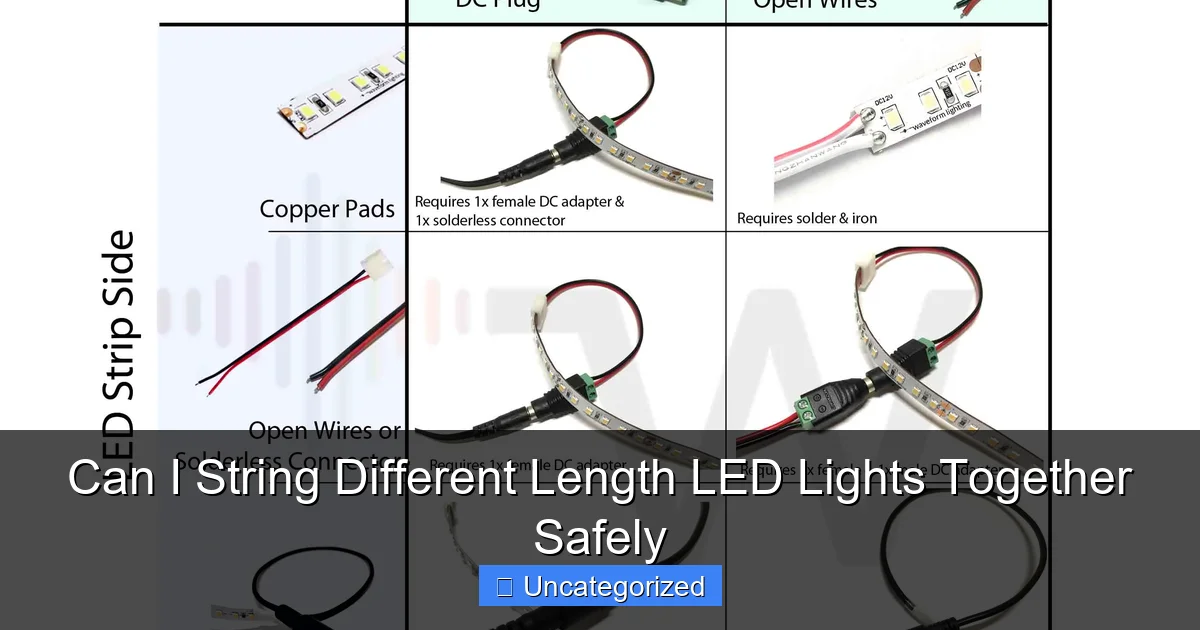
Image source: waveformlighting.com
Yes, you can safely string different length LED lights together—but only if they share the same voltage, type (e.g., 12V DC), and are connected in parallel to avoid overloading circuits. Always check manufacturer guidelines and use compatible connectors to ensure even power distribution and prevent damage or fire hazards.
Key Takeaways
- Check wattage limits: Ensure total draw doesn’t exceed the circuit’s rated capacity.
- Use compatible types: Mix only same-voltage and same-type LED lights for safety.
- Inspect connectors: Secure and waterproof connections to prevent short circuits or failures.
- Balance lengths: Avoid daisy-chaining too many long strands to reduce voltage drop.
- Test before final install: Verify functionality and safety with a trial run first.
- Follow manufacturer guidelines: Adhere to specific product instructions for mixing lengths safely.
📑 Table of Contents
- Can I String Different Length LED Lights Together Safely
- Understanding LED Light Specifications and Compatibility
- Electrical Safety Considerations When Mixing LED Strands
- Best Practices for Mixing Different Length LED Lights
- Real-World Scenarios and Case Studies
- Data Table: LED Strand Compatibility Checklist
- Conclusion: Balancing Convenience and Safety
Can I String Different Length LED Lights Together Safely
When the holiday season rolls around or you’re sprucing up your home for a special occasion, LED string lights become a go-to choice for creating a warm, inviting ambiance. Their energy efficiency, longevity, and variety of designs make them a favorite among homeowners and decorators alike. But as you dig through your storage bins, you might find a mix of different length LED lights—some 25 feet, others 50, maybe even a few 10-foot strands left over from last year’s porch display. The inevitable question arises: Can I string different length LED lights together safely?
This is a common concern, especially when you’re aiming for a cohesive, professional-looking display without the hassle of buying all new, uniform strands. While the idea of mixing and matching may seem convenient, it’s not without risks. Electrical safety, voltage compatibility, and manufacturer guidelines all play a role in whether combining different lengths is a smart move. In this comprehensive guide, we’ll explore the technical aspects, best practices, and real-world scenarios to help you make an informed decision. Whether you’re decorating a tree, outlining your roofline, or creating a cozy indoor nook, understanding how to safely connect LED lights of varying lengths is essential for both aesthetics and safety.
Understanding LED Light Specifications and Compatibility
Voltage and Power Requirements
One of the most critical factors when combining LED lights of different lengths is their voltage and power specifications. Most standard LED string lights operate on either 120V (for North American outlets) or 24V/230V (common in Europe and other regions). The voltage must match across all strands you plan to connect. For example, attempting to link a 120V strand with a 24V one will either result in the lower-voltage lights failing to illuminate or, worse, overheating and potential fire hazards.
Visual guide about can i string different lenth led lights together
Image source: i.ytimg.com
Additionally, consider the wattage (power draw) of each strand. A 25-foot strand may consume 4.8 watts, while a 50-foot version of the same model could draw 9.6 watts. The total power load is the sum of all connected strands. Exceeding the circuit’s capacity—especially if you’re also running other high-draw appliances—can trip breakers or damage wiring.
Series vs. Parallel Wiring
LED strings are typically wired in series or parallel configurations, and this affects how they behave when connected. In a series circuit, the voltage is divided across each bulb, and if one bulb fails, the entire string may go dark (though newer LED strands often include bypass circuits to prevent this). In parallel wiring, each bulb receives the full voltage, so one failure doesn’t affect the others.
When mixing lengths, it’s crucial that all strands use the same wiring configuration. Mixing series and parallel lights can lead to uneven brightness, flickering, or complete failure. Most commercial LED strings are parallel-wired for reliability, but always check the manufacturer’s specifications.
Manufacturer’s Connectivity Ratings
Every LED light set comes with a maximum connectable number—usually printed on the packaging or in the manual. For instance, a 25-foot strand might support up to 10 additional 25-foot strands, totaling 12 in a daisy chain. This rating accounts for voltage drop, heat buildup, and circuit safety. Never exceed this limit, even if the lights appear to function. Doing so risks overheating, shortened lifespan, and electrical hazards.
Example: If Brand X’s 25-foot strand allows 10 total connections, but you have a 50-foot version from the same brand, you might assume it supports 20. This is not necessarily true—the 50-foot version may have a lower connectable count due to higher power draw. Always verify per-strand ratings.
Electrical Safety Considerations When Mixing LED Strands
Voltage Drop and Dimming Effects
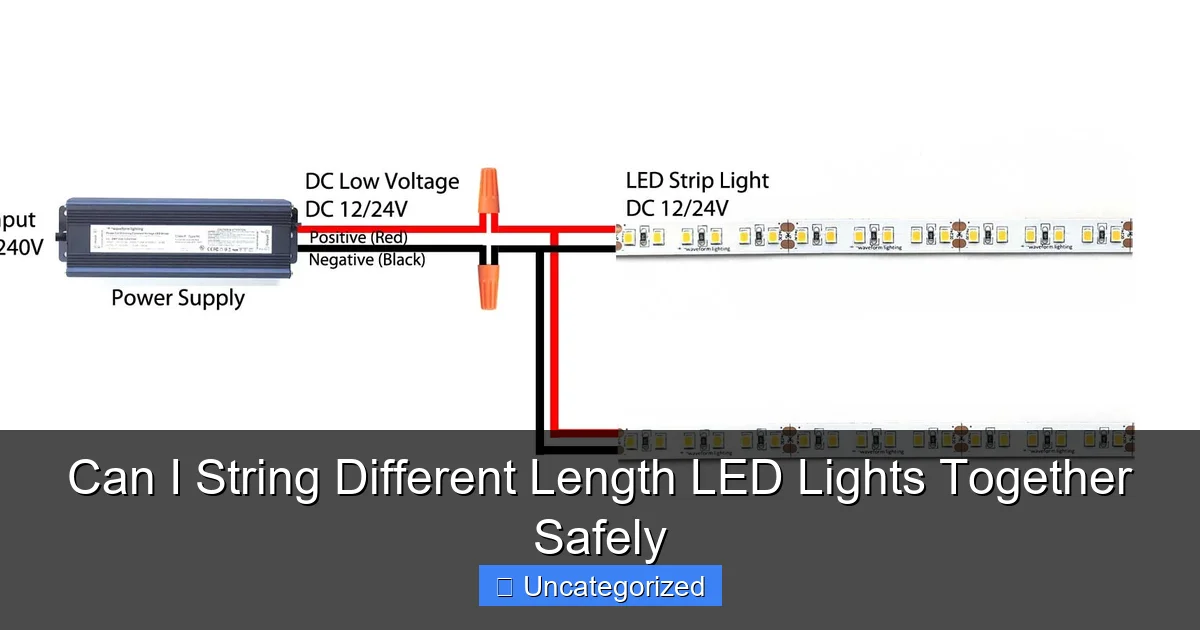
When you string different lengths together—especially if they’re from different brands or model years—you may encounter voltage drop. This occurs when the cumulative resistance of the wires and connections causes the voltage to decrease over the length of the chain. The result? Lights at the end of the line may appear dimmer or flicker.
Visual guide about can i string different lenth led lights together
Image source: waveformlighting.com
Voltage drop is more pronounced with longer total runs and lower-gauge (thinner) wires. For example, combining a 25-foot strand with a 100-foot commercial-grade light string might cause the shorter strand to appear brighter due to receiving higher voltage early in the chain. This not only affects aesthetics but can stress the LEDs, reducing their lifespan.
Tip: Use a multimeter to test voltage at the end of your chain. If it’s more than 10% below the rated voltage (e.g., 108V instead of 120V), consider shortening the chain or using a higher-gauge extension cord.
Overloading Circuits and Fire Risks
Every electrical circuit has a maximum load, typically 15 or 20 amps in residential settings. At 120V, this translates to 1,800 watts (15A) or 2,400 watts (20A). While individual LED strands draw minimal power (e.g., 5–15 watts), combining many strands—especially with different lengths and power draws—can quickly add up.
For example, ten 50-foot LED strands at 10 watts each = 100 watts. But if you also run a space heater (1,500 watts) on the same circuit, you’re nearing the 15-amp limit. Mixing lengths from different manufacturers compounds the risk, as their power efficiency may vary.
Safety tip: Use a circuit checker or plug-in outlet tester to ensure you’re not overloading the circuit. Never daisy-chain power strips or extension cords.
Waterproofing and Outdoor Use
Outdoor LED lights must be rated for wet or damp locations (look for IP65 or higher). When combining different lengths, ensure all strands are equally weather-resistant. A 10-foot indoor strand connected to a 50-foot outdoor-rated string may compromise the entire setup during rain or snow.
Also, check that all connectors and end caps are sealed. Moisture ingress can cause short circuits, especially when strands of different ages (with varying seal integrity) are linked. For permanent outdoor installations, consider using silicone sealant on connectors.
Best Practices for Mixing Different Length LED Lights
Stick to the Same Brand and Series
The safest way to combine different lengths is to use strands from the same manufacturer and product line. These are engineered to work together, with matching voltage, wiring, and connectable ratings. For example, Philips Hue’s 20-foot and 33-foot LED strips are designed for seamless integration, including app-controlled brightness and color synchronization.
If you must mix brands, verify that:
- All strands are 120V (or 240V, depending on your region)
- They use the same LED type (e.g., SMD 5050, COB)
- Connectors are compatible (e.g., 3-prong, 4-prong, proprietary)
- They have similar power consumption (within 10–15%)
Real-world example: A homeowner combines a 25-foot GE 120V strand with a 50-foot GE 120V strand from the same “Classic White” series. Both have 3-prong connectors and a max connectable count of 10. The result? A seamless, even-lit display with no dimming or overheating.
Use Extension Cords and Power Adapters Wisely
When combining lengths, you may need extension cords or power adapters to bridge gaps. Always use heavy-duty, outdoor-rated cords with a gauge appropriate for the total load (e.g., 14-gauge for up to 1,500 watts). Avoid “daisy-chaining” cords, as this increases resistance and fire risk.
For indoor setups, consider multi-outlet power strips with surge protection. These distribute load evenly and protect against voltage spikes. However, never exceed the strip’s amperage rating (usually 15A).
Pro tip: Use a Y-splitter adapter to power two separate chains from one outlet, reducing strain on a single circuit. This is ideal for large displays (e.g., rooflines + trees).
Test Before Permanent Installation
Before hanging lights permanently, test your entire chain on the ground. Plug it in and check for:
- Consistent brightness across all strands
- No flickering or buzzing
- Connectors that stay cool (not warm) to the touch
- Proper functioning of timers or smart controls (if used)
If any issues arise, troubleshoot immediately. Common fixes include replacing damaged connectors, shortening the chain, or using a voltage booster for long runs.
Real-World Scenarios and Case Studies
Holiday Light Display: Mixing 25-Foot and 50-Foot Strands
Scenario: A homeowner wants to outline their roofline (100 feet) and wrap three trees (25 feet each) using leftover 25-foot and 50-foot LED strands. All are 120V, same brand, and rated for 10 total connections.
Solution: They create two separate chains:
- Chain 1 (Roofline): Two 50-foot strands → 100 feet. Total: 2 strands (within the 10-strand limit).
- Chain 2 (Trees): Three 25-foot strands → 75 feet. Total: 3 strands.
Using a Y-splitter, both chains are powered from one outlet. The result is a balanced display with no voltage drop or overheating.
Indoor Decor: Combining 10-Foot and 15-Foot LED Strips
Scenario: A decorator uses 10-foot and 15-foot LED strips to outline a bedroom ceiling (40 feet total). The strips are from different brands but both are 24V, 5W per foot.
Challenge: The 10-foot strip has a 3-prong connector; the 15-foot uses a 4-prong. The decorator uses a universal LED connector adapter to bridge the gap.
Outcome: The lights work, but the 15-foot strip appears slightly dimmer due to voltage drop. The decorator shortens the chain by removing one 10-foot strip, improving brightness.
Commercial Installation: Large-Scale Event Lighting
Scenario: An event planner uses 100-foot commercial LED strands (24V, 50W each) and 25-foot residential strands (120V, 10W each) for a stage backdrop. They attempt to connect them directly.
Problem: The 120V and 24V strands are incompatible. The 25-foot lights fail to illuminate, and the 100-foot strands overheat due to mismatched load.
Solution: The planner uses separate circuits and power supplies for each voltage type, avoiding cross-connection. A professional electrician installs a 24V-to-120V transformer for the residential strands.
Data Table: LED Strand Compatibility Checklist
| Factor | Safe for Mixing? | Details |
|---|---|---|
| Voltage | ❌ No | All strands must have the same voltage (e.g., 120V). Mixing 120V and 24V is unsafe. |
| Wiring Configuration | ❌ No | Series and parallel circuits cannot be mixed. Check manufacturer specs. |
| Connectable Rating | ✅ Yes (with caution) | Total connected strands must not exceed the lowest-rated strand’s limit. |
| Power Consumption | ✅ Yes (if within 10–15%) | High-wattage and low-wattage strands can be mixed if total load is managed. |
| Connector Type | ✅ Yes (with adapters) | Use universal adapters for 3-prong/4-prong or proprietary connectors. |
| Weather Rating | ❌ No | All outdoor strands must have IP65+ rating. Indoor lights can’t be mixed. |
| Brand/Series | ✅ Yes (recommended) | Same-brand strands ensure compatibility. Cross-brand use requires verification. |
Conclusion: Balancing Convenience and Safety
So, can you string different length LED lights together safely? The answer is yes—but only with careful planning and adherence to electrical best practices. While mixing lengths offers flexibility and cost savings, it introduces risks like voltage drop, overheating, and circuit overload. The key lies in understanding your lights’ specifications, respecting manufacturer guidelines, and prioritizing safety over convenience.
Start by verifying voltage, wiring, and connectable ratings. Stick to the same brand when possible, and always test your setup before installation. Use heavy-duty cords, avoid overloading circuits, and consider separate chains for large displays. For complex setups (e.g., commercial or mixed-voltage), consult a licensed electrician.
Remember, LED lights are designed for longevity and safety—but only when used as intended. By following the principles outlined here, you can create stunning, professional-grade lighting displays that shine brightly without compromising safety. Whether you’re decorating for the holidays, a wedding, or everyday ambiance, your efforts will pay off in both beauty and peace of mind.
Frequently Asked Questions
Can I string different length LED lights together safely?
Yes, you can safely connect LED lights of varying lengths if they share the same voltage and are from the same product line. Always check the manufacturer’s guidelines to avoid overloading the circuit or damaging the lights.
What happens if I mix LED string lights with different wattages?
Mixing LED strings with different wattages can cause uneven brightness or overload the first string in the circuit. To stay safe, use a power supply and connectors rated for the total wattage of all connected lights.
Do different length LED lights need a special power adapter?
Not always, but you must ensure the power adapter can handle the combined voltage and amperage of all connected strings. For long or mixed-length setups, a higher-capacity adapter or separate power feeds may be necessary.
Can I connect 12V and 24V LED strips together?
No, never connect 12V and 24V LED lights in the same circuit—this can burn out the lower-voltage strip. Always match voltages when stringing different length LED lights together to prevent damage.
How do I avoid dimming when combining long and short LED strings?
Dimming often occurs due to voltage drop across long runs. Use a thicker gauge wire, inject power at multiple points, or limit the number of connected strings to maintain consistent brightness.
Are there limits to how many different length LED lights I can string together?
Yes, most manufacturers specify a maximum number of connectable strings (often 3–5). Exceeding this limit risks overheating, flickering, or failure—always verify with the product manual before connecting different length LED lights.