Featured image for can led string lights be shortened
Image source: ledlightinginfo.com
Yes, LED string lights can be shortened—but only if they’re designed for it. Look for models with cut marks or modular connectors, as cutting non-adjustable lights can damage the circuit and create safety hazards. Always check the manufacturer’s guidelines before trimming to ensure compatibility and avoid voiding the warranty.
Key Takeaways
- Check manufacturer guidelines: Always verify if your LED lights are designed for shortening.
- Cut only at marked points: Never cut between bulbs; follow designated cut lines.
- Seal connections properly: Use waterproof caps or silicone to protect exposed wires.
- Test before shortening: Ensure lights work fully before making any modifications.
- Avoid overloading circuits: Shortening may increase voltage—check wattage limits.
- Use quality tools: Sharp cutters and strippers prevent damage to wires and insulation.
📑 Table of Contents
- The Magic and Mystery of LED String Lights
- Understanding How LED String Lights Work
- Which LED String Lights Can Be Safely Shortened?
- Step-by-Step Guide to Shortening Cuttable LED String Lights
- Safety, Risks, and Best Practices
- Creative Applications and Real-World Examples
- Final Thoughts: Empower Your Creativity with Custom LED Lights
The Magic and Mystery of LED String Lights
LED string lights have become a staple in home decor, event planning, and holiday celebrations. Their versatility, energy efficiency, and dazzling array of colors and styles make them a favorite among homeowners, crafters, and designers alike. From twinkling fairy lights adorning Christmas trees to warm white strands lining wedding arches, these tiny bulbs create an ambiance that’s hard to replicate. But as enchanting as they are, LED string lights often come with a common dilemma: can LED string lights be shortened? Whether you’ve purchased a 50-foot strand for a small balcony or inherited a long set from a previous project, the question of customization arises. Can you trim them to fit your space without damaging the circuit or rendering them useless?
This is a question that has sparked debate among DIY enthusiasts, electricians, and manufacturers. The answer isn’t always straightforward—it depends on the type of LED string lights, their internal wiring, and the tools and techniques you use. While some lights are designed to be cut and customized, others will fail the moment you snip the wrong wire. In this comprehensive guide, we’ll explore everything you need to know about shortening LED string lights—from understanding their construction and identifying cuttable models to step-by-step instructions, safety tips, and real-life applications. Whether you’re a seasoned DIYer or a first-time decorator, this article will equip you with the knowledge to safely and effectively customize your LED lights for any space or occasion.
Understanding How LED String Lights Work
Before you reach for the wire cutters, it’s essential to understand the internal mechanics of LED string lights. Unlike traditional incandescent bulbs, LEDs (Light Emitting Diodes) operate on low-voltage DC (direct current) power, often stepped down from household AC (alternating current) via an adapter or transformer. Their compact size, energy efficiency, and durability make them ideal for string configurations, but their circuitry is more sensitive and complex than older lighting technologies.

Visual guide about can led string lights be shortened
Image source: ledlightinginfo.com
Types of LED String Light Circuits
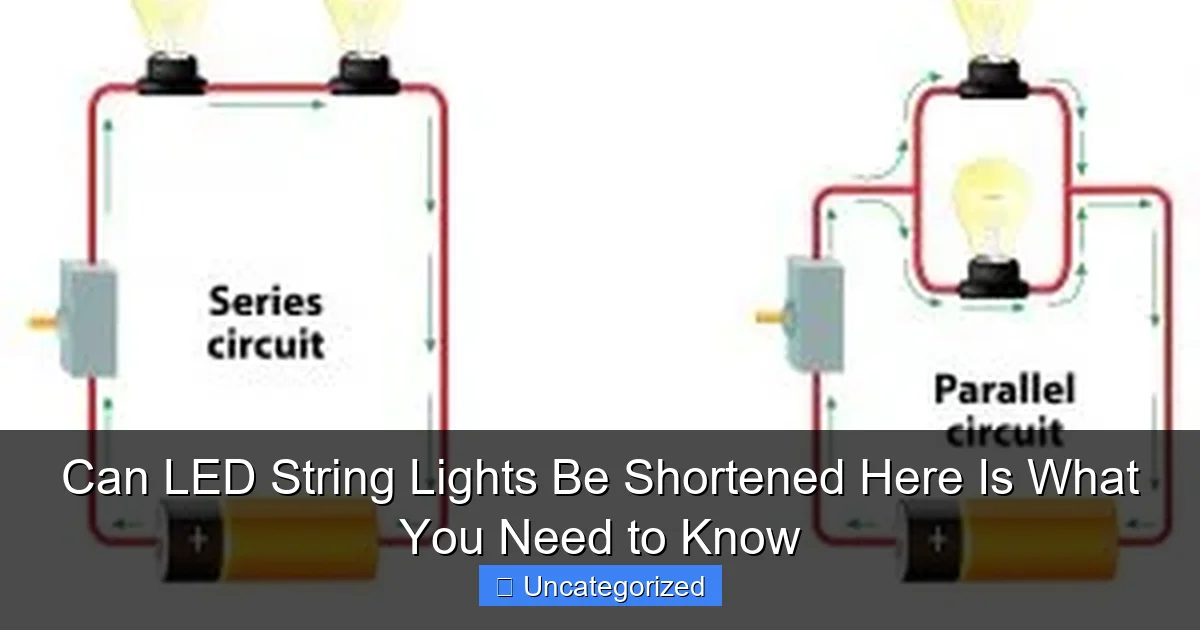
LED string lights are typically wired in one of three configurations: series, parallel, or series-parallel (hybrid). Each has different implications for whether and how they can be shortened.
- Series Wiring: In a series circuit, LEDs are connected end-to-end like a chain. Current flows through each bulb in sequence. If one LED fails, the entire string may go out. Series circuits are common in older or budget LED strings. Cutting a series-wired string is generally not recommended, as removing even a single bulb or segment can break the circuit and disable the entire strand.
- Parallel Wiring: In parallel circuits, each LED has its own independent path to the power source. This means that if one bulb fails or is removed, the others continue to function. Parallel wiring is more robust and is often used in higher-quality or commercial-grade LED strings. These are more likely to be safely shortened, especially if designed with cut points.
- Series-Parallel (Hybrid) Wiring: Many modern LED strings use a hybrid approach. For example, groups of 10 LEDs may be wired in series, and these groups are then connected in parallel. This design balances efficiency and reliability. Some of these strings are designed with cut points between groups, allowing you to shorten them without affecting the remaining lights.
Identifying Cuttable vs. Non-Cuttable Strings
Not all LED strings are created equal. Some are explicitly marketed as “cuttable” or “customizable,” while others are sealed and intended to be used as-is. Here are key indicators:
- Look for Cut Marks: Many cuttable LED strings have visible notches, symbols, or labels (e.g., scissors icon, “CUT HERE”) at regular intervals—usually every 10, 20, or 30 LEDs. These marks indicate safe cutting points between parallel groups.
- Check the Packaging or Manual: Reputable brands often state whether the lights are cuttable. Look for phrases like “modular design,” “extendable,” or “cut to length.”
- Inspect the Wiring: Use a magnifying glass or smartphone camera to examine the wire junctions. If you see multiple wires (e.g., red, black, green, white) or small PCBs (printed circuit boards) at intervals, it may be a modular design. Single-core wires with no visible junctions suggest a non-cuttable series circuit.
Which LED String Lights Can Be Safely Shortened?
The ability to shorten LED string lights hinges on design, not just type. While parallel and hybrid circuits are more forgiving, only certain models are engineered for customization. Let’s break down the types that can be shortened—and how to identify them.
Visual guide about can led string lights be shortened
Image source: thumbs.dreamstime.com
Cuttable LED Strings: Designed for Customization
Some LED string lights are explicitly built for modular use. These are ideal for shortening and are commonly used in:
- LED Strip Lights (e.g., SMD 3528, 5050): These flexible strips have copper pads every few inches, marked with a cut line. You can snip between LEDs and solder new connectors or power leads. Brands like Philips Hue, Govee, and LIFX offer cuttable strips with detailed instructions.
- Plug-and-Play Modular Strings: Used in commercial displays and holiday lighting, these strings have connectors at both ends and cut points in the middle. For example, a 30-foot string might be made of three 10-foot sections. You can disconnect one section or cut at the marked junction.
- Waterproof Outdoor Strings with Cut Points: Many outdoor-rated LED strings (e.g., for patios or gardens) are designed to be shortened. Look for models with IP65 or higher ratings and visible cut symbols.
Example: The GE Energy Smart Cuttable LED String Lights have a “CUT HERE” label every 10 bulbs. Each group of 10 is wired in series, but the groups are connected in parallel. Cutting at the label disconnects one group without affecting the rest.
Non-Cuttable Strings: What to Avoid
Not all strings are meant to be altered. Here are types you should never attempt to shorten:
- Sealed or Encapsulated Strings: These have bulbs embedded in silicone or plastic, making the wires inaccessible. Cutting them exposes bare wires and risks short circuits.
- Series-Wired Holiday Lights: Traditional Christmas lights often use series circuits. Snipping one wire breaks the entire chain.
- Battery-Powered Mini Strings: While convenient, most are not designed for cutting. Their small PCBs and thin wires are fragile.
- Strings with No Cut Marks: If there’s no indication of safe cut points, assume it’s non-cuttable.
Tip: When in doubt, contact the manufacturer. Most provide technical support for customization questions.
Step-by-Step Guide to Shortening Cuttable LED String Lights
Ready to customize your lights? Follow this detailed guide to shorten cuttable LED strings safely and effectively. This method applies to both plug-in and low-voltage DC models with marked cut points.
Tools and Materials You’ll Need
- Wire cutters or precision scissors
- Wire strippers (for re-terminating wires)
- Electrical tape or heat-shrink tubing
- Soldering iron and solder (optional, for permanent connections)
- Multimeter (to test continuity)
- Marker or highlighter
- Workbench or flat surface
Step 1: Identify Safe Cut Points
Unroll the entire string and lay it flat. Look for cut marks—usually every 10–30 bulbs. These are typically indicated by:
- A printed scissors icon
- A “CUT HERE” label
- A gap in the wiring or a small PCB
- Multiple wires (e.g., red/black) instead of a single core
Pro Tip: Count the bulbs between cut points. Most cuttable strings allow shortening in increments (e.g., 10 bulbs per section).
Step 2: Cut at the Designated Mark
Using sharp wire cutters, snip exactly at the cut point. Avoid cutting through individual wires or LEDs. For example:
- If the mark is between two groups, cut through the connecting wire or PCB trace.
- For LED strips, cut along the copper pads, not between them.
Caution: Do not cut near the plug or transformer. Always leave at least 6 inches of wire from the power source.
Step 3: Insulate the Cut Ends
Exposed wires can cause short circuits or electric shocks. Cover the cut ends with:
- Electrical tape: Wrap tightly around the cut point, covering all exposed metal.
- Heat-shrink tubing: Slide a piece over the wires before cutting, then shrink with a heat gun.
Example: For a 20-foot string cut to 12 feet, insulate the end of the 12-foot segment (now the new “end”) and the discarded 8-foot piece.
Step 4: Test the Lights
Plug in the shortened string and verify all bulbs light up. Use a multimeter to check for continuity if any section fails. If a group doesn’t light:
- Ensure the cut was at a safe point.
- Check for loose wires or poor insulation.
- Inspect for accidental damage to nearby LEDs.
Step 5: (Optional) Re-terminate for Reuse
If you plan to reuse the discarded section, attach a new plug or connector:
- Strip 1/4 inch of insulation from the wires.
- Solder a new plug or use a quick-connect terminal.
- Seal with heat-shrink tubing.
Safety, Risks, and Best Practices
Shortening LED string lights isn’t without risks. Improper cuts can lead to electrical hazards, fire, or permanent damage. Follow these safety guidelines to protect yourself and your home.
Electrical Safety First
- Unplug Before Cutting: Always disconnect the string from power. Even low-voltage DC can pose risks if mishandled.
- Use Insulated Tools: Choose wire cutters with rubber grips and insulated handles.
- Avoid Water Exposure: Never cut or handle lights near sinks, bathtubs, or outdoor wet areas.
- Check Local Codes: In some regions, modifying electrical devices voids warranties or violates safety standards.
Common Mistakes to Avoid
- Cutting at the Wrong Spot: Snipping between LEDs in a series circuit will break the entire string.
- Damaging Adjacent Wires: Use precision tools—don’t hack or tear the wires.
- Insufficient Insulation: Exposed wires can arc or spark, especially in humid environments.
- Ignoring Voltage Requirements: If re-terminating, ensure the new plug matches the original voltage (e.g., 12V, 24V).
When to Call a Professional
DIY customization is great, but some situations require expert help:
- You’re unsure about the wiring configuration.
- The string is part of a larger system (e.g., smart home setup).
- You need to shorten high-voltage (120V) strings (rare, but possible).
- Multiple sections fail after cutting—indicating a deeper circuit issue.
Creative Applications and Real-World Examples
Shortening LED string lights unlocks endless creative possibilities. Here’s how people use custom-length lights in real-life scenarios.
Home Decor Projects
- Headboard Lighting: A 10-foot cuttable string wrapped around a wooden headboard creates a soft glow. Cut to fit the width, then secure with adhesive clips.
- Shelving Accents: Shorten a 20-foot string to 3 feet and weave it through open shelving for a modern look.
- Ceiling Canopy: Use a shortened strand to create a starry effect over a reading nook. Cut into 5-foot sections and drape from a central hook.
Event and Wedding Decor
- Chair Backlights: Cut strings to 2-foot lengths and attach to each chair with zip ties for a romantic wedding reception.
- Photo Backdrop: Shorten a 50-foot string to 15 feet and hang vertically behind a photo booth.
- Table Runners: Place a 3-foot shortened string down the center of a dining table for holiday meals.
Outdoor and Garden Use
- Fence Lighting: Cut a 30-foot string to 18 feet to match a backyard fence. Use outdoor-rated, waterproof models.
- Tree Wrapping: Shorten a long string to wrap around a small tree trunk or bush.
- Pathway Markers: Cut strings into 1-foot segments and embed them in garden stones.
Data Table: Cuttable vs. Non-Cuttable LED Strings
| Feature | Cuttable Strings | Non-Cuttable Strings |
|---|---|---|
| Wiring Type | Parallel or Hybrid | Series |
| Cut Marks | Yes (e.g., scissors icon) | No |
| Bulb Accessibility | Wires exposed between groups | Sealed or encapsulated |
| Typical Use | Outdoor, commercial, modular | Indoor holiday, battery-powered |
| Risk of Shortening | Low (if cut at marks) | High (circuit break) |
| Example Brands | GE, Philips, LIFX, Govee | Holiday Time, Brightown, Twinkle Star |
Final Thoughts: Empower Your Creativity with Custom LED Lights
The answer to “can LED string lights be shortened?” is a resounding yes—but with conditions. By understanding the wiring, identifying cuttable models, and following safety protocols, you can transform any LED string into a perfectly sized, customized light source. Whether you’re illuminating a cozy bedroom, designing a wedding arch, or adding sparkle to your garden, the ability to shorten lights empowers you to create without limits.
Remember: always prioritize safety. Use the right tools, respect the circuit design, and when in doubt, consult the manufacturer. With this knowledge, your LED string lights aren’t just decor—they’re a canvas for your imagination. So go ahead: measure your space, find those cut marks, and snip with confidence. The perfect ambiance is just a cut away.
Frequently Asked Questions
Can LED string lights be shortened without damaging them?
Yes, many LED string lights can be shortened, but it depends on the design. Always check the manufacturer’s instructions to ensure cutting won’t void the warranty or cause malfunctions.
Where should I cut LED string lights to shorten them?
Cut only at designated “cut points,” usually marked by a scissor icon or a gap in the wiring. Cutting elsewhere can damage the circuit and render the remaining lights unusable.
What tools do I need to shorten LED string lights?
You’ll need wire cutters, electrical tape, and possibly a soldering iron for a secure connection. For waterproof lights, use silicone sealant to protect the cut ends from moisture.
Can shortening LED string lights affect their brightness or performance?
If done correctly at the right cut points, shortening shouldn’t impact brightness. However, improper cuts may disrupt the circuit, causing dimming or failure in the remaining sections.
Are there safety risks when shortening LED string lights?
Yes, if not done properly. Avoid exposed wires, ensure connections are insulated, and never cut live wires. Always unplug the lights before working on them to prevent electric shocks.
Can I reconnect or extend shortened LED string lights later?
Yes, but it requires soldering or using compatible connectors. For a seamless fix, use waterproof connectors if the lights are for outdoor use. Keep in mind this may affect the original design’s durability.

