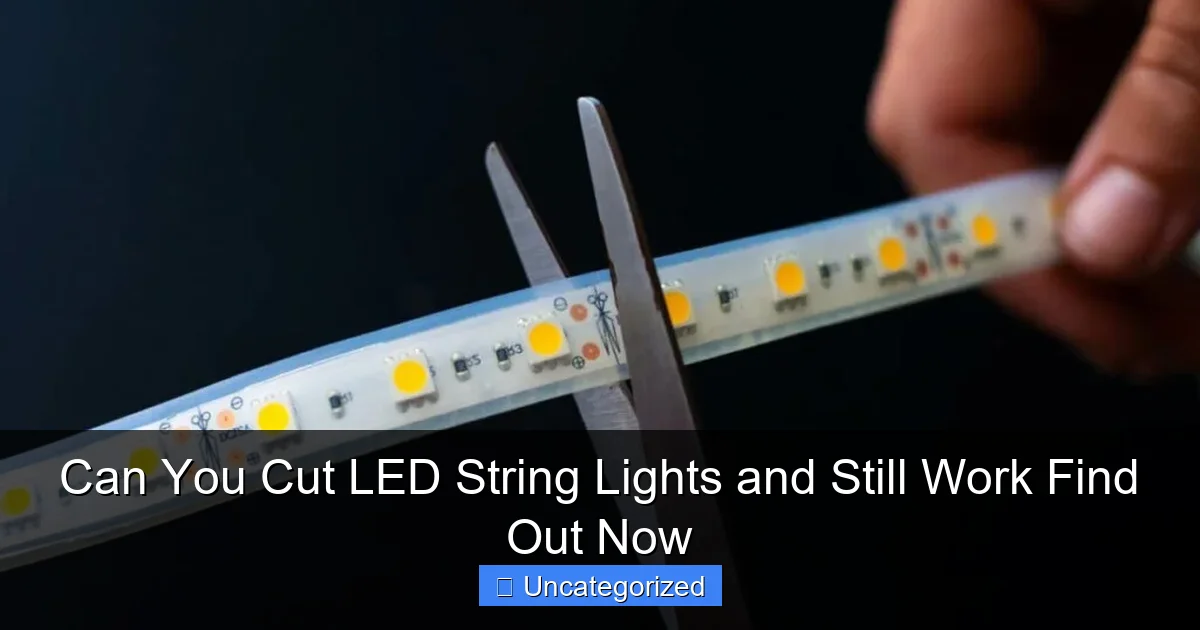
Featured image for can you cut led string lights and still work
Image source: howtolightguide.com
Yes, you can cut LED string lights and still have them work—but only if they’re specifically designed for it. Look for models with cuttable markings or solderless connectors to ensure functionality after trimming. Attempting to cut non-adjustable strings may permanently damage the circuit, so always check the manufacturer’s guidelines before making any cuts.
Key Takeaways
- Check manufacturer guidelines: Always verify if your LED lights are marked as “cuttable” before attempting.
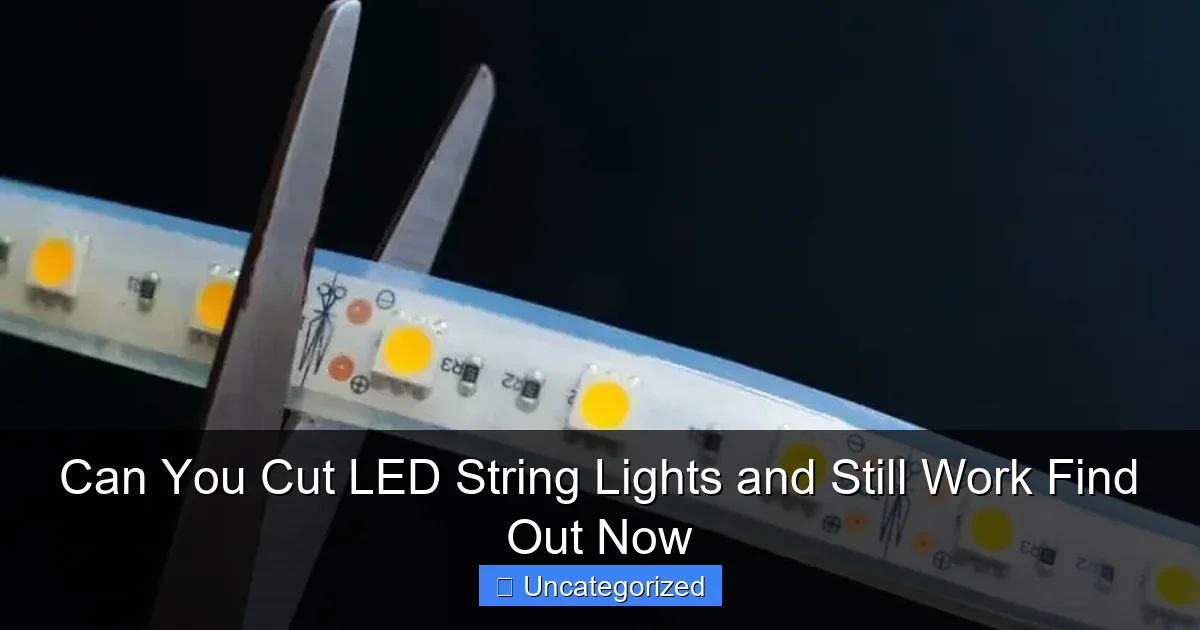
- Cut only at marked points: LEDs can only be safely cut at designated copper pads or lines.
- Use sharp tools: Clean cuts with scissors or wire cutters prevent damage to internal wiring.
- Seal ends properly: Waterproof lights require end caps or silicone to maintain weather resistance.
- Test before cutting: Confirm functionality by testing the full strand before modifying.
- Measure twice, cut once: Plan your layout to avoid unnecessary waste or incorrect lengths.
📑 Table of Contents
- The Shocking Truth About Cutting LED String Lights: Will They Still Work?
- How LED String Lights Work: The Science Behind the Glow
- When You Can (and Can’t) Cut LED String Lights: A Practical Guide
- Step-by-Step: How to Cut LED String Lights Safely
- Creative Uses for Cut LED String Lights
- Data Table: LED String Light Cutting Compatibility
- Conclusion: Cut Smart, Shine Bright
The Shocking Truth About Cutting LED String Lights: Will They Still Work?
Imagine this: You’ve just purchased a 50-foot strand of dazzling LED string lights to illuminate your patio, only to realize it’s way too long for your space. Do you return it? Coil up the excess? Or can you simply cut the LED string lights and still have them work? It’s a question that haunts holiday decorators, DIY enthusiasts, and event planners alike. The good news? Sometimes you can. The bad news? It’s not as simple as grabbing scissors and snipping away.
LED string lights have become a staple in modern decor, offering energy efficiency, vibrant colors, and endless creative possibilities. But their delicate internal wiring and circuitry mean that cutting them improperly can result in a strand of lifeless bulbs. Whether you’re decorating a cozy apartment, planning a wedding, or just trying to avoid tripping over extra cords, understanding the science and safety behind cutting LED lights is essential. This guide dives deep into the mechanics, risks, and best practices of modifying LED string lights so you can make informed decisions and keep your glow intact.
How LED String Lights Work: The Science Behind the Glow
The Anatomy of an LED String Light
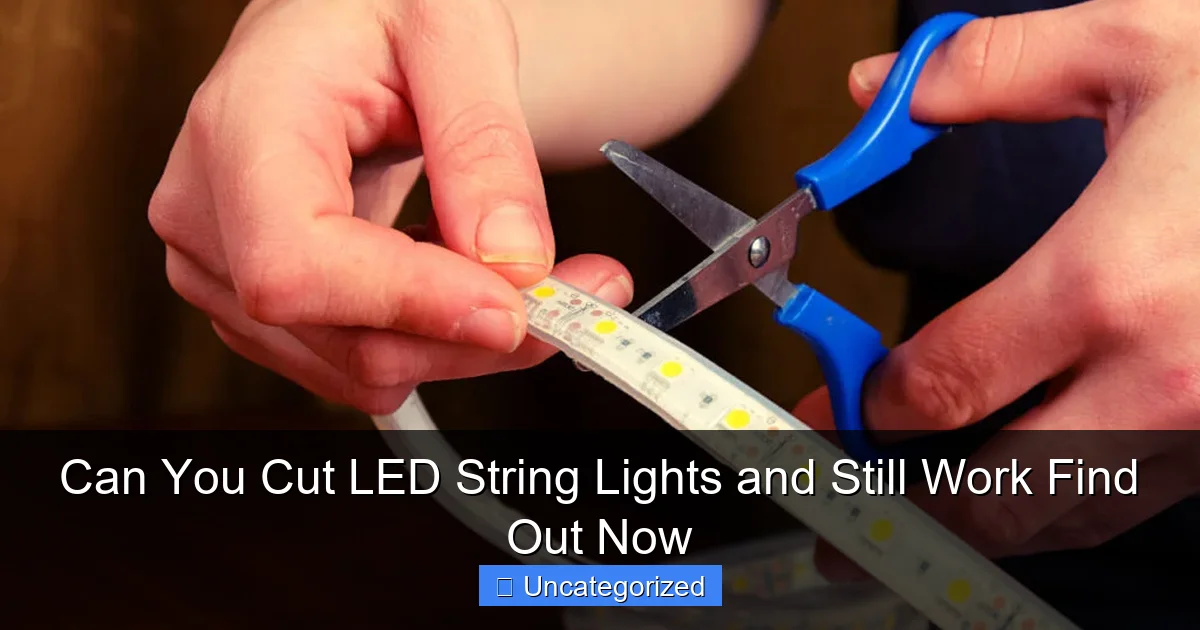
Before you even consider cutting your lights, it’s crucial to understand their internal structure. Unlike traditional incandescent strings, LED (Light Emitting Diode) lights are built with precision. A typical LED strand consists of:
Visual guide about can you cut led string lights and still work
Image source: howtolightguide.com
- LED bulbs: Tiny semiconductors that emit light when electricity passes through them.
- Wires: Thin copper conductors that carry power. Most strands use a parallel circuit (each bulb gets full voltage) or a series circuit (voltage is shared).
- Resistors: Small components that regulate current to prevent overheating.
- Insulation: Plastic coating that protects wires and prevents short circuits.
- Controller: The “brain” that manages on/off, color changes, and modes (if applicable).
For example, a 100-bulb warm white strand might use a parallel circuit, allowing individual bulbs to function even if one fails. In contrast, a series circuit (common in older or cheaper models) shuts off the entire strand if one bulb breaks.
Why Cutting Is Risky (and When It’s Safe)
The key to safe cutting lies in the circuit type and manufacturer design. Here’s why:
- Parallel circuits: These are safer to cut because each bulb operates independently. If you cut the strand between bulbs, the remaining lights will still work. However, cutting through a bulb or resistor will break the circuit.
- Series circuits: Cutting anywhere in the loop will disconnect the entire strand, leaving it dark.
- Smart or addressable LEDs: These require a data signal (not just power). Cutting them without preserving the data line will render the rest useless.
Pro Tip: Check the product manual or packaging for terms like “cuttable” or “modular.” If you don’t see this, proceed with caution.
When You Can (and Can’t) Cut LED String Lights: A Practical Guide
Manufacturer-Designated Cut Points
Some LED strings are specifically designed to be cut. These often include:
Visual guide about can you cut led string lights and still work
Image source: unitopledstrip.com
- Marked cut lines: Look for small scissors symbols or dotted lines between bulbs. For example, Philips Hue Outdoor Strips or GE Energy Smart Cuttable LEDs.
- Modular connectors: Brands like Twinkly use magnetic or snap-on ends, allowing you to add or remove segments.
- Resealing kits: High-end brands include silicone caps to waterproof cut ends.
Example: A 20-foot cuttable strand from Luminoodle might have 10 cut points, each 2 feet apart. Cutting at these points preserves functionality and safety.
Non-Cuttable Lights: The Red Flags
Never cut LED strings if they:
- Lack marked cut points.
- Use series circuits (common in battery-operated or cheap strands).
- Have data-dependent LEDs (e.g., RGB color-changing strips with a controller).
- Are labeled “non-modular” or “do not cut” (check the manual).
Real-World Scenario: You cut a non-cuttable 30-bulb strand at the halfway point. The first 15 bulbs light up, but the rest stay dark because the circuit is broken. Worse, exposed wires could pose a shock or fire hazard.
Hybrid Solutions: When in Doubt, Extend or Reconnect
If your lights aren’t cuttable, consider:
- Extension cords: Use manufacturer-approved extensions to reach your desired length.
- Splice kits: For advanced users, solderless connectors (e.g., Wago 221 clips) can join cut ends.
- Creative coiling: Wrap excess lights around a pole or hide them in decor.
Step-by-Step: How to Cut LED String Lights Safely
Tools You’ll Need
- Precision wire cutters (not kitchen scissors).
- Multimeter (to test circuits).
- Heat-shrink tubing or liquid electrical tape (for sealing).
- Electrical tape (temporary fix).
- Needle-nose pliers (for handling tiny wires).
The Cutting Process (For Cuttable Strands)
- Identify cut points: Look for marked lines or gaps between bulbs. Avoid cutting near resistors or controllers.
- Test the strand: Plug it in to confirm all bulbs work.
- Cut carefully: Use wire cutters to snip between bulbs, not through them. For example, cut 1 inch from the last bulb in the desired section.
- Seal the ends:
- For waterproof strands: Slide heat-shrink tubing over the cut end and use a heat gun to seal it.
- For indoor strands: Wrap with 2-3 layers of electrical tape.
- Test again: Plug in the remaining section to ensure it works.
Example: You cut a 50-foot cuttable strand at 30 feet. The first 30 bulbs light up; the 20-foot tail is safely sealed and can be stored for later use.
What to Do If You Cut the Wrong Spot
- Short circuit? Unplug immediately. Check for exposed wires and cover them with tape.
- No power? Use a multimeter to trace the break. Reconnect wires with solder or a splice kit.
- Damaged bulb? Replace it with a spare (if available) or remove it to restore the circuit.
Creative Uses for Cut LED String Lights
DIY Projects That Shine
Cutting LED lights opens up endless possibilities:
- Custom-length garlands: Trim a 20-foot strand to fit a mantel or staircase.
- Accent lighting: Cut 2-foot sections for picture frames, headboards, or mirrors.
- Wedding decor: Create table runners or archway accents with precise lengths.
- Terrarium lighting: Use 6-inch sections to illuminate miniature gardens.
Upcycling Leftover Sections
Don’t toss those cut pieces! Repurpose them for:
- Closet lights: Tape 1-foot sections to shelves.
- Emergency flashlights: Connect a cut end to a battery pack.
- Holiday crafts: Wrap around wreaths or gift boxes.
Pro Tip: Store leftover sections in labeled bags with their wattage and voltage for future use.
Data Table: LED String Light Cutting Compatibility
| LED Type | Circuit Type | Cuttable? | Cutting Method | Sealing Required? |
|---|---|---|---|---|
| Standard white/warm white | Parallel | Yes (if marked) | Between bulbs at cut lines | Yes (indoor: tape; outdoor: heat-shrink) |
| RGB color-changing | Parallel with data line | Only if data line preserved | Avoid cutting data wire | Yes |
| Battery-operated | Series | No | N/A | N/A |
| Smart LEDs (e.g., Twinkly) | Data-dependent | No (use modular ends) | Connect via app-controlled segments | No |
| Outdoor-rated strips | Parallel | Yes (with waterproofing) | At designated cut points | Yes (silicone sealant recommended) |
Conclusion: Cut Smart, Shine Bright
Cutting LED string lights can work—but only when you respect their design and follow safety protocols. The key takeaways? Always check for cut points, avoid series circuits, and seal cut ends to prevent hazards. Whether you’re trimming a strand for a cozy nook or upcycling leftovers into a craft project, understanding the science behind LED lights empowers you to customize your decor without sacrificing safety or style.
Remember: When in doubt, consult the manufacturer or opt for modular alternatives. And if you’re still nervous, start small—test a 1-foot section before tackling your entire strand. With the right approach, your LED lights will keep glowing for years, no matter how you cut them. So grab those wire cutters, follow this guide, and let your creativity shine. After all, the only thing brighter than your LED lights should be your confidence in using them!
Frequently Asked Questions
Can you cut LED string lights and still work properly?
Yes, many LED string lights can be safely cut and still work, but only at designated cut points (usually marked by a pair of scissors icon). Ensure the power is off before cutting and follow the manufacturer’s instructions to avoid damaging the circuit.
Where should you cut LED string lights to ensure they still function?
LED string lights typically have marked cut points, often located between individual bulbs or at specific intervals. Cutting outside these points may break the circuit and render the remaining lights inoperable.
Is it safe to cut LED string lights yourself?
Yes, it’s generally safe if you cut only at the designated marks and use sharp scissors or wire cutters. Avoid cutting live wires or damaging the protective coating to prevent short circuits or safety hazards.
Will cutting LED string lights affect their brightness or performance?
Cutting at the correct points shouldn’t affect brightness or performance, as long as the circuit remains intact. However, overloading the remaining section (e.g., connecting too many lights) may cause dimming or failure.
Can you cut LED string lights and reconnect them later?
Some LED string lights allow reconnection using connectors or soldering, but this isn’t universal. Check the product manual—many are designed for one-time cutting, and improper reconnection may damage the lights.
Do all LED string lights have the option to cut and still work?
No, not all LED string lights are designed to be cut. Always verify the packaging or product description for “cuttable” features or marked cut points before attempting to modify them.

