Featured image for can you get led christmas lights strings to flash
Image source: images.vexels.com
Yes, you can easily get LED Christmas light strings to flash by choosing models with built-in flashing modes or using a compatible controller. Most modern LED strings offer multiple lighting effects, including steady, twinkle, and chase patterns, making festive customization simple and plug-and-play.
Key Takeaways
- Yes, easily: Most LED strings have built-in flashing modes—just press the control button.
- Check packaging: Ensure lights specify “flashing” or “multi-function” before buying.
- Use a timer: Automate flashing patterns with programmable controllers or smart plugs.
- DIY option: Add a flasher adapter to non-flashing LED strings for custom effects.
- Battery-powered: Choose these for portability and easier flashing control without outlets.
- Read reviews: Confirm reliability of flashing features before purchasing online.
📑 Table of Contents
- Can You Get LED Christmas Lights Strings to Flash Easily
- Understanding LED Christmas Lights and Flashing Capabilities
- How to Make LED Christmas Lights Flash: Methods and Tools
- Smart LED Christmas Lights: The Future of Flashing Displays
- DIY Flashing LED Projects: Creative Ideas and Tips
- Comparing Flashing LED Options: A Buyer’s Guide
- Conclusion
Can You Get LED Christmas Lights Strings to Flash Easily
The holiday season is synonymous with twinkling lights, festive decorations, and the warm glow of Christmas cheer. LED Christmas lights have become the go-to choice for many households due to their energy efficiency, longevity, and vibrant colors. But beyond their steady glow, many people wonder: Can you get LED Christmas lights strings to flash? The answer is a resounding yes—and with more flexibility and ease than ever before. Whether you’re aiming for a gentle twinkle, a dramatic strobe, or a synchronized light show set to music, modern LED technology makes it entirely possible to achieve dynamic lighting effects that elevate your holiday decor.
From simple plug-and-play flashing bulbs to programmable smart LED strings, the options for creating a dazzling, animated display are virtually limitless. This guide explores how you can transform your traditional LED Christmas lights into a captivating light show with minimal effort. We’ll walk you through the types of flashing LED lights available, how to control them, the tools and accessories you’ll need, and expert tips to ensure your setup is both safe and stunning. Whether you’re decorating a small apartment balcony or an entire suburban home, this comprehensive guide will help you unlock the full potential of your LED Christmas light strings.
Understanding LED Christmas Lights and Flashing Capabilities
How Do LED Christmas Lights Work?
LED (Light Emitting Diode) Christmas lights operate differently from traditional incandescent bulbs. Instead of heating a filament to produce light, LEDs use semiconductor materials that emit light when an electric current passes through them. This process is highly efficient, converting most of the energy into light rather than heat. As a result, LEDs consume up to 80% less energy, last 25 times longer, and remain cool to the touch—making them safer and more sustainable than older lighting technologies.
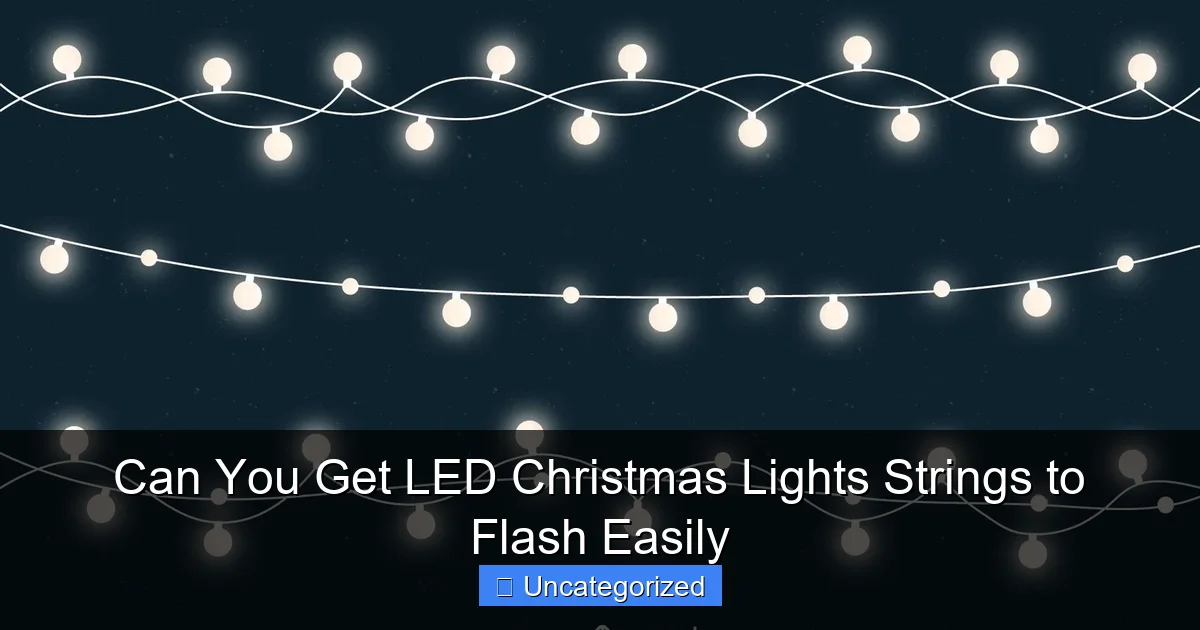
Visual guide about can you get led christmas lights strings to flash
Image source: png.pngtree.com
One of the key advantages of LEDs is their ability to rapidly turn on and off without degrading the bulb. This fast switching capability is what enables flashing, blinking, and other dynamic effects. Unlike incandescent bulbs, which can flicker but often suffer from delayed response times and filament wear, LEDs can flash at high frequencies—up to thousands of times per second—without damage.
Types of Flashing Effects in LED Strings
Manufacturers have leveraged the fast response time of LEDs to create a wide range of pre-programmed flashing modes. These include:
- Steady On: Constant illumination with no flashing (baseline mode).
- Twinkle: Random or patterned flashing of individual bulbs, mimicking stars in the night sky.
- Chase: A wave-like effect where lights appear to move in sequence, often used for outlining rooflines or pathways.
- Strobe: Rapid, high-intensity flashes—great for dramatic or festive displays.
- Fading: Smooth transitions between brightness levels, creating a soft pulsing effect.
- Random: Unpredictable flashing patterns for a lively, energetic look.
- Combination: Multiple effects in one string, such as twinkle + chase or fade + strobe.
Many LED strings come with a built-in controller (usually a small box near the plug) that allows you to cycle through these modes with a simple button press. For example, a popular 100-light warm white LED string from a leading brand might offer 8 different lighting effects, including “slow fade,” “twinkle/flash,” and “steady on.”
Pre-Programmed vs. Customizable Flashing
Most consumer-grade LED Christmas lights use pre-programmed microcontrollers embedded in the power adapter or light string. These controllers are preloaded with a set number of effects (typically 4 to 10), which you can toggle through manually. While convenient, they offer limited customization.
For more advanced users, addressable LED strips and smart controllers allow for fully customizable flashing patterns, speed, color changes, and even music synchronization. These systems use digital LEDs like WS2811, WS2812B, or SK6812, which can be individually controlled via software. This is the technology behind professional light shows and animated holiday displays seen in cities and theme parks.
How to Make LED Christmas Lights Flash: Methods and Tools
Using Built-in Flashing Modes (Plug-and-Play)
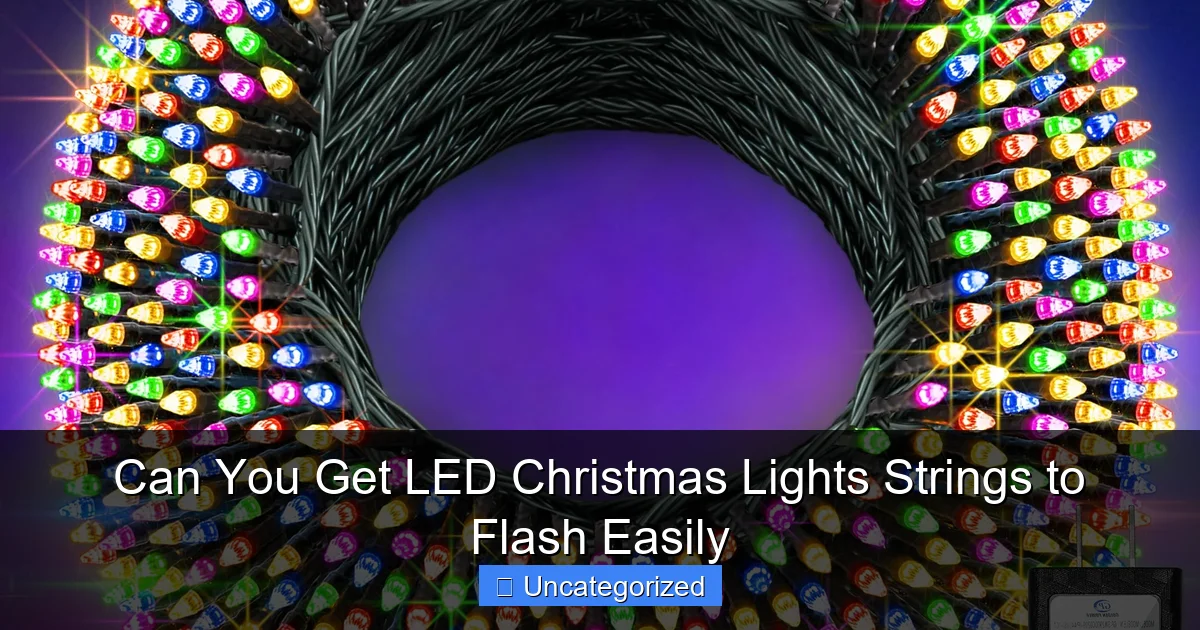
The easiest way to get your LED Christmas lights to flash is to buy strings with built-in flashing modes. These are widely available at hardware stores, online retailers (Amazon, Home Depot, Target), and specialty lighting shops. Look for packaging that mentions “8-mode,” “multi-function,” or “animated” effects.
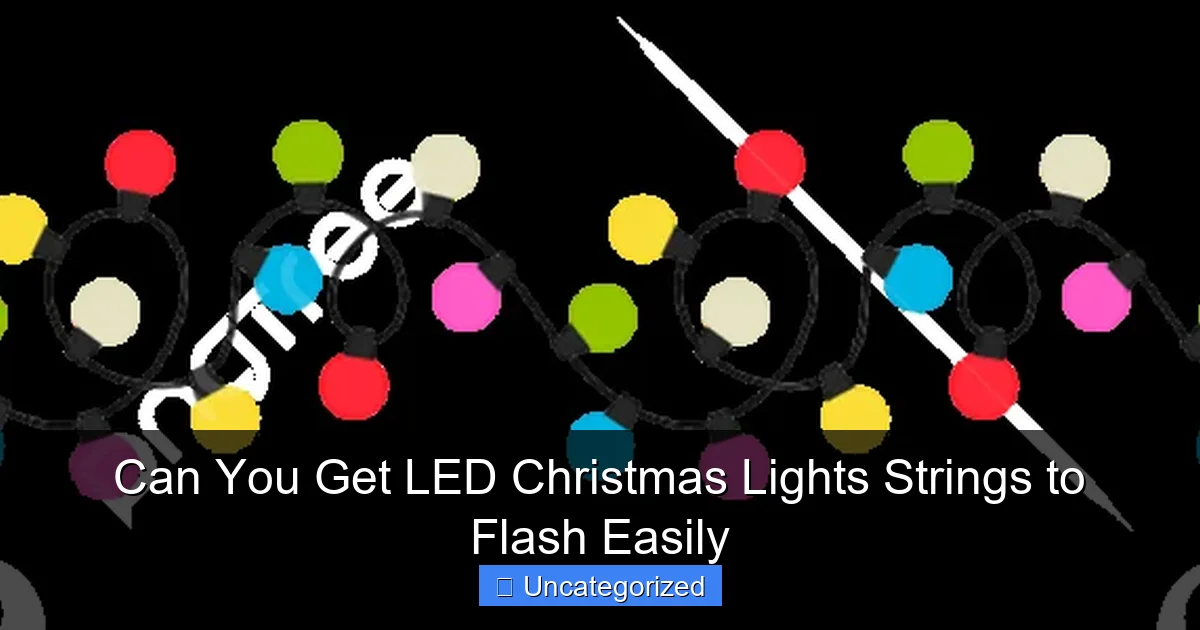
Visual guide about can you get led christmas lights strings to flash
Image source: images-na.ssl-images-amazon.com
For example, a 200-light RGB LED string might include the following modes:
- Steady on (all colors)
- Slow fade (color transition)
- Fast blink (all on/off)
- Twinkle (random flashing)
- Chase (forward and reverse)
- Wave (smooth pulsing)
- Strobe (rapid flashes)
- Flash (alternating on/off)
Tip: When purchasing, check the distance between the controller and the first bulb. A long lead (e.g., 6 feet) gives you more flexibility in placing the lights without the control box being visible.
Adding a Flashing Controller (For Non-Flashing LED Strings)
If you already have a set of LED lights that only stay on steady, you can still make them flash by adding an external flashing controller. These devices plug between your power source and the light string and override the default steady-on behavior.
There are two main types:
- Mechanical Flashers: Use a relay or thermal switch to turn the lights on and off. They’re simple, inexpensive, and great for basic blinking. However, they offer limited control over speed and patterns.
- Electronic Flashing Controllers: Use microchips to provide multiple modes (blink, flash, fade, etc.) and adjustable speed. These are more versatile and often include a remote control.
Example: The GE 250-Light LED String Light Flasher Controller allows you to set flash speed (slow, medium, fast) and choose between steady, flash, and twinkle modes. It’s compatible with most standard plug-in LED strings.
Installation Tip: Always ensure the controller’s maximum wattage rating exceeds the total draw of your lights. For example, if your string uses 5 watts, a 10-watt controller is sufficient.
Using Smart Controllers and Programmable LEDs
For advanced users, smart controllers and programmable LED strips offer the ultimate in customization. These systems use digital LEDs (e.g., NeoPixels) that can be individually addressed, allowing you to create complex animations, color gradients, and synchronized music shows.
Popular tools include:
- Arduino or Raspberry Pi: Microcontrollers that run custom code to control LED patterns. Libraries like FastLED or NeoPixel make it easy to program flashing effects.
- Smart Controllers (e.g., WLED, ESPixelStick): Wi-Fi-enabled devices that connect to your home network and allow control via smartphone apps or voice assistants (Alexa, Google Home).
- Software (e.g., xLights, Vixen Lights): Programs that let you design and preview light shows, then export sequences to your controller.
Example Setup: A homeowner uses an ESP32-based controller with 500 addressable RGB LEDs. Using xLights, they program a 10-minute sequence that includes flashing snowflakes, a pulsing Christmas tree, and a synchronized light show to “Jingle Bells.” The entire display is controlled via a mobile app and runs on a schedule.
Smart LED Christmas Lights: The Future of Flashing Displays
What Are Smart LED Christmas Lights?
Smart LED Christmas lights are Wi-Fi or Bluetooth-enabled strings that connect to your smartphone, tablet, or smart home system. Unlike traditional lights, they offer full control over color, brightness, speed, and flashing patterns through dedicated apps.
Popular brands include:
- Philips Hue Outdoor String Lights: 33-foot string with 50 color-changing LEDs. Controlled via Hue app; supports Alexa, Google Assistant, and Apple HomeKit.
- Twinkly Strings: App-controlled RGB LEDs with built-in camera for mapping light positions. Enables pixel-perfect animations and music synchronization.
- Nanoleaf Shapes (Holiday Edition): Modular panels that can be arranged into shapes (e.g., snowflakes, stars) and programmed with custom flashing effects.
These lights often use addressable LEDs, meaning each bulb can display a different color and flash pattern simultaneously. This allows for stunning visual effects like “fireworks,” “falling snow,” or “moving snowflakes.”
Benefits of Smart Flashing Lights
- Remote Control: Adjust flashing modes, brightness, and schedules from your phone—even when you’re away from home.
- Customization: Create and save your own light shows, or download pre-made sequences from online libraries.
- Music Sync: Many smart lights can pulse or flash in time with music. Twinkly, for example, uses a built-in microphone to detect beats.
- Scheduling: Set your lights to turn on/off or change modes at specific times (e.g., “flash at 6 PM, steady at 10 PM”).
- Voice Control: Say, “Alexa, make the lights flash red and green,” for hands-free operation.
Tip: For outdoor use, ensure your smart lights are rated for weather resistance (IP44 or higher) and use a waterproof power adapter.
Setting Up a Smart Flashing Display
Here’s a step-by-step guide to creating a smart flashing setup:
- Choose Your Lights: Select a smart LED string compatible with your preferred ecosystem (e.g., Hue, Twinkly, or generic Bluetooth).
- Download the App: Install the manufacturer’s app (e.g., Hue, Twinkly, or Nanoleaf).
- Connect to Wi-Fi/Bluetooth: Follow the app’s instructions to pair the lights with your network.
- Position the Lights: Hang or install the string, ensuring the controller is accessible.
- Design Your Flashing Pattern: Use the app to select a pre-made effect (e.g., “Twinkle”) or create a custom sequence.
- Test and Adjust: Run a short test to ensure the flashing works as expected. Adjust speed, brightness, and color if needed.
- Schedule or Automate: Set a timer or link to a smart home routine (e.g., “Flash when motion is detected”).
Pro Tip: For music sync, place the lights near the music source (e.g., speaker) to ensure accurate beat detection.
DIY Flashing LED Projects: Creative Ideas and Tips
Building a Custom Flashing Controller
If you’re handy with electronics, building your own flashing controller can be a fun and rewarding project. Here’s a basic circuit using an Arduino Uno and a 5V relay module:
- Connect the relay to Arduino pins (e.g., D8 for control).
- Program the Arduino to toggle the relay on/off at set intervals (e.g., 500ms for a blink).
- Wire the relay in series with the LED string’s power supply.
- Upload the code and test.
Sample Arduino Code (Blink Effect):
const int relayPin = 8;

void setup() {
  pinMode(relayPin, OUTPUT);
}

void loop() {
  digitalWrite(relayPin, HIGH); // Turn on
  delay(500); // 0.5 seconds
  digitalWrite(relayPin, LOW);  // Turn off
  delay(500);
}
For more complex effects, use the FastLED library to control addressable LEDs directly.
Creating Themed Flashing Displays
Use flashing lights to enhance holiday themes:
- Santa’s Workshop: Use red and green flashing lights to simulate blinking tools and a “busy” workshop.
- Winter Wonderland: Pair blue/white twinkling LEDs with a slow fade to mimic falling snow.
- Christmas Tree Animation: Program addressable LEDs to flash in a spiral pattern from base to tip.
- Pathway Lights: Use flashing white LEDs to guide guests to your door.
Tip: Combine flashing lights with static decor (e.g., wreaths, garlands) for a balanced look.
Safety and Best Practices
- Check Ratings: Ensure all components are UL-listed or ETL-certified.
- Outdoor Use: Use waterproof connectors and enclosures for controllers.
- Overload Protection: Never exceed the controller’s maximum load (e.g., don’t connect 10 strings to a 500W controller).
- Fire Safety: Avoid covering lights with flammable materials (e.g., paper, fabric).
- Timers: Use a timer to prevent lights from running overnight.
Comparing Flashing LED Options: A Buyer’s Guide
Cost and Complexity Comparison
Below is a comparison of different flashing LED solutions, based on cost, ease of use, and customization:
| Type | Cost Range | Ease of Use | Customization | Best For |
|---|---|---|---|---|
| Pre-Programmed Flashing Strings | $10–$30 | ⭐⭐⭐⭐⭐ | ⭐⭐ | Casual decorators, small displays |
| External Flashing Controllers | $15–$40 | ⭐⭐⭐⭐ | ⭐⭐⭐ | Adding flash to existing lights |
| Smart LED Strings (App-Controlled) | $50–$150 | ⭐⭐⭐ | ⭐⭐⭐⭐⭐ | Tech-savvy users, music sync |
| DIY Programmable LEDs | $100–$300+ | ⭐⭐ | ⭐⭐⭐⭐⭐ | Advanced hobbyists, large displays |
Where to Buy Flashing LED Lights
- Pre-Programmed Strings: Amazon, Home Depot, Lowe’s, Walmart
- Flashing Controllers: Amazon, eBay, specialty lighting stores
- Smart Lights: Philips Hue, Twinkly, Nanoleaf websites; Best Buy; Amazon
- DIY Components: Adafruit, SparkFun, Amazon (Arduino, NeoPixels)
Tip: Read reviews to ensure compatibility and reliability. Look for brands with good customer support.
Future Trends in Flashing LED Technology
As technology advances, expect even more exciting features:
- AI-Powered Displays: Lights that adapt to weather, music, or social media trends.
- Solar-Powered Flashing Lights: Eco-friendly options for outdoor use.
- Holographic Effects: 3D light projections using LED grids.
- Integration with Smart Homes: Lights that respond to voice commands, motion, or calendar events.
Conclusion
So, can you get LED Christmas lights strings to flash easily? Absolutely. Whether you opt for a simple plug-and-play flashing string, add an external controller, invest in smart LED technology, or dive into DIY programming, there’s a solution that fits your skill level, budget, and creative vision. The days of static, steady-on holiday lights are long gone—today’s LED technology empowers you to create dynamic, eye-catching displays that bring your holiday spirit to life.
From the gentle twinkle of a snowy night to a high-energy strobe synchronized to your favorite carol, flashing LED lights offer endless possibilities. By understanding the tools and techniques available, you can transform your home into a festive masterpiece that delights neighbors and visitors alike. Remember to prioritize safety, test your setup early, and—most importantly—have fun with the process. After all, the magic of the holidays isn’t just in the lights, but in the joy they bring.
This year, don’t just hang Christmas lights—make them dance, pulse, and sparkle. With the right approach, your LED Christmas lights can flash in ways that are as unique and memorable as the season itself.
Frequently Asked Questions
Can you get LED Christmas lights strings to flash with a simple setup?
Yes, many modern LED Christmas light strings come with built-in flashing or twinkling modes that you can activate with a button or remote control. Look for “flashing LED Christmas lights” or “multi-function” options for easy setup.
Do I need a special controller to make LED Christmas lights flash?
Most flashing LED Christmas lights include a built-in controller, but you can also use a separate LED-compatible flasher adapter if your set lacks this feature. Always check the product description to confirm.
Are flashing LED Christmas lights safe for indoor and outdoor use?
Yes, as long as the lights are rated for your intended location (check for “indoor/outdoor” labels). Flashing LED Christmas lights are energy-efficient and generate less heat than incandescent lights, making them safer for extended use.
How do I switch my LED Christmas lights from steady to flashing mode?
Many sets have a button on the plug or a remote to cycle through modes like steady, flash, or twinkle. Refer to your product’s manual for specific instructions—some require holding the button for a few seconds.
Can I sync multiple LED Christmas light strings to flash together?
Yes, if your lights have a “connectable” or “end-to-end” design and share the same flashing mode. Some brands offer app-controlled or smart LED Christmas lights for synchronized effects across multiple strands.
Why won’t my LED Christmas lights flash even after pressing the mode button?
This could be due to a faulty controller, low batteries (for remote-controlled sets), or incompatible power sources. Try resetting the lights or replacing the batteries before troubleshooting further.