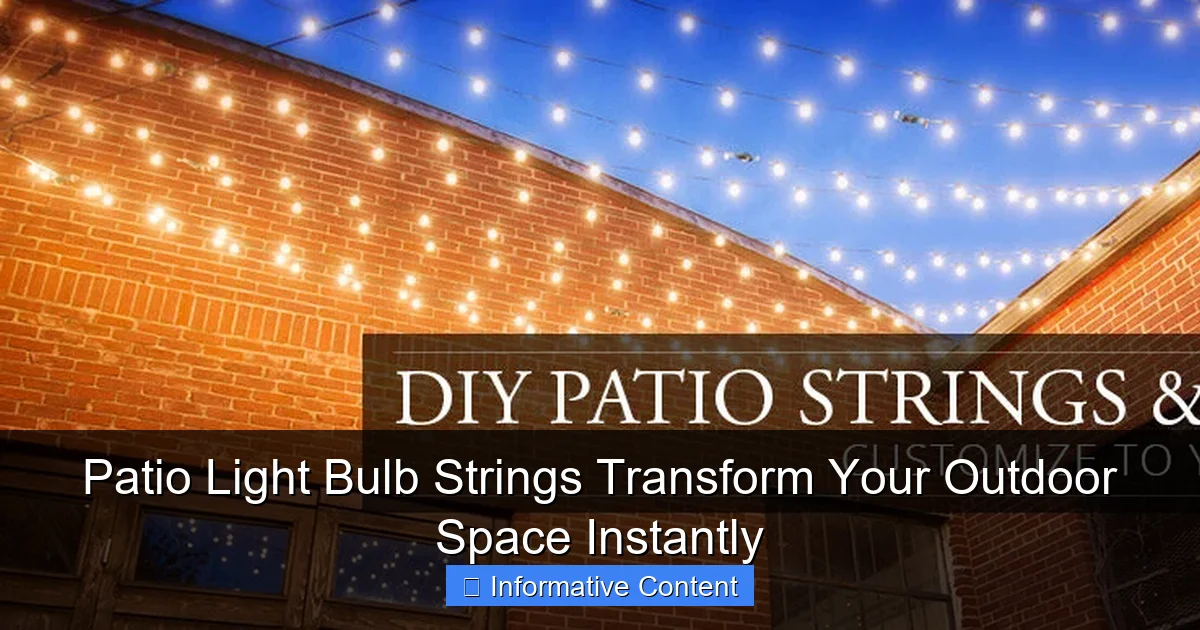
Featured image for patio light bulb strings
Image source: img.yardenvy.com
Patio light bulb strings instantly elevate any outdoor space with warm, inviting ambiance and effortless style. Designed for durability and easy installation, these versatile lights are perfect for patios, pergolas, and backyards, offering energy-efficient illumination that enhances evening gatherings. With weather-resistant construction and customizable lengths, they’re the ultimate quick upgrade for year-round outdoor enjoyment.
Key Takeaways
- Choose weather-resistant bulbs: Ensure durability and longevity in outdoor conditions.
- Measure your space first: Avoid over- or under-lighting with precise string length planning.
- Opt for energy-efficient LEDs: Save on electricity while enjoying bright, ambient lighting.
- Install with proper spacing: Hang bulbs 12-18 inches apart for balanced illumination.
- Use dimmers for versatility: Adjust brightness to match any mood or occasion effortlessly.
📑 Table of Contents
- Why Patio Light Bulb Strings Are a Game-Changer for Your Backyard
- How Patio Light Bulb Strings Work and What Makes Them Special
- Types of Patio Light Bulb Strings: Finding Your Perfect Match
- Installation Tips: How to Hang Patio Light Bulb Strings Like a Pro
- Choosing the Right Bulb: Brightness, Color, and Energy Use
- Seasonal Use and Maintenance: Keeping Your Lights Looking Great
- Final Thoughts: Lighting Up Your Life, One String at a Time
Why Patio Light Bulb Strings Are a Game-Changer for Your Backyard
Picture this: it’s a warm summer evening, and you’re sitting on your patio, sipping a cool drink as the sun dips below the horizon. The air is soft, the breeze gentle, but something’s missing. The moment you flick a switch, a warm, golden glow spreads across your space. Your patio transforms from a simple concrete slab into a cozy, inviting retreat. That’s the magic of patio light bulb strings.
Whether you’re hosting a backyard BBQ, enjoying a quiet night with a book, or celebrating a special occasion, these simple yet transformative lights can elevate your outdoor experience. I first discovered their charm during a family gathering when my cousin strung up a few strands of Edison bulbs above her deck. Suddenly, the ordinary became extraordinary. The laughter grew louder, the conversations deeper, and the night felt more memorable. It wasn’t just about lighting; it was about creating a mood, a feeling. And the best part? You don’t need to be an electrician or spend a fortune to get this effect.
How Patio Light Bulb Strings Work and What Makes Them Special
At first glance, patio light bulb strings might seem like just another decorative lighting option. But dig a little deeper, and you’ll find they offer a unique blend of functionality, style, and versatility. Unlike permanent fixtures or harsh floodlights, these strings provide soft, diffused illumination that enhances your space without overwhelming it.
Visual guide about patio light bulb strings
Image source: png.pngtree.com
The Basic Components
Most patio light bulb strings consist of a flexible cable with sockets spaced evenly along the length. Each socket holds a bulb—usually LED or incandescent—and the entire strand connects to a power source. Here’s what sets them apart:
- Plug-and-play design: No wiring or electrical know-how required. Just plug into an outdoor outlet or extension cord.
- Weather-resistant materials: Designed to withstand rain, wind, and UV exposure (look for IP44 or higher ratings).
- Modular length options: Available in 10 to 100+ feet, with end-to-end connectors for longer runs.
- Energy-efficient LEDs: Modern versions use up to 80% less energy than traditional incandescents.
Why They’re Different from Other Outdoor Lights
Compared to solar path lights, floodlights, or landscape spotlights, patio light bulb strings excel in creating ambiance. They’re not meant to illuminate your entire yard for safety—they’re meant to make your seating area feel warm and welcoming. Think of them as the “accent lighting” of your outdoor space.
For example, my neighbor tried using solar stake lights along his patio edge. They worked fine but looked too scattered and didn’t provide enough coverage. When he switched to a single 50-foot string of warm white LEDs, the difference was night and day. The entire area felt more cohesive and inviting.
Real-World Example: The “String Light Effect”
A friend of mine, Sarah, hosted a baby shower on her small backyard deck. She was worried it would feel cramped and dull. Instead of renting expensive lighting, she bought two 25-foot patio light bulb strings and hung them in a crisscross pattern above the seating area. She added a few paper lanterns for texture. The result? Guests kept saying how “cozy” and “magical” the space felt. The lights created a soft canopy that framed the event perfectly—no harsh shadows, no glare, just a gentle glow that made everyone feel at ease.
Types of Patio Light Bulb Strings: Finding Your Perfect Match
Not all patio light bulb strings are created equal. With so many options available, it’s easy to feel overwhelmed. The key is to match your choice to your space, style, and usage needs.
1. Edison-Style Bulbs (Vintage Aesthetic)
These feature exposed filaments and glass bulbs, often in warm amber or clear finishes. They’re perfect for:
- Backyard bistros or cafes
- Rustic or farmhouse-style patios
- Events with a vintage or romantic vibe
Pros: High visual impact, nostalgic charm, great for Instagram-worthy photos.
Cons: Bulbs are more fragile, higher energy use if not LED, may not suit modern minimalist spaces.
Pro tip: Look for “shatterproof” Edison-style LEDs if you have kids or pets. They give the same look with added durability.
2. Globe Bulbs (Modern and Clean)
Round or teardrop-shaped bulbs in white, frosted, or colored finishes. Ideal for:
- Contemporary patios with clean lines
- Poolside areas (they reflect beautifully in water)
- Minimalist or Scandinavian-style spaces
Pros: Sleek appearance, even light distribution, often more energy-efficient.
Cons: Less “character” than Edison bulbs, may look too plain for some.
3. Colored and RGB Options (Party Mode On)
From soft pastels to bold neon, colored strings add instant fun. RGB (color-changing) models let you switch hues with a remote or app.
- Great for kids’ birthday parties
- Perfect for themed events (think red/white for July 4th)
- Adds playful energy to game nights
Pros: High versatility, mood-boosting effects, great for renters who want temporary color.
Cons: Can feel gimmicky if overused, some apps have connectivity issues.
4. Solar-Powered Strings (Eco-Friendly Choice)
These charge during the day and light up at dusk. No cords, no electricity bills.
- Best for sunny patios with direct sunlight
- Ideal for renters or those avoiding outlet access
- Great for remote seating areas
Pros: Zero energy costs, easy installation, eco-friendly.
Cons: Less reliable in cloudy weather, shorter lifespan than plug-in models, dimmer light output.
5. Heavy-Duty Commercial Grade (For Frequent Use)
Thicker cables, reinforced sockets, and commercial-grade bulbs. Designed for:
- Restaurants with outdoor seating
- Event venues or rental properties
- People who host weekly gatherings
Pros: Extremely durable, often UL-listed for safety, longer lifespan.
Cons: Higher upfront cost, heavier to install, less “decorative” feel.
Real talk: I once bought cheap “bargain” patio lights for a summer party. They worked great—until a thunderstorm rolled in. One got zapped by a power surge, and the whole strand died. Lesson learned: spend a little more for quality, especially if you plan to leave them up year-round.
Installation Tips: How to Hang Patio Light Bulb Strings Like a Pro
You’ve picked your perfect strings. Now comes the fun part: hanging them! But before you start drilling holes, let’s talk about the smartest, safest ways to get that professional look.
Assess Your Space First
Grab a measuring tape and walk around your patio. Ask yourself:
- Where are the natural “anchor points”? (Trees, fences, roof eaves, pergolas)
- Do I have access to an outdoor outlet? How far is it?
- Will the lights cross any high-traffic areas? (Avoid tripping hazards!)
- What’s my ideal “glow zone”? (Focus on seating, dining, or cooking areas)
I learned this the hard way when I tried to string lights across my entire yard without measuring. I ran out of lights halfway through and had to buy another strand—which didn’t match perfectly. Now I always map out my space first.
Hanging Methods for Every Setup
Option 1: The Classic “Canopy” (Best for Pergolas or Decks)
- Run strings parallel to each other, 2–3 feet apart.
- Use S-hooks or zip ties to attach to beams.
- For a crisscross effect, alternate directions in a grid pattern.
Pro tip: Leave a slight sag between anchors (about 1 inch per foot). It looks more relaxed and prevents strain on the wires.
Option 2: “Floating” Between Trees or Posts
- Use sturdy nylon cord or aircraft wire (not fishing line—it degrades in UV light).
- Attach lights to the cord with small zip ties or clips.
- Keep tension even to avoid drooping in the middle.
Caution: Don’t wrap lights directly around tree trunks. It can damage the bark and create fire hazards as the tree grows.
Option 3: Wall-Mounted with Hooks or Rafters
- Install cup hooks or eye screws into siding, stucco, or wood.
- Space them 2–4 feet apart, depending on your string length.
- For a “curtain” effect, hang multiple vertical strands from eaves.
DIY hack: Use adhesive outdoor hooks for renters or surfaces you can’t drill into. Just make sure they’re rated for the weight of your lights.
Safety First: Avoiding Common Mistakes
- Never use indoor extension cords outdoors. They’re not weatherproof and can overheat.
- Check for frayed wires or loose sockets before installing.
- Use a GFCI outlet (or GFCI-protected extension cord) to prevent shocks.
- Don’t overload circuits. Most outdoor outlets handle about 150–200 watts max.
Real-life example: My friend Mark hung his lights using regular picture hooks. They held fine—until a windstorm hit. The entire strand fell, taking a potted plant with it. Now he uses heavy-duty hooks rated for outdoor use, and his lights have survived three hurricanes!
Choosing the Right Bulb: Brightness, Color, and Energy Use
Here’s where things get technical—but don’t worry, I’ll keep it simple. The bulbs you choose can make or break your patio lighting experience.
Brightness: Lumens vs. Watts
Forget watts—they measure energy use, not light output. Instead, look for lumens:
- 50–100 lumens per bulb: Soft, ambient glow (perfect for dining areas)
- 100–200 lumens per bulb: Balanced brightness (ideal for most patios)
- 200+ lumens per bulb: Bright, task-oriented light (good for cooking zones)
Example: I have a 30-foot string with 20 bulbs. I chose 150-lumen LEDs—enough to see clearly without washing out the stars. If I’d gone with 300-lumen bulbs, my patio would feel like a parking lot.
Color Temperature: Setting the Mood
Measured in Kelvin (K), this determines how “warm” or “cool” the light feels:
- 2200K–2700K: Warm white (cozy, candle-like glow)
- 3000K–3500K: Soft white (bright but not harsh)
- 4000K+: Cool white (clinical, daylight-like)
Rule of thumb: Stick to 2200K–3000K for outdoor patios. Cooler temps feel too stark for relaxation.
LED vs. Incandescent: The Showdown
| Feature | LED Bulbs | Incandescent Bulbs |
|---|---|---|
| Energy Use | 1–3 watts per bulb | 5–15 watts per bulb |
| Lifespan | 15,000–50,000 hours | 1,000–2,000 hours |
| Heat Output | Low (safe to touch) | High (can burn skin) |
| Cost (Initial) | Higher | Lower |
| Color Range | Warm to cool white, RGB options | Mostly warm white |
| Durability | High (shock-resistant) | Low (fragile glass) |
My take: LEDs win every time. Yes, they cost more upfront, but I’ve had the same strand for 5 years with zero bulb replacements. The energy savings alone paid for the upgrade in two summers.
Smart Bulbs: The Future of Patio Lighting?
Some brands now offer Wi-Fi-enabled bulbs that you can control via app or voice assistant (Alexa, Google Home). Features include:
- Dimming without a dimmer switch
- Scheduling (turn on at sunset)
- Color changing or scene presets
But: They require a strong Wi-Fi signal and can be glitchy. I tried smart bulbs once—they kept disconnecting during a party. Now I stick to regular LEDs with a simple timer.
Seasonal Use and Maintenance: Keeping Your Lights Looking Great
Patio light bulb strings aren’t just for summer. With the right care, you can enjoy them year-round—and save money by avoiding annual replacements.
When to Take Them Down (And When to Leave Them Up)
- Leave up year-round if: They’re commercial-grade, in a covered area, or in a mild climate.
- Take down seasonally if: You live in an area with heavy snow, ice, or frequent storms.
Pro tip: I leave my lights up from April to November. In winter, I cover the bulbs with clear plastic bags (secured with rubber bands) to protect from snow. It works great!
Cleaning and Storage Tips
- Turn off and unplug before handling.
- Wipe bulbs gently with a dry microfiber cloth. For stubborn dirt, use a mild soapy water solution—but never submerge sockets.
- Inspect for damage: Look for cracked bulbs, frayed wires, or corroded sockets.
- Store properly: Wrap loosely around a cardboard tube or use a storage reel. Avoid tangles!
Real talk: Last year, I stored my lights in a tangled mess. When I pulled them out, half the bulbs were broken from the stress. Now I use a simple DIY storage method: wrap them around an old wrapping paper tube and store in a plastic bin with silica gel packets to prevent moisture.
Troubleshooting Common Issues
- Half the strand is out? Check for loose bulbs or a blown fuse (many strings have one in the plug).
- Flickering lights? Tighten bulbs, check for moisture in sockets, or replace the string.
- Dim lights? You might be overloading the circuit. Try plugging into a different outlet.
Bonus tip: Keep spare bulbs on hand—especially if you have a long strand. A single dead bulb can ruin the whole effect.
Final Thoughts: Lighting Up Your Life, One String at a Time
Patio light bulb strings aren’t just about illumination—they’re about transformation. That simple act of hanging a strand of lights can turn your outdoor space from an afterthought into your favorite room of the house. I’ve seen them create magic at birthday parties, quiet moments with a book, and everything in between.
The best part? You don’t need a huge budget or professional help. Start small. Try one strand across your dining table or along a fence. Play with placement until it feels right. Mix styles—Edison bulbs with globe accents, or warm white with a pop of color. The possibilities are endless.
And remember: lighting is personal. What works for your neighbor might not work for you. That’s okay. The goal isn’t perfection—it’s creating a space where you love to spend time. Whether you’re into cozy vintage vibes, sleek modern looks, or playful party energy, there’s a patio light bulb string out there with your name on it.
So go ahead—string up some lights, pour yourself a drink, and watch your patio come to life. The stars are already shining. Now it’s time to add your own sparkle.
Frequently Asked Questions
What are the best patio light bulb strings for outdoor use?
Weather-resistant LED or Edison-style patio light bulb strings are ideal for outdoor use, offering durability and a warm ambiance. Look for UL-listed options with shatterproof bulbs for safety and longevity.
How do I install patio light bulb strings safely?
Secure the strings to sturdy anchor points like eaves, fences, or poles using hooks or zip ties, ensuring they’re away from water sources. Avoid overloading circuits and use outdoor-rated extension cords for safe setup.
Can I leave patio light bulb strings on overnight?
Yes, energy-efficient LED patio light bulb strings can safely stay on for hours, but timers or smart plugs help conserve power. Always check manufacturer guidelines for heat dissipation and weather exposure limits.
What spacing should I use between patio light bulb strings?
For even coverage, space bulbs 6–12 inches apart along the string, depending on the desired brightness. Closer spacing creates a cozy glow, while wider gaps work for subtle accent lighting.
Do patio light bulb strings work in winter?
Most outdoor-rated patio light bulb strings are designed to withstand cold temperatures, but avoid using incandescent bulbs in freezing conditions. Opt for LED strings labeled for year-round outdoor use.
How do I fix flickering patio light bulb strings?
Check for loose bulbs, damaged sockets, or faulty connections, and replace any worn parts. Ensure the string is fully plugged in and compatible with your power source to prevent voltage issues.