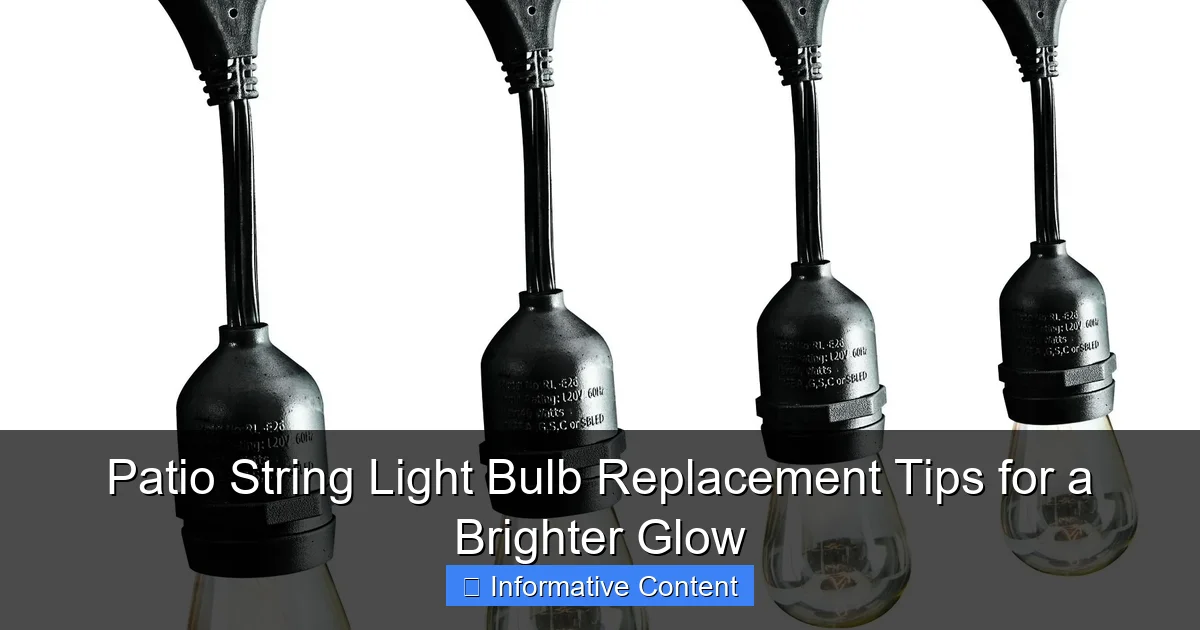
Featured image for patio string light bulb replacement
Image source: harborfreight.com
Replacing patio string light bulbs is the quickest way to restore a vibrant, inviting glow to your outdoor space. Always choose weather-resistant, LED bulbs designed for outdoor use to ensure longevity and energy efficiency. Match the bulb type and socket size to your existing string lights for a seamless, hassle-free upgrade.
Key Takeaways
- Choose LED bulbs: Opt for energy-efficient LEDs to save power and last longer.
- Check bulb type: Match the base size and voltage to avoid compatibility issues.
- Inspect sockets: Clean and repair damaged sockets to ensure consistent lighting performance.
- Seal connections: Use silicone to waterproof wire joints for year-round durability.
- Replace in pairs: Swap neighboring bulbs to maintain uniform brightness across the strand.
📑 Table of Contents
- Why Replacing Patio String Light Bulbs Matters
- Understanding Your Patio String Light Setup
- Choosing the Right Replacement Bulbs
- Step-by-Step Guide to Replacing Patio String Light Bulbs
- Extending the Life of Your Patio Lights
- Data Table: Comparing Replacement Bulb Options
- Final Thoughts: Keep the Glow Going
Why Replacing Patio String Light Bulbs Matters
There’s something magical about the soft glow of patio string lights at dusk. Whether you’re hosting a summer barbecue, enjoying a quiet evening on the porch, or creating a romantic ambiance for a date night, those twinkling bulbs set the mood perfectly. But over time, even the most durable string lights will have bulbs burn out. Suddenly, that warm, inviting glow is interrupted by a dark gap — and it’s not just an eyesore, it’s a mood killer.
I remember one summer when my backyard lights started flickering during a family gathering. One bulb had died, then another, and before I knew it, half the string was dark. The kids noticed immediately, and my sister joked that we were “celebrating in partial darkness.” That night sparked my obsession with patio string light bulb replacement. I learned that replacing bulbs isn’t just about aesthetics — it’s about safety, efficiency, and extending the life of your lighting setup. Whether you’re dealing with vintage Edison bulbs or modern LED strands, knowing how to replace bulbs properly can save you time, money, and frustration.
Understanding Your Patio String Light Setup
Identifying the Type of String Light
Before you even think about replacing a bulb, you need to know what kind of string lights you’re working with. Not all patio lights are created equal, and using the wrong bulb can lead to poor performance or even damage.
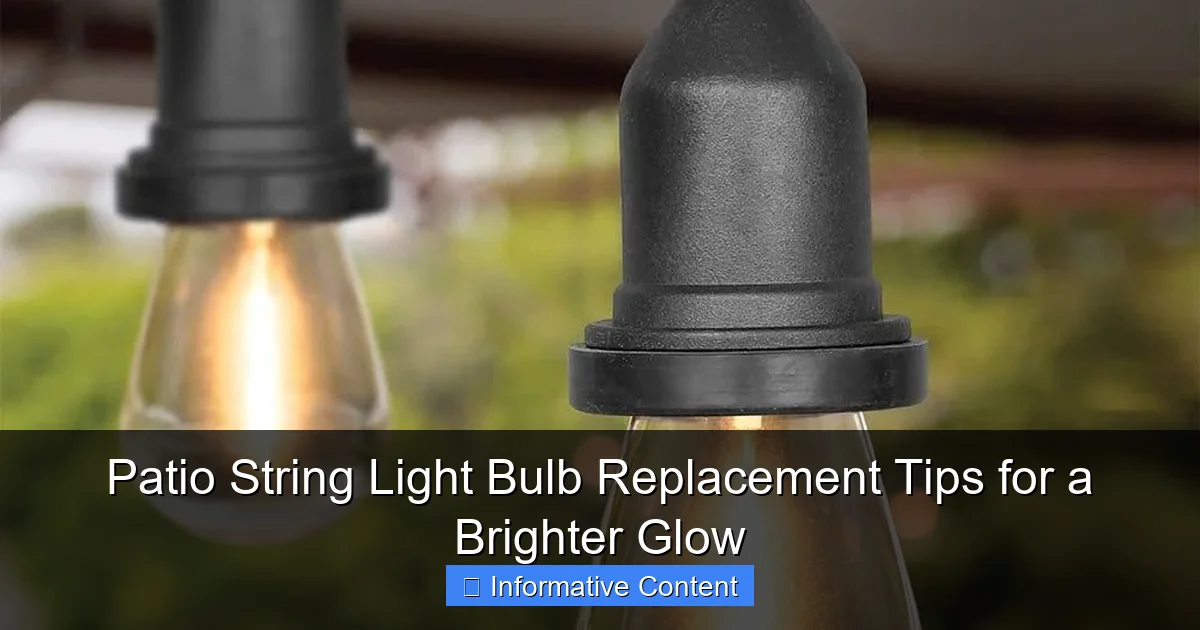
Visual guide about patio string light bulb replacement
Image source: files.ekmcdn.com
- Incandescent string lights: These are the classic, warm-glow bulbs that have been around for decades. They’re affordable and create that nostalgic “twinkle” effect, but they consume more energy and burn out faster than LEDs.
- LED string lights: Energy-efficient and long-lasting, LED bulbs are the go-to choice for modern outdoor lighting. They come in various color temperatures (warm white, cool white, multicolor) and often include smart features like dimming or remote control.
- Solar-powered string lights: Great for off-grid areas, these lights charge during the day and glow at night. The bulbs are usually LEDs, but the entire system relies on solar panel efficiency and battery life.
- Smart string lights: These connect to Wi-Fi or Bluetooth and can be controlled via apps. They often use proprietary bulbs, so replacement requires brand-specific parts.
I once bought generic LED bulbs to replace the ones on my solar string lights, only to find they wouldn’t fit the socket or sync with the solar controller. Lesson learned: always check the type first.
Checking the Socket Type and Voltage
Not all bulbs fit all sockets. Most patio string lights use either E12 (candelabra) or E26 (standard) bases. E12 is smaller and common in vintage-style or decorative strands, while E26 is the larger, more universal size found in many outdoor setups.
You can easily identify the socket by measuring the diameter of the metal base. If it’s about 12mm, it’s E12. If it’s around 26mm, it’s E26. Some specialty lights use GU10, G4, or other pin bases — common in bistro or café-style strings.
Voltage is another critical factor. Most outdoor string lights run on low voltage (12V or 24V) for safety, especially if they’re near water or used in wet climates. Others operate at standard household voltage (120V in the U.S.). Using a 120V bulb in a 24V system can result in dim lighting or no light at all. Conversely, plugging a 24V bulb into a 120V circuit can cause immediate burnout.
Pro tip: Look for a label on the plug or socket housing. It usually lists the voltage and wattage. If it’s worn off, use a multimeter to test the output at the socket (with the lights off and unplugged, of course).
Choosing the Right Replacement Bulbs
Matching Wattage and Lumens
When replacing bulbs, matching the original wattage is essential to avoid overloading the circuit or dimming the overall brightness. For incandescent bulbs, wattage directly relates to brightness. But with LEDs, it’s more about lumens — the actual measure of light output.
For example, a 5-watt LED can produce the same lumens as a 40-watt incandescent. Always check the packaging: a good LED replacement should list both wattage and lumens. If your original bulb was 40W, look for an LED with around 450–500 lumens for a similar glow.
I replaced all my incandescent bulbs with 5W LEDs (480 lumens each) and was amazed at how much brighter and more consistent the string became. Plus, my electricity bill dropped by about 15% during the summer months.
Color Temperature and Light Quality
Color temperature, measured in Kelvin (K), affects the mood of your space. Lower numbers (2000K–2700K) produce warm, yellowish light — perfect for cozy, romantic settings. Higher numbers (3500K–5000K) give off a cooler, daylight-like glow, which is great for task lighting or modern aesthetics.
- 2200K–2700K: Warm white — ideal for patios, decks, and intimate gatherings.
- 3000K–3500K: Neutral white — a balanced choice for dining areas or mixed-use spaces.
- 4000K–5000K: Cool white — best for workspaces or if you want a crisp, clean look.
I once tried 5000K bulbs for a garden party and realized too late that the harsh light made the space feel clinical. Swapping back to 2700K instantly transformed the vibe. Lesson: match the light to the occasion.
Weather Resistance and Durability
Outdoor bulbs face rain, wind, UV exposure, and temperature swings. Look for bulbs labeled weather-resistant or IP65-rated (meaning they’re dust-tight and protected against water jets). Even if your lights are under an awning, moisture can creep in over time.
LEDs generally outperform incandescents in durability. They don’t have fragile filaments and are less likely to shatter. Some brands offer shatterproof or silicone-coated bulbs — a great choice if you have kids or pets running around.
Also, consider the bulb shape. Edison-style bulbs with exposed filaments look beautiful but are more fragile. Globe or teardrop shapes offer better protection and even light distribution.
Step-by-Step Guide to Replacing Patio String Light Bulbs
Preparing for the Replacement
Before you start, unplug the lights and let them cool if they’ve been on. Safety first! Gather your tools: replacement bulbs, gloves (to avoid fingerprints on bulbs), a step ladder (if needed), and a soft cloth.
If you’re replacing multiple bulbs, take a photo of the string before starting. This helps you remember the order and spacing, especially if bulbs vary in color or shape.
For LED strings, check if the bulbs are shunted (allowing current to bypass dead bulbs) or non-shunted (requiring all bulbs to work). Most modern strings are shunted, but older models aren’t. If one bulb goes out and the whole string dies, you’ve got a non-shunted system — replace every bulb to ensure reliability.
Removing and Installing Bulbs
Most bulbs twist in and out. Gently grasp the bulb (not the wire) and turn it counterclockwise to remove. If it’s stuck, wrap a rubber band around it for grip or use a soft cloth to avoid cracking the glass.
When installing the new bulb, align the base with the socket and turn clockwise until snug. Don’t over-tighten — this can damage the socket. For LED bulbs, ensure they’re oriented correctly (some are directional).
After replacing a bulb, plug in the string and test it. If the new bulb doesn’t light, double-check the socket and try another bulb. Sometimes, a dead socket is the real issue — more on that below.
Troubleshooting Common Issues
Sometimes, replacing a bulb doesn’t fix the problem. Here are a few common hiccups and how to solve them:
- Bulb fits but won’t light: The socket may be corroded. Clean it with a cotton swab and isopropyl alcohol. If the metal contacts are bent, gently straighten them.
- String flickers or flashes: This could mean a loose bulb, a failing transformer, or a short in the wiring. Unplug and inspect each socket. Tighten bulbs and check for frayed wires.
- Only half the string works: In non-shunted strings, one dead bulb cuts power to the rest. Replace all bulbs or upgrade to a shunted system.
- Bulb blows out repeatedly: This suggests a voltage spike or poor-quality bulb. Use a surge protector and opt for reputable brands.
I once had a string where every new bulb burned out within a week. After testing, I found a loose wire near the plug creating a voltage spike. Fixing the connection solved the issue — and saved me from buying a whole new set.
Extending the Life of Your Patio Lights
Regular Maintenance Tips
You don’t have to wait for bulbs to die before taking action. A little maintenance goes a long way:
- Inspect monthly: Check for loose bulbs, damaged sockets, or frayed cords. Tighten connections and replace any cracked bulbs.
- Clean the bulbs: Dust and grime reduce brightness. Wipe bulbs with a dry microfiber cloth. For stubborn spots, use a damp cloth — but never while the lights are on.
- Store properly in winter: If you take your lights down, coil them loosely and store in a dry, temperature-controlled space. Avoid folding or kinking the wires.
- Use a timer or smart plug: Limiting run time reduces bulb wear. I use a dusk-to-dawn timer — my lights turn on at sunset and off at 10 PM, cutting wear by 30%.
Upgrading for Long-Term Savings
If you’re constantly replacing bulbs, it might be time to upgrade. Consider:
- Switching to LED: LEDs last 15–25 times longer than incandescents and use up to 80% less energy. The upfront cost is higher, but you’ll recoup it in energy savings and fewer replacements.
- Choosing shunted sockets: These allow individual bulbs to fail without killing the whole string — a game-changer for large installations.
- Investing in weatherproof strands: Look for UL-listed outdoor ratings and reinforced wiring. Brands like Brightech, LITOM, and GE offer reliable options.
I upgraded to a 50-foot shunted LED string with 25 warm white bulbs. It’s been running for two years with only one replacement. Total cost? $45 — less than I spent on incandescent replacements over the same period.
Data Table: Comparing Replacement Bulb Options
| Bulb Type | Avg. Lifespan | Energy Use (per bulb) | Cost per Bulb | Best For | Weather Resistance |
|---|---|---|---|---|---|
| Incandescent (40W) | 1,000–2,000 hours | 40 watts | $0.50–$1.00 | Vintage look, short-term use | Low (not recommended for wet areas) |
| LED (5W, 480 lumens) | 15,000–25,000 hours | 5 watts | $2.00–$5.00 | Long-term, energy-efficient use | High (IP65-rated options available) |
| LED (Smart, RGB) | 20,000+ hours | 6 watts | $4.00–$8.00 | Color-changing, app-controlled setups | Medium to High (check model specs) |
| Solar LED (3W) | 10,000–15,000 hours | 3 watts (solar-powered) | $3.00–$6.00 | Off-grid, eco-friendly spaces | High (but depends on solar panel) |
| Edison-style LED (4W) | 10,000 hours | 4 watts | $3.50–$7.00 | Aesthetic appeal, decorative lighting | Medium (exposed filament is fragile) |
This table helps you weigh trade-offs between cost, longevity, and performance. For most homeowners, standard LED bulbs offer the best balance. If you want ambiance, go for Edison-style LEDs. For tech lovers, smart bulbs add fun and flexibility.
Final Thoughts: Keep the Glow Going
Replacing patio string light bulbs isn’t just a chore — it’s an opportunity to enhance your outdoor space. Whether you’re fixing a single dark spot or upgrading your entire setup, the right approach ensures your lights stay bright, safe, and beautiful for years.
Remember: start by understanding your system, choose bulbs that match your needs, and don’t skip maintenance. A little attention now prevents big headaches later. And if you’re ever unsure, take a photo and visit a local lighting store — the experts there can help you find the perfect match.
After all, those little bulbs do more than light up your patio. They light up moments — laughter with friends, quiet evenings under the stars, the first toast of the season. So take the time to get it right. With these patio string light bulb replacement tips, you’ll keep that glow shining bright, night after night.
Frequently Asked Questions
How do I choose the right bulb for patio string light bulb replacement?
Check the voltage (often 24V or 120V) and base type (E12/E17 are common) of your existing string lights. LED bulbs are ideal for patio use—they last longer, use less energy, and produce a brighter glow than incandescent options.
Can I mix different types of bulbs in my patio string lights?
It’s best to avoid mixing bulb types (e.g., LED and incandescent) as they draw power differently, which can cause flickering or burnout. For a consistent, brighter glow, use the same type and wattage for all patio string light bulb replacements.
Why are some bulbs in my patio string lights brighter than others?
Uneven brightness often indicates mismatched bulbs or failing sockets. Replace all bulbs at once with identical ones to ensure uniform light output and extend the lifespan of your entire string.
How often should I replace bulbs in outdoor patio string lights?
LED bulbs last 20,000–50,000 hours, so you may only need patio string light bulb replacement every 3–5 years. Incandescent bulbs (1,000–2,000 hours) require more frequent changes—inspect annually for dimming or burnouts.
Are solar-powered patio string lights easier to maintain?
Solar lights have built-in rechargeable batteries and LEDs, reducing the need for frequent bulb changes. However, if the LED fails, you’ll need to replace the entire unit—unlike traditional strings with removable bulbs.
What’s the safest way to replace bulbs in hanging patio string lights?
Always turn off and unplug the lights before replacing bulbs. For elevated strings, use a stable ladder and avoid pulling on wires—twist bulbs gently to remove and insert new ones carefully to prevent socket damage.