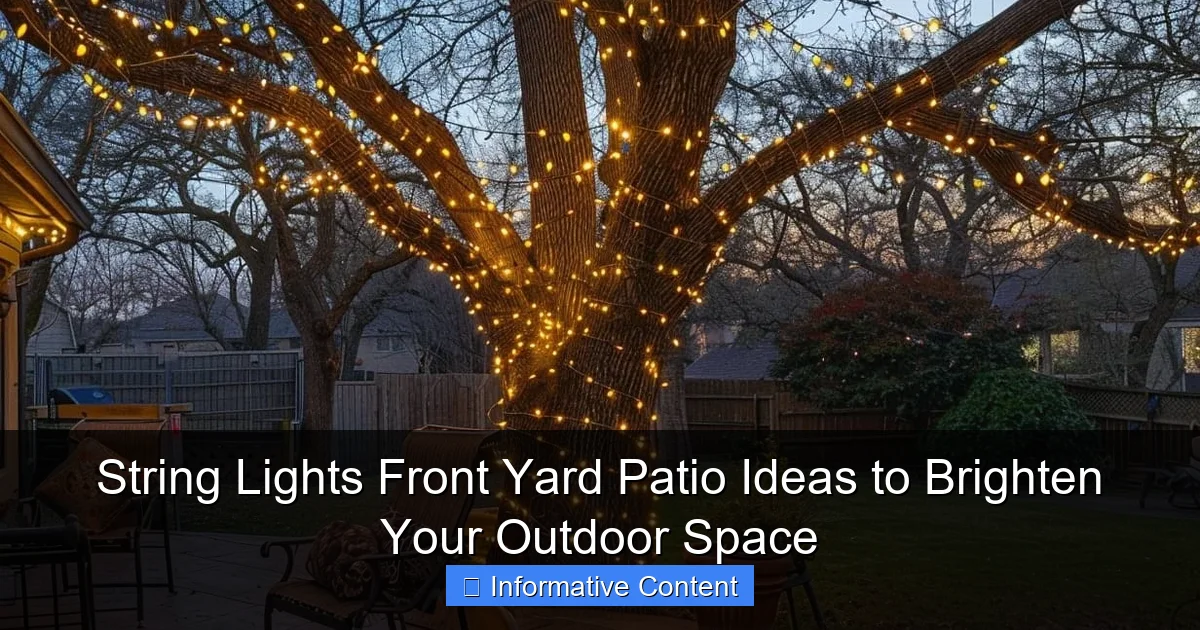
Featured image for string lights front yard patio
Image source: garden.lighting
Transform your front yard patio into a captivating nighttime oasis with the strategic use of string lights, creating both ambiance and functional illumination. From classic Edison bulbs to solar-powered options and creative overhead installations, these versatile lighting ideas enhance curb appeal while extending your outdoor living space well after sunset.
Key Takeaways
- Plan your layout: Sketch light placement before installation for balanced coverage.
- Choose durable lights: Opt for weather-resistant, commercial-grade string lights.
- Layer lighting: Combine string lights with lanterns or spotlights for depth.
- Use dimmers: Adjust brightness to set the perfect mood effortlessly.
- Highlight focal points: Frame patios, trees, or pathways for visual impact.
- Secure safely: Use clips or hooks, not nails, to avoid wire damage.
📑 Table of Contents
- Why String Lights Are the Secret to a Magical Front Yard Patio
- Choosing the Right String Lights for Your Front Yard Patio
- Creative String Light Layouts for Maximum Impact
- Weatherproofing and Safety: Protecting Your Investment
- Styling Your Front Yard Patio: Beyond the Lights
- Cost, Installation, and Maintenance: What to Expect
- Final Thoughts: Let Your Front Yard Patio Shine
Why String Lights Are the Secret to a Magical Front Yard Patio
Picture this: It’s a warm summer evening, and you’re sitting on your front porch with a cool drink in hand. The sun has just dipped below the horizon, and suddenly, your front yard patio lights up—not with harsh spotlights, but with a gentle, twinkling glow. String lights, draped across trees, strung along railings, or woven through planters, transform your outdoor space into a cozy, inviting haven. It’s not just about lighting up the dark; it’s about creating a mood, a feeling, and a space where memories are made.
String lights are more than just a trendy decor choice—they’re a game-changer for front yard patios. Whether you’re hosting a backyard BBQ, enjoying a quiet night with family, or simply want to boost your home’s curb appeal, these versatile lights add warmth, charm, and functionality. And the best part? You don’t need to be an electrician or a design expert to pull it off. With a few clever ideas and some simple planning, your front yard can go from ordinary to extraordinary. Let’s explore how to use string lights to brighten your outdoor space in ways that feel both practical and enchanting.
Choosing the Right String Lights for Your Front Yard Patio
Before you start hanging lights, it’s important to pick the right type for your space, style, and needs. Not all string lights are created equal, and the wrong choice can leave you with a tangled mess or a dim, disappointing glow.
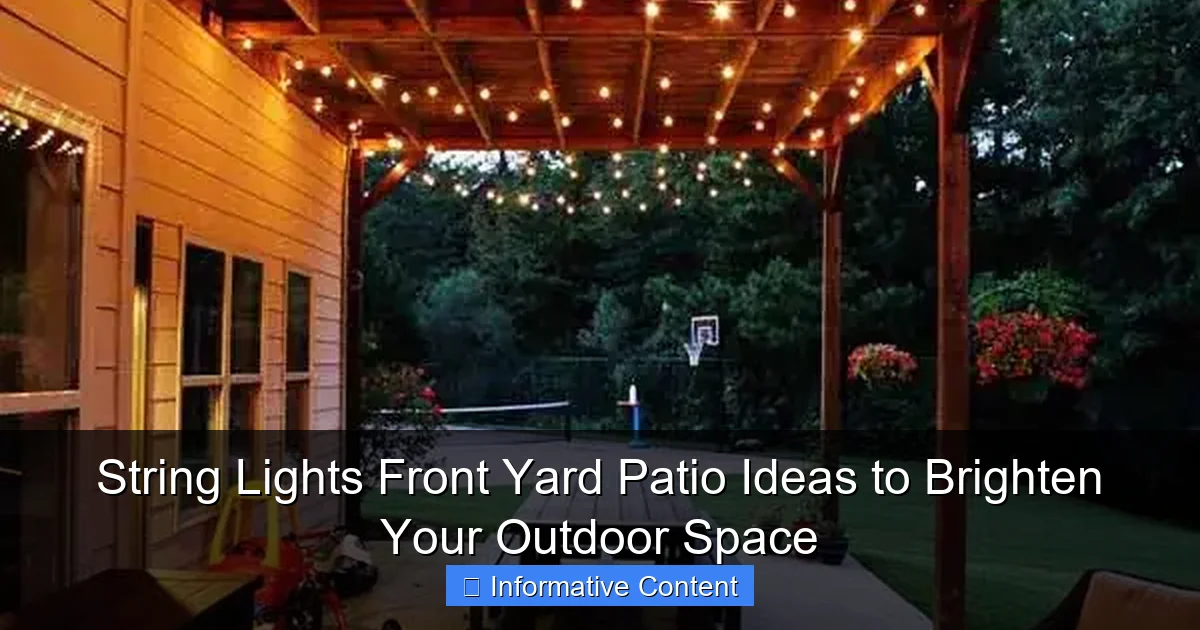
Visual guide about string lights front yard patio
Image source: woohome.com
Types of String Lights: LED vs. Incandescent
LED string lights are the clear winner for most outdoor setups. They’re energy-efficient, last up to 25,000 hours (that’s over 20 years if used 3 hours a night!), and generate almost no heat. They’re also brighter and more durable than incandescent bulbs. Incandescent lights, while nostalgic and warm, burn out faster and use more energy—plus, they can get hot enough to be a safety hazard near fabric or dry foliage.
Pro tip: Look for weather-resistant LED lights with an IP65 or higher rating. This means they’re dust-tight and protected against water jets—perfect for rain or sprinkler systems.
Bulb Shapes and Sizes: Globe, Edison, or Mini?
- Globe lights: These are classic and versatile. The round bulbs cast a soft, diffused glow that’s great for ambient lighting. They work well in trees, along fences, or wrapped around columns.
- Edison bulbs: With their vintage filament design, these are ideal for a rustic, industrial, or farmhouse aesthetic. They’re a bit brighter and more directional, so they’re perfect for patios with a defined dining or seating area.
- Mini lights: Tiny bulbs on thin wires—ideal for delicate, fairy-light effects. Use them to weave through shrubs, hang from eaves, or create a canopy over a small bistro table.
For a front yard patio, I recommend a mix: Edison bulbs over the seating area for task lighting, and globe or mini lights for surrounding trees or railings to create depth.
Smart Features: Dimmers, Timers, and App Control
Want to take your lighting to the next level? Consider smart string lights. Many now come with:
- Remote controls or apps: Adjust brightness, change colors (if RGB), or set schedules from your phone.
- Motion sensors: Great for safety—lights turn on when someone walks by.
- Voice control: Works with Alexa, Google Assistant, or Siri. “Hey Google, turn on the patio lights at sunset.”
While these features add cost, they’re worth it if you want convenience and energy savings. A timer alone can cut your electricity use by 30%—and you’ll never forget to turn them off.
Creative String Light Layouts for Maximum Impact
The way you arrange your string lights can make or break the vibe. It’s not just about hanging them—it’s about crafting a scene. Here are some tried-and-true layouts that work beautifully in front yard patios.
Canopy or Ceiling Effect (Hanging Over a Seating Area)
This is the most popular setup. String lights are hung in a grid or crisscross pattern above a patio table or lounge area. The result? A starry-sky feel that’s intimate and romantic.
- How to do it: Use hooks, eye screws, or adhesive clips on your porch ceiling, pergola, or even the eaves. For a front yard without a roof, install a freestanding pergola or use tall poles at the corners.
- Spacing: Hang lights 12–18 inches apart for even coverage. Use zip ties or wire clips to secure them every 3–4 feet.
- Pro tip: Add sheer fabric panels or outdoor curtains to soften the light and create a “room” effect.
One reader told me they hung Edison bulbs in a diamond pattern over their front porch and now use it as their favorite dinner spot—even in winter with a heater!
Wrap Around Trees, Columns, or Railings
Take advantage of natural structures. Wrapping lights around trees adds height and drama, while columns or railings create vertical interest.
- For trees: Start at the base and spiral upward. Use zip ties or light clips to secure the wire. Avoid damaging bark—wrap loosely and don’t leave lights on during winter.
- For railings: Drape lights horizontally or vertically. For a “twinkle” effect, use mini lights and let them drape slightly.
- For columns: Wrap tightly for a clean look, or loosely for a whimsical feel. Add a garland or greenery between bulbs for extra flair.
Just remember: If you’re wrapping a tree, check local regulations. Some areas prohibit lights on street-side trees for safety reasons.
Pathway or Border Lighting
Guide guests to your front door with a glowing pathway. String lights along the edges of a walkway, driveway, or garden bed.
- Use ground stakes: Many string lights come with stakes or can be paired with low-profile stakes to keep wires off the ground.
- Create a “tunnel” effect: Hang lights between two rows of trees or posts along a path. It’s like walking through a fairy tale.
- Color tip: Warm white (2700K–3000K) feels inviting. Avoid cool white or blue unless you want a modern, icy look.
Weatherproofing and Safety: Protecting Your Investment
Front yard patios face the elements—rain, wind, snow, and UV rays. Without proper protection, even the best string lights won’t last. Here’s how to keep them shining year after year.
Sealing and Securing Connections
Water is the enemy. Every plug, socket, and splice is a potential leak point.
- Use outdoor-rated extension cords: Look for thick, rubber-coated cords with built-in covers for the plug.
- Seal connections: Use silicone sealant or waterproof tape on any exposed joints. For extra protection, place plugs inside a waterproof junction box or a plastic container with a lid (drill small holes for cords).
- Avoid daisy-chaining: Too many lights on one circuit can overheat. Stick to the manufacturer’s limit (usually 3–5 strands).
I once saw a neighbor’s lights fail because they left the plug dangling near a sprinkler. A $10 junction box would’ve saved them $200 in replacements!
Wind and Storm Protection
Strong gusts can snap wires or pull down lights. Secure them properly:
- Use sturdy hooks: Adhesive clips fail in wind. Opt for screw-in hooks, eye bolts, or gutter clips.
- Leave slack: Don’t stretch lights tight. A slight sag allows movement without snapping.
- Remove in extreme weather: If a storm is coming, take down delicate setups. For permanent installations, use heavy-duty wire and anchors.
Electrical Safety Basics
- Use a GFCI outlet: This shuts off power if it detects a ground fault—crucial for outdoor areas.
- Check for fraying or damage: Before each season, inspect cords for cracks, exposed wires, or burnt smells.
- Don’t overload circuits: If your lights flicker or the breaker trips, you’ve got too much on one circuit.
And please—never use indoor lights outdoors. It’s not just a waste of money; it’s a fire hazard.
Styling Your Front Yard Patio: Beyond the Lights
String lights are the star, but the supporting cast matters too. Pair them with the right decor to create a cohesive, inviting space.
Furniture and Layout: Define Your Space
Start with a clear layout. Even a small front patio can feel spacious with the right furniture.
- Zones: Create a dining area, a lounge spot, and a conversation nook. Use rugs, planters, or low walls to separate them.
- Furniture: Choose weather-resistant materials like wicker, teak, or powder-coated metal. Add cushions in outdoor fabric (look for UV-resistant and water-repellent).
- Scale: Don’t overcrowd. Leave room for movement. A bistro set works for two; a sectional needs more space.
One couple I know turned their tiny front porch into a “mini backyard” with a foldable table, two chairs, and a hanging chair. The string lights made it feel twice as big!
Greenery and Planters: Bring in Nature
Plants add life and help the lights shine.
- Hanging baskets: Drape lights around them for a cascading effect.
- Planters with lights: Use lanterns, LED candles, or string lights woven through branches.
- Climbing vines: Train ivy or jasmine on a trellis—then string lights through it.
Try a “light garden”: Place solar-powered path lights among low-growing plants like sedum or thyme. The mix of light and greenery is stunning.
Accessories: The Finishing Touches
- Outdoor rugs: Define areas and add color. Choose flat-weave or outdoor-rated materials.
- Side tables: Hold drinks, books, or a small lantern. Use nesting tables for flexibility.
- Decor items: Wind chimes, a water feature, or a fire pit (if space allows) add sensory layers.
Remember: Less is more. A few well-placed items feel curated; too many look cluttered.
Cost, Installation, and Maintenance: What to Expect
Let’s talk practicalities. How much will this cost? How long will it take? And how do you keep it looking great?
Cost Breakdown: Budget to Premium
Here’s a realistic look at what you’ll spend:
| Item | Budget Option | Mid-Range | Premium |
|---|---|---|---|
| String lights (25–50 ft) | $15–$30 (basic LED) | $40–$80 (smart features) | $100–$200 (commercial-grade) |
| Installation hardware | $10–$20 (hooks, clips) | $30–$60 (poles, pergola) | $100+ (custom structures) |
| Extension cords & timers | $10–$20 | $25–$50 (weatherproof) | $75+ (smart plugs) |
| Furniture (optional) | $100–$200 (bistro set) | $300–$800 (sectional) | $1,000+ (custom) |
| Total (lights + hardware) | $35–$70 | $95–$190 | $275+ |
You can start small—say, $50 for lights and hooks—and expand over time. Many people add more lights each season.
DIY Installation: Step-by-Step
- Plan your layout: Sketch where lights will go. Measure distances.
- Install hardware: Screw in hooks, poles, or clips. Use a level to keep them straight.
- Hang the lights: Start at the power source and work outward. Test as you go.
- Secure and seal: Use zip ties, clips, and sealant. Tuck cords behind trim or plants.
- Add decor: Place furniture, rugs, and accessories.
Most setups take 2–4 hours. For a complex canopy, allow a full day.
Maintenance: Keep Them Glowing
- Clean bulbs: Wipe with a damp cloth once a year. Dust blocks light.
- Check for damage: Inspect cords and bulbs before each season.
- Store properly: If removing lights, coil them loosely and store in a dry place.
- Update annually: Replace burnt-out bulbs or frayed strands.
A little care goes a long way. One reader told me their lights lasted 8 years with just a yearly wipe-down!
Final Thoughts: Let Your Front Yard Patio Shine
String lights aren’t just decor—they’re a way to reclaim your front yard as a living space. They turn a forgotten patch of concrete into a place for laughter, relaxation, and connection. Whether you go all-out with a glowing canopy or keep it simple with a few strands along the railing, the magic is in the glow.
Start small. Try one idea this weekend—maybe wrap a tree or hang a mini canopy over your front steps. See how it feels. You’ll be amazed at how such a small change can transform your home’s entire vibe. And remember: It’s not about perfection. It’s about creating a space that feels like you. So grab some lights, invite a friend, and let your front yard patio shine. After all, the best memories happen under the stars—or, in this case, under the twinkle of string lights.
Frequently Asked Questions
What are the best string lights for front yard patio areas?
Weather-resistant LED string lights with shatterproof bulbs, like Edison-style or globe lights, are ideal for front yard patios. Look for UL-listed or solar-powered options to ensure durability and energy efficiency in outdoor conditions.
How do I install string lights on a front yard patio without drilling holes?
Use adhesive outdoor hooks, tension rods between railings, or attach lights to existing structures like fences or trees. Zip ties or removable gutter clips also work well for temporary setups without damaging surfaces.
Can I leave string lights front yard patio up year-round?
Only if the lights are specifically rated for permanent outdoor installation and made with all-weather materials. Even then, periodic checks for wear, frayed wires, or water damage are crucial to maintain safety and longevity.
What spacing works best for patio string lights?
Space bulbs 4-6 inches apart for ambient lighting or 8-12 inches for a subtle glow. For larger patios, layer multiple strands in a zigzag or crisscross pattern to evenly cover the area without overcrowding.
How do I power outdoor string lights if there’s no nearby outlet?
Solar-powered string lights are a convenient, eco-friendly solution. Alternatively, use heavy-duty extension cords routed safely along walls or underground conduits, or consider a portable battery pack for short-term events.
Are warm or cool white string lights better for a front yard patio?
Warm white (2700K-3000K) creates a cozy, inviting ambiance perfect for patios, while cool white (4000K+) feels more modern and bright. Choose warm white for relaxation or entertaining, and cool white for a crisp, functional look.