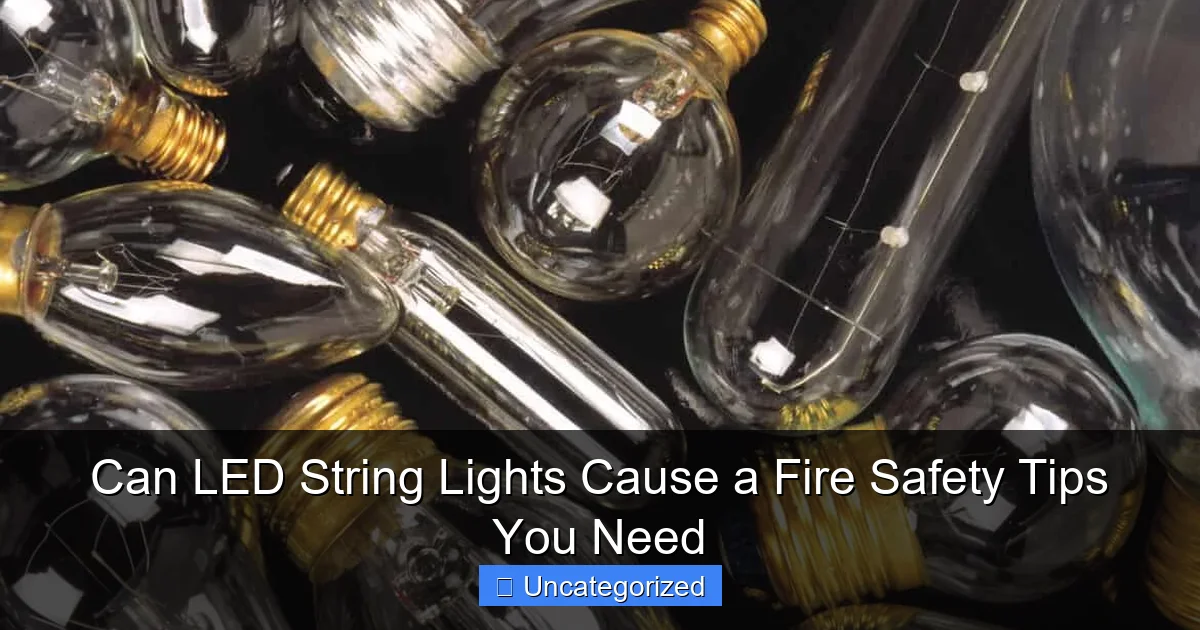
Featured image for can led string lights cause a fire
Image source: ledlightideas.com
LED string lights are generally safe and unlikely to cause a fire when used properly, thanks to their low heat output and energy-efficient design. However, overloading circuits, using damaged cords, or daisy-chaining too many strands can create serious fire hazards—always follow manufacturer guidelines and inspect lights regularly for safety.
Key Takeaways
- Inspect lights regularly: Check for frayed wires or damaged sockets before each use.
- Choose certified products: Always buy LED lights with UL, ETL, or safety certifications.
- Don’t overload circuits: Avoid daisy-chaining too many strands to prevent overheating.
- Use timers or smart plugs: Automate shutoff to reduce prolonged usage risks.
- Keep away from flammables: Maintain safe distance from fabrics, paper, or dry plants.
- Unplug when unattended: Disconnect lights before sleeping or leaving home.
📑 Table of Contents
- Can LED String Lights Cause a Fire? What You Need to Know
- How LED String Lights Work and Why They’re Safer Than Incandescents
- When LED String Lights Can Become a Fire Hazard
- Fire Safety Tips for Using LED String Lights
- Outdoor vs. Indoor LED String Lights: Key Differences
- What to Do If an LED Light Fire Occurs
- Data Table: LED String Light Safety Comparison
Can LED String Lights Cause a Fire? What You Need to Know
The warm, twinkling glow of LED string lights has become a staple in modern decor, from cozy bedrooms to festive outdoor patios. Whether draped across a mantel, woven through a wedding arch, or strung along a backyard fence, these versatile lights create a magical ambiance. But as their popularity grows, so do concerns: Can LED string lights cause a fire? The short answer is yes—but the risk is significantly lower than with traditional incandescent bulbs, and with proper use, the danger can be nearly eliminated.
Understanding fire risks associated with LED string lights is crucial for homeowners, decorators, and event planners. While LEDs are celebrated for their energy efficiency and longevity, they are not immune to electrical hazards. Faulty wiring, overuse, or improper installation can still lead to overheating, short circuits, or even fires. This guide dives deep into the science behind LED safety, explores real-world incidents, and provides actionable fire safety tips to help you enjoy your lights without worry. Whether you’re decorating for the holidays, a special event, or everyday ambiance, this comprehensive resource will arm you with the knowledge to stay safe.
How LED String Lights Work and Why They’re Safer Than Incandescents
The Science Behind LED Technology
LEDs, or light-emitting diodes, are semiconductor devices that convert electricity directly into light through electroluminescence. Unlike incandescent bulbs, which rely on heating a tungsten filament until it glows (a process that wastes up to 90% of energy as heat), LEDs produce light with minimal heat output. This fundamental difference is why LEDs are inherently safer for fire prevention.
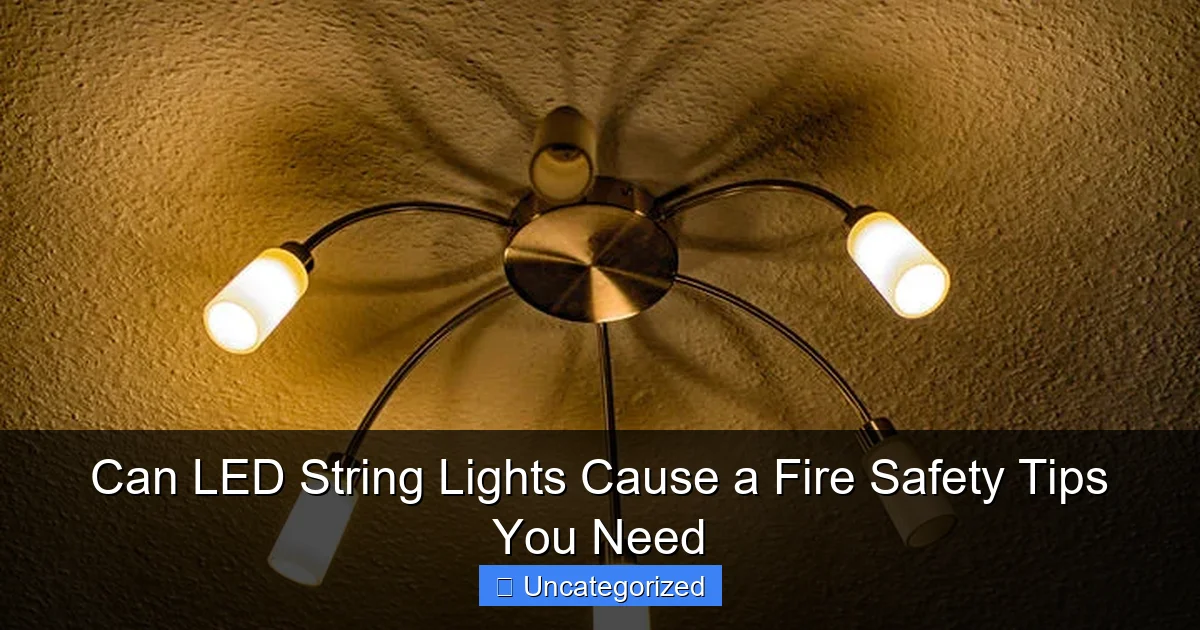
Visual guide about can led string lights cause a fire
Image source: ledlightinginfo.com
For example, a 10-watt LED bulb produces the same brightness as a 60-watt incandescent but operates at temperatures around 100°F (38°C), compared to over 300°F (149°C) for incandescents. This means LED string lights—typically using 0.5 to 2 watts per bulb—generate very little heat, reducing the risk of igniting nearby materials like curtains, paper, or dry vegetation.
Energy Efficiency and Heat Management
LEDs consume up to 80% less energy than traditional bulbs, which translates to lower electrical loads and less strain on wiring. This efficiency also reduces the chance of overheating in power cords, adapters, or extension cords. For instance, a 100-bulb LED string might draw just 10–20 watts total, while the same setup with incandescents could require 400–600 watts—a significant difference in potential heat buildup.
Manufacturers further enhance safety with features like:
- Thermal cutoffs that shut off the circuit if temperatures exceed safe limits.
- Low-voltage transformers (12V or 24V) that reduce electrical shock and fire risks.
- Encapsulated wiring to prevent fraying and short circuits.
Real-World Comparison: LED vs. Incandescent Fire Risks
According to the U.S. Consumer Product Safety Commission (CPSC), holiday lights cause approximately 860 residential fires annually, resulting in 14 deaths and $10 million in property damage. However, 90% of these incidents involve incandescent or older halogen bulbs, not LEDs. A 2021 study by Underwriters Laboratories (UL) found that LED lights accounted for less than 5% of lighting-related fires, even though they represent over 70% of the market today. This stark contrast highlights why switching to LEDs is a critical step in fire prevention.
When LED String Lights Can Become a Fire Hazard
Damaged or Counterfeit Products
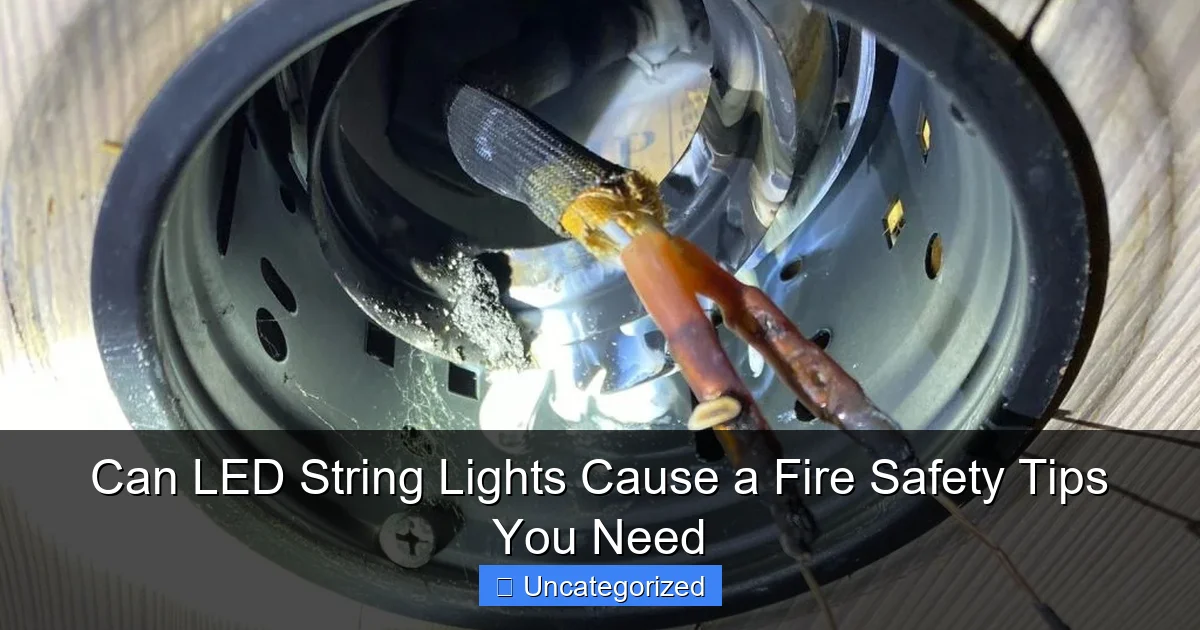
Not all LED string lights are created equal. Counterfeit or poorly manufactured lights often lack safety certifications and may have substandard components. For example, a 2022 investigation by the National Electrical Manufacturers Association (NEMA) found that 30% of budget LED strings sold online had:
- Exposed copper wiring
- Overheating resistors
- Non-compliant power adapters
These flaws can lead to short circuits or electrical arcing, which can ignite surrounding materials. Always check for safety labels like UL (Underwriters Laboratories), ETL, or CSA—these certify that the product meets rigorous fire and electrical safety standards.
Visual guide about can led string lights cause a fire
Image source: ledlightinginfo.com
Overloading Circuits and Power Strips
Even safe LED lights can become hazardous when used improperly. Overloading circuits is a common mistake. For instance, connecting five 20-watt LED strings (100 watts total) to a single 15-amp household circuit (rated for 1,800 watts) might seem safe—but when combined with other appliances (TVs, space heaters, etc.), the cumulative load can exceed the circuit’s capacity. This causes overheating in wiring, outlets, or extension cords, increasing fire risk.
Example: A homeowner in Florida plugged 12 LED strings (240 watts) into a power strip already running a space heater (1,500 watts) and a TV (200 watts). The total load (1,940 watts) exceeded the circuit’s 1,800-watt limit, causing the power strip to melt and ignite a nearby rug. The fire was contained, but it underscores the importance of calculating total wattage.
Prolonged Use and Poor Ventilation
While LEDs run cool, leaving lights on for days without ventilation can still pose risks. Poorly ventilated fixtures (e.g., enclosed lanterns or dense garlands) trap heat, potentially damaging internal components. A 2020 case in Oregon involved a 100-bulb LED string left on for 72 hours inside a sealed glass terrarium. The trapped heat degraded the wiring insulation, causing a short circuit that ignited dried moss. The fire spread to nearby furniture before being extinguished.
Tip: Never use LED lights in sealed, non-ventilated spaces. Follow manufacturer guidelines for maximum continuous usage (usually 12–24 hours).
Fire Safety Tips for Using LED String Lights
Choose Certified, High-Quality Products
Always prioritize safety-certified LED lights. Look for labels like:
- UL (Underwriters Laboratories) – Tests for fire, shock, and mechanical hazards.
- ETL (Intertek) – Similar to UL, with a focus on electrical safety.
- CSA (Canadian Standards Association) – Common for North American products.
Avoid “bargain bin” lights from unverified sellers. For example, a $5 LED string from a marketplace might lack thermal protection, while a $20 UL-certified version includes safety features that could prevent a fire.
Inspect Before Use: The 5-Point Safety Check
Before installing any lights, perform this quick inspection:
- Wiring: Look for frayed, cracked, or exposed wires.
- Bulbs: Ensure all bulbs are intact and seated properly.
- Plugs: Check for loose, bent, or corroded prongs.
- Labels: Confirm safety certifications and indoor/outdoor ratings.
- Smell: Discard lights with a burning or chemical odor.
Example: A homeowner in Texas noticed a faint burning smell when testing a new LED string. Upon inspection, they found a cracked bulb base causing a short circuit. Replacing the string prevented a potential fire.
Proper Installation and Load Management
Follow these installation best practices:
- Use the right extension cords: Opt for heavy-duty cords with a minimum 16-gauge wire for outdoor use. Avoid daisy-chaining more than 3 strings.
- Calculate total wattage: Use the formula: Total Watts = Number of Strings × Watts per String. Stay below 80% of your circuit’s capacity (e.g., 1,440 watts for a 1,800-watt circuit).
- Secure cords safely: Use clips or hooks—never nails or staples, which can damage wiring.
Pro Tip: For outdoor use, choose lights rated IP44 or higher (resistant to splashes and dust). Indoor lights (IP20) should never be used outside.
Smart Usage Habits
Adopt these habits to minimize risk:
- Use timers: Set lights to turn off after 6–8 hours. Smart plugs with scheduling features add convenience.
- Unplug when not in use: Especially during storms or extended absences.
- Keep away from flammables: Maintain at least 12 inches of clearance from curtains, paper, or dry plants.
Case Study: A family in Colorado used a timer to turn off their LED Christmas lights at midnight. This prevented overheating when the lights were accidentally left on during a heatwave, avoiding a potential fire.
Outdoor vs. Indoor LED String Lights: Key Differences
Weather Resistance and IP Ratings
Outdoor LED lights must withstand rain, snow, and temperature swings. They use higher IP (Ingress Protection) ratings to seal against moisture. For example:
- IP44: Resists splashes (suitable for covered patios).
- IP65: Dust-tight and protected against jets of water (ideal for gardens).
- IP67: Submersion-resistant for 30 minutes (rare, but used in poolside decor).
Indoor lights (IP20) lack seals, making them vulnerable to humidity. Using indoor lights outside can lead to short circuits—a common cause of outdoor fires.
Power Source Considerations
Outdoor setups often require longer cords or extension cables. To prevent voltage drop (which can cause overheating):
- Use thicker extension cords: 14-gauge or 12-gauge for runs over 25 feet.
- Choose lights with built-in transformers: Reduces the need for multiple adapters.
- Install GFCI outlets: Ground Fault Circuit Interrupters shut off power if a short circuit occurs, preventing fires and shocks.
Example: A homeowner in Seattle used a 50-foot extension cord to power outdoor LED lights. The thin 18-gauge cord overheated, melting insulation and igniting a wooden deck. Upgrading to a 14-gauge cord resolved the issue.
Installation Best Practices for Outdoor Use
Follow these outdoor-specific tips:
- Elevate cords: Keep them 6+ inches above ground to avoid water pooling.
- Use weatherproof connectors: Rubber gaskets or silicone sealant protect splices.
- Secure lights with clips: Avoid tying cords to trees or metal structures, which can damage wiring.
Pro Tip: For permanent installations (e.g., landscape lighting), hire an electrician to ensure compliance with local codes.
What to Do If an LED Light Fire Occurs
Immediate Response Steps
If you notice smoke, sparks, or flames from your lights:
- Cut power immediately: Unplug the lights or flip the circuit breaker.
- Use a Class C fire extinguisher: Designed for electrical fires. Never use water—it can spread the fire or cause electrocution.
- Evacuate and call 911: If the fire spreads, prioritize safety.
- Document the incident: Take photos for insurance claims or manufacturer reports.
Example: A homeowner in Arizona saw smoke from a melted LED adapter. They unplugged the lights, used a fire extinguisher, and called the fire department. The quick response contained the fire to a small area.
Post-Incident Actions
After a fire or near-miss:
- Dispose of damaged lights: Do not attempt to repair or reuse them.
- Inspect other lights: Check for similar damage or overheating signs.
- Report to authorities: File a report with the CPSC if the product was defective.
- Review safety practices: Adjust your usage habits to prevent recurrence.
Pro Tip: Keep a fire extinguisher rated for electrical fires (Class C) near your holiday decor or outdoor setup.
Preventing Future Incidents
Use the incident as a learning opportunity:
- Upgrade to smart lights: Many have built-in thermal sensors that shut off automatically.
- Install smoke alarms: Place them near light displays for early detection.
- Educate family members: Teach kids and guests about light safety.
Data Table: LED String Light Safety Comparison
| Feature | UL-Certified LED Lights | Uncertified/Cheap LED Lights | Incandescent String Lights |
|---|---|---|---|
| Heat Output | Low (100–150°F) | Moderate to High (150–300°F if defective) | Very High (300–500°F) |
| Energy Use | 0.5–2 watts per bulb | 0.5–2 watts per bulb (but inefficient) | 4–10 watts per bulb |
| Fire Risk | Low (if undamaged) | High (due to poor insulation, overheating) | Very High (filament heat) |
| Lifespan | 25,000–50,000 hours | 1,000–5,000 hours (often fails prematurely) | 1,000–2,000 hours |
| Safety Certifications | UL, ETL, CSA | None or fake labels | UL, ETL, CSA (but higher fire risk) |
While LED string lights are far safer than incandescents, they are not fireproof. The key to prevention lies in quality, proper use, and vigilance. By choosing certified products, inspecting lights before use, avoiding overloading, and following installation guidelines, you can enjoy the beauty of LED lights without compromising safety. Remember: fire risks increase exponentially with damaged, uncertified, or improperly used lights. Stay informed, stay cautious, and let your lights shine—safely.
Frequently Asked Questions
Can LED string lights cause a fire if left on overnight?
While LED string lights generate minimal heat and are generally safe, leaving *any* lights on unattended increases risk if faulty wiring or damaged bulbs go unnoticed. Always use certified lights and timers to reduce hazards.
Are LED string lights safer than traditional incandescent string lights?
Yes, LED lights produce significantly less heat and consume less energy, lowering fire risks. However, ensure they meet safety standards (e.g., UL/ETL certification) for long-term safety.
Can overloading an outlet with LED string lights start a fire?
Yes, even low-wattage LED lights can cause fires if too many are plugged into one outlet, overheating the circuit. Follow manufacturer guidelines for maximum connections and use surge protectors.
Do damaged LED string lights pose a fire risk?
Frayed wires or cracked bulbs can spark electrical faults, increasing fire chances. Inspect lights regularly and discard any with visible damage or flickering issues.
Can outdoor LED string lights catch fire in wet conditions?
Only if they’re not rated for outdoor use or have damaged waterproofing. Use IP65+ rated lights for wet areas and avoid exposing connectors to moisture.
What fire safety tips should I follow with LED string lights?
Always buy certified lights, avoid covering them with flammable materials, and unplug when not in use. For added safety, use smart plugs with auto-shutoff features.