Featured image for how led string lights work
Image source: dygtyjqp7pi0m.cloudfront.net
LED string lights work by passing an electrical current through tiny light-emitting diodes (LEDs), which convert energy into bright, efficient light with minimal heat. Connected in a series or parallel circuit along a flexible wire, these LEDs are powered by batteries, USB, or an adapter, allowing for versatile, low-energy illumination. Their durability, energy efficiency, and vibrant color options make them ideal for enhancing any indoor or outdoor space.
Key Takeaways
- LEDs use semiconductors to convert electricity into light efficiently.
- Low voltage operation makes them safe for indoor and outdoor use.
- Parallel wiring design ensures one failed bulb won’t darken the whole strand.
- Energy-efficient technology reduces power consumption by up to 80% vs incandescent.
- Long lifespan of 25,000+ hours cuts replacement and maintenance costs.
- Minimal heat emission enhances safety around fabrics and children.
📑 Table of Contents
- The Magic of LED String Lights: More Than Just Decoration
- The Science Behind the Glow: How LEDs Produce Light
- Anatomy of an LED String Light: Components and Wiring
- Power Sources and Energy Efficiency
- Types of LED String Lights: Choosing the Right One
- Installation, Safety, and Maintenance
- Conclusion: Illuminate Your World with Confidence
The Magic of LED String Lights: More Than Just Decoration
Walk into any modern home, café, or event space, and you’re likely to be greeted by the soft, enchanting glow of LED string lights. These versatile, energy-efficient lights have become a staple in interior and exterior design, transforming ordinary spaces into cozy, magical environments. Whether draped across a bedroom wall, wrapped around a patio railing, or strung above a wedding reception, LED string lights create ambiance with minimal effort. But have you ever paused to wonder: how do these tiny lights work so efficiently, last so long, and remain cool to the touch?
Beyond their aesthetic appeal, LED string lights are a marvel of modern engineering. Unlike traditional incandescent or fluorescent lighting, they rely on semiconductor technology to produce light, making them safer, more durable, and far more efficient. In this guide, we’ll peel back the layers of LED string lights—from the science behind their glow to the wiring that powers them, and even how to choose the right type for your space. Whether you’re a home decorator, an event planner, or a curious DIY enthusiast, understanding how LED string lights work will help you make informed choices, troubleshoot issues, and maximize their potential to brighten your life.
The Science Behind the Glow: How LEDs Produce Light
To truly appreciate how LED string lights work, it’s essential to understand the core technology: the Light Emitting Diode (LED). Unlike traditional bulbs that use filaments or gas to generate light, LEDs rely on a phenomenon called electroluminescence—a process where light is emitted when an electric current passes through a semiconductor material.
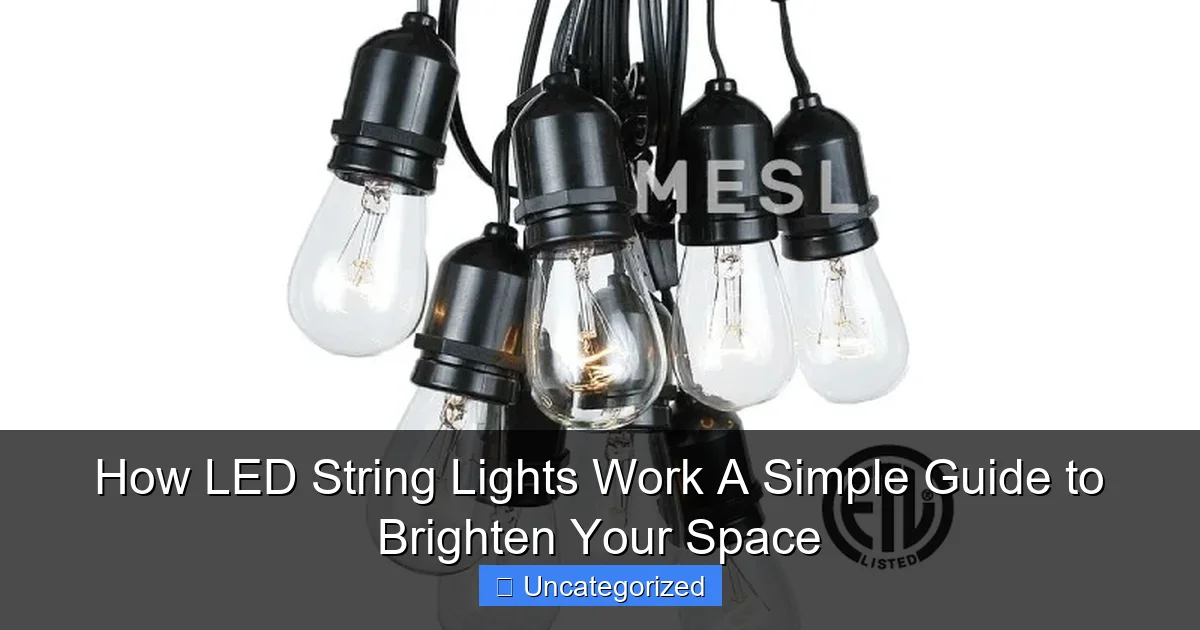
Visual guide about how led string lights work
Image source: modernelectricaltt.com
What Is an LED?
An LED is a two-lead semiconductor device made of materials like gallium arsenide (GaAs), gallium phosphide (GaP), or gallium nitride (GaN). These materials are doped with impurities to create a p-n junction, the heart of the LED. When a voltage is applied across the junction, electrons from the n-type material recombine with holes (positive charge carriers) from the p-type material. This recombination releases energy in the form of photons—light particles.
The color of the light depends on the energy gap between the electron and hole states, which is determined by the semiconductor material. For example:
- Red and amber LEDs use GaAs and GaP.
- Green and yellow LEDs use GaP with additional dopants.
- Blue and white LEDs use GaN, often coated with a phosphor layer to produce broad-spectrum white light.
This precise control over color makes LEDs ideal for decorative lighting, where mood and ambiance are key.
Energy Efficiency and Heat Management
One of the most significant advantages of LEDs is their energy efficiency. Traditional incandescent bulbs convert only about 10% of electrical energy into light, with the rest lost as heat. In contrast, LEDs convert up to 80% of energy into light, making them up to 90% more efficient. This efficiency stems from the direct conversion of electrical energy into photons, bypassing the need for a heated filament.
Moreover, LEDs generate very little heat—most of the energy is emitted as light, not infrared radiation. This makes LED string lights safe to touch, even after hours of use, and reduces the risk of fire hazards when used near fabrics or dry plants. For example, a 10-foot string of 100 warm white LEDs typically draws only 6–8 watts, compared to 60–100 watts for an equivalent incandescent string.
Lifespan and Durability
LEDs are also known for their longevity. A typical LED can last 25,000 to 50,000 hours, or about 2.5 to 5.7 years of continuous use. In contrast, incandescent bulbs last only 1,000–2,000 hours. This durability is due to the solid-state nature of LEDs—there are no filaments to burn out or glass envelopes to shatter. The semiconductor material is encapsulated in a robust epoxy resin, making it resistant to vibration, moisture, and temperature fluctuations.
Tip: To maximize LED lifespan, avoid exposing them to extreme heat (e.g., near radiators) or prolonged direct sunlight, which can degrade the phosphor coating in white LEDs.
Anatomy of an LED String Light: Components and Wiring
Now that we’ve covered the science, let’s explore the physical structure of an LED string light. Understanding its components will help you troubleshoot issues, customize your setup, and choose the right type for your needs.
Visual guide about how led string lights work
Image source: mistydaydream.com
Core Components
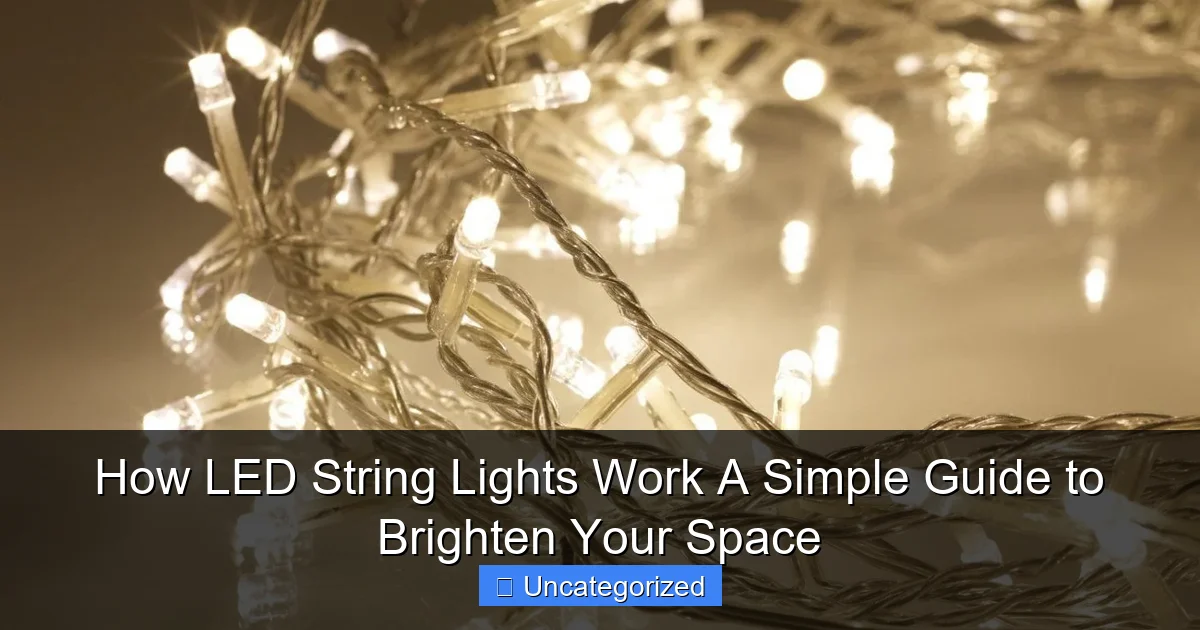
- LEDs (Light Emitting Diodes): The light sources, typically spaced 2–5 inches apart along the wire. Each LED is a tiny semiconductor chip mounted on a reflective cup and sealed in a plastic lens.
- Wires (Conductors): Thin copper wires carry electrical current from the power source to the LEDs. Most strings use two-core (positive and negative) or three-core (for color-changing models) wiring.
- Power Source: This can be a wall adapter (AC to DC converter), battery pack, or USB plug. Battery-powered strings are ideal for outdoor or portable use, while plug-in versions are better for permanent installations.
- Controller (Optional): Found in programmable strings, this small device allows you to change colors, brightness, and lighting effects (e.g., twinkling, fading). It often includes a timer function.
- Insulation and Jacket: The wires are coated with PVC or silicone to prevent short circuits and protect against weather damage.
Wiring Configurations: Series vs. Parallel
The way LEDs are connected in a string determines how they operate and how failures affect the entire circuit. There are two main configurations:
- Series Circuit: LEDs are connected end-to-end, forming a single path for current. If one LED fails (e.g., due to a loose connection), the entire string goes dark because the circuit is broken. However, series circuits are simpler to design and require fewer wires.
- Parallel Circuit: Each LED has its own path to the power source. If one fails, the others remain lit. This redundancy makes parallel strings more reliable but requires more wiring and a higher current capacity.
- Series-Parallel Hybrid: Most commercial LED strings use this configuration. Groups of 10–30 LEDs are connected in series, and these groups are connected in parallel. This balances reliability and efficiency. For example, a 100-LED string might have 10 groups of 10 LEDs in series, all connected in parallel.
Practical Example: If a single LED burns out in a series-parallel string, only its group of 10 LEDs will go dark, while the remaining 90 stay lit. This is why most LED strings don’t fail completely.
Voltage and Current Regulation
LEDs require precise voltage and current to operate safely. Most operate at 2–3 volts and draw 20–30 milliamps (mA) of current. To prevent overheating, each LED or group has a resistor in series, which limits the current. For example, a 120V AC-to-DC adapter might step down to 12V DC, and resistors ensure each LED receives only 2.5V and 20mA.
Tip: Never connect LED strings directly to high-voltage sources (e.g., household outlets) without a proper adapter. Doing so can destroy the LEDs instantly.
Power Sources and Energy Efficiency
The power source is a critical factor in the performance and convenience of LED string lights. Choosing the right type depends on your use case, location, and energy-saving goals.
AC vs. DC Power
Most LED strings run on direct current (DC), but they’re often powered by alternating current (AC) sources (e.g., wall outlets). Here’s how the conversion works:
- Plug-in (AC-powered): These strings include a built-in AC-to-DC converter (wall adapter). The adapter transforms 120V (US) or 230V (EU) AC into low-voltage DC (e.g., 3V, 12V, or 24V). This is the most common type for indoor use.
- Battery-powered: Use AA, AAA, or lithium-ion batteries to provide DC power directly. Ideal for outdoor events, camping, or areas without outlets. Battery life varies: a 4xAA battery pack might last 12–24 hours for a 50-LED string.
- USB-powered: Plug into a USB port (e.g., power bank, laptop). Great for desks, cars, or temporary setups. Most draw 5V DC and are compatible with USB-A or USB-C ports.
Example: A 10-foot USB-powered string with 50 LEDs draws ~3 watts, so a 10,000mAh power bank can run it for ~12 hours (10,000mAh ÷ 250mA = 40 hours; 40h × 3W = 120Wh; 120Wh ÷ 10h = 12W, but actual runtime is lower due to inefficiencies).
Energy Consumption and Cost Savings
LEDs are remarkably energy-efficient. Let’s compare a 100-LED string to a traditional incandescent equivalent:
| Parameter | LED String (100 LEDs) | Incandescent String (100 bulbs) |
|---|---|---|
| Power Draw | 6–8 watts | 60–100 watts |
| Annual Energy Use (5h/day) | 10.95–14.6 kWh | 109.5–182.5 kWh |
| Annual Cost (at $0.12/kWh) | $1.32–$1.75 | $13.14–$21.90 |
| Lifespan | 25,000–50,000 hours | 1,000–2,000 hours |
Over 5 years, using LED strings could save you $60–$100 in electricity alone, plus the cost of replacing burned-out incandescent bulbs. For large installations (e.g., holiday lights), the savings are even greater.
Solar-Powered Options
For eco-conscious users, solar-powered LED strings are a fantastic choice. These include:
- A solar panel to capture sunlight.
- A rechargeable battery (usually NiMH or Li-ion) to store energy.
- An automatic light sensor to turn the lights on at dusk and off at dawn.
Solar strings are ideal for gardens, patios, and pathways. A typical 50-LED solar string charges in 6–8 hours of sunlight and runs for 6–10 hours at night.
Types of LED String Lights: Choosing the Right One
Not all LED string lights are created equal. The right type depends on your space, purpose, and personal style.
By Shape and Design
- Standard Bulb (M5, M6, G12): Miniature bulbs with a classic look. M5 (5mm) is the most common.
- Fairy Lights (Micro-LEDs): Ultra-thin wires with tiny LEDs (1–2mm), often used for delicate decorations.
- Edison Bulbs: Vintage-style LEDs in glass bulbs, popular for industrial or rustic decor.
- Rope Lights: LEDs encased in flexible PVC tubing, ideal for outlining shapes or pathways.
- Net Lights: Grid-like strings for covering shrubs or walls quickly.
By Color and Effect
- Single-Color: Warm white, cool white, red, blue, etc. Warm white (2700K–3000K) mimics candlelight; cool white (4000K–5000K) is brighter and more modern.
- RGB (Color-Changing): LEDs with red, green, and blue chips. Can blend to create any color. Controlled via remote or app.
- Twinkle/Flashing: Random or programmed flickering effects.
- Steady-On: Constant brightness for ambient lighting.
Tip: For bedrooms, choose warm white or dimmable strings. For parties, RGB or twinkle lights add excitement.
By Installation Type
- Indoor: Low-voltage, often with thin wires and plastic coatings.
- Outdoor: Waterproof (IP65 or higher), with UV-resistant jackets and weatherproof connectors.
- Commercial-Grade: Heavy-duty wires, high lumen output, and long warranties for events or retail.
Practical Example: For a wedding arch, use waterproof fairy lights with a timer to avoid manual switching. For a bookshelf, opt for USB-powered micro-LEDs.
Installation, Safety, and Maintenance
Proper installation and care ensure your LED string lights shine safely for years.
Installation Tips
- Plan the Layout: Measure the area and buy strings with 10–20% extra length. Use clips, hooks, or adhesive strips (for indoor use) to secure lights without damaging surfaces.
- Use Connectors: Most strings have end-to-end connectors. Limit to 3–5 connected strings to avoid overloading the circuit.
- Outdoor Safety: Use outdoor-rated strings with GFCI (Ground Fault Circuit Interrupter) outlets to prevent electric shock.
- Height and Clearance: Keep lights away from flammable materials (e.g., curtains, dry leaves) and at least 12 inches from the ground to avoid tripping.
Safety Precautions
- Check for Damage: Inspect wires for fraying or exposed copper before use.
- Avoid Overheating: Don’t cover lights with insulation or heavy fabrics. LEDs need airflow to stay cool.
- Child and Pet Safety: Use battery-powered or low-voltage strings in homes with kids/pets. Avoid dangling wires within reach.
- Follow Manufacturer Guidelines: Never exceed the recommended number of connected strings or wattage.
Maintenance and Troubleshooting
- Cleaning: Wipe with a dry cloth. For outdoor strings, use mild soap and water, then dry completely.
- Storing: Wrap loosely around a cardboard tube or use a reel to prevent tangling.
- Common Issues:
- Partial Outage: Check for loose connections or a burned-out LED group.
- Flickering: Replace the battery or check the adapter.
- No Light: Test the power source and controller (if applicable).
Tip: Keep spare LEDs and resistors for repairs. Most hardware stores sell replacement parts.
Conclusion: Illuminate Your World with Confidence
From their semiconductor heart to their versatile designs, LED string lights are a testament to how technology can enhance everyday life. They’re not just decorative—they’re efficient, safe, and customizable tools for transforming spaces. By understanding how they work, you can make smarter purchases, install them safely, and troubleshoot issues with ease.
Whether you’re creating a cozy reading nook, lighting up a garden party, or adding sparkle to a holiday display, LED string lights offer endless possibilities. So go ahead—experiment with colors, try new layouts, and let the science of light brighten your world, one tiny LED at a time. With this guide in hand, you’re ready to shine brighter, longer, and more sustainably than ever before.
Frequently Asked Questions
How do LED string lights work?
LED string lights work by passing an electrical current through light-emitting diodes (LEDs), which convert energy into light with minimal heat. The LEDs are connected in a series or parallel circuit along a flexible wire, allowing them to glow uniformly when powered.
Are LED string lights energy-efficient compared to traditional bulbs?
Yes, LED string lights use up to 80% less energy than incandescent bulbs because they convert most of the electricity directly into light. This efficiency makes them a cost-effective and eco-friendly lighting solution.
How long do LED string lights last?
Most LED string lights last 25,000–50,000 hours due to their durable diodes and low heat output. With regular use, they can shine for years without needing replacement.
Can LED string lights work outdoors?
Many LED string lights are designed for outdoor use with weather-resistant coatings and waterproof seals. Always check the product’s IP rating to ensure it’s safe for rain or humidity.
Do LED string lights require special power sources?
LED string lights typically work with standard outlets, batteries, or USB power, depending on the model. Their low voltage requirements make them versatile for indoor and outdoor setups.
Why are my LED string lights flickering?
Flickering in LED string lights can result from a loose connection, incompatible dimmer switch, or power supply issues. Ensure all connections are secure and the power source matches the lights’ voltage.