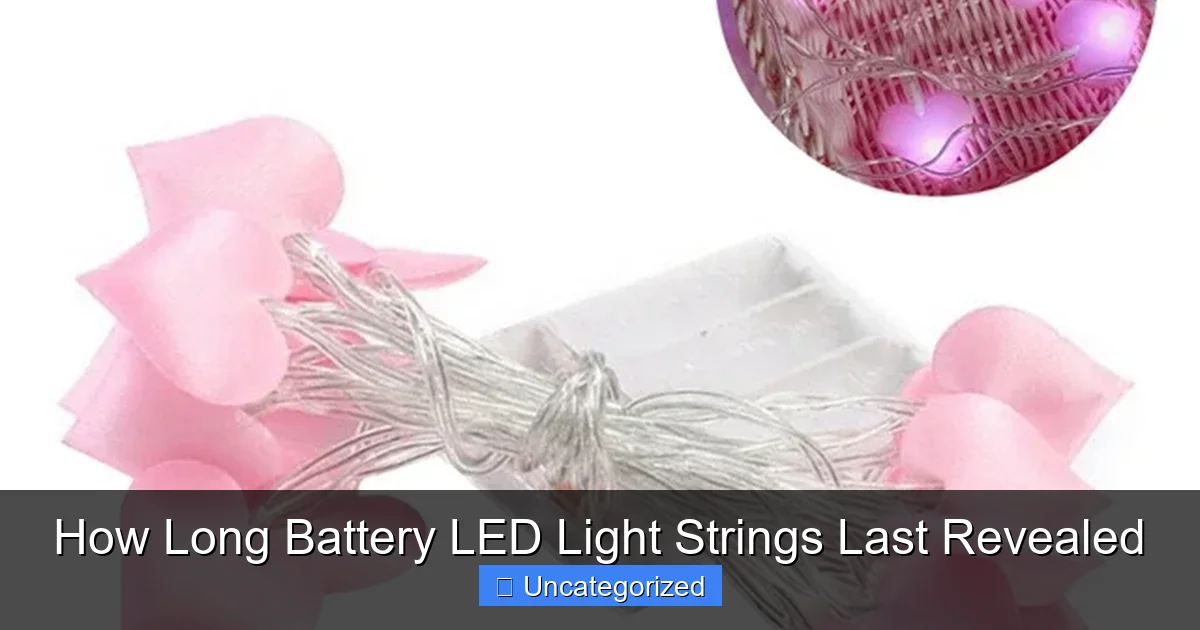
Featured image for how long battery led light strings last
Image source: picclickimg.com
Battery LED light strings typically last 30 to 100 hours on a single set of batteries, depending on bulb count, battery type, and usage patterns. High-quality LEDs with energy-efficient designs and lithium batteries can extend runtime significantly, making them ideal for long-term or repeated use. Proper storage and turning them off when not in use further maximize lifespan.
Key Takeaways
- Battery life varies by LED quality and usage patterns.
- Use lithium batteries for longer runtime in cold weather.
- Timer settings extend battery life by limiting usage hours.
- High brightness drains batteries faster—adjust settings wisely.
- Store properly off-season to prevent battery corrosion damage.
- Replace batteries promptly to avoid leakage and LED failure.
📑 Table of Contents
- How Long Battery LED Light Strings Last: The Ultimate Guide
- Factors That Influence Battery LED Light String Lifespan
- Real-World Battery Life Examples: What to Expect
- How to Maximize Battery LED Light String Lifespan
- Comparing Battery Types: A Data-Driven Overview
- When to Replace Your Battery LED Light Strings
- Conclusion: Making the Most of Your Battery LED Lights
How Long Battery LED Light Strings Last: The Ultimate Guide
There’s something magical about the warm, twinkling glow of LED light strings—especially during the holidays, weddings, or cozy evenings at home. Battery-powered LED light strings have become increasingly popular due to their flexibility, portability, and ease of use. Unlike plug-in lights, they don’t require access to an outlet, making them ideal for decorating trees, patios, bedrooms, or even outdoor spaces where extension cords are impractical. But one burning question remains: How long do battery LED light strings actually last?
The answer isn’t a simple number. Battery life depends on a complex interplay of factors, including battery type, LED quality, usage patterns, environmental conditions, and even the brand of the light string. Whether you’re planning a seasonal display or using them for year-round ambiance, understanding the lifespan of your battery-powered LED lights can save you time, money, and frustration. In this comprehensive guide, we’ll dive deep into what affects battery life, how to maximize longevity, real-world examples, and expert-backed tips to help you get the most out of your lights. By the end, you’ll know exactly how long your battery LED light strings can last—and how to make them last even longer.
Factors That Influence Battery LED Light String Lifespan
When it comes to determining how long battery LED light strings last, it’s essential to recognize that no two setups are identical. Several variables come into play, each affecting the overall runtime and durability of your lights. Understanding these factors helps you make informed decisions when purchasing, using, and maintaining your light strings.
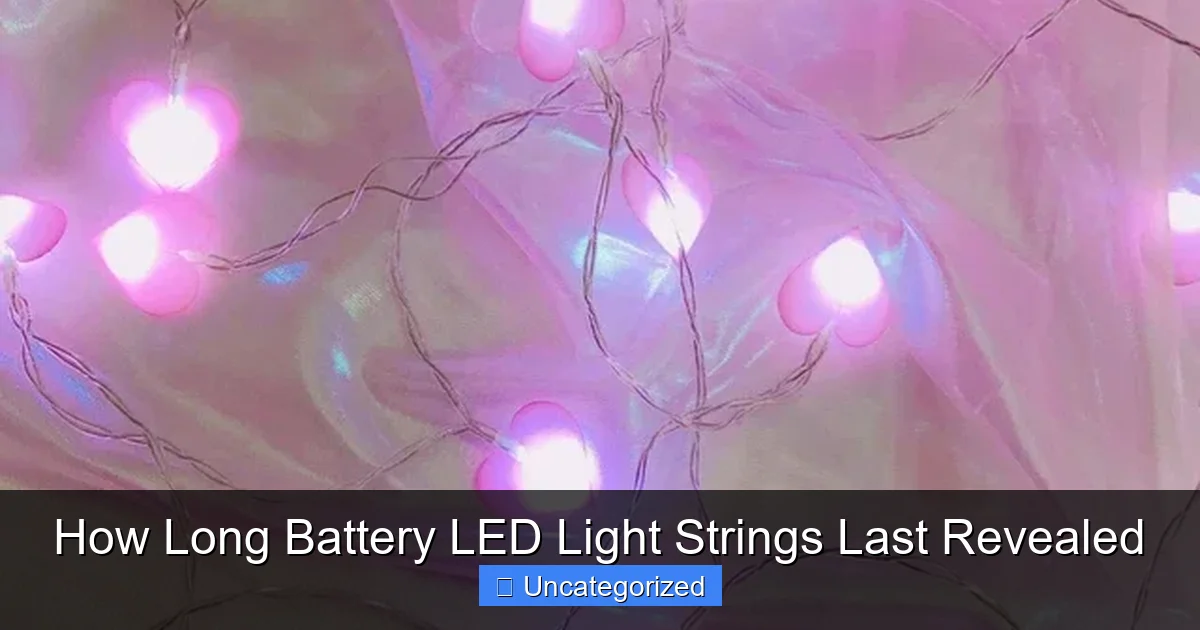
Visual guide about how long battery led light strings last
Image source: picclickimg.com
Battery Type and Quality
The type of battery you use is one of the most critical factors. Most battery-powered LED light strings use either AA or AAA batteries, and the choice between alkaline, lithium, or rechargeable NiMH batteries can dramatically impact performance.
- Alkaline batteries: Widely available and affordable, but they have a shorter lifespan under continuous use. They also perform poorly in cold temperatures, which can reduce runtime by up to 30% in winter conditions.
- Lithium batteries: More expensive upfront, but they last significantly longer—up to 2–3 times more than alkaline—especially in extreme temperatures. They’re ideal for outdoor or long-duration use.
- Rechargeable NiMH batteries: Environmentally friendly and cost-effective over time, but they have lower voltage (1.2V vs. 1.5V) and may not deliver the same brightness. They’re best used with lights designed for lower voltage or in intermittent (timer-based) setups.
For example, a 20-foot string with 100 LEDs powered by four AA alkaline batteries might last 20–30 hours continuously. The same setup with lithium batteries could run for 60–90 hours under the same conditions.
LED Count and Power Consumption
The number of LEDs on your string directly affects battery drain. A 50-LED string will consume less power than a 200-LED version, assuming the same LED type and brightness. However, modern LEDs are highly efficient, and manufacturers often use micro-LEDs or low-power diodes to minimize energy use.
- Standard LED strings: 20–100 LEDs, drawing ~0.06–0.1 watts per LED.
- High-density or RGB strings: 150–300+ LEDs, may draw up to 0.15 watts per LED due to color-changing circuits.
For instance, a 100-LED warm white string might consume 6–10 watts total, while a 200-LED RGB string with color effects could draw 15–20 watts. This means the RGB version will drain batteries faster, even if the LEDs themselves are efficient.
Brightness Settings and Modes
Many battery LED strings come with multiple lighting modes: steady, blinking, chasing, or color-changing. Each mode affects battery life differently.
- Steady-on mode: Most energy-efficient, as LEDs run at full power without interruptions.
- Blinking or twinkling modes: Can extend battery life by 20–40% because LEDs are off part of the time, reducing average power draw.
- Color-changing or animated modes: Often the most power-hungry due to complex circuitry and frequent LED switching.
Using a timer or motion sensor can also help. For example, a string set to run for only 4 hours per night (instead of 8) will double its effective lifespan over a week.
Environmental Conditions
Temperature and humidity play a major role. Cold weather slows down chemical reactions in batteries, reducing voltage and capacity. Humidity can cause corrosion on battery contacts, leading to intermittent power or premature failure.
- Batteries lose ~20–30% capacity at 32°F (0°C).
- At -4°F (-20°C), capacity can drop by 50% or more.
- High humidity (especially outdoors) can lead to short circuits if the battery compartment isn’t sealed.
If you’re using lights outside in winter, lithium batteries are strongly recommended. Also, consider using weatherproof battery packs or protective covers.
Brand and Build Quality
Not all LED strings are created equal. Premium brands (e.g., GE, Philips, Luminara) often use higher-efficiency LEDs, better circuitry, and more durable wiring. Budget brands may cut corners, leading to higher power consumption, inconsistent brightness, or shorter lifespans.
For example, a $10 string from a discount store might last 15 hours on fresh batteries, while a $25 string from a trusted brand could last 40+ hours under the same conditions—due to optimized power management and better LED drivers.
Real-World Battery Life Examples: What to Expect
To give you a clearer picture, let’s examine real-world scenarios based on common setups. These examples are based on user reports, manufacturer specs, and independent testing.
Visual guide about how long battery led light strings last
Image source: guitarinsideout.com
Scenario 1: Holiday Tree Decoration (Indoor Use)
- Setup: 200 warm white LEDs, 20-foot string, powered by 3 AA alkaline batteries.
- Usage: 6 hours per night, steady-on mode.
- Expected runtime: 4–5 nights (24–30 hours total).
- Tips: Use a timer to limit runtime to 6 hours. Switch to lithium batteries to extend to 10–12 nights. Avoid leaving overnight.
Note: After 30 hours, the lights may dim slightly as batteries deplete, but they’ll still function for another 5–10 hours at reduced brightness.
Scenario 2: Outdoor Patio Lighting (Year-Round)
- Setup: 100 cool white LEDs, 10-foot string, 3 AA lithium batteries, weatherproof housing.
- Usage: 4 hours per night, blinking mode.
- Expected runtime: 25–30 nights (100–120 hours total).
- Tips: Lithium batteries are essential for cold nights. Use a solar-powered battery pack (if compatible) for extended use.
One user reported their lithium-powered outdoor string lasted 6 weeks with nightly use—far longer than expected.
Scenario 3: Wedding or Event Lighting (Single Use)
- Setup: 300 RGB LEDs, 30-foot string, 4 AA rechargeable NiMH batteries (2500mAh).
- Usage: 8 hours continuous, color-changing mode.
- Expected runtime: 6–8 hours (may dim after 6 hours).
- Tips: Bring spare batteries or a portable USB power bank with a DC converter. Use lower brightness settings if available.
For large events, consider using multiple shorter strings with individual batteries to avoid a single point of failure.
Scenario 4: Bedroom or Nursery Night Light
- Setup: 50 soft white LEDs, 5-foot string, 2 AAA alkaline batteries.
- Usage: 8 hours per night, steady-on.
- Expected runtime: 10–12 nights (80–96 hours total).
- Tips: Use a motion sensor or smart plug with a timer. Rechargeable AAA batteries work well here due to shorter nightly use.
This setup is ideal for parents who want a gentle night light without cords.
Scenario 5: DIY Art or Photography Lighting
- Setup: 150 high-brightness LEDs, 15-foot string, 4 AA lithium batteries.
- Usage: 3 hours per session, 2–3 sessions per week.
- Expected runtime: 6–8 weeks (30–40 hours total).
- Tips: Store batteries separately when not in use to prevent leakage. Use a battery level indicator if available.
Artists and photographers often prefer lithium for consistent brightness during shoots.
How to Maximize Battery LED Light String Lifespan
Want your battery LED lights to last longer? With a few smart strategies, you can double or even triple their effective lifespan. Here’s how.
Choose the Right Batteries
As discussed, lithium batteries are the best choice for longevity and performance, especially for long or outdoor use. They cost more upfront (~$2–$3 per AA), but their extended life and reliability make them worth it.
- For occasional indoor use: Alkaline is fine.
- For frequent or outdoor use: Go lithium.
- For eco-conscious users: Rechargeable NiMH (but use in timer mode).
Pro tip: Buy batteries in bulk (e.g., 24-pack) to save money and ensure consistent quality.
Use a Timer or Smart Controller
One of the easiest ways to extend battery life is to limit usage time. A simple 6-hour timer ensures lights turn off automatically, preventing unnecessary drain.
- Mechanical timers: $5–$10, plug into wall outlet (if using a DC adapter).
- Smart plugs: $15–$25, can be controlled via app or voice (e.g., Alexa, Google Home).
- Built-in timers: Many modern LED strings have a 6- or 8-hour timer function—activate it!
For example, reducing nightly runtime from 8 to 4 hours doubles your battery life.
Optimize Lighting Modes
Use energy-efficient modes when possible:
- Choose steady-on over blinking if you want maximum brightness.
- Use blinking or twinkling to extend life by 25–40%.
- Avoid color-changing or animated modes for long durations—save them for special occasions.
Some strings allow you to adjust brightness (e.g., 50%, 75%, 100%). Lower brightness = longer life.
Store and Maintain Properly
Proper storage prevents battery leakage and corrosion, which can damage the light string.
- Remove batteries when not in use for more than a week.
- Store in a cool, dry place (not in a hot garage or damp basement).
- Inspect battery contacts regularly for corrosion—clean with a cotton swab and vinegar if needed.
- Replace old or swollen batteries immediately.
One user reported that storing lights with old batteries caused a corroded terminal, rendering the string unusable.
Upgrade to Solar or USB-Powered Options
If you’re using lights frequently, consider upgrading to:
- Solar-powered battery packs: Recharge during the day, power lights at night. Ideal for outdoor use.
- USB-powered strings: Can be connected to power banks, wall adapters, or solar chargers. More sustainable and cost-effective long-term.
For example, a 20000mAh power bank can run a 100-LED string for 50+ hours—perfect for camping or off-grid events.
Comparing Battery Types: A Data-Driven Overview
To help you make the best choice, here’s a comparison of the most common battery types used in LED light strings. Data is based on average performance under continuous LED load (100 LEDs, 3 AA batteries, steady-on mode).
| Battery Type | Capacity (mAh) | Avg. Runtime (Hours) | Cost per AA (USD) | Performance in Cold | Best For |
|---|---|---|---|---|---|
| Alkaline | 2500–2800 | 20–30 | $0.50–$1.00 | Poor (30% loss at 32°F) | Occasional indoor use |
| Lithium (Primary) | 2900–3500 | 60–90 | $2.00–$3.00 | Excellent (only 5–10% loss at -4°F) | Outdoor, winter, long-term use |
| Rechargeable NiMH | 1800–2500 | 15–25 | $1.50–$2.50 (per recharge) | Good (15–20% loss at 32°F) | Eco-friendly, timer-based use |
| Lithium-Ion (USB) | 20000+ (power bank) | 100+ | $15–$30 (one-time) | Good (with insulation) | Events, off-grid, frequent use |
Note: Runtime estimates assume 100 LEDs drawing ~0.1W each (10W total). Actual results may vary based on LED efficiency, circuit design, and environmental factors.
When to Replace Your Battery LED Light Strings
Even the best battery LED light strings have a finite lifespan. But how do you know when it’s time to retire them? Here are the signs.
Dim or Flickering Lights
If your lights are dimming even with fresh batteries, it’s a sign of aging LEDs or failing circuitry. Over time, LEDs degrade (a process called lumen depreciation), and drivers may malfunction.
- Check: Replace batteries first. If dimness persists, the string is likely worn out.
- Solution: Replace the string. Most quality strings last 2–5 years with regular use.
Uneven Brightness or Dead Sections
LED strings are often wired in parallel or series. If one section goes dark, it could be a broken wire, loose connection, or failed LED.
- Check: Gently wiggle the string to see if the issue is intermittent.
- Solution: If multiple sections fail, it’s time for a new string. Some brands offer replaceable LED bulbs—check the packaging.
Battery Compartment Corrosion
Leaked batteries leave a white, crusty residue that can damage contacts. If cleaning doesn’t restore power, the string may be unusable.
- Prevention: Remove batteries when not in use for extended periods.
- Solution: Replace if corrosion is severe or contacts are damaged.
Water Damage (Especially Outdoors)
Even “weatherproof” strings can fail if the battery compartment isn’t fully sealed. Moisture causes short circuits and corrosion.
- Prevention: Use silicone sealant on battery covers or invest in IP65-rated strings.
- Solution: Discard if water has entered the circuit board.
Manufacturer Recommendations
Most LED strings are rated for 20,000–50,000 hours of LED life, but this is under ideal conditions. In practice, battery and wiring issues often cause failure first.
- Expect 2–4 years of regular use.
- Store properly to extend lifespan.
- Keep receipts—some brands offer 1–3 year warranties.
Conclusion: Making the Most of Your Battery LED Lights
So, how long do battery LED light strings last? The answer is: anywhere from 20 to 100+ hours of continuous use, depending on your setup. With smart choices—like using lithium batteries, setting timers, optimizing modes, and proper storage—you can extend that lifespan significantly. A well-maintained string can last several holiday seasons, multiple outdoor events, or even years of nightly ambiance.
Remember, the key isn’t just the number of LEDs or the brand—it’s how you use them. By understanding the factors that affect battery life and applying the tips in this guide, you’ll get the most value, beauty, and longevity from your investment. Whether you’re lighting up a Christmas tree, creating a romantic dinner setting, or adding flair to a DIY project, battery-powered LED strings offer unmatched convenience and charm.
Ultimately, the magic of these lights isn’t just in their glow—it’s in how long they can keep glowing. With the right care, your battery LED light strings won’t just last through one night… they’ll last through many. So go ahead, string them up, set the timer, and enjoy the light—without the worry.
Frequently Asked Questions
How long do battery LED light strings typically last?
Battery LED light strings typically last 30 to 60 hours on a single set of batteries, depending on the battery type (e.g., alkaline vs. lithium) and LED brightness. Usage patterns, like intermittent vs. continuous operation, also impact total runtime.
What factors affect the battery life of LED light strings?
The battery life of LED light strings depends on battery quality, LED count, brightness settings, and ambient temperature. For example, colder temperatures can reduce battery efficiency, especially with standard alkaline batteries.
How long do LED light strings last with rechargeable batteries?
LED light strings can last 20 to 40 hours with rechargeable NiMH batteries, though runtime varies based on capacity (mAh) and charging habits. Rechargeables are cost-effective but may require more frequent recharging than alkaline batteries.
Do battery LED light strings last longer in timer mode?
Yes, using timer mode (e.g., 6 hours on/18 hours off) can extend battery LED light strings’ lifespan by reducing total active time. This mode is ideal for holiday lights or decorative displays.
How can I maximize the battery life of my LED light strings?
To maximize battery life, use lithium batteries in extreme temperatures, switch to lower brightness settings, and turn off lights when unused. High-quality batteries and energy-efficient LEDs also help extend runtime.
Are battery LED light strings worth it for long-term use?
Battery LED light strings are worth it for short-term or occasional use, like events or seasonal décor, due to their convenience and portability. For long-term use, consider plug-in versions to avoid frequent battery replacements.