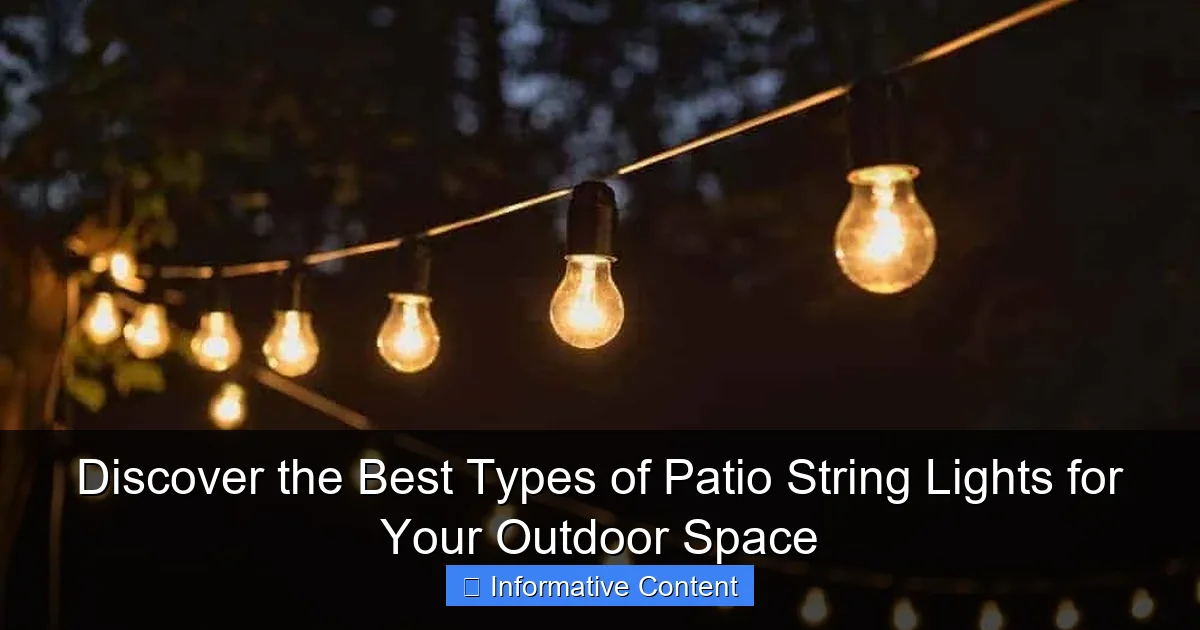
Featured image for types of patio string lights
Image source: homestratosphere.com
Choosing the right patio string lights can transform your outdoor space into a warm, inviting retreat. From classic incandescent bulbs for a nostalgic glow to energy-efficient LEDs and solar-powered options for eco-friendly ambiance, each type offers unique benefits in style, durability, and function. Whether you prefer vintage Edison bulbs, color-changing smart lights, or weather-resistant commercial-grade strings, there’s a perfect match for every patio design and occasion.
Key Takeaways
- Choose LED bulbs: Energy-efficient, long-lasting, and perfect for eco-conscious outdoor lighting.
- Opt for weatherproof: Ensure durability with IP65-rated lights for rain and sun exposure.
- Pick warm white: Creates a cozy, inviting ambiance ideal for evening gatherings.
- Consider smart features: Control brightness and color via app or voice for flexibility.
- Mix string types: Combine globe and Edison bulbs for layered, dynamic lighting effects.
- Check spacing: 12–18 inches between bulbs ensures even, glare-free illumination.
📑 Table of Contents
- Why Patio String Lights Are a Game-Changer for Outdoor Living
- 1. Bulb Types: The Heart of Your String Light Aesthetic
- 2. Power Sources: Balancing Convenience and Sustainability
- 3. Color Temperature and Light Quality: Setting the Mood
- 4. Installation Methods: From DIY to Professional
- 5. Weather Resistance and Durability: Surviving the Elements
- 6. Smart Features and Controls: The Future of Patio Lighting
- Comparing the Top Patio String Lights: A Quick Reference
- Final Thoughts: Finding Your Perfect Patio Glow
Why Patio String Lights Are a Game-Changer for Outdoor Living
There’s something magical about stepping onto your patio at dusk and being greeted by a soft, warm glow. Patio string lights aren’t just about illumination—they’re about mood. I still remember the first time I strung up a set of fairy lights across my backyard. It transformed the space from a simple concrete slab into a cozy, inviting retreat. Whether you’re hosting a summer barbecue, enjoying a quiet evening with a book, or stargazing with a glass of wine, the right string lights can make your outdoor area feel like a personal oasis.
But here’s the thing: not all patio string lights are created equal. With so many options—bulb types, power sources, color temperatures, and more—it’s easy to feel overwhelmed. That’s why I’ve put together this guide to help you discover the best types of patio string lights for your space. From classic Edison bulbs to solar-powered fairy lights, we’ll break down the pros, cons, and real-world uses of each. Whether you’re on a budget, want to go eco-friendly, or just love a retro vibe, there’s a perfect match waiting for you.
1. Bulb Types: The Heart of Your String Light Aesthetic
The bulb you choose sets the tone for your entire outdoor lighting scheme. Let’s explore the most popular types and how they can transform your patio.
Edison Bulbs: Vintage Charm with a Modern Twist
If you love that rustic, industrial look, Edison bulbs are your go-to. These exposed-filament bulbs give off a warm, golden glow (usually 2200K-2700K) that instantly adds character. I used them on my pergola, and guests always comment on how cozy it feels—like a Parisian sidewalk café, but in my backyard.
- Best for: Pergolas, dining areas, and spaces where you want a “lived-in” vibe
- Pros: High visual appeal, dimmable (with compatible fixtures), available in various shapes (teardrop, globe, squirrel cage)
- Cons: Higher energy use (unless LED versions), fragile glass, pricier than standard bulbs
Pro Tip: Pair LED Edison bulbs with a dimmer switch. I learned the hard way that not all are dimmable—check the packaging!
LED Bulbs: Energy Efficiency Meets Versatility
LED patio string lights are a game-changer for practicality. I upgraded from incandescent to LED last year and cut my energy bill by 60%. They last up to 25,000 hours (vs. 1,000 for incandescent) and come in every color and shape imaginable.
- Best for: Large spaces, long-term use, eco-conscious homeowners
- Pros: Energy-efficient, durable, low heat output, often waterproof
- Cons: Some cheaper sets have uneven brightness, “cool white” LEDs can feel harsh
Real-World Example: My neighbor uses color-changing LED strings for holidays. She switches from warm white for summer dinners to red/green for Christmas—no need to buy new lights!
Fairy Lights: Delicate Magic for Intimate Spaces
For a whimsical, twinkling effect, fairy lights (tiny LED bulbs on thin wire) are unbeatable. I wrapped them around my balcony railing, and now it feels like a secret garden at night.
- Best for: Railings, trees, railings, and accent lighting
- Pros: Flexible, lightweight, often battery-powered, perfect for small spaces
- Cons: Not for primary illumination, shorter lifespan (if battery-powered)
Pro Tip: Use copper wire fairy lights outdoors—they resist corrosion better than silver.
Incandescent Bulbs: Classic Glow (With Caveats)
Remember the old-school string lights from childhood? That’s incandescent. They give off a soft, warm light (2700K) but are being phased out for energy inefficiency.
- Best for: Temporary use, nostalgia-driven setups
- Pros: Affordable, warm color, widely available
- Cons: High energy use, short lifespan, fragile
Note: I keep a set for holiday decorations but use LEDs year-round.
2. Power Sources: Balancing Convenience and Sustainability
How your lights get power impacts installation, cost, and environmental footprint. Let’s weigh the options.
Plug-In (AC) Lights: Reliable but Less Flexible
These are the workhorses of patio lighting. I used plug-in Edison strings for my first setup—simple but limiting.
- Best for: Permanent installations, high-wattage needs
- Pros: Consistent brightness, no battery swaps, often dimmable
- Cons: Requires outdoor outlets, extension cords can be unsightly
Practical Fix: Use weatherproof outlet covers and cord clips to hide cords along railings. I ran mine under a deck skirt—no tripping hazards!
Solar-Powered Lights: Eco-Friendly and Off-Grid
For areas without outlets, solar lights are a lifesaver. My friend in Arizona uses them to light her desert patio—no wires, no bills.
- Best for: Remote spaces, eco-conscious setups, temporary installations
- Pros: Zero electricity cost, easy to install, often weatherproof
- Cons: Dimmer in cloudy weather, shorter runtime (6-8 hours), battery replacements needed
Pro Tip: Place the solar panel in direct sunlight. I once mounted mine under a tree—lights barely lasted an hour.
Battery-Powered Lights: Portable and Precise
Need lights for a rental? Battery-powered fairy lights are your friend. I used them to decorate a friend’s wedding arbor—no outlets, no mess.
- Best for: Rentals, events, small spaces
- Pros: Totally portable, no cords, often come with timers
- Cons: Batteries add cost, not for long-term use
Real-World Hack: Use rechargeable batteries and a solar charger to cut costs.
Hardwired Lights: The Ultimate Permanent Solution
For a seamless, professional look, hardwired lights are unbeatable. My cousin hired an electrician to install them—worth every penny.
- Best for: Permanent patios, high-end setups
- Pros: No visible cords, customizable, often dimmable
- Cons: Expensive, requires professional installation
Note: Not DIY-friendly unless you’re an electrician!
3. Color Temperature and Light Quality: Setting the Mood
Color temperature (measured in Kelvin, K) affects everything from relaxation to romance. Let’s decode the spectrum.
Warm White (2200K-3000K): Cozy and Inviting
This is the sweet spot for patios. I use 2700K lights—they’re warm without being yellow, like candlelight.
- Best for: Dining, lounging, general ambiance
- Why it works: Mimics firelight, reduces eye strain, complements skin tones
Pro Tip: Avoid mixing warm and cool lights. I once paired warm Edison bulbs with cool LEDs—looked chaotic.
Cool White (4000K-5000K): Crisp and Modern
For a contemporary vibe, cool white lights feel clean and bright. My neighbor uses them for her minimalist patio.
- Best for: Modern spaces, task lighting (grilling areas)
- Why it works: Feels “clean,” good for visibility
- Caution: Can feel clinical or harsh at night
Real-World Example: I use cool white under my grill for nighttime cooking, but switch to warm for dinners.
RGB (Color-Changing) Lights: Festive and Fun
Love holidays? RGB lights let you switch colors with a remote. I use them for Halloween (purple/orange) and Fourth of July (red/white/blue).
- Best for: Parties, seasonal decor
- Pros: Versatile, fun, often app-controlled
- Cons: Overkill for daily use, can feel gimmicky
Pro Tip: Use “white” mode as your default—most RGB lights offer warm/cool white options.
4. Installation Methods: From DIY to Professional
How you hang your lights impacts both safety and style. Let’s explore options.
Ceiling/Wall Mounting: Permanent and Polished
For patios with roofs or walls, mounting lights directly creates a clean look. I used outdoor-rated hooks on my pergola.
- Best for: Covered patios, pergolas
- Pros: No sagging, weather-resistant, professional appearance
- Cons: Requires tools, not for renters
DIY Tip: Use a laser level to keep hooks perfectly aligned. I eyeballed my first attempt—looked crooked!
Hanging from Trees or Posts: Natural and Flexible
For open spaces, drape lights between trees or posts. My friend uses zip ties to attach strings to her backyard oaks.
- Best for: Yards without structures, temporary setups
- Pros: Easy to install, no drilling
- Cons: Sagging over time, tree growth can damage cords
Pro Tip: Use adjustable zip ties to account for tree movement.
Stakes and Ground Mounts: For Open Areas
No walls? No problem. Ground stakes let you create “light poles” anywhere. I used them to outline my fire pit area.
- Best for: Lawns, open patios
- Pros: Portable, no permanent installation
- Cons: Tripping hazard if not secured
Real-World Fix: Bury stakes slightly and mark with reflective tape.
5. Weather Resistance and Durability: Surviving the Elements
Outdoor lights must withstand sun, rain, and wind. Here’s what to check.
IP Ratings: Decoding Water Resistance
Look for IP65 or higher. My first set was only IP44—they failed after one rainy season.
- IP65: Dustproof, protected against water jets
- IP67: Dustproof, survives immersion (great for coastal areas)
Pro Tip: Check bulb sockets—even IP65 lights can fail if water gets into the base.
Material Matters: From Plastic to Copper
Cheap plastic wires crack in sun; copper wires last years. I upgraded to copper-core strings—no more brittle cords.
- Best materials: Copper wire, silicone insulation, UV-resistant bulbs
- Avoid: Thin plastic, aluminum wires
Real-World Example: My neighbor’s plastic strings turned yellow after two summers—mine (copper) still look new.
6. Smart Features and Controls: The Future of Patio Lighting
Want lights that turn on at sunset or sync to music? Smart tech is here.
Smart Bulbs: Control with Your Phone
Philips Hue and LIFX let you control color, brightness, and schedules via app. I use mine to turn on at dusk automatically.
- Pros: Customizable, integrates with Alexa/Google Home
- Cons: Expensive, requires Wi-Fi
Pro Tip: Start with a small set to test compatibility.
Motion Sensors and Timers: Practical and Safe
Motion-activated lights are great for security. My timer turns off lights at midnight—saves energy!
- Best for: Pathways, security lighting
- Pros: Energy-saving, hands-free
- Cons: Can be overly sensitive
Real-World Hack: Pair a timer with a dimmer for “night mode”—bright at first, then softer.
Comparing the Top Patio String Lights: A Quick Reference
| Type | Best For | Lifespan | Energy Use | Weather Resistance | Price Range |
|---|---|---|---|---|---|
| Edison (LED) | Vintage ambiance | 15,000-25,000 hrs | Low | IP65 | $$$ |
| Fairy (Solar) | Accent lighting | 2-3 years (battery) | None | IP65 | $ |
| LED (Plug-In) | Large spaces | 25,000 hrs | Low | IP65-67 | $$ |
| RGB (Smart) | Parties/seasonal | 15,000 hrs | Medium | IP65 | $$$ |
Final Thoughts: Finding Your Perfect Patio Glow
Choosing patio string lights isn’t just about function—it’s about creating a space that feels like you. Whether you’re drawn to the vintage warmth of Edison bulbs, the eco-friendly glow of solar lights, or the playful flexibility of RGB, there’s no one-size-fits-all answer. I’ve learned that the best setups often mix types: warm white LEDs for ambient light, fairy lights for magic, and a smart plug to control it all.
Remember to consider your space, power access, and how you’ll use the lights. Start small—a 10-foot string on your railing—and expand as you see what works. And don’t forget the little details: weatherproof sockets, cord management, and dimmers can make all the difference. Your patio isn’t just an outdoor area—it’s an extension of your home. With the right lights, it can be your favorite room of all.
Frequently Asked Questions
What are the different types of patio string lights available?
Patio string lights come in various styles, including Edison bulbs, globe lights, fairy lights, and LED strands, each offering unique aesthetics. Choose based on your outdoor décor, desired brightness, and energy efficiency needs.
Which types of patio string lights are best for year-round use?
Weather-resistant LED string lights with shatterproof bulbs are ideal for year-round use, as they withstand rain, wind, and temperature changes. Look for UL-listed or IP65-rated lights for durability.
Are solar-powered patio string lights as bright as electric ones?
Solar-powered lights are slightly dimmer but offer eco-friendly convenience for ambient lighting. For brighter illumination, opt for plug-in LED string lights with higher lumens.
What’s the difference between S14 and G40 bulbs in patio string lights?
S14 bulbs are smaller, cylindrical, and perfect for a vintage vibe, while G40 bulbs are larger, rounder, and provide more diffused light. Both are popular types of patio string lights for outdoor ambiance.
Can I connect multiple strands of patio string lights together?
Yes, many patio string lights are connectable, but check the manufacturer’s guidelines to avoid overloading circuits. LED strands typically allow more connections than incandescent ones.
How do I choose the right color temperature for my patio string lights?
Warm white (2700K-3000K) creates a cozy, inviting glow, while cool white (4000K+) offers brighter, modern lighting. Consider your outdoor space’s mood and function when selecting types of patio string lights.