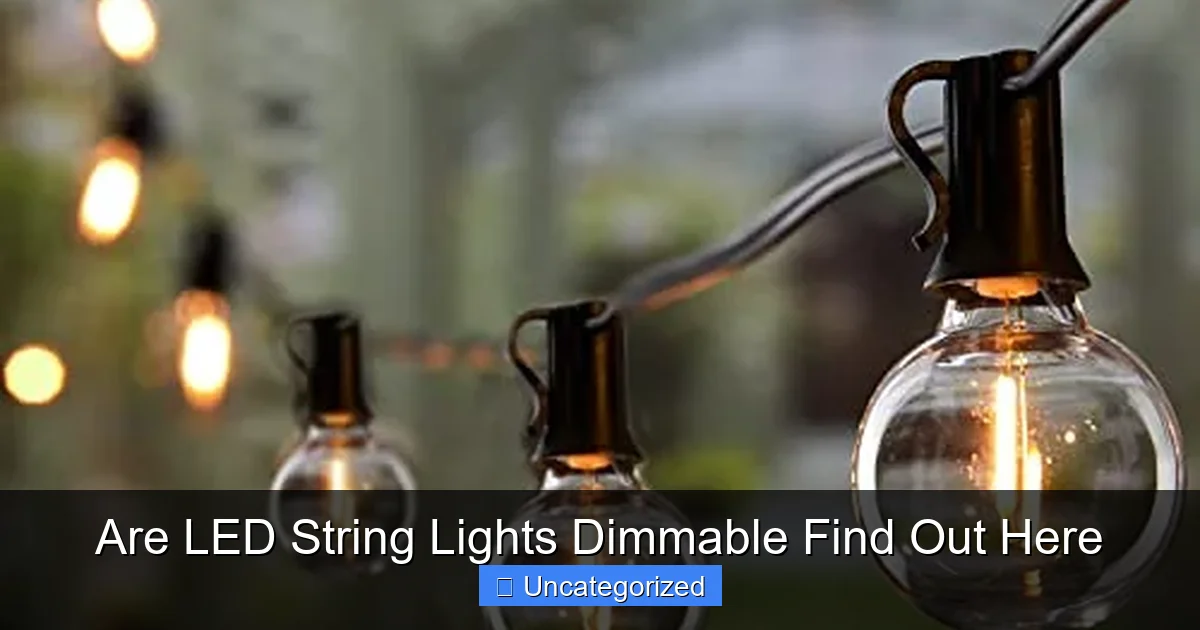
Featured image for are led string lights dimmable
Image source: m.media-amazon.com
Yes, many LED string lights are dimmable—but only if they’re specifically designed with dimmable LEDs and paired with a compatible dimmer switch. Always check the product specifications for terms like “dimmable” or “compatible with LED dimmers” to avoid flickering or damage. Using non-dimmable LEDs with a dimmer can shorten lifespan and cause performance issues, so verify before you buy.
Key Takeaways
- Check the label: Look for “dimmable” on packaging or product descriptions.
- Use compatible dimmers: Standard dimmers may not work; opt for LED-specific ones.
- Test before full setup: Verify dimming function early to avoid rewiring later.
- Warm tones dim best: Soft white LEDs offer smoother dimming than cool hues.
- Buy extra bulbs: Keep spares; dimmable LEDs may fail faster under stress.
- Smart LEDs simplify: Choose app-controlled strings for built-in dimming options.
📑 Table of Contents
- Are LED String Lights Dimmable? Find Out Here
- Understanding LED Technology and Dimming Capabilities
- How to Tell If Your LED String Lights Are Dimmable
- Choosing the Right Dimmer for LED String Lights
- Common Issues and Troubleshooting
- Top Dimmable LED String Light Options (2023)
- Conclusion: Mastering Dimmable LED String Lights
Are LED String Lights Dimmable? Find Out Here
Imagine transforming your living room, patio, or bedroom into a cozy, ambient haven with just a flick of a switch. LED string lights have become a staple in modern home decor, offering energy efficiency, long lifespans, and a variety of designs to suit any style. From fairy lights adorning wedding arches to warm white strands wrapping around a Christmas tree, these lights are as versatile as they are beautiful. But one question frequently pops up: Are LED string lights dimmable?
The answer isn’t always straightforward. While many LED string lights *are* dimmable, not all of them are, and even those that are may require specific conditions to work properly. Whether you’re planning a romantic dinner under soft lighting or want to adjust the brightness for a late-night reading session, understanding the dimming capabilities of your LED string lights can make all the difference. In this comprehensive guide, we’ll explore what makes LED string lights dimmable, the types available, how to test them, and tips for choosing the right dimmer and setup. By the end, you’ll have all the knowledge you need to create the perfect lighting ambiance—every time.
Understanding LED Technology and Dimming Capabilities
How LED Lights Work
Before diving into dimming, it’s essential to understand how LED (Light Emitting Diode) technology differs from traditional incandescent or fluorescent lighting. Unlike older bulbs that rely on heating a filament or gas, LEDs produce light through electroluminescence in a semiconductor. This process is highly efficient, converting more energy into light and less into heat. However, because LEDs operate on low-voltage direct current (DC), they require a driver or transformer to convert standard household AC power into the correct voltage and current.
Visual guide about are led string lights dimmable
Image source: cdn.shopify.com
LED drivers regulate power to maintain consistent brightness and prevent flickering. When dimming is desired, the driver must be compatible with dimming signals. This is where the complexity arises: not all LED drivers support dimming, and those that do may only work with specific types of dimmers.
Why Not All LEDs Are Dimmable
One of the biggest misconceptions about LED string lights is that all are dimmable by default. In reality, only LED lights specifically designed for dimming will respond to a dimmer switch. Here’s why:
- Driver Compatibility: The internal driver in a non-dimmable LED converts power without adjusting for dimming signals, so the light won’t respond to changes in voltage.
- Chip Design: Dimmable LEDs use specialized chips that can interpret and adjust to varying input signals (e.g., pulse-width modulation or phase-cut dimming).
- Cost and Use Case: Manufacturers often produce non-dimmable versions to reduce costs for users who don’t need adjustable brightness.
Example: A $10 set of LED fairy lights from a discount store is likely non-dimmable, while a $30 set marketed for “smart home integration” may include dimming features and a compatible driver.
Types of LED Dimming Methods
LEDs use two primary dimming technologies:
- Triac (Phase-Cut) Dimming: Common in residential settings, this method cuts off a portion of the AC waveform. It works with standard wall dimmers but requires LEDs labeled “Triac-compatible.”
- 0-10V (Low-Voltage) Dimming: Used in commercial or high-end residential setups, this method sends a 0–10V DC signal to adjust brightness. It’s more precise but requires specialized dimmers and compatible drivers.
For most homeowners, Triac dimming is the go-to choice, but always check your LED string light’s specifications to confirm compatibility.
How to Tell If Your LED String Lights Are Dimmable
Check the Packaging and Product Specifications
The easiest way to determine dimmability is to read the packaging or product description. Look for keywords like:
Visual guide about are led string lights dimmable
Image source: nerdtechy.com
- “Dimmable”
- “Works with Triac dimmers”
- “0-10V compatible”
- “Adjustable brightness”
If these terms are absent, the lights are likely non-dimmable. For example, a product titled “100-LED Warm White String Lights – Dimmable with Remote” clearly states its capability, while “Battery-Powered LED Fairy Lights” without further details probably isn’t.
Inspect the Driver or Power Supply
The driver (often a small box or plug) contains vital clues. A dimmable LED string light’s driver will:
- Be labeled “Dimmable” or list a compatible dimmer type (e.g., “ELV” or “MLV”).
- Have a higher wattage rating to accommodate dimmer loads.
- Include a model number you can search online for specs.
Tip: If the driver feels warm during use, it may be a sign of poor quality or incompatibility with your dimmer.
Test with a Dimmer Switch (Safely!)
When in doubt, conduct a safe test:
- Ensure your dimmer is compatible (see Section 4).
- Install the dimmer temporarily (if hardwired) or use a plug-in dimmer for battery/plug-in lights.
- Turn the lights on and slowly adjust the dimmer.
- Watch for flickering, buzzing, or sudden shutdowns—these are signs of incompatibility.
Warning: Never test non-dimmable LEDs with a dimmer, as it can damage the driver or create a fire hazard.
Common Pitfalls to Avoid
- Assuming All LEDs Are Dimmable: Always verify—don’t rely on brand reputation alone.
- Ignoring Minimum Load Requirements: Some dimmers need a minimum wattage (e.g., 40W) to work. If your LED string uses only 10W, it may flicker or not turn on.
- Mixing Dimmable and Non-Dimmable Lights: Connecting incompatible lights to the same dimmer can cause erratic behavior.
Choosing the Right Dimmer for LED String Lights
Types of Dimmers Compatible with LEDs
Not all dimmers work with LEDs. Here are the most common types:
- Triac Dimmers: The standard for homes. Look for models labeled “LED-compatible” or “low-load” (e.g., Lutron Diva or Leviton Decora).
- ELV (Electronic Low Voltage) Dimmers: Designed for LED drivers that use electronic transformers. They provide smoother dimming but cost more.
- 0-10V Dimmers: For professional or commercial use. Requires a separate low-voltage control wire.
- Smart Dimmers: Wi-Fi or Bluetooth-enabled (e.g., Philips Hue, Lutron Caséta). Allow remote or app-based control and integrate with voice assistants.
Example: A Lutron MACL-153M is a popular Triac dimmer that works with most dimmable LED string lights and has a minimum load of 15W—ideal for longer strands.
Wattage and Load Considerations
LEDs use far less power than incandescents, but dimmers have minimum and maximum load requirements. Use this formula to calculate total wattage:
Total Wattage = Number of LED Strings × Wattage per String
For example, if you have four 5W LED strings, your total load is 20W. Most standard dimmers require at least 40W, so you’d need to:
- Use a low-load dimmer (e.g., Lutron Skylark).
- Add a load resistor to meet the minimum requirement (not recommended for beginners).
- Use more lights or a higher-wattage driver.
Plug-In vs. Hardwired Dimmers
- Plug-In Dimmers: Ideal for battery or outlet-powered LED strings. Simply plug the lights into the dimmer, then into the wall. Easy to install and move.
- Hardwired Dimmers: For permanently installed lights (e.g., under-cabinet or outdoor). Requires electrical expertise to install but offers seamless integration.
Pro Tip: For outdoor LED string lights, use a dimmer with an IP65 or higher rating to protect against moisture.
Common Issues and Troubleshooting
Flickering or Buzzing Lights
Flickering is the most common dimming issue. Causes include:
- Incompatible Dimmer: Your dimmer may not support the LED’s driver. Replace it with a Triac or ELV dimmer.
- Overloading the Circuit: Too many lights on one dimmer can exceed its capacity. Split the load across multiple dimmers.
- Loose Connections: Check wiring, plugs, and solder joints. Even a small gap can cause flickering.
- Voltage Fluctuations: Use a surge protector or voltage stabilizer for sensitive setups.
Example: If your 50-foot LED strand flickers at low brightness, try reducing the length to 30 feet or upgrading to a 100W-rated dimmer.
Lights Not Turning On or Off Properly
- Minimum Load Not Met: As mentioned earlier, add more lights or a low-load dimmer.
- Defective Driver: Test the lights on a standard outlet. If they work, the driver may be faulty.
- Dimmer Range Issues: Some dimmers have a “sweet spot” for brightness. Adjust the dimmer’s low-end trim (if available).
Color Shifts or Inconsistent Brightness
Some LEDs change color temperature when dimmed (e.g., warm white turning yellow). This is due to the driver’s design. To fix:
- Use “color-stable” LEDs (e.g., CCT-tunable lights).
- Choose dimmers with a “soft start” feature to minimize shifts.
- Stick to reputable brands like GE, Philips, or Nanoleaf.
When to Call a Professional
While many issues can be DIY-fixed, consult an electrician if:
- You’re hardwiring a dimmer and aren’t confident in your skills.
- Flickering persists after troubleshooting.
- You notice burning smells or scorch marks.
Top Dimmable LED String Light Options (2023)
Best Overall: Philips Hue Lightstrip Plus
- Features: App/voice control, color-changing, 20,000-hour lifespan.
- Dimming: Full range via Hue Bridge or compatible dimmer.
- Price: $99 for 80 inches (expandable).
- Why It’s Great: Seamless integration with smart homes and precise dimming.
Best Budget: GE 40-LED Warm White String Lights
- Features: 24-foot strand, Triac dimmable, weather-resistant.
- Dimming: Works with standard wall dimmers.
- Price: $25.
- Why It’s Great: Reliable performance at an affordable price.
Best for Outdoors: LITOM Solar String Lights
- Features: 100 LEDs, solar-powered, IP65 waterproof.
- Dimming: Manual brightness control via solar panel.
- Price: $35.
- Why It’s Great: Eco-friendly and perfect for patios or gardens.
Data Table: Comparison of Dimmable LED String Lights
| Product | Length | Color Temperature | Dimming Method | Price (USD) | Best For |
|---|---|---|---|---|---|
| Philips Hue Lightstrip Plus | 80″ (expandable) | 2000K–6500K | App/Bridge | $99 | Smart homes, ambiance |
| GE 40-LED Warm White | 24′ | 2700K | Triac | $25 | Indoor/outdoor, budget |
| LITOM Solar String Lights | 33′ | 3000K | Manual | $35 | Patios, gardens |
| Twinkle Star 100-LED Fairy Lights | 33′ | 2700K | Remote (Triac) | $18 | Decor, events |
| Nanoleaf Shapes Hexagons | Custom | 1200K–6500K | App/Voice | $250 | Artistic displays, gaming |
Conclusion: Mastering Dimmable LED String Lights
So, are LED string lights dimmable? The short answer is: yes, but only if they’re designed for it. By checking product specs, understanding your dimmer type, and troubleshooting common issues, you can unlock the full potential of your LED lighting setup. Whether you’re creating a serene bedroom retreat, a vibrant party space, or a festive holiday display, dimmable LEDs offer unparalleled control over your environment.
Remember, the key to success lies in compatibility. Always pair dimmable LED string lights with the right dimmer, respect wattage limits, and prioritize quality over price. With the right combination, you’ll enjoy smooth, flicker-free dimming that enhances every moment—from quiet nights to lively gatherings. So go ahead, experiment with different brightness levels, and let your creativity shine. Your perfect ambiance is just a dimmer switch away.
Frequently Asked Questions
Are LED string lights dimmable?
Most LED string lights are dimmable, but it depends on the model and whether they’re designed to work with dimmer switches or remotes. Always check the product specifications before purchasing to confirm dimmable compatibility.
Can I use a regular dimmer switch with dimmable LED string lights?
No, standard incandescent dimmers may not work properly with LED string lights. Use an LED-compatible dimmer to avoid flickering or damage to the lights.
How do I know if my LED string lights are dimmable?
Look for labels like “dimmable” or “compatible with dimmers” in the product description or packaging. If unsure, contact the manufacturer to verify the LED string lights’ dimming capabilities.
Do all dimmable LED string lights work with smart home systems?
Not all dimmable LED string lights are smart-enabled. Some require specific hubs or remotes for dimming. Check if the product supports smart features like Alexa or Google Assistant before buying.
Why do my LED string lights flicker when dimmed?
Flickering often occurs when non-dimmable LEDs are used with a dimmer, or the dimmer isn’t compatible. Ensure both the LED string lights and dimmer are rated for dimming.
Can battery-operated LED string lights be dimmable?
Yes, many battery-operated LED string lights include built-in dimming features via buttons or remotes. However, they’re usually not compatible with wall-mounted dimmers since they don’t plug into mains power.