Featured image for patio light string ideas
Image source: happydealhappyday.com
Transform your outdoor oasis with creative patio light string ideas that blend ambiance and functionality. From draped fairy lights to industrial-style Edison bulbs, these versatile lighting solutions instantly elevate any patio, enhancing evening entertaining and relaxation. Discover how simple installations—like wrapping trees, framing pergolas, or lining pathways—can create a magical atmosphere with minimal effort.
Key Takeaways
- Choose weather-resistant lights for year-round durability and safety.
- Mix bulb types like Edison and fairy lights for layered ambiance.
- Hang lights strategically along railings, trees, or pergolas for depth.
- Use dimmers or timers to adjust mood and save energy effortlessly.
- Opt for warm hues (2700K–3000K) to create a cozy, inviting glow.
- DIY creative patterns like zigzags or canopies for personalized flair.
📑 Table of Contents
- Patio Light String Ideas to Transform Your Outdoor Space
- Choosing the Right Type: Navigating the Light String Landscape
- Creative Installation Ideas: Beyond the Straight Line
- Enhancing the Ambiance: Color, Shape & Accessories
- Seasonal & Themed Lighting: Adapting Your Patio
- Maintenance, Safety & Longevity: Keeping Your Lights Glowing
Patio Light String Ideas to Transform Your Outdoor Space
Remember that first time you hosted a backyard dinner under a string of lights? The way the glow danced across your guests’ faces, the laughter echoing a little louder, the night feeling just a bit more magical? That’s the power of patio light strings. They’re not just about illumination; they’re about crafting an atmosphere. Whether you’re dreaming of a romantic bistro vibe, a festive party zone, or a serene retreat, the right patio light string ideas can completely transform your outdoor space from a forgotten corner into the heart of your home.
But let’s be honest—walking into a store or scrolling online, the sheer variety of patio light strings can be overwhelming. Edison bulbs, globe lights, solar-powered strands, LED options, dimmable features… where do you even start? And how do you choose what *feels* right for your unique patio? This isn’t just about picking a pretty string; it’s about understanding how light interacts with your space, your lifestyle, and your personal aesthetic. We’ll explore practical, inspiring, and even a few unexpected patio light string ideas that go beyond the basics. Forget the generic “hang them in a line” advice. We’re diving into how to use light to define zones, enhance your existing décor, and create a truly inviting outdoor experience. Think of this as your friendly, no-nonsense guide to turning your patio into a glowing haven.
Choosing the Right Type: Navigating the Light String Landscape
Before you start picturing your dream patio, you need to understand the tools. Not all patio light strings are created equal. Choosing the right *type* is the foundation of your design. It impacts brightness, energy use, longevity, and even the mood you create. Let’s break down the main contenders:
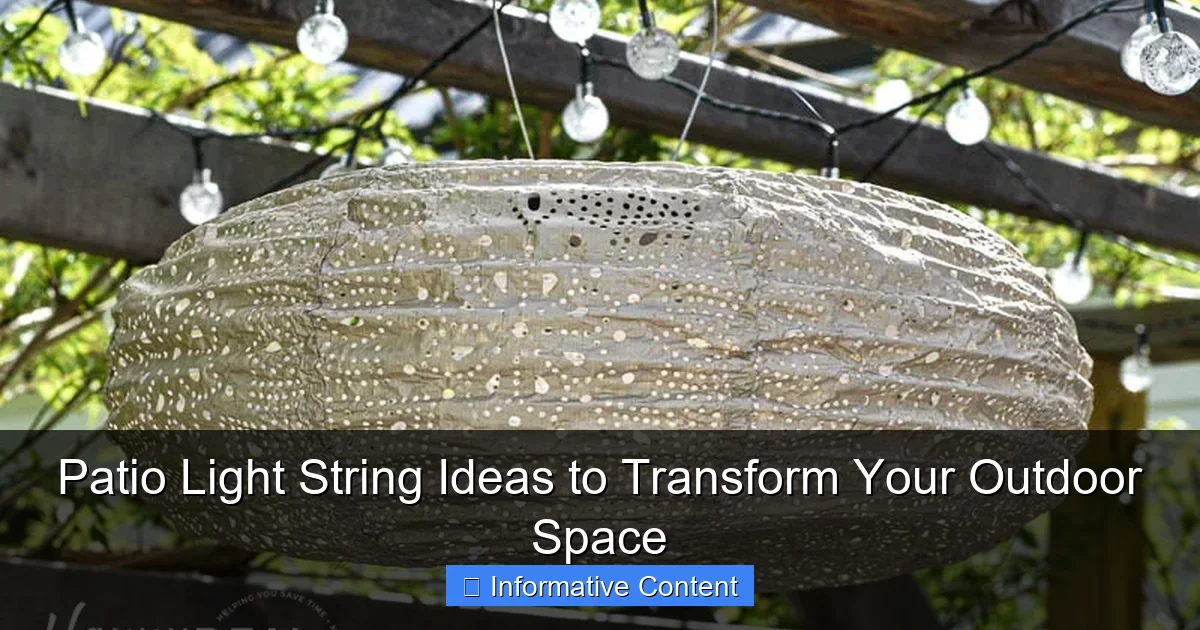
Visual guide about patio light string ideas
Image source: happydealhappyday.com
LED Patio Lights: The Modern Standard
For most people, LED patio lights are the clear winner. They’re energy-efficient (using up to 90% less energy than incandescent), incredibly long-lasting (often 25,000-50,000 hours), and generate very little heat—crucial for safety around wood, fabric, and pets. Modern LEDs also offer a fantastic range of colors and color temperatures. You’ll find:
- Warm White (2700K-3000K): The classic, inviting glow that mimics candlelight or incandescent bulbs. Perfect for creating a cozy, romantic, or traditional feel. Think intimate dinners and relaxed evenings.
- Soft White (3000K-3500K): A slightly brighter, more neutral white. Offers a clean, modern look while still being warm. Great for patios with modern furniture or when you need a bit more illumination.
- Daylight (5000K-6500K): Bright, crisp white. More functional, good for task lighting (like grilling areas), but can feel a bit stark for pure ambiance. Use sparingly or in specific zones.
- Color-Changing RGB: Offers a spectrum of colors. Ideal for parties, themed nights, or adding playful pops of color. Look for models with a “warm white” mode for everyday use.
Pro Tip: Check the “lumens” rating. This tells you the actual brightness, not just the wattage (which is irrelevant for LEDs). 100-200 lumens per bulb is usually plenty for ambient patio lighting. Also, look for “dimmable” LEDs if you want control over the brightness.
Incandescent & Vintage Edison Bulbs: The Charm Factor
Ah, the classic incandescent patio lights or those with Edison bulbs (the vintage-style, visible filaments). They offer an undeniably warm, nostalgic glow that LEDs are still trying to perfectly replicate. The light is soft, slightly diffused, and incredibly inviting. Edison bulbs, in particular, add a touch of industrial chic or farmhouse charm.
- The Good: Unmatched warmth, unique aesthetic (especially Edison), often cheaper upfront.
- The Reality Check: They use significantly more energy (higher electricity bills), generate a lot of heat (a fire hazard near dry materials or low-hanging plants), and have a much shorter lifespan (1,000-2,000 hours). They’re also more fragile.
When to Use Them: If the *aesthetic* is paramount and you’re okay with higher running costs and shorter lifespan. Use them for special occasions or in areas where heat isn’t a concern (e.g., high above a dining table, not draped over a wooden pergola). Consider lower-wattage incandescent bulbs (40W or less) to mitigate heat and energy use. For a compromise, look for “vintage LED” bulbs that mimic the Edison look but offer LED efficiency.
Solar-Powered Patio Lights: Eco-Friendly & Easy Install
Solar patio lights are fantastic for off-grid areas, renters, or anyone wanting a zero-energy solution. They charge during the day via a small solar panel and turn on automatically at dusk.
- The Good: Zero electricity cost, easy DIY installation (no wiring), eco-friendly, perfect for remote spots (garden path, tree, fence post).
- The Reality Check: Brightness and runtime depend heavily on sunlight exposure. Cloudy days or shaded areas mean dimmer, shorter light. Quality varies wildly—cheap ones might only last a few hours or fail after one winter. Look for models with larger solar panels and higher mAh battery ratings.
When to Use Them: Ideal for accent lighting, outlining pathways, wrapping around trees, or decorating areas far from power outlets. Pair them with plug-in lights for main areas. Use high-quality, weatherproof solar strings for best results.
Plug-In vs. Hardwired: The Power Source Decision
This is crucial for safety and convenience.
- Plug-In (Standard): The most common and versatile. Plug into an outdoor-rated GFCI outlet. Ensure the outlet is protected from the elements (use an in-use cover). Use heavy-duty outdoor extension cords if needed, but avoid long, daisy-chained runs. Great for temporary or seasonal setups.
- Hardwired (Permanent): Requires professional electrical installation to connect directly to your home’s wiring. Offers a clean, seamless look with no visible cords. Ideal for permanent installations (pergolas, covered patios). More expensive upfront but very clean and reliable long-term.
Key Consideration: Always use lights rated for outdoor use (look for “Wet” or “Damp” location rating). Indoor lights will fail quickly and are a safety hazard outdoors.
Creative Installation Ideas: Beyond the Straight Line
Now for the fun part! How you *install* your patio light strings is where the real magic happens. Forget just draping them straight across. Use light to define, enhance, and surprise.
Define Zones & Create Rooms
Your patio likely has different functional areas: dining, lounging, grilling, maybe even a small bar. Use light strings to visually separate and define these zones, creating distinct “rooms” within your outdoor space.
- Dining Area: Hang a dense cluster of lights (Edison or warm white LEDs) directly above your table, creating a “ceiling” of light. This focuses attention on the table and creates intimacy. Use a dimmer to adjust for different occasions.
- Lounging Area: Drape strings along the back of a sectional or wrap them around a pergola column near the seating. Use softer, warmer light to encourage relaxation. Consider a lower, more ambient glow than the dining zone.
- Grilling Zone: Use brighter, cooler white LEDs (3500K-4000K) mounted on a nearby wall or pergola beam, angled to illuminate the grill surface. This is task lighting, not ambiance.
- Pathway/Entry: String lights along a fence, low wall, or use solar path lights to guide guests safely. Creates a welcoming entry.
Example: Sarah used warm white LED strings in a crisscross pattern over her dining table, then draped softer strings along the back wall near her lounge chairs. The dining area felt bright and social, while the lounge felt cozy and separate.
Embrace the Architecture & Existing Features
Work *with* your patio, not against it. Existing structures are your best friends for mounting.
- Pergola or Gazebo: The classic! String lights across the beams in a crisscross, zig-zag, or parallel lines. For a dramatic effect, hang multiple strands at different heights. Use zip ties, S-hooks, or specialized pergola clips (avoid nails in wood).
- Fences & Railings: Wrap lights vertically or horizontally around fence posts or railings. Use clips or hooks designed for this. Creates a glowing border.
- Roof Overhang or Eaves: Hang strings from the edge of a covered patio roof. Use gutter hooks or adhesive clips (ensure they’re rated for your roof type and weather). Creates a soft, downward glow.
- Walls & Pillars: Use outdoor-rated adhesive hooks, screw-in hooks, or even picture hangers (for lightweight strings) to create a “light wall” or frame a feature.
Pro Tip: For a seamless look on wood, use small, clear plastic zip ties or specialized “invisible” clips. Avoid damaging paint or delicate finishes.
Think Vertically: Wrap Trees & Columns
Don’t limit yourself to horizontal lines. Go vertical!
- Tree Wrapping: Gently wrap lights around the trunk and main branches of a tree (especially a palm, maple, or birch). Start at the base and spiral upwards. Use outdoor-rated, non-conductive ties (like plastic zip ties or velcro straps) to secure—**never use metal wire**. This creates a magical, illuminated centerpiece. Solar lights work well here.
- Column Wrapping: Wrap lights around pergola columns, pillars, or even large planters. Use a spiral pattern for a dynamic look. This adds height and visual interest.
Caution: When wrapping trees, ensure the lights aren’t too tight, and use low-heat LEDs. Remove them in winter if you live in a freezing climate to prevent damage to the tree and the lights.
Create Canopies & Floating Ceilings
Transform the open sky above your patio.
- Canopy Effect: String lights across the patio in a grid pattern (like a checkerboard) or in parallel lines close together. This creates a “light roof” that feels intimate and cozy, especially effective under a pergola or open sky.
- Floating Ceiling: Use a large, lightweight frame (like a bamboo hoop, metal ring, or even a repurposed hula hoop) and string lights across it. Suspend it from the pergola or trees above the seating area. It looks like a glowing cloud!
- Starburst Pattern: Hang multiple strands from a central point (a pergola beam or a tree branch) radiating outwards like spokes. Creates a dramatic focal point.
Example: Mark created a starburst pattern above his fire pit using warm white LEDs, making it the glowing heart of the patio.
Enhancing the Ambiance: Color, Shape & Accessories
The *type* of light and *how* you install it sets the foundation, but the details truly elevate the ambiance. This is where you add personality and polish.
Playing with Color & Color Temperature
We touched on this earlier, but it’s worth emphasizing. Color is a powerful mood tool.
- Warm White (2700K-3000K): Your go-to for most patios. Cozy, inviting, romantic, timeless. Works with almost any décor.
- Soft White (3000K-3500K): Clean, modern, slightly brighter. Good for contemporary patios or when you need more light for tasks.
- RGB Color-Changing: Use sparingly for impact. Set to a single, soft color (like soft blue or amber) for a unique vibe, or use the color cycle for parties. Ensure it has a reliable “warm white” mode for everyday.
- Colored Bulbs (Red, Blue, Green, etc.): Use for holidays (red/green for Christmas, blue/white for Hanukkah, pastels for Easter) or themed parties. Can be overwhelming if used everywhere, so use as accents.
Pro Tip: Use a dimmer with warm white or soft white lights. Lowering the brightness instantly transforms the mood from “bright” to “intimate.” Dimmers work best with dimmable LEDs.
Choosing the Right Bulb Shape & Size
The bulb itself contributes to the look.
- Globe Lights: Classic, spherical bulbs. Offer a soft, diffused glow. Great for a vintage or bistro feel. Available in various sizes (small, medium, large).
- Edison Bulbs: Vintage-style with visible filaments. Create a warm, industrial, or farmhouse vibe. Larger bulbs make a bigger statement.
- Candle Lights: Small, flame-shaped bulbs. Mimic the flicker of real candles. Very romantic, but often dimmer. Best used in clusters or for accent lighting.
- Mini Lights: Tiny, often used in dense strands. Create a “twinkle” effect. Great for wrapping trees or adding subtle sparkle.
- Novelty Shapes: Stars, hearts, moons, pineapples, etc. Perfect for kids’ areas, themed patios, or adding fun. Use as accents.
Example: For a romantic dinner, use warm white globe lights. For a rustic farmhouse vibe, use large Edison bulbs. For a playful kids’ zone, use star-shaped lights.
Adding Accessories for the Finishing Touch
Small details make a big difference.
- Diffusers/Covers: Plastic or glass covers over bulbs can soften the light, reduce glare, and add a decorative element (like a lantern effect). Ensure they’re rated for outdoor use.
- Light Clips & Hooks: Invest in quality outdoor-rated clips, hooks, and zip ties. They make installation easier and look neater. Use different types for different surfaces (adhesive for smooth, screw-in for wood, gutter hooks for roofs).
- Light Covers/Ornaments: Hang small, lightweight ornaments (glass balls, paper lanterns, fabric shapes) on individual bulbs to create unique focal points. Ensure they don’t block too much light or create a fire hazard.
- Smart Controls: Use smart plugs or smart bulbs to control your lights with your phone, voice (Alexa/Google), or set schedules. Turn them on automatically at sunset, dim them remotely, or create scenes. Adds convenience and security.
Pro Tip: For a cohesive look, choose light strings with bulbs and cords in colors that complement your patio furniture and décor (e.g., black cord with black furniture, white cord with light wood).
Seasonal & Themed Lighting: Adapting Your Patio
Your patio lighting shouldn’t be static. Adapt it to the seasons and special occasions! This keeps your space fresh and exciting.
Summer Vibes: Bright, Festive, & Social
Summer is prime patio time. Think bright, inviting, and ready for parties.
- Bright & Airy: Use warm white or soft white LEDs. Ensure good coverage for evening gatherings.
- Festive Accents: Add colorful string lights (blue, green, yellow) for Fourth of July, rainbow lights for Pride, or pastel colors for a summer wedding. Use novelty shapes (pineapples, flamingos).
- Pathway & Entry: Ensure clear, well-lit paths using solar lights or low-voltage path lights. Safety first!
- Outdoor Kitchen/Bar: Use brighter, task-oriented lighting near grills and prep areas. Consider under-cabinet LED strips.
Fall & Winter: Cozy, Warm, & Inviting
As days get shorter, lighting becomes even more crucial for extending patio use.
- Warm & Cozy: Emphasize warm white (2700K-3000K) or amber lights. Use dimmers to create a soft, flickering candle-like glow.
- Holidays: Use traditional holiday colors (red/green, blue/white, gold/white) in clusters or specific zones. Use icicle lights along eaves or pergola edges for a winter wonderland effect.
- Fire Pit Area: Make the fire pit the glowing heart. Use lights around the base or above it. The combination of firelight and string lights is magical.
- Protection: Use weatherproof covers for plugs and connections. Consider taking down delicate solar lights or storing them if you get heavy snow or ice.
Spring: Fresh & Renewed
Welcome the longer days with a fresh look.
- Clean & Bright: Use soft white or warm white LEDs. It feels clean and welcoming after winter.
- Floral Accents: Use pastel-colored lights (pink, light blue, yellow) to complement spring blooms. Hang them near flower beds or planters.
- Twinkle Effect: Use mini lights or globe lights to mimic the sparkle of spring rain or dew.
Themed Nights & Events
Lighting is key for creating atmosphere for any event.
- Romantic Dinner: Warm white Edison or globe lights, dimmed low, with candle lights for accent. Use a canopy effect above the table.
- Movie Night: Use warm white lights around the seating area (not too bright), dimmed during the movie. Use brighter, cool white lights near the screen for setup/cleanup.
- Kids’ Party: Bright, colorful RGB lights, novelty shapes (stars, hearts), maybe even glow sticks integrated into the strings.
- Game Night: Ensure good general illumination (soft white LEDs) with brighter task lighting over game tables.
Pro Tip: Have a “seasonal switch” – easily swap out colored bulbs or add/remove accent lights to transform the feel without rewiring the whole setup.
Maintenance, Safety & Longevity: Keeping Your Lights Glowing
You’ve invested time and effort (and money!) into your beautiful patio lighting. Keep it shining bright and safe for years to come.
Regular Cleaning & Inspection
Dust, pollen, bird droppings, and weather take a toll.
- Frequency: Clean lights at least once a year (before storing for winter or at the start of spring). Clean more often in dusty or pollen-heavy areas.
- Method: Turn off and unplug lights. Use a soft, damp cloth to wipe bulbs and cords. For stubborn grime, use a mild soapy water solution (dish soap) and a soft brush. Rinse with clean water and dry thoroughly *before* plugging back in. Avoid abrasive cleaners.
- Inspection: While cleaning, check for:
- Frayed or damaged cords (replace immediately)
- Loose or cracked bulbs (replace)
- Corroded sockets (clean with electrical contact cleaner or replace the strand)
- Damaged plugs or connectors
Safe Storage (For Seasonal Lights)
If you take down lights for winter or store them off-season:
- Clean Thoroughly: As above, before storing.
- Coil Carefully: Avoid kinks and sharp bends. Use figure-8 or looped coiling techniques. Store on a reel or in a large, labeled bin.
- Dry Storage: Keep in a cool, dry, dark place (like a basement or closet). Avoid damp areas (garage, shed) where moisture can damage components.
- Label & Organize: Label bins with the type, color, and intended use (e.g., “Pergola – Warm White – 20ft”). Makes next year’s setup easier.
Weatherproofing & Electrical Safety
This is non-negotiable for safety and longevity.
- Use Outdoor-Rated Lights & Cords: Always check the rating (“Wet” or “Damp” location). Indoor lights are a fire hazard outdoors.
- Protect Connections: Use outdoor-rated extension cords with built-in GFCI protection. For plug connections, use waterproof covers or silicone sealant (applied *after* unplugging). Avoid daisy-chaining too many cords.
- GFCI Outlet: Ensure your outdoor outlet has GFCI (Ground Fault Circuit Interrupter) protection. It shuts off power if it detects a ground fault, preventing shocks. Test it monthly.
- Secure Mounting: Ensure lights and cords are securely fastened and not dangling where they can be snagged or damaged by weather or animals. Use appropriate clips/hooks.
- Turn Off When Not In Use: Especially during storms, heavy rain, or when leaving for extended periods. Saves energy and reduces risk.
Replacing Bulbs & Troubleshooting
- LED Strings: Often, if one bulb fails, the whole strand might go out (series circuit). Check the user manual. Some have a “shunt” that bypasses the dead bulb. Others require replacing the entire strand or using a specialized LED tester/repair tool. Individual LED replacement is often not feasible.
- Incandescent Strings: Usually, only the dead bulb needs replacing. Turn off, unplug, let cool, then carefully remove and replace with the same wattage and type.
- Troubleshooting: If a strand isn’t working:
- Check the outlet (test with another device).
- Check the plug and connections.
- Check the fuse in the plug (if applicable).
- Look for obvious damage (frayed cord, broken bulb).
- Try a different strand in the same outlet.
| Light String Type | Energy Efficiency | Lifespan (Hours) | Heat Generated | Best For | Key Consideration |
|---|---|---|---|---|---|
| LED | Excellent (Lowest) | 25,000 – 50,000 | Very Low | Everyday use, energy savings, safety, longevity | Choose correct color temp & lumens; ensure dimmability if needed |
| Incandescent | Poor (High) | 1,000 – 2,000 | High | Special occasions, vintage aesthetic (use sparingly) | High running cost, fire hazard near flammable materials, short life |
| Edison Bulb (LED or Incan) | Good (LED), Poor (Incan) | 25,000 (LED), 1,000-2,000 (Incan) | Low (LED), High (Incan) | Aesthetic charm, vintage/industrial style | LED version recommended; avoid high heat near wood/plants |
| Solar-Powered | Excellent (Zero) | 1,000 – 5,000 (Battery), 5-10 years (Panel) | Very Low | Off-grid areas, accent lighting, pathways, trees | Sunlight dependent; runtime varies; quality varies widely |
| Plug-In (Standard) | Depends on bulb type | Depends on bulb type | Depends on bulb type | Most versatile, easy installation | Requires accessible outdoor GFCI outlet; use outdoor cords |
| Hardwired | Depends on bulb type | Depends on bulb type | Depends on bulb type | Permanent, clean look, no visible cords | Requires professional installation; higher upfront cost |
Transforming your patio with light strings is more than just hanging some lights—it’s about crafting an experience. From choosing the right type (LEDs for efficiency and longevity, solar for off-grid charm, Edison for vintage appeal) to the creative installation (defining zones, embracing architecture, going vertical) and the finishing touches (color, shape, smart controls), every decision shapes the atmosphere. Remember the core principles: prioritize safety (outdoor-rated, GFCI, secure mounting), embrace maintenance (clean, inspect, store properly), and adapt for the seasons and your lifestyle.
The magic happens when light interacts with your space and your memories. That first dinner under the stars, the laughter around the fire pit, the quiet evening with a book—your patio light strings are the silent architects of these moments. Don’t be afraid to experiment! Try a new color for a party, wrap a tree you never thought of, or create a floating canopy. Start small, see what you love, and build from there. The best patio light string ideas are the ones that make *you* feel happy, relaxed, and connected to your outdoor space. So, grab those strings, step outside, and start creating your own glowing haven. Your patio is waiting to shine. The only limit is your imagination (and maybe your extension cord length!).
Frequently Asked Questions
What are the best patio light string ideas for a cozy ambiance?
Warm white fairy lights, Edison-style bulbs, or globe string lights create a welcoming glow for patios. Drape them overhead, along railings, or around pergolas to enhance the cozy atmosphere.
How can I use patio light strings in small outdoor spaces?
Opt for compact LED string lights or mini lanterns to avoid overwhelming the area. Hang them vertically on walls or fences to maximize space while adding charm.
Are solar-powered patio light strings a good option?
Yes! Solar-powered patio light string ideas are energy-efficient and easy to install without wiring. They’re ideal for eco-conscious homeowners and work well in sunny spots.
Can I leave patio light strings outside year-round?
Choose weather-resistant, commercial-grade string lights for durability. Look for IP65-rated or higher to withstand rain, wind, and snow without damage.
How do I style patio light strings for special occasions?
Mix twinkling fairy lights with colored bulbs or paper lanterns for events. Layer them with greenery or sheer fabric for a festive, Instagram-worthy look.
What creative ways can I arrange patio light strings?
Try zigzag patterns across the ceiling, spiral them around trees, or weave them through outdoor curtains. These patio light string ideas add visual interest to any layout.